ExploreTravel GuidesPlan a trip
    de|en
    All Places & RegionsAbout FernwehFAQPrivacy PolicyImprint
    ExploreTravel GuidesPlan a trip
    • Places in the region
    • Round trips
    • Nearby
    Mosel

    Germany

    Mosel

    Region

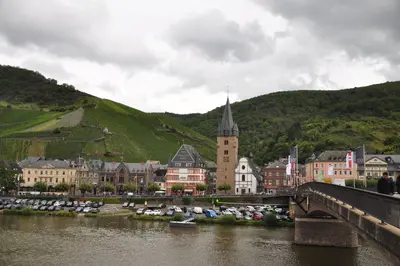
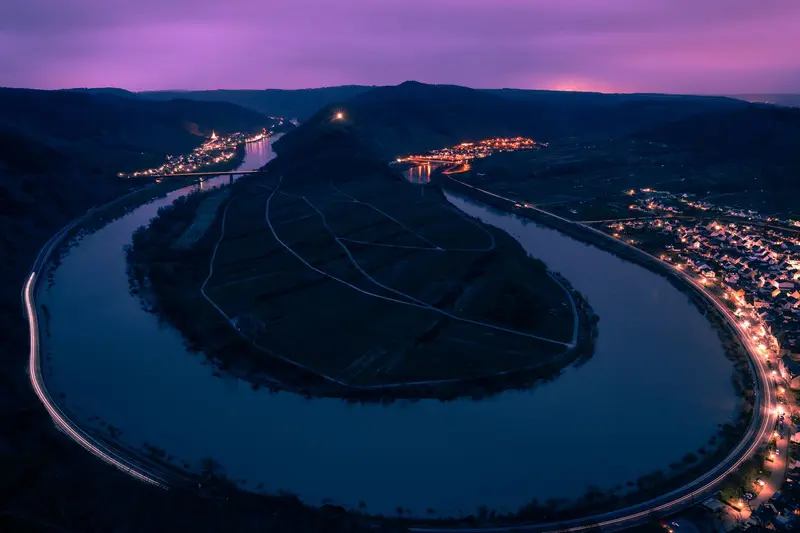
    From Perl in the Saarland, via Trier, to its confluence with the Rhine near Koblenz, the Moselle winds through the Slate Mountains in tight bends. Riesling mainly grows on its slopes, covering some 60% of the vineyard area.

    1. Home
    2. Destinations
    3. Germany
    4. Mosel
    From Perl in the Saarland, via Trier, to its confluence with the Rhine near Koblenz, the Moselle winds through the Slate Mountains in tight bends. Riesling mainly grows on its slopes, covering some 60% of the vineyard area. Many vineyards are so steep they can only be worked by hand; Europe's steepest vineyard is Calmont near Bremm.The Romans already cultivated wine here professionally; their legacy is clearest in Trier. Downstream follow wine towns such as Bernkastel-Kues, Traben-Trarbach, and Cochem with its Reichsburg; Burg Eltz stands in the Elz side valley. The Moselle railway links Koblenz and Trier, stopping at Cochem; excursion boats shuttle between the towns.
    Cochem

    Place 1 of 4

    Cochem

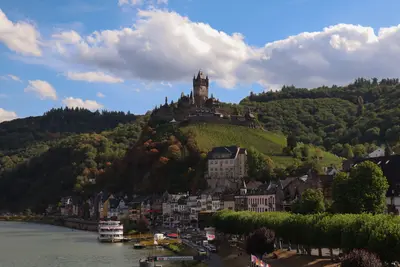
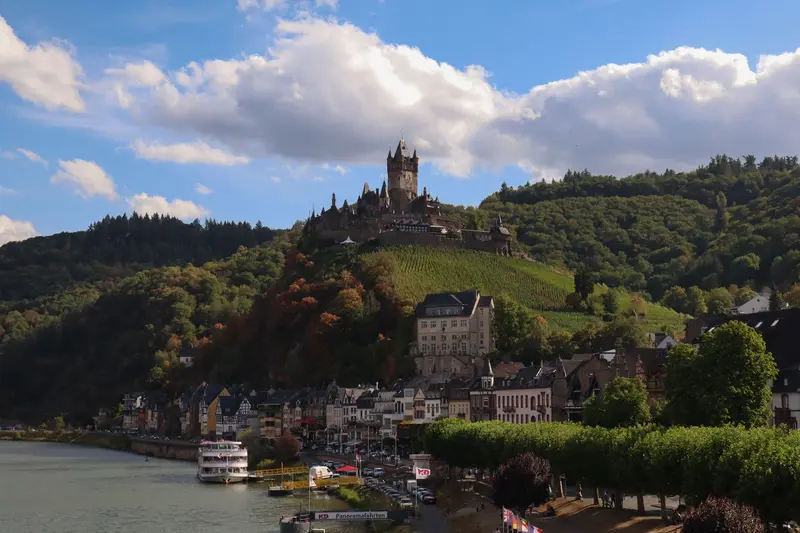
    With just over 5,000 inhabitants, Cochem is the tourist hub of the Untermosel. More than 100 metres above the river stands Reichsburg Castle, its origins dating back to the 12th century.

    Discover
    Trier

    Place 2 of 4

    Trier

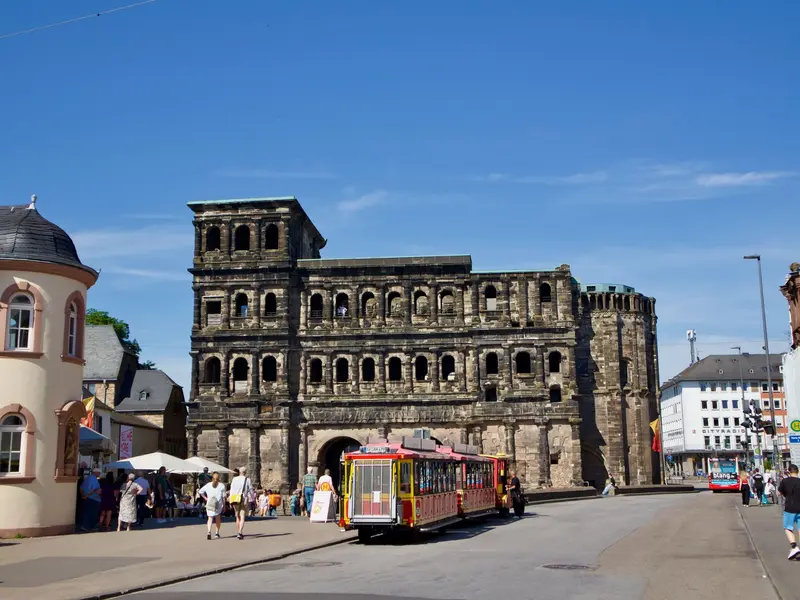
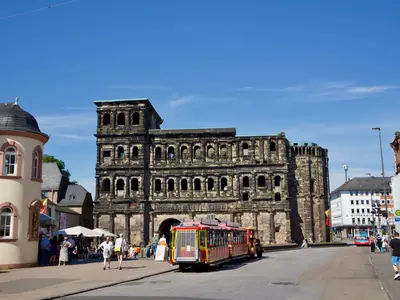
    Trier on the Moselle, near the Luxembourg border, is one of Germany's oldest cities. Augustus founded it no later than 16 BC as Augusta Treverorum, and in late antiquity, it was one of the Roman Empire's capitals.

    Trier has about 112,000 inhabitants and an Old Town you can easily explore on foot. From the main station, it's a few minutes' walk to the Porta Nigra, from where the pedestrian zone leads to the Hauptmarkt and on to the Dom and Liebfrauenkirche.

    Discover
    Burg Eltz

    Place 3 of 4

    Burg Eltz

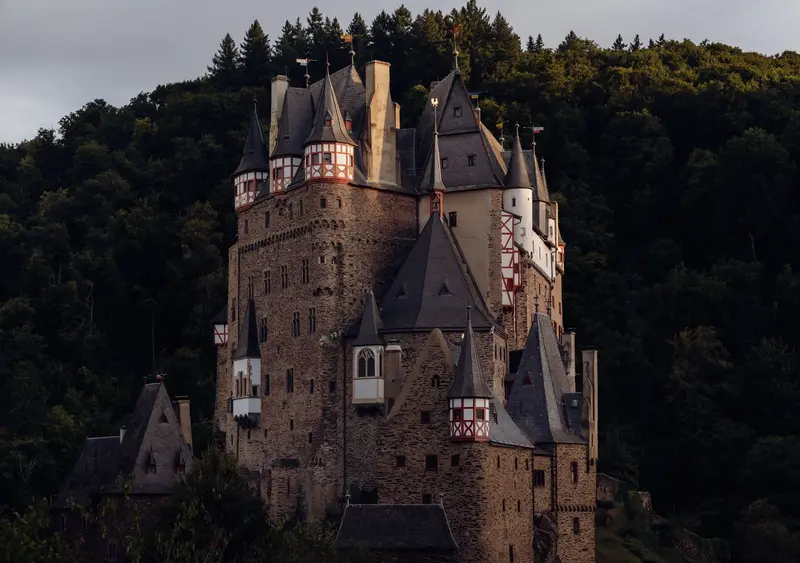
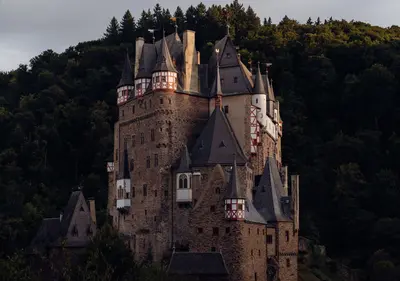
    Eltz Castle stands on a roughly 70-meter high rock spur in a loop of the Elz River, nestled between the Moselle, Eifel, and Maifeld regions.

    Discover
    Bernkastel-Kues

    Place 4 of 4

    Bernkastel-Kues

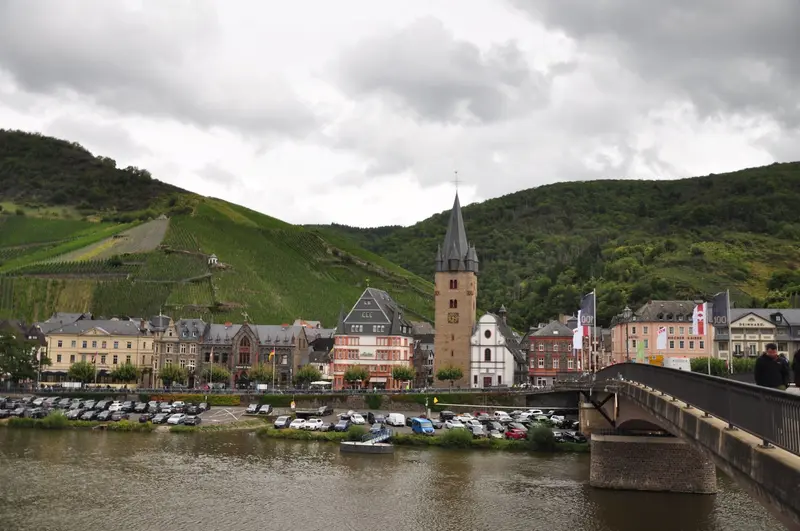
    Bernkastel-Kues on the Middle Moselle consists of two districts on both sides of the river.

    Discover

    Round trips through this region

    Rhein, Mosel and Castles

    In a week, you'll follow the Rhine from Cologne to Koblenz, then into the Upper Middle Rhine Valley, a UNESCO World Heritage site since 2002. From Bacharach, you'll explore the Loreley, a 132-meter high slate rock face near St. Goarshausen. Afterward, switch to the Moselle in Cochem with its Reichsburg, then hike to Eltz Castle, owned by the Eltz family for over 800 years. The journey ends in Trier, where Roman structures like Porta Nigra and Imperial Baths have been World Heritage sites since 1986.

    7 Days
    7 stops
    Open jaw

    Nearby

    Bernkastel-Kues

    Bernkastel-Kues

    Bernkastel-Kues on the Middle Moselle consists of two districts on both sides of the river. In Bernkastel, half-timbered houses frame the medieval market square with the town hall from 1608 and St. Michael's Fountain from 1606; right next to it stands the narrow Spitzhäuschen from 1416. Above the town lies the ruin of Landshut Castle, once the summer residence of the Archbishops of Trier.Directly above the old town grows the Bernkasteler Doctor, one of the world's most expensive Riesling vineyards. In Kues, the Cusanusstift with its Gothic chapel, wine museum, and library commemorates the scholar Nikolaus von Kues. There is no train station; you arrive by bus from Wittlich, by boat, or via the Moselle Cycle Path.
    Cochem

    Cochem

    With just over 5,000 inhabitants, Cochem is the tourist hub of the Untermosel. More than 100 metres above the river stands Reichsburg Castle, its origins dating back to the 12th century. Destroyed in the 17th century, it was rebuilt in Neo-Gothic style between 1868 and 1877.On the left bank, the old town, market square, and Moselle promenade are bustling with wine taverns, cafés, and shops. A chairlift leads up to Pinnerkreuz, and in the Cond district, you can visit the former Bundesbank bunker from the Cold War. Cochem is located on the Moselle Railway line between Koblenz and Trier.
    Burg Eltz

    Burg Eltz

    Eltz Castle stands on a roughly 70-meter high rock spur in a loop of the Elz River, nestled between the Moselle, Eifel, and Maifeld regions. It originated in the 12th century, was never seriously destroyed, and still belongs to the same family, now in its 33rd generation. Many recognize its image from the former 500 D-Mark banknote.From the parking lot near Wierschem, it's about a 10-minute walk, or you can take the shuttle bus. Hikers can reach the castle via the Traumpfad Eltzer Burgpanorama trail. The guided tour shows the interiors of the Rübenach and Rodendorf houses; the ticket includes the Treasury. It is open seasonally from April to early November.
    Trier

    Trier

    Trier on the Moselle, near the Luxembourg border, is one of Germany's oldest cities. Augustus founded it no later than 16 BC as Augusta Treverorum, and in late antiquity, it was one of the Roman Empire's capitals. Nowhere north of the Alps are so many Roman structures preserved.Nine monuments, including Porta Nigra, Imperial Baths, Amphitheater, Basilica of Constantine, Cathedral, and Church of Our Lady, have formed a UNESCO World Heritage site since 1986. Other attractions include the Main Market with its burgher houses and Karl Marx's birthplace. The city, with around 112,000 inhabitants, is compact; most sights are reachable on foot from the central station.
    Nürburgring

    Nürburgring

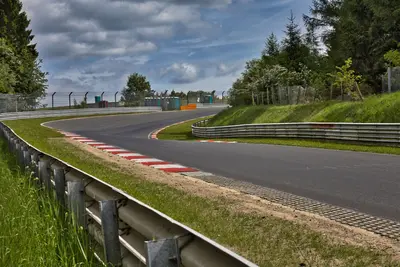
    The Nürburgring, near Nürburg in the Ahrweiler district, was inaugurated on June 18, 1927, and is named after the Nürburg castle ruins. Today, it's famous for the 20.8-kilometer Nordschleife (North Loop), which racing driver Jackie Stewart dubbed the 'Green Hell' due to its hilly, forest-lined course. The 24-hour race starts here every year.Since its opening, you can drive the Nordschleife with your own road-legal car during tourist drives for a fee. According to Autozeitung, the 2026 season runs from March 7 to November 15, usually from 5:30 PM to 7:30 PM on weekdays and from 8 AM to 7 PM on event-free weekends. A lap costs 30 Euros from Monday to Thursday, and 35 Euros from Friday to Sunday and on public holidays (as of March 2026). Motorcycles have no longer been permitted since 2025. Times vary depending on the schedule, so check the official opening hours beforehand.