Fernweh: Home
ExploreGuideDestinationsMy tripsMy trip
de|en
All Places & RegionsRound tripsNight trains in EuropeAll highlightsAbout FernwehFAQPrivacy PolicyImprint
Download on the App StoreGet it on Google Play
ExploreGuideDestinationsMy tripsMy trip
    • Places & highlights
    • Tours
    • Eat & drink
    • Culture
    • Getting around
    • Accommodation
    • Nearby
    Aukštaitija National Park

    Scotch Mist / Wikimedia Commons / CC BY-SA 4.0, mod.

    Lithuania

    Aukštaitija National Park

    Point of Interest

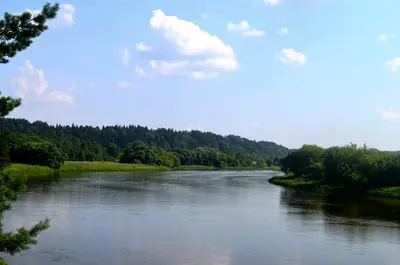
    The Aukštaitija National Park, in Lithuania's lake-rich northeast, is the country's oldest protected area, founded in 1974.

    by Felix Gillen

    1. Home
    2. Destinations
    3. Lithuania
    4. East Lithuania
    5. Aukštaitija National Park
    The Aukštaitija National Park, in Lithuania's lake-rich northeast, is the country's oldest protected area, founded in 1974. Spanning over 41,000 hectares, pine forests alternate with 127 lakes, many of them interconnected by streams and narrow passages, ideal for paddling, swimming, and cycling.Between the lakes lie old wooden villages, a wooden church from 1757, a 19th-century watermill, and Ladakalnis, from whose peak you can see six lakes at once. In summer, many city dwellers come here for hiking, paddling, and berry picking; starting points are Ignalina and the village of Palūšė.
    Lithuania travel guideRound trips in LithuaniaPlan a trip with Aukštaitija National Park

    Contents

    • Places & highlights
    • Tours
    • Eat & drink
    • Culture
    • Getting around
    • Accommodation
    • Nearby

    Sights in Aukštaitija National Park

    Discover the most important sights and attractions

    1Museum of old Beekeeping Stripeikiai

    In the forest village of Stripeikiai, which appeared in 14th-century chronicles and where honey and wax have always been collected, Bronislovas Kazlas founded the Museum of Ancient Beekeeping in 1984. Lonely Planet considers it one of the highlights of the ethnographic heritage in the park. At the end of the honey season, a traditional festival is celebrated here. A nice stop on a tour through the park.
    Open in Google Maps
    Ladakalnis

    “LinkmenasLake002” by Hugo.arg / Wikimedia Commons / CC BY-SA 3.0, mod.

    2Ladakalnis

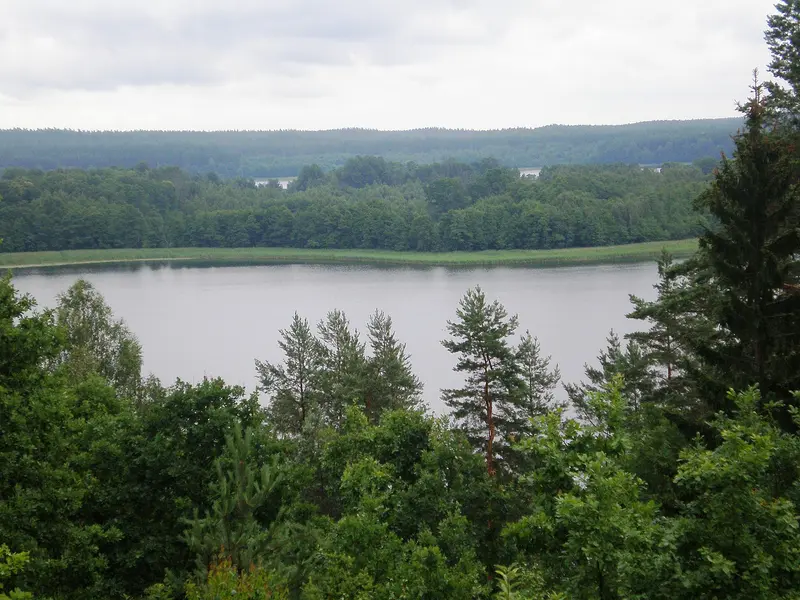
    The park's most famous viewpoint: From the 176 m high hill on the Šiliniškės Ridge, you look out onto six lakes simultaneously. According to legend, sacrifices were offered here to the Baltic goddess Lada; today, the hill is protected as a geomorphological natural monument. Right next to it, the Ginučiai Castle Mound offers another panoramic view.
    Open in Google Maps
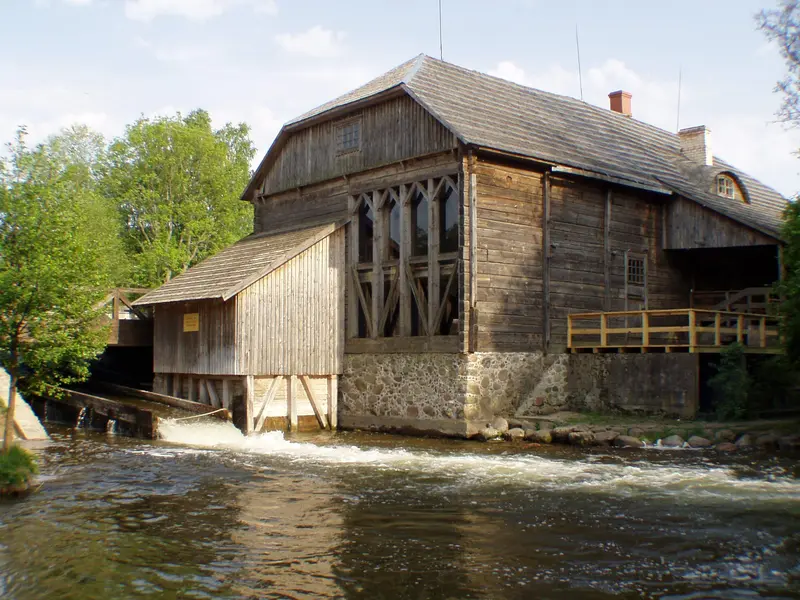
    Ginučiai Watermill

    “Ginuciu vandens malunas (Watermill, Ginuciai)” by Dan / Wikimedia Commons / CC BY-SA 2.0, mod.

    3Ginučiai Watermill

    The two-story 19th-century mill with a stone base and wooden siding is protected as a technical monument. The north part houses an exhibition; in the south, you can even stay overnight. It's also where the National Park's 14 km marked circular hiking trail begins.
    Open in Google Maps

    4Wooden Church St. Joseph in Palūšė

    The wooden church with a separate bell tower was built in 1757 and restored in 1996; the ensemble is a listed building and adorns the national park's emblem. It is located in the village of Palūšė by Lake Lūšiai, home to the park's visitor center. A good starting or ending point for cycling and paddling tours.
    Open in Google Maps

    Tours & experiences in Aukštaitija National Park

    Search tours for Aukštaitija National Park on GetYourGuide* (Affiliate link)On GetYourGuide, with reviews from other travellers

    * Affiliate link: if you book through it, we earn a small commission. The price stays the same for you.

    Restaurants in Aukštaitija National Park

    Nature and Culture

    About two-thirds of the park is forest, mainly pines, alongside bogs and glacially formed ridge chains with long, deep ribbon lakes. The park also contains castle mounds and burial mounds from the 9th to 12th centuries, as well as linear villages like Salos, Strazdai, and Šuminai, which have retained their traditional layout.The symbol of the park is the wooden St. Joseph's Church of Palūšė; it also adorns its emblem. Traditionally, the end of the honey season is celebrated at the Stripeikiai Beekeeping Museum.

    Out in the Park

    You're most flexible by car; the park administration suggests several circular routes starting from the Palūšė Visitor Centre. According to Lonely Planet, Ignalina has the widest selection of accommodations and restaurants, while Palūšė is the hub for water sports.Marked routes include a 14 km circular hiking trail from Ginūčiai Water Mill, a 25 km cycling loop, and a 30 km paddling route, both of which start in Palūšė. Since 1 January 2026, Ignalina municipality has charged a local fee of 2 euros per person per night.

    Accommodations in Aukštaitija National Park

    Find perfect stay in Aukštaitija National Park

    Booking.com* (Affiliate link)
    Search Hotels
    Agoda* (Affiliate link)
    Search Hotels
    Airbnb
    Vacation Rentals

    * Affiliate link: if you book through it, we earn a small commission. The price stays the same for you.

    Campgrounds in Aukštaitija National Park

    Find perfect campground in Aukštaitija National Park

    Search via Google Maps
    Campgrounds nearby (15km)
    Camping.info
    Find Campgrounds
    Park4Night
    RV Parks & Camping

    Nearby

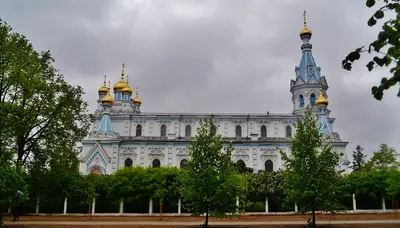
    Daugavpils

    Daugavpils

    Daugavpils, Latvia's second-largest city and Latgale's center, lies approx. 230 km southeast of Riga on the Daugava's banks. It features Eastern Europe's only nearly unaltered early 19th-century fortress, its arsenal housing the Rothko Museum with original paintings by Daugavpils-born Mark Rothko. Other highlights include the Church Hill with four denominations' places of worship and a tram on Russian broad gauge.

    Zairon·CC BY-SA 4.0

    East Lithuania

    East Lithuania

    Eastern Lithuania features the capital Vilnius, with its Baroque UNESCO Old Town, and Trakai, about 28 km west, with its island castle on Lake Galvė. Further northeast lie lakes and forests, such as Aukštaitija National Park, Lithuania's oldest protected area.

    Pofka·CC BY-SA 4.0

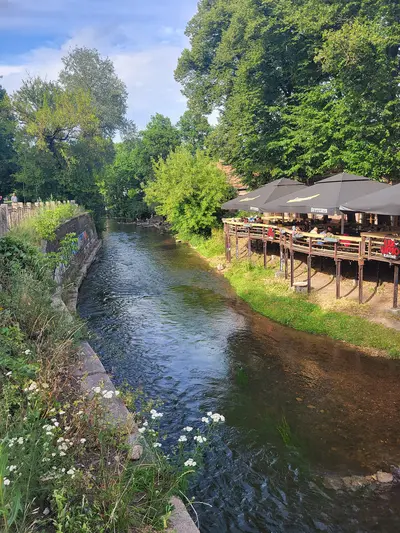
    Užupis

    Užupis

    Vilnius' smallest quarter, beyond the Vilnelė river, next to the Old Town, playfully declared independence on April 1, 1997. Galleries, studios, street art, and cafés define the quarter. It decayed in the Soviet era, becoming an artists' colony in the 1990s.

    Renata3·CC BY-SA 4.0

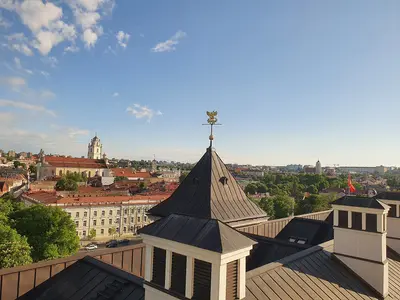
    Vilnius

    Vilnius

    The Lithuanian capital boasts one of Europe's great Baroque old towns: church spires, courtyards, and cobblestone alleys between Cathedral Square and Gate of Dawn, a UNESCO World Heritage site since 1994. Additionally, there's the Užupis Artists' Quarter, impressive museums on recent history, and a lively restaurant scene, which the Guide Michelin has been reviewing since 2024.

    Pofka·CC BY-SA 4.0

    Kernavė

    Kernavė

    The small village, located around 35 km from Vilnius on the right bank of the Neris, was one of the first centers of the Lithuanian state in the 13th century. Five hillforts above the legendary Pajauta Valley and traces of some 10,000 years of settlement have made the Archaeological Site of Kernavė a UNESCO World Heritage site since 2004.

    Hugo.arg·public domain

    Your next steps

    Aukštaitija National Park is in Lithuania. Ways to carry on from here.

    • More in Lithuania

      Highlights, areas, routes and the best time to travel for all of Lithuania.

      Lithuania travel guide
    • Round trips in Lithuania

      Ready-made routes through Lithuania, with stops, nights and a map.

      See the routes
    • Plan a trip with Aukštaitija National Park

      The Guide asks about season, length and who is coming, and suggests a trip with Aukštaitija National Park.

      Plan the trip

    Sources & method

    • Photos: Wikimedia Commons. Each photo carries its credit.
    • The content is based on web research from public, traceable sources. How the content is made · The role of AI