Fernweh: Home
ExploreGuideDestinationsMy tripsMy trip
de|en
All Places & RegionsRound tripsNight trains in EuropeAll highlightsAbout FernwehFAQPrivacy PolicyImprint
Download on the App StoreGet it on Google Play
ExploreGuideDestinationsMy tripsMy trip
    • Places & highlights
    • Tours
    • Eat & drink
    • Culture
    • Getting around
    • Accommodation
    • Round trips
    • Nearby
    Kernavė

    Hugo.arg / Wikimedia Commons / public domain

    Lithuania

    Kernavė

    Point of Interest

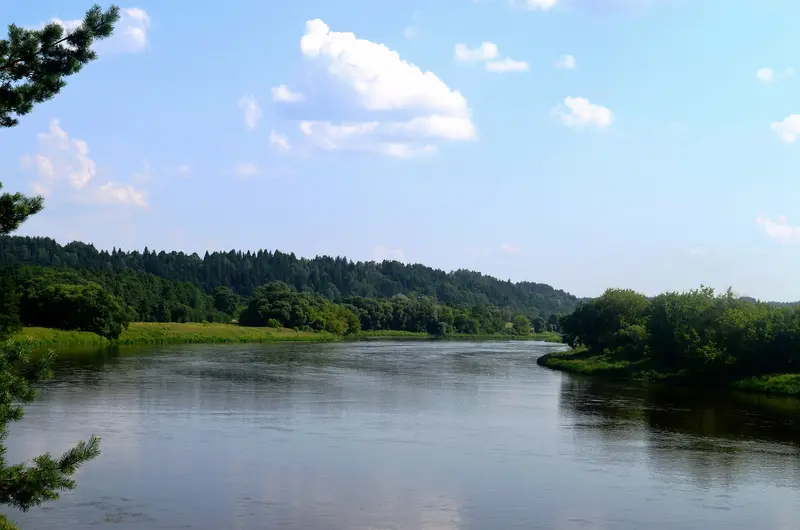
    The small village, located around 35 km from Vilnius on the right bank of the Neris, was one of the first centers of the Lithuanian state in the 13th century.

    by Felix Gillen

    1. Home
    2. Destinations
    3. Lithuania
    4. East Lithuania
    5. Kernavė
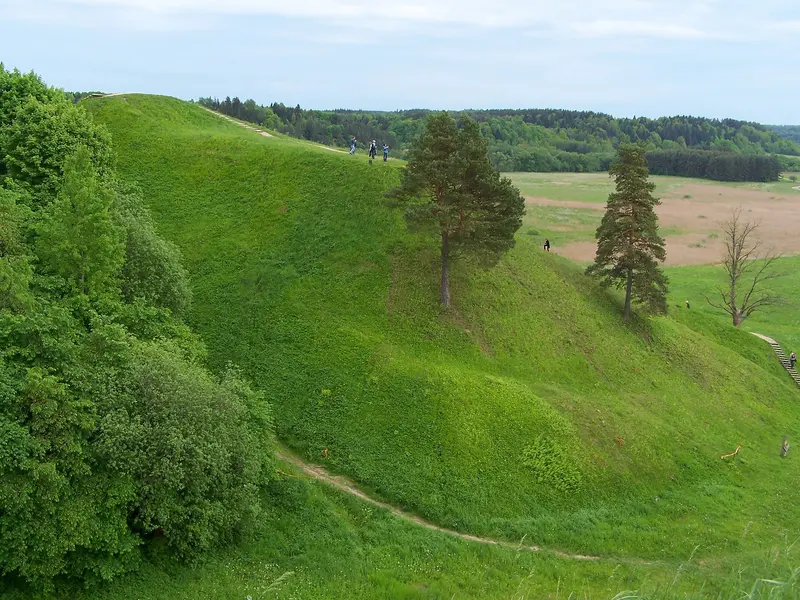
    The small village, located around 35 km from Vilnius on the right bank of the Neris, was one of the first centers of the Lithuanian state in the 13th century. Five hillforts above the legendary Pajauta Valley and traces of some 10,000 years of settlement have made the Archaeological Site of Kernavė a UNESCO World Heritage site since 2004.
    Lithuania travel guideSee the round tripPlan a trip with Kernavė

    Contents

    • Places & highlights
    • Tours
    • Eat & drink
    • Culture
    • Getting around
    • Accommodation
    • Round trips
    • Nearby

    Sights in Kernavė

    Discover the most important sights and attractions

    Castle Hill of Kernavė

    “Kernavė - Hill forts 02” by Lestat (Jan Mehlich) / Wikimedia Commons / CC BY-SA 3.0, mod.

    1Castle Hill of Kernavė

    Five large hillforts above Neris' Pajauta Valley were part of a mighty defense system around the medieval town of Kernavė, a key 13th-century center destroyed by the Teutonic Order in the late 14th century. From the hills, including Aukuro kalnas, you can gaze far across the river valley. For a tour of the site, with its hillforts, burial grounds, and settlement traces, you should plan several hours; sturdy footwear is advisable.
    Open in Google Maps
    Archaeological Museum Kernavė

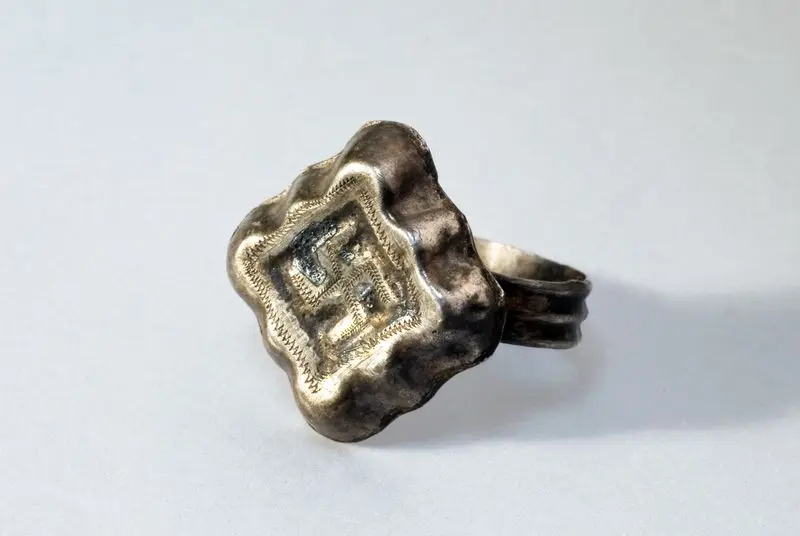
    A 13th-14th century unknown Lithuanian from the Grand Duchy of Lithuania (ring), Administration of the State Cultural Reserve of Kernavė / Wikimedia Commons / CC BY-SA 4.0, mod.

    Museum

    2Archaeological Museum Kernavė

    The Cultural Reserve Museum exclusively displays finds from excavations in Kernavė and its surroundings, totaling approximately 16,000 objects from all epochs of Lithuanian prehistory. Interactive screens trace the valley's transformation from the Ice Age and first hunters to the medieval town. It's an ideal starting point for your visit and a great option on rainy days.
    Open in Google Maps

    3Reconstructed artisan yards in the Pajauta Valley

    At the foot of the castle hills, the cultural reserve in 2016 scientifically reconstructed three courtyards of the medieval town from the 13th and 14th centuries, based on excavation findings of a blacksmith, a jeweler, and a bone carver. Residential buildings, workshops, and plank fences were constructed without nails from softwood, just as the excavations revealed. You can visit the courtyards during the museum's opening hours, which also displays the authentic artifacts.
    Open in Google Maps
    Scapular Church and Chapels of Kernavė

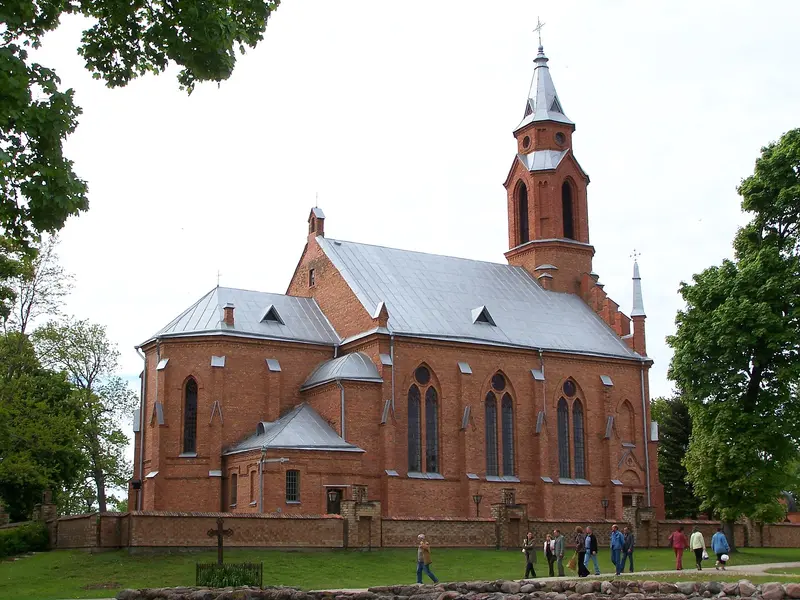
    “Kernavė - Church 01” by Lestat (Jan Mehlich) / Wikimedia Commons / CC BY-SA 3.0, mod.

    4Scapular Church and Chapels of Kernavė

    The Neo-Gothic Church of Our Lady of the Scapular was built around 1920 on the edge of the hill terrace; in front of it stands a granite sculpture of Moses by Antanas Kmieliauskas, dating from 2000. The interior includes 19th-century paintings and a Baroque brass bell, cast in Vilnius in 1667. Immediately next to it stand an octagonal wooden chapel from the late 18th century or 1822, today a small museum of ecclesiastical relics, and the Classical mausoleum chapel of the Römer family from 1856.
    Open in Google Maps

    Tours & experiences in Kernavė

    Search tours for Kernavė on GetYourGuide* (Affiliate link)On GetYourGuide, with reviews from other travellers

    * Affiliate link: if you book through it, we earn a small commission. The price stays the same for you.

    Restaurants in Kernavė

    Cradle of Lithuanian State

    Ten Millennia of SettlementIn the Neris valley near Kernavė, people lived since the 9th or 8th millennium BC; findings range from the late Stone Age to the Middle Ages. In the 13th century, Kernavė was a significant town and one of the first centers of the Lithuanian state, protected by five hillforts. At the end of the 14th century, the Teutonic Order destroyed the town, but the area has remained settled to this day.Cultural Reserve and World Heritage SiteIn 1989, the area was protected as an archaeological-historical museum reserve; today, the cultural reserve covers around 194 ha with 18 protected monuments. Since 2004, the Kernavė Archaeological Site has been a UNESCO World Heritage Site. Only a small part of the area has been explored so far, and excavations are ongoing.Living ArchaeologyThe reserve focuses on "living archaeology": reconstructed farmsteads display crafts such as bone carving, jewelry making, and blacksmithing, all substantiated by excavations. Every July, a festival takes place where these craft techniques are demonstrated.

    Arrival and Visit

    Getting ThereKernavė is located about 35 km from Vilnius on the right bank of the Neris; the easiest way to reach the site is by car as a day trip from Vilnius or on your way to Kaunas.On SiteBegin at the Archaeological Museum, then paths lead to the hillforts and into the Pajauta Valley.Plan several hours for the tour; the site is extensive and hilly.In July, a visit to the Festival of Living Archaeology is worthwhile.

    Accommodations in Kernavė

    Find perfect stay in Kernavė

    Booking.com* (Affiliate link)
    Search Hotels
    Agoda* (Affiliate link)
    Search Hotels
    Airbnb
    Vacation Rentals

    * Affiliate link: if you book through it, we earn a small commission. The price stays the same for you.

    Campgrounds in Kernavė

    Find perfect campground in Kernavė

    Search via Google Maps
    Campgrounds nearby (15km)
    Camping.info
    Find Campgrounds
    Park4Night
    RV Parks & Camping

    Round trips with Kernavė

    From Vilnius to the Baltic Sea: Lithuania in Ten Days

    From Vilnius to the Baltic Sea: Lithuania in Ten Days

    The route connects the capital Vilnius with Trakai Island Castle, modernist Kaunas, the Hill of Crosses, and the Baltic Sea coast with Klaipėda and the Curonian Spit. Most stages can be covered by train, bus, and ferry; a rental car makes the section via Šiauliai easier. At the end, take the overnight ferry from Klaipėda back to Kiel.

    11 Days
    7 stops
    Open jaw

    Pofka·CC BY-SA 4.0

    Nearby

    East Lithuania

    East Lithuania

    Eastern Lithuania features the capital Vilnius, with its Baroque UNESCO Old Town, and Trakai, about 28 km west, with its island castle on Lake Galvė. Further northeast lie lakes and forests, such as Aukštaitija National Park, Lithuania's oldest protected area.

    Pofka·CC BY-SA 4.0

    Trakai

    Trakai

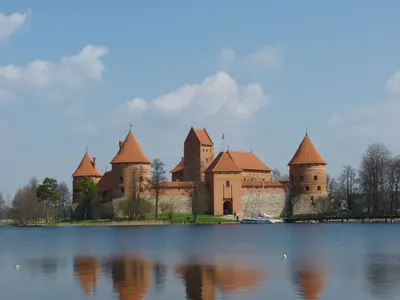
    The small town, about 28 km west of Vilnius, is nestled between several lakes and is the capital's most popular day trip destination. Its landmark is the red brick castle on an island in Lake Galvė; on Karaimų Street, colorful wooden houses and a prayer house tell of the Karaites, who have lived here since the late 14th century.

    Suphot Punnachaiya·Pexels

    Vilnius

    Vilnius

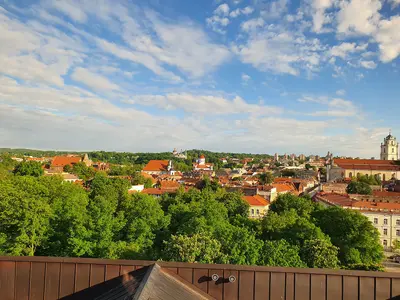
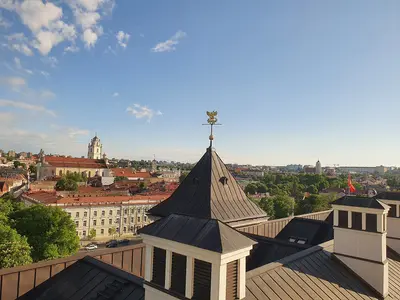
    The Lithuanian capital boasts one of Europe's great Baroque old towns: church spires, courtyards, and cobblestone alleys between Cathedral Square and Gate of Dawn, a UNESCO World Heritage site since 1994. Additionally, there's the Užupis Artists' Quarter, impressive museums on recent history, and a lively restaurant scene, which the Guide Michelin has been reviewing since 2024.

    Pofka·CC BY-SA 4.0

    Užupis

    Užupis

    Vilnius' smallest quarter, beyond the Vilnelė river, next to the Old Town, playfully declared independence on April 1, 1997. Galleries, studios, street art, and cafés define the quarter. It decayed in the Soviet era, becoming an artists' colony in the 1990s.

    Renata3·CC BY-SA 4.0

    Mid-Lithuania

    Mid-Lithuania

    Central Lithuania is the land along the Memel (Nemunas) river around Kaunas, the country's second-largest city. Kaunas, interwar provisional capital, has its modernist architecture on the UNESCO World Heritage List since 2023.

    Ed Wingate·Unsplash

    Your next steps

    Kernavė is in Lithuania. Ways to carry on from here.

    • More in Lithuania

      Highlights, areas, routes and the best time to travel for all of Lithuania.

      Lithuania travel guide
    • Round trips with Kernavė

      One route passes through Kernavė, with stops, nights and a map.

      See the round trip
    • Plan a trip with Kernavė

      The Guide asks about season, length and who is coming, and suggests a trip with Kernavė.

      Plan the trip

    Sources & method

    • Photos: Wikimedia Commons. Each photo carries its credit.
    • Place data such as addresses and ratings comes from Google Maps.
    • The content is based on web research from public, traceable sources. How the content is made · The role of AI