Pofka / Wikimedia Commons / CC BY-SA 4.0, mod.
Round trip · Lithuania
From Vilnius to the Baltic Sea: Lithuania in Ten Days
by Felix Gillen
- 11 Days / 10 Nights
- Vilnius → Nida
The route connects the capital Vilnius with Trakai Island Castle, modernist Kaunas, the Hill of Crosses, and the Baltic Sea coast with Klaipėda and the Curonian Spit. Most stages can be covered by train, bus, and ferry; a rental car makes the section via Šiauliai easier. At the end, take the overnight ferry from Klaipėda back to Kiel.
At a glance
- Duration
- 11 Days / 10 Nights
- Stops
- 7 · Vilnius → Nida
- Arrival
- Flight · Vilnius (VNO)
- Departure
- Ferry · Klaipėda, DFDS-Terminal (Fähre nach Kiel)
- Best Time to Go
- May to September
7 stops
Why This Route?
It covers in ten days three UNESCO World Heritage sites, Vilnius Old Town, Modernist Kaunas, and the Curonian Spit, plus Trakai and the Hill of Crosses, ending at the ferry port with a direct connection to Germany.
Hidden Gems
- Paneriai Memorial, Vilnius
- Old Karaite Cemetery, Trakai
- Krapfen at Spurginė, Kaunas
- Gardumėlis Bakery, Nida
Getting there and back
Open jaw: start and end are in different places
- Arrival
- Flight · Vilnius (VNO)From Vilnius Airport, a train travels in about 7 minutes to the main station on the edge of the Old Town.
- Departure
- Ferry · Klaipėda, DFDS-Terminal (Fähre nach Kiel)DFDS sails six times a week in the evenings from Klaipėda to Kiel. The terminal is located approximately 5 km south of Klaipėda train station (City bus 9). Alternatively, a return flight from Palanga or a return train journey to Vilnius (a good 4 hours).
Itinerary
Vilnius
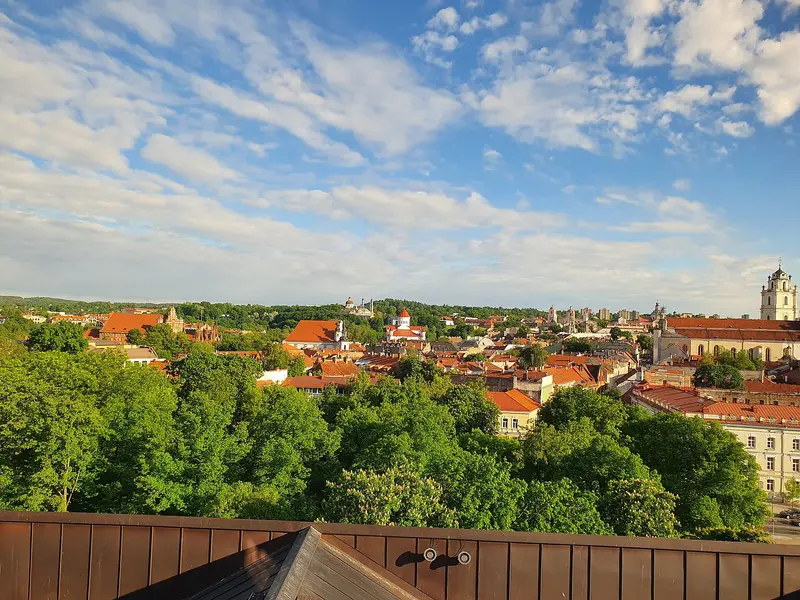
The Lithuanian capital boasts one of Europe's great Baroque old towns: church spires, courtyards, and cobblestone alleys between Cathedral Square and Gate of Dawn, a UNESCO World Heritage site since 1994. Additionally, there's the Užupis Artists' Quarter, impressive museums on recent history, and a lively restaurant scene, which the Guide Michelin has been reviewing since 2024.
Old Town, Užupis and museums; a day trip to Trakai (bus or train, depending on connections, approx. 30-40 minutes each way).
11 Sights
4 Restaurants
Culture and History
Capital of the Grand DuchyFrom the 13th to the end of the 18th century, Vilnius was the political center of the Grand Duchy of Lithuania. Its Old Town, with its radial street network around Castle Hill, has been a UNESCO World Heritage site since 1994 and combines Gothic, Renaissance, Baroque, and Classicism. Baroque is particularly prominent: churches like St. Peter and Paul, with around 2,000 stucco figures, showcase a unique, late-blooming variant of the style.The "Jerusalem of Lithuania"Before World War II, Vilnius was one of Europe's major centers of Jewish life, with approximately 100,000 Jewish inhabitants. Most were murdered during the German occupation, many in the Paneriai Forest on the city's outskirts. Preserved are the alleys around Žydų Street, the Choral Synagogue, and several buildings of the Vilna Gaon Jewish Museum, joined in 2024 by a museum dedicated to the culture and identity of Lithuanian Jews on Pylimo Street.Resistance and IndependenceLocated in the former KGB building on Gedimino Avenue, the Museum of Occupations and Freedom Fights documents occupation, deportations, and resistance. In 1989, Cathedral Square was the starting point for the Baltic Way, the human chain stretching to Tallinn. With humor, the artists' quarter of Užupis declared itself an independent republic in 1997, its constitution displayed on a wall in over 25 languages.
Trakai
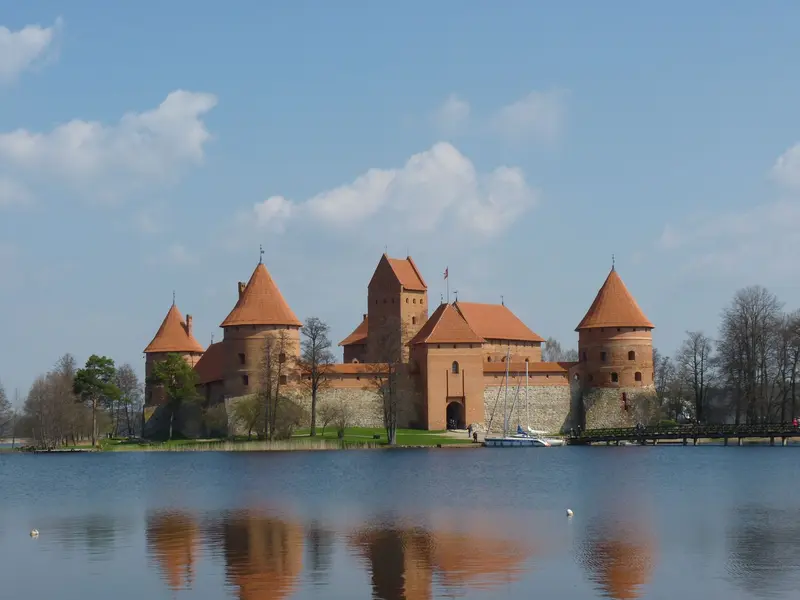
The small town, about 28 km west of Vilnius, is nestled between several lakes and is the capital's most popular day trip destination. Its landmark is the red brick castle on an island in Lake Galvė; on Karaimų Street, colorful wooden houses and a prayer house tell of the Karaites, who have lived here since the late 14th century.
Day trip from Vilnius: Island Castle, Karaite Street, Kibinai for lunch.
7 Sights
2 Restaurants
Castles and Karaim
Old Residence of the Grand DukesTrakai was briefly the seat of the Lithuanian Grand Dukes and remained an important voivodeship capital from the 14th to the 18th century. Grand Duke Kęstutis began construction of the island castle in the late 14th century; his son Vytautas completed it around 1409 and died here in 1430. After Russian rule began in 1795, Trakai became a provincial town.The KaraitesIn 1397, Vytautas brought several hundred Karaite families from Crimea to Trakai to defend the castles; they received the land between the two castles. The Karaites follow a religion based on the Hebrew Bible, but they are not Jews, and they speak a Turkic language that is endangered today. Fewer than 200 of them live in Lithuania, yet Trakai, with its Kenesa, cemetery, and the wooden houses of Karaimų Street, remains their center to this day. In 2022, Lithuania officially marked the 'Year of the Karaites'.Life by the LakeThe city stretches long and narrow between several lakes. In summer, many people come from Vilnius for swimming, sailing, and boating; from the water, you can see the island castle from all sides.
Kernavė
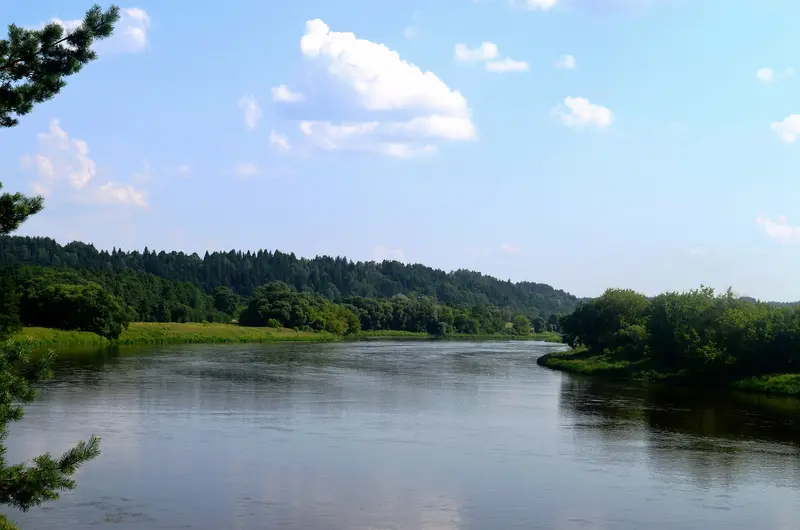
The small village, located around 35 km from Vilnius on the right bank of the Neris, was one of the first centers of the Lithuanian state in the 13th century. Five hillforts above the legendary Pajauta Valley and traces of some 10,000 years of settlement have made the Archaeological Site of Kernavė a UNESCO World Heritage site since 2004.
Optional car detour, approx. 35 km from Vilnius: UNESCO castle mound and Archaeological Museum.
4 Sights
Cradle of Lithuanian State
Ten Millennia of SettlementIn the Neris valley near Kernavė, people lived since the 9th or 8th millennium BC; findings range from the late Stone Age to the Middle Ages. In the 13th century, Kernavė was a significant town and one of the first centers of the Lithuanian state, protected by five hillforts. At the end of the 14th century, the Teutonic Order destroyed the town, but the area has remained settled to this day.Cultural Reserve and World Heritage SiteIn 1989, the area was protected as an archaeological-historical museum reserve; today, the cultural reserve covers around 194 ha with 18 protected monuments. Since 2004, the Kernavė Archaeological Site has been a UNESCO World Heritage Site. Only a small part of the area has been explored so far, and excavations are ongoing.Living ArchaeologyThe reserve focuses on "living archaeology": reconstructed farmsteads display crafts such as bone carving, jewelry making, and blacksmithing, all substantiated by excavations. Every July, a festival takes place where these craft techniques are demonstrated.
Kaunas
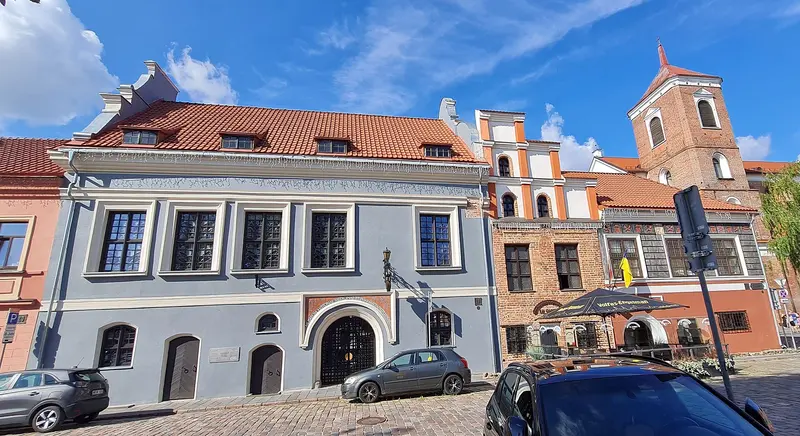
Lithuania's second-largest city lies about 100 km west of Vilnius at the confluence of the Neman (Nemunas) and Neris. The medieval Old Town with its castle and Town Hall Square is followed by the interwar New Town, when Kaunas was provisional capital; its modernist architecture is UNESCO World Heritage since 2023.
From Vilnius by LTG Link express train in 59 minutes. Old Town, Modernist New Town, Pažaislis Monastery.
10 Sights
3 Restaurants
Architecture of Optimism
Provisional CapitalAs Vilnius belonged to Poland during the interwar period, Kaunas became Lithuania's provisional capital. The young state rapidly developed all its infrastructure, leading to a building boom. Over 6,000 buildings from this era are preserved, including the Church of the Resurrection of Christ, the Central Post Office, and the Bank of Lithuania.UNESCO World Heritage since 2023In 2023, UNESCO added "Modern Kaunas: Architecture of Optimism, 1919-1939" to its World Heritage List. Architects combined national traditions with foreign influences to create a unique school of modernism. The Art Deco Museum and the Amsterdam School Museum showcase how people lived at the time, in authentically furnished apartments.Art and Street ArtKaunas boasts a vibrant street art scene along a Street Art Route, such as the Yard Gallery, an open-air gallery located in a residential courtyard, or with a four-story mural for the Kaunas-born Fluxus artist Jurgis Mačiūnas on a former shoe factory in the Old Town.
Hill of Crosses
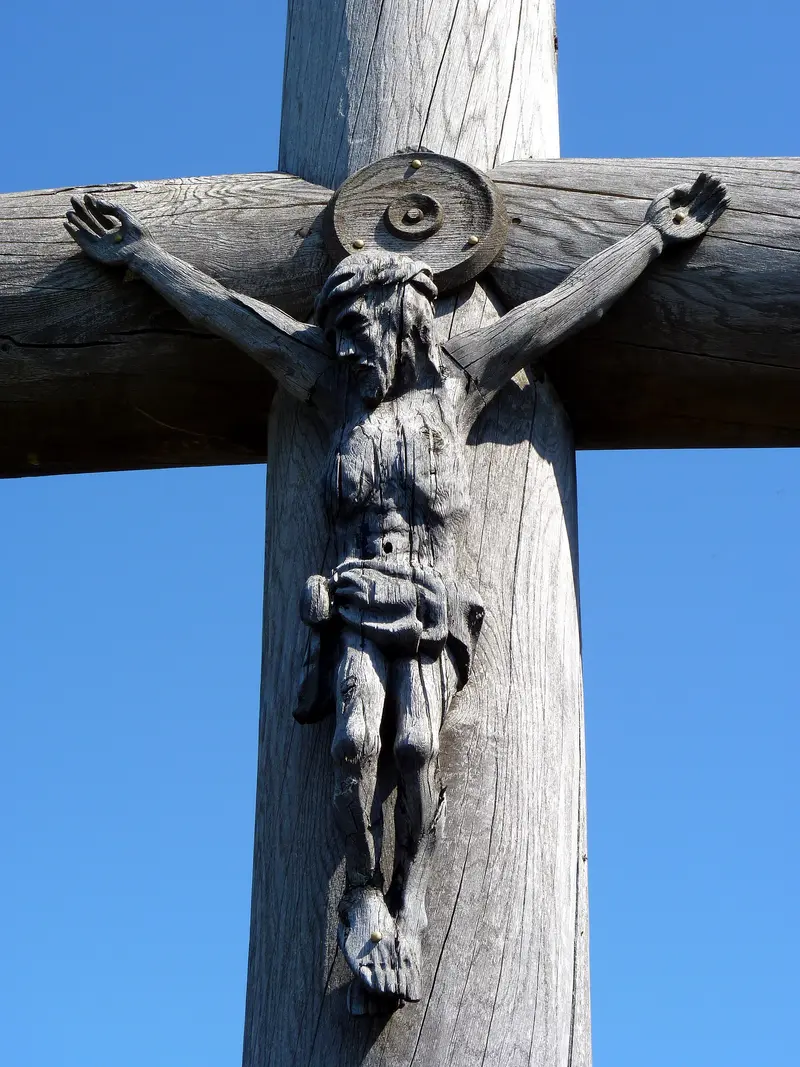
In northern Lithuania, thousands of crosses of all sizes and styles cover a small hill, along with rosaries, carved wooden crosses, and figures of the caring Christ. During the Soviet era, when the erection of crosses was forbidden, the pilgrimage site, approximately 12 km north of Šiauliai, became a symbol of hope and resistance.
Overnight stay in Šiauliai; the Hill of Crosses is about 10 km north (A12 towards Riga, then 2 km). Train from Vilnius to Šiauliai takes approx. 2.5 hours. For the legs from Kaunas to Šiauliai and Šiauliai to Klaipėda, there are train and bus connections; please check current timetables with LTG Link or at the bus station. By car, this section is the most flexible.
1 Sight
A hill full of crosses
HistoryIt is not precisely documented when the first crosses were erected on the former castle hill. During the Soviet era, it was forbidden and could lead to arrest, yet new crosses continued to appear; thus, the hill became a symbol of hope and resistance. Today, believers come from all over Lithuania and abroad.What You SeeAmong thousands of iron and wooden crosses hang rosaries; beside them stand carved Lithuanian chapel-posts (koplytstulpis) and figures of the sorrowful Christ (Rūpintojėlis). Those who look closely will discover a memorial for the victims of 9/11, tributes to COVID-19 victims, and blue-and-yellow ribbons for the civilian victims of Russia's war against Ukraine.
Klaipėda
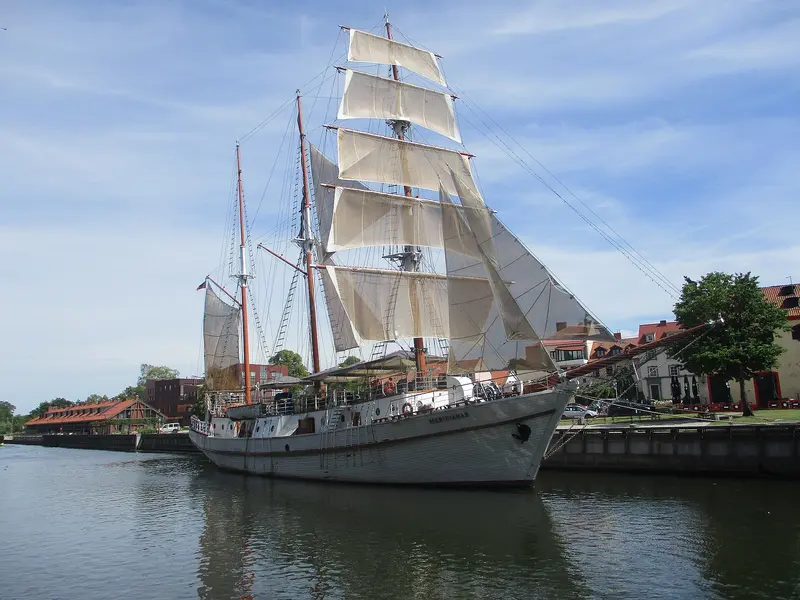
Lithuania's third-largest city and most important port, formerly Memel, lies at the mouth of the Danė into the Curonian Lagoon. The small old town with Theater Square and the Ännchen von Tharau Fountain, the promenade along the Danė with the sailing ship Meridianas, and many sculptures characterize the center; from here, ferries depart for the Curonian Spit and Kiel.
Old Town, Danė Promenade, Sea Museum in Smiltynė.
7 Sights
3 Restaurants
Memel and Klaipėda
A City with Two NamesIn the 1250s, the Teutonic Order founded a castle at the mouth of the Dane River, around which the city grew. Long known as Memel, it was German-influenced. In 1923, the Klaipėda Region (Memelland) was united with Lithuania, commemorated by a gate-like monument in the New Town. In 1939, German troops marched in. War damage and Soviet demolition, including all major Old Town churches, have left their mark.Theatre, Song and SculpturesRichard Wagner performed at Theatre Square in 1836; the figure of Ännchen von Tharau commemorates Simon Dach's song. Small sculptures are hidden throughout the city, such as a golden wish mouse or a black phantom.Port CityKlaipėda boasts one of the most important ports on the eastern Baltic Sea, remaining largely ice-free even in winter. In July, the city celebrates the Sea Festival with ship parades and waterside programs.
Nida
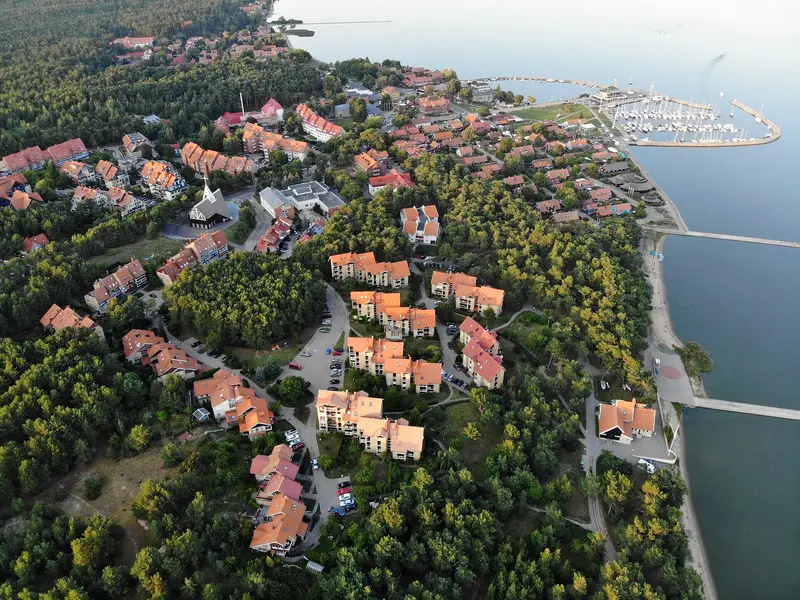
The former fishing village of Nida (German: Nidden) is the main settlement on the Curonian Spit, located just a few kilometers from the border with the Russian exclave of Kaliningrad. Above the village rises the Parnidis Dune, colorful wooden houses line the lagoon shore, and on Mother-in-law's Hill, Thomas Mann had his summer house built in 1930.
Klaipėda-Smiltynė ferry, then one-hour bus to Nida. Parnidis Dune, Thomas Mann House, cycling to Juodkrantė's Hill of Witches. Return to Klaipėda the same way.
7 Sights
4 Restaurants
Fishing village and summer retreat
From fishing village to resortNida was a fishing village, as the wooden houses along the lagoon and the Ethnographic Fisherman's Homestead show. In winter fishermen walked across the frozen lagoon in special shoes to fish through the ice, and they sailed flat-bottomed Kurenkahn boats. Smokehouses in the village still smoke fresh fish today.Painters and Thomas MannFrom the late 19th and early 20th century painters came to Nida, among them Max Pechstein; the view from Mother-in-Law's Hill over the lagoon and fishermen's cottages became known as the "Italian view". Thomas Mann visited in 1929, moved into his summer house a year later and spent three summers here until 1932. Today it is a museum that hosts the annual international Thomas Mann Festival.AmberWith some luck you may find small pieces of amber on the beach. The Mizgiris Amber Gallery shows how varied "Baltic gold" is, with inclusions and the largest piece of amber in Lithuania.
Plan this route as your trip
All stops, trains and nights go into your trip planner. You adjust dates and places to stay afterwards.
This route is a suggestion from our research. Please check timetables, times in port, opening hours and prices before you book – what your tour operator or carrier says is what counts.
Fernweh is a free travel guide and trip planner: routes researched by people, taken over in one click, used day by day on the road. More about Fernweh
7 stops
Route Summary
Duration11 Days
Stops7 Places
TypeMixed