Fernweh: Home
ExploreGuideDestinationsMy tripsMy trip
de|en
All Places & RegionsRound tripsNight trains in EuropeAll highlightsAbout FernwehFAQPrivacy PolicyImprint
Download on the App StoreGet it on Google Play
ExploreGuideDestinationsMy tripsMy trip
    • Neighborhoods & highlights
    • Recommendations
    • Tours
    • Eat & drink
    • Culture
    • Getting around
    • Accommodation
    • Plan trip
    • Round trips
    • Nearby
    Trakai

    Photo by Suphot Punnachaiya on Pexels

    Lithuania

    Trakai

    City

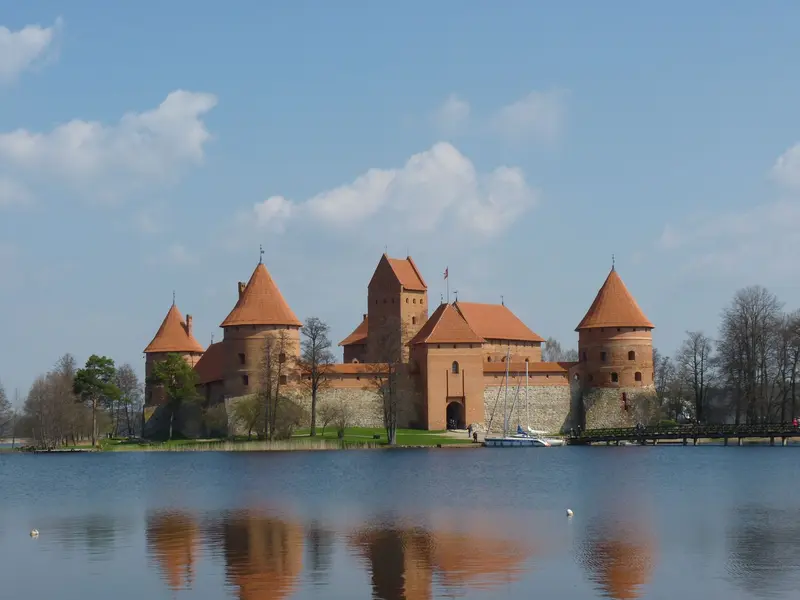
    The small town, about 28 km west of Vilnius, is nestled between several lakes and is the capital's most popular day trip destination.

    by Felix Gillen

    1. Home
    2. Destinations
    3. Lithuania
    4. East Lithuania
    5. Trakai
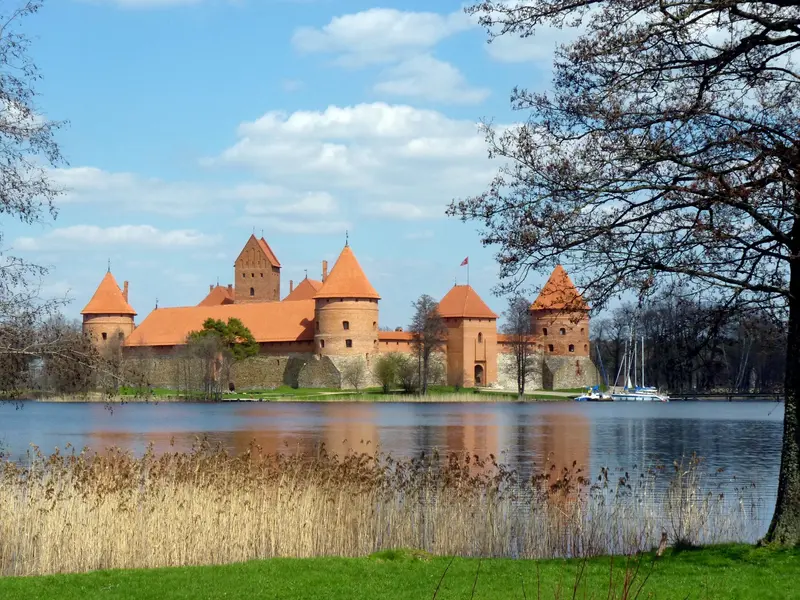
    The small town, about 28 km west of Vilnius, is nestled between several lakes and is the capital's most popular day trip destination. Its landmark is the red brick castle on an island in Lake Galvė; on Karaimų Street, colorful wooden houses and a prayer house tell of the Karaites, who have lived here since the late 14th century.
    Lithuania travel guideSee the round tripPlan a trip with Trakai

    Contents

    • Neighborhoods & highlights
    • Recommendations
    • Tours
    • Eat & drink
    • Culture
    • Getting around
    • Accommodation
    • Round trips
    • Nearby

    Sights in Trakai

    Discover the most important sights and attractions

    Trakai Isle Castle

    Photo by Suphot Punnachaiya on Pexels

    Castle

    1Trakai Isle Castle

    The Gothic brick castle on an island in Lake Galvė is one of Lithuania's most iconic images. Construction began under Grand Duke Kęstutis in the late 14th century and was largely completed by his son Vytautas around 1409; Vytautas died here in 1430. After its decline in the 17th century, the castle was rebuilt in the 20th century. Via wooden bridges, you reach the Trakai History Museum, housed in the main building since 1962; an upstairs hall provides information about the Karaim and Tatars. Admission is charged, and it's quietest on weekday mornings before the tour buses arrive; autumn and winter, with the frozen lake, are also atmospheric.
    Open in Google Maps
    Karaimų Street and Kenesa

    “Trakai Kenesa” by Wojsyl / Wikimedia Commons / CC BY-SA 3.0, mod.

    Place of Worship

    2Karaimų Street and Kenesa

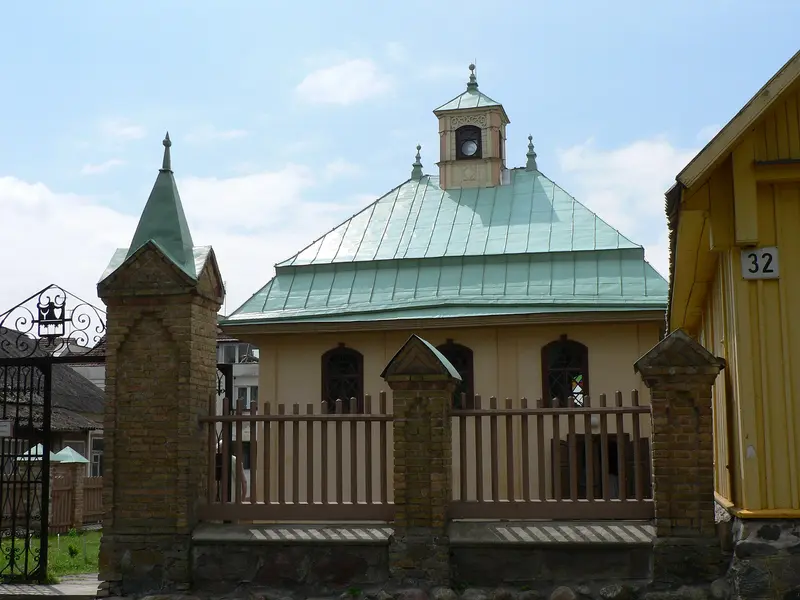
    The town's main street leads from the centre towards the Island Castle and is lined with wooden houses painted yellow, green, and ochre, many of them from the 19th century and typically featuring three windows facing the street. This is where the Karaims settled, whom Grand Duke Vytautas brought from Crimea to Trakai in 1397. Its focal point is the Kenesa, the community's prayer house from the late 19th century, with colourful windows and a pointed roof; services take place on Saturdays, and visits are not desired during these times.
    Open in Google Maps
    Peninsula Castle Trakai

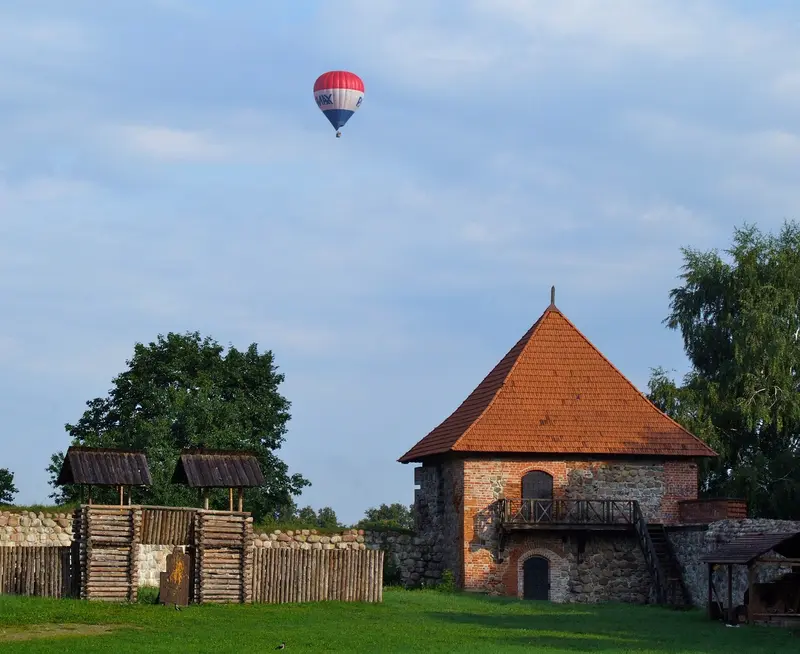
    “Trakai Peninsula Castle and balloon” by Pudelek (Marcin Szala) / Wikimedia Commons / CC BY-SA 3.0, mod.

    3Peninsula Castle Trakai

    Trakai's second castle, largely a ruin, sits on the mainland between the lakes. Its courtyard displays replicas of medieval wooden tools; medieval festivals are held here around mid-June and mid-August. A Trakai History Museum combi-ticket covers the Island and Peninsula Castles.
    Open in Google Maps
    Užutrakis Manor House

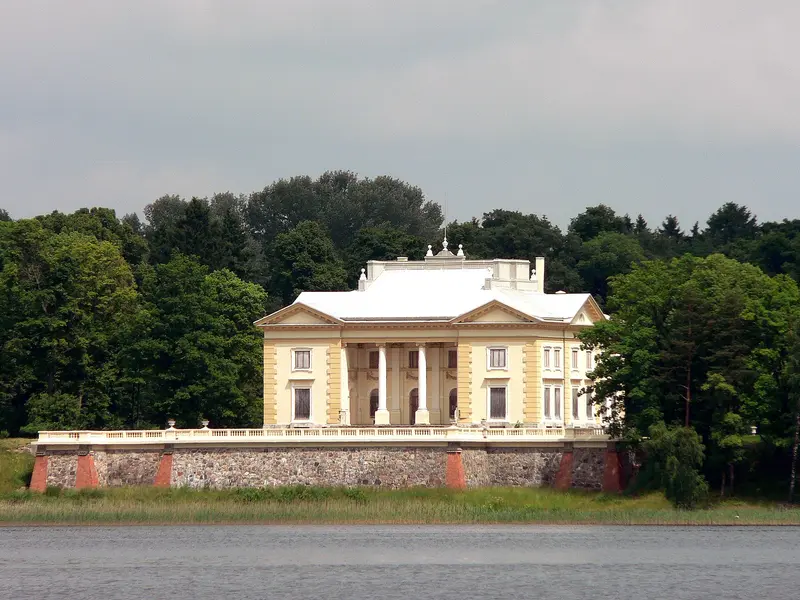
    “Trakai Tyszkiewicz palace” by Wojsyl / Wikimedia Commons / CC BY-SA 3.0, mod.

    4Užutrakis Manor House

    On the opposite shore of Lake Galvė, Count Józef Tyszkiewicz had a neoclassical palace with Louis XVI interiors built around 1900; the park, featuring copies of antique sculptures and almost 100 tree and shrub species, was designed by French landscape architect Édouard François André. From the terrace, you look across the lake to the island castle. After decades as a Soviet sanatorium and pioneer camp, the complex is being restored, and concerts and exhibitions take place in summer. There is no bridge; by car, it's about a 6 km detour.
    Open in Google Maps
    Church of the Visitation

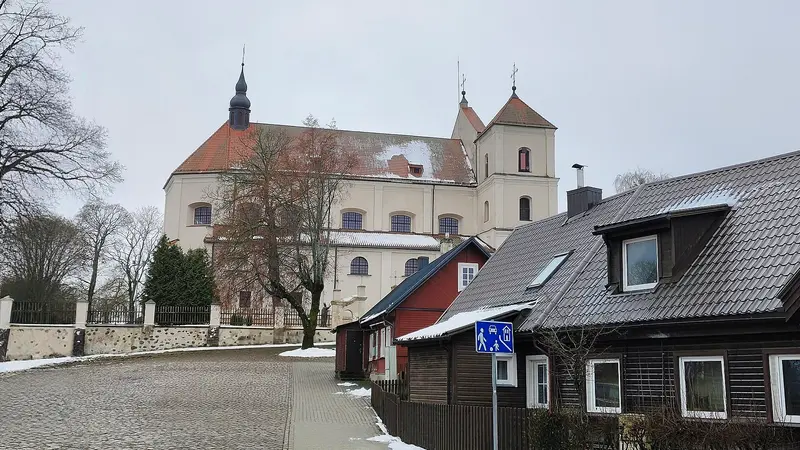
    Mojmir Churavy / Wikimedia Commons / CC0

    Church

    5Church of the Visitation

    The 15th-century parish church is among the oldest churches in Lithuania's smaller towns. Its altarpiece of the Mother of God is particularly revered, believed to be miraculous. The church is located in the town's southern part and is a convenient stop on the way from the train station to the castle.
    Open in Google Maps

    6Karaite Ethnographic Exhibition (S.-Šapšal Museum)

    The exhibition on Karaimų Street, opened in 1967, showcases the history, customs, and daily life of the Karaim people, who arrived in Lithuania from Crimea around 600 years ago, featuring weapons, crafts, clothing, household items, documents, and photos. It is based on the collection of scholar and Karaim community leader Seraja Šapšal, after whom the museum has been named since 2011. After years of restoration, it is open again according to the tourism office, Wednesdays to Sundays from 10 AM to 6 PM; great for rainy days.
    Open in Google Maps

    Tours & experiences in Trakai

    Search tours for Trakai on GetYourGuide* (Affiliate link)On GetYourGuide, with reviews from other travellers

    * Affiliate link: if you book through it, we earn a small commission. The price stays the same for you.

    Restaurants in Trakai

    1

    Kybynlar

    One of two restaurants in Trakai that, according to the Tourist Office, are run by Karaim families. The menu features the eponymous Kibinai (kybyn), crescent-shaped pastries with meat, cheese, or vegetable filling; a Krupnik, a sweet spiced liqueur, pairs perfectly. Authentically local, directly on Karaimų Street.
    Show on Google Maps
    2

    Kiubėtė

    The town's second Karaite family-run restaurant is named after the Kiubete, a large round pasty said to resemble the sun or a shield. Additionally, there are Kibinai and other Karaite specialties. Typically local.
    Show on Google Maps

    Castles and Karaim

    Old Residence of the Grand DukesTrakai was briefly the seat of the Lithuanian Grand Dukes and remained an important voivodeship capital from the 14th to the 18th century. Grand Duke Kęstutis began construction of the island castle in the late 14th century; his son Vytautas completed it around 1409 and died here in 1430. After Russian rule began in 1795, Trakai became a provincial town.The KaraitesIn 1397, Vytautas brought several hundred Karaite families from Crimea to Trakai to defend the castles; they received the land between the two castles. The Karaites follow a religion based on the Hebrew Bible, but they are not Jews, and they speak a Turkic language that is endangered today. Fewer than 200 of them live in Lithuania, yet Trakai, with its Kenesa, cemetery, and the wooden houses of Karaimų Street, remains their center to this day. In 2022, Lithuania officially marked the 'Year of the Karaites'.Life by the LakeThe city stretches long and narrow between several lakes. In summer, many people come from Vilnius for swimming, sailing, and boating; from the water, you can see the island castle from all sides.

    Travel To and Around

    From Vilnius to TrakaiBus and Train: Numerous daily buses and trains take 30 to 40 minutes, depending on the connection. Buses leave Vilnius Bus Station and stop closer to the castle than trains.Train: Trakai train station is unstaffed; purchase your return ticket from the train conductor. The island castle is approximately 3 km away, alongside the lake.Car: Approximately 20 to 30 minutes, depending on traffic. During peak season, parking in the center is difficult; locals often rent out parking spaces in their yards, or you can park on the outskirts and walk 1 to 2 km.LocallyAll attractions in town are reachable on foot. On Lake Galvė, you can rent rowboats or kayaks or take a sightseeing cruise. There is no bridge to Užutrakis Manor on the opposite shore; it's about 6 km by car.Best TimeWeekdays early morning are quietest, before the tour buses arrive. Autumn and winter are significantly less crowded; with a frozen lake, the castle appears especially impressive.

    Accommodations in Trakai

    Find perfect stay in Trakai

    Booking.com* (Affiliate link)
    Search Hotels
    Agoda* (Affiliate link)
    Search Hotels
    Airbnb
    Vacation Rentals

    * Affiliate link: if you book through it, we earn a small commission. The price stays the same for you.

    Campgrounds in Trakai

    Find perfect campground in Trakai

    Search via Google Maps
    Campgrounds nearby (15km)
    Camping.info
    Find Campgrounds
    Park4Night
    RV Parks & Camping

    Plan your trip to Trakai

    Save places, build a route and plan your city trip, all in one place.

    1. 1
      Sunrise over alpine peaks and a sea of clouds
      1234

      Round trip

      12 days · 4 stops

      Saved

      Pick a route

      Pick a ready-made one or save places and plan your own.

      Open bookmarks
    2. 2

      Trip to Trakai

      Live
      • 1Trakai Isle Castle3 days
      • 2Karaimų Street and Kenesa4 days
      • 3Peninsula Castle Trakai5 days
      Budget

      Plan your trip

      The planner sorts stops, days and budget. Plan together in real time.

      Start trip planning
    3. 3
      9:41 No signal
      Trakai
      Available offline

      Photo by Suphot Punnachaiya on Pexels

      Use it on the road

      Download the guide to your phone and use it on site, even offline.

    Round trips with Trakai

    From Vilnius to the Baltic Sea: Lithuania in Ten Days

    From Vilnius to the Baltic Sea: Lithuania in Ten Days

    The route connects the capital Vilnius with Trakai Island Castle, modernist Kaunas, the Hill of Crosses, and the Baltic Sea coast with Klaipėda and the Curonian Spit. Most stages can be covered by train, bus, and ferry; a rental car makes the section via Šiauliai easier. At the end, take the overnight ferry from Klaipėda back to Kiel.

    11 Days
    7 stops
    Open jaw

    Pofka·CC BY-SA 4.0

    Nearby

    East Lithuania

    East Lithuania

    Eastern Lithuania features the capital Vilnius, with its Baroque UNESCO Old Town, and Trakai, about 28 km west, with its island castle on Lake Galvė. Further northeast lie lakes and forests, such as Aukštaitija National Park, Lithuania's oldest protected area.

    Pofka·CC BY-SA 4.0

    Vilnius

    Vilnius

    The Lithuanian capital boasts one of Europe's great Baroque old towns: church spires, courtyards, and cobblestone alleys between Cathedral Square and Gate of Dawn, a UNESCO World Heritage site since 1994. Additionally, there's the Užupis Artists' Quarter, impressive museums on recent history, and a lively restaurant scene, which the Guide Michelin has been reviewing since 2024.

    Pofka·CC BY-SA 4.0

    Užupis

    Užupis

    Vilnius' smallest quarter, beyond the Vilnelė river, next to the Old Town, playfully declared independence on April 1, 1997. Galleries, studios, street art, and cafés define the quarter. It decayed in the Soviet era, becoming an artists' colony in the 1990s.

    Renata3·CC BY-SA 4.0

    Kernavė

    Kernavė

    The small village, located around 35 km from Vilnius on the right bank of the Neris, was one of the first centers of the Lithuanian state in the 13th century. Five hillforts above the legendary Pajauta Valley and traces of some 10,000 years of settlement have made the Archaeological Site of Kernavė a UNESCO World Heritage site since 2004.

    Hugo.arg·public domain

    Mid-Lithuania

    Mid-Lithuania

    Central Lithuania is the land along the Memel (Nemunas) river around Kaunas, the country's second-largest city. Kaunas, interwar provisional capital, has its modernist architecture on the UNESCO World Heritage List since 2023.

    Ed Wingate·Unsplash

    Your next steps

    Trakai is in Lithuania. Ways to carry on from here.

    • More in Lithuania

      Highlights, areas, routes and the best time to travel for all of Lithuania.

      Lithuania travel guide
    • Round trips with Trakai

      One route passes through Trakai, with stops, nights and a map.

      See the round trip

    Sources & method

    • Photos: Wikimedia Commons, Pexels. Each photo carries its credit.
    • Place data such as addresses and ratings comes from Google Maps.
    • The content is based on web research from public, traceable sources. How the content is made · The role of AI