Fernweh: Home
ExploreGuideDestinationsMy tripsMy trip
de|en
All Places & RegionsRound tripsNight trains in EuropeAll highlightsAbout FernwehFAQPrivacy PolicyImprint
Download on the App StoreGet it on Google Play
ExploreGuideDestinationsMy tripsMy trip
    • Places & highlights
    • Recommendations
    • Tours
    • Eat & drink
    • Culture
    • Getting around
    • Accommodation
    • Nearby
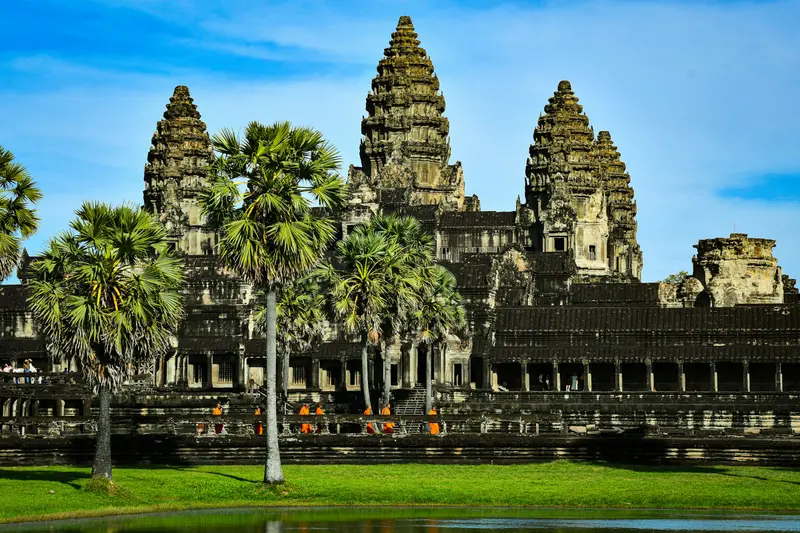
    Temple of Angkor

    Photo by Armand Mckenzie on Unsplash

    Cambodia

    Temple of Angkor

    Point of Interest

    The temples of Angkor, north of Siem Reap, are Cambodia's most important cultural heritage and have been a UNESCO World Heritage site since 1992: Within the approximately 400 km² archaeological park lie the capitals of the Khmer Empire…

    by Felix Gillen

    1. Home
    2. Destinations
    3. Cambodia
    4. Siem Reap and Angkor
    5. Temple of Angkor
    The temples of Angkor, north of Siem Reap, are Cambodia's most important cultural heritage and have been a UNESCO World Heritage site since 1992: Within the approximately 400 km² archaeological park lie the capitals of the Khmer Empire from the 9th to 15th centuries, including Angkor Wat, the walled royal city of Angkor Thom with the Bayon, and the tree-entwined Ta Prohm.For a first impression, one day on the Small Circuit is sufficient, but Lonely Planet author Nick Ray and Rough Guides recommend at least three days. Entry is only possible with the Angkor Pass (1, 3 or 7 days).
    Cambodia travel guideRound trips in CambodiaPlan a trip with Temple of Angkor

    Contents

    • Places & highlights
    • Recommendations
    • Tours
    • Eat & drink
    • Culture
    • Getting around
    • Accommodation
    • Nearby

    Sights in Temple of Angkor

    Discover the most important sights and attractions

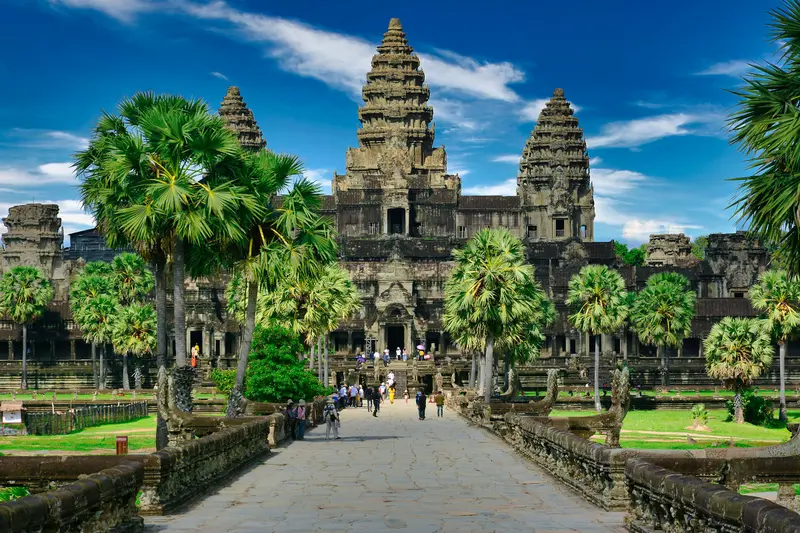
    Angkor Wat

    Photo by allPhoto Bangkok on Unsplash

    Temple

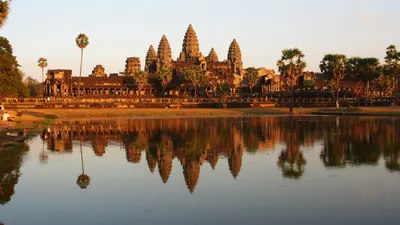
    1Angkor Wat

    Cambodia's most famous temple, built in the early 12th century under King Suryavarman II, served as a state temple for Vishnu and represents the cosmic Mount Meru. Unlike most Khmer temples, it faces west; its outer wall is 3.6 km long. Its galleries feature long bas-reliefs, such as the Battle of Kurukshetra in the west and the Churning of the Ocean of Milk in the east. Open from 5 AM for sunrise; children under 12 are not permitted on the upper temple level (Bakan).
    Open in Google Maps
    Bayon

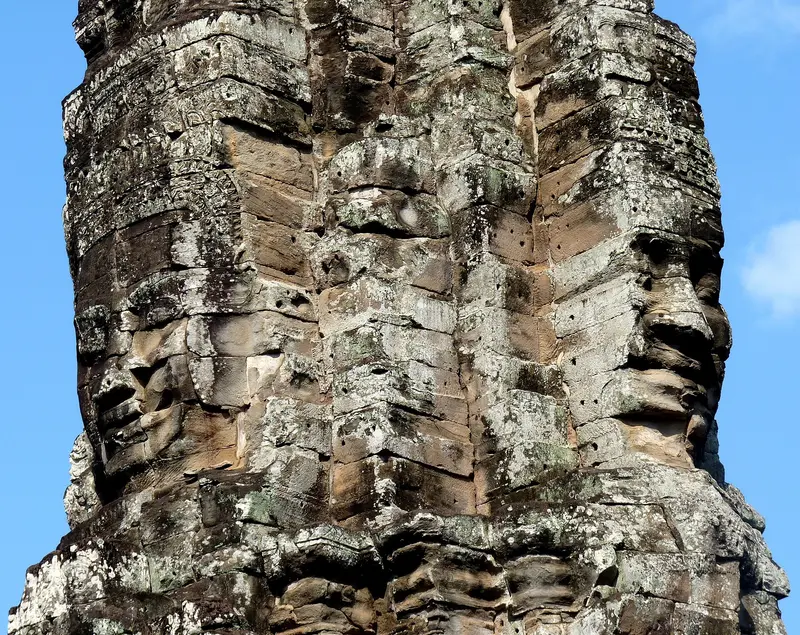
    “Stone faces in Bayon, Angkor” by Dudva / Wikimedia Commons / CC BY-SA 3.0, mod.

    Place of Worship

    2Bayon

    The state temple of Buddhist King Jayavarman VII. (late 12th to early 13th century) stands precisely at the center of Angkor Thom. Of the original 49 towers, 37 still stand, most bearing four enormous smiling faces. The outer gallery depicts daily life scenes such as markets and cockfights, as well as the naval battle between Khmer and Cham on the Tonle Sap. Rough Guides recommends visiting at lunchtime, when many groups are at lunch; there's hardly any shade.
    Open in Google Maps
    Ta Prohm

    Pierre André Leclercq / Wikimedia Commons / CC BY-SA 4.0, mod.

    Place of Worship

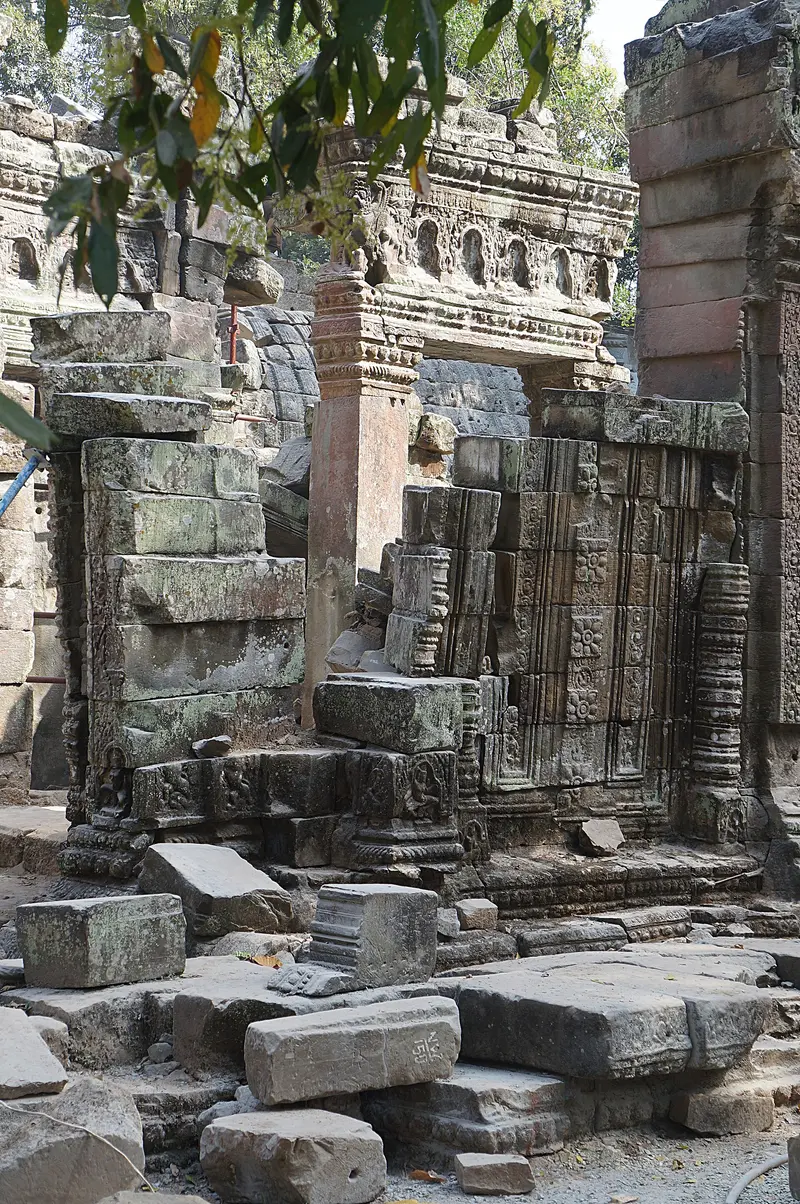
    3Ta Prohm

    The monastery temple Rajavihara, consecrated in 1186, was built by Jayavarman VII in honor of his mother. Ta Prohm is famous because massive silk-cotton trees and strangler figs were deliberately left on its walls; in 2001, scenes for the film Lara Croft: Tomb Raider were filmed here. The Archaeological Survey of India has secured large sections together with the APSARA Authority. It is quietest before 10 AM or in the late afternoon.
    Open in Google Maps
    Baphuon

    Marcin Konsek / Wikimedia Commons / CC BY-SA 4.0, mod.

    Temple

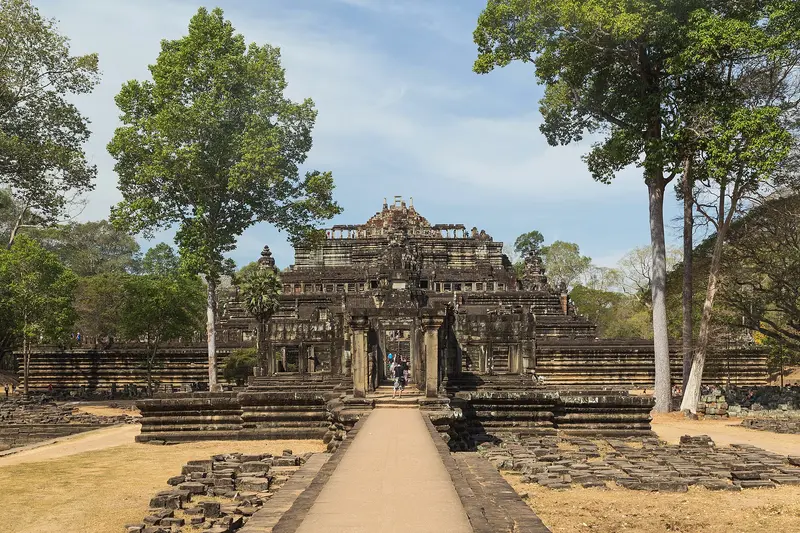
    4Baphuon

    The three-tiered temple mountain from the mid-11th century was the state temple of King Udayadityavarman II. and dedicated to Shiva. It is located northwest of the Bayon within Angkor Thom, was restored in recent decades and features a reclining Buddha on its western side.
    Open in Google Maps
    Historic Landmark

    5Terrace of the Elephants and Leper King's Terrace

    The two terraces at Angkor Thom's Royal Square date from the late 12th century, built under Jayavarman VII. The Elephant Terrace features life-size reliefs of elephants and Garudas, while the adjacent Terrace of the Leper King displays deeply layered rows of reliefs with gods and Nagas. From here, the court observed ceremonies on the square.
    Open in Google Maps
    Preah Khan

    Satdeep Gill / Wikimedia Commons / CC BY-SA 4.0, mod.

    Place of Worship

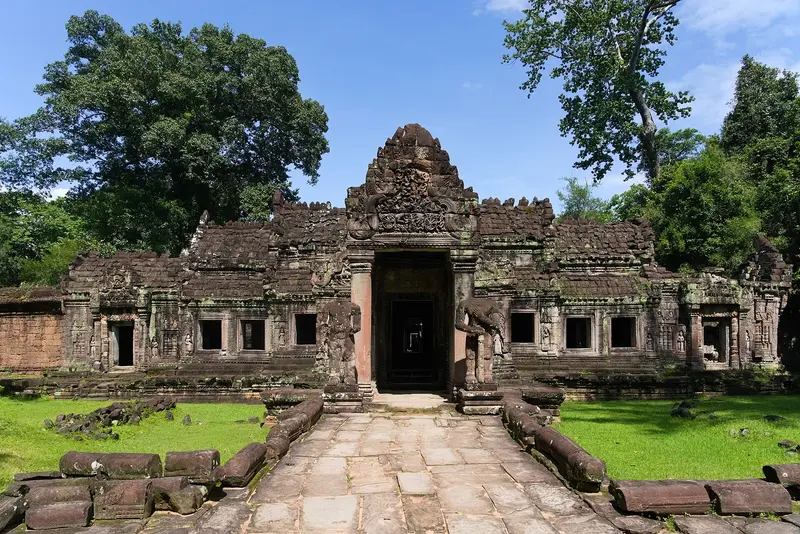
    6Preah Khan

    Jayavarman VII. had this sprawling temple-monastery complex built in the late 12th century northeast of Angkor Thom for his father. Long corridors, collapsed galleries and trees on walls recall Ta Prohm, though Rough Guides and Lonely Planet authors find it much quieter. Preah Khan is on the Grand Circuit.
    Open in Google Maps

    Tours & experiences in Temple of Angkor

    Search tours for Temple of Angkor on GetYourGuide* (Affiliate link)On GetYourGuide, with reviews from other travellers

    * Affiliate link: if you book through it, we earn a small commission. The price stays the same for you.

    Restaurants in Temple of Angkor

    History and Significance

    Capitals of the Khmer EmpireBetween the 9th and 15th centuries, the kings of the Khmer Empire successively built capitals, state temples, and large water reservoirs (Barays) around Angkor. Angkor Wat was built in the early 12th century under Suryavarman II as a Vishnu temple. At the end of the 12th century, the Buddhist king Jayavarman VII had the city of Angkor Thom, including the Bayon, Ta Prohm, and Preah Khan, constructed. Angkor Wat is depicted on Cambodia's national flag.World Heritage and RestorationUNESCO inscribed Angkor on the World Heritage List and simultaneously on the Red List in 1992; it was removed from the latter in 2004. International teams collaborate with the Cambodian APSARA Authority on its preservation, including the Japanese Government Team for Safeguarding Angkor at Bayon and the Archaeological Survey of India at Ta Prohm.Behavior in the TemplesShoulders and knees must be covered; those who violate this may be turned away from the Bakan of Angkor Wat.Do not climb on loose stones, do not touch reliefs, do not take anything. The park has been smoke-free since 2012, drones have been prohibited since 2016.Ask monks before taking photos; do not give money or sweets to children.

    Tickets and How-To

    Angkor Pass1 day US$37, 3 days US$62 (valid on any three days within 7 days), 7 days US$72 (valid within 30 days). Official sales are exclusively online at angkorenterprise.gov.kh, via the Angkor Pass app, and at the Ticket Center on Road 60, approximately 4 km from the city center.Children under 12 years old receive free admission (pass required as proof of age), but are not permitted onto the Bakan of Angkor Wat.A pass dated for the following day is valid from 4:45 PM on the previous evening for sunset viewing; this evening does not count as a pass day.The pass also includes Banteay Srei, Kbal Spean, Beng Mealea, and the Roluos Group. Not included are Koh Ker (US$15) and Phnom Kulen National Park (US$20).Opening HoursAccording to the official ticket map, the park is open from 5 AM to 6:30 PM. Angkor Wat is accessible from 5 AM to 6 PM (sunrise viewing), Phnom Bakheng from 6 AM to 7 PM, Pre Rup and Srah Srang from 5 AM to 7 PM, and the other temples from 6 AM to 6:30 PM. The Ticket Center sells passes from 5:30 AM to 5 PM.Getting Around and Avoiding CrowdsThe Small Circuit (an approximately 17 km loop) leads to Angkor Wat, Angkor Thom, Ta Keo, Ta Prohm, and Banteay Kdei, while the Grand Circuit (approximately 25 km) additionally includes Preah Khan, Neak Pean, Ta Som, East Mebon, and Pre Rup.A full-day tuk-tuk is the most convenient option; for nearby temples, a bicycle is also suitable.Tip from Rough Guides and Lonely Planet author Nick Ray: Enter Angkor Wat for sunrise through the East Gate, visit Ta Prohm before 10 AM or in the late afternoon, and the Bayon at lunchtime when groups are eating.According to the German Federal Foreign Office (Auswärtiges Amt), visitors to Angkor are required to stay at least one night in Cambodia; day trips without an overnight stay are not permitted.

    Accommodations in Temple of Angkor

    Find perfect stay in Temple of Angkor

    Booking.com* (Affiliate link)
    Search Hotels
    Agoda* (Affiliate link)
    Search Hotels
    Airbnb
    Vacation Rentals

    * Affiliate link: if you book through it, we earn a small commission. The price stays the same for you.

    Nearby

    Siem Reap and Angkor

    Siem Reap and Angkor

    The region around Siem Reap is the main reason for most trips to Cambodia: It is home to the Angkor Archaeological Park with Angkor Wat, Angkor Thom, and the Bayon, a UNESCO World Heritage site since 1992 and covering around 400 km². Siem Reap itself serves as the base, offering hotels, restaurants, museums, and the Phare Circus.Further afield are the delicate temple of Banteay Srei, the riverbed reliefs of Kbal Spean, the sacred mountain Phnom Kulen, the overgrown complex of Beng Mealea, the temple city of Koh Ker (UNESCO since 2023), and on the Tonle Sap, stilt villages that stand either in the lake or on high stilts depending on the water level.

    Vicky T·Unsplash

    Siem Reap

    Siem Reap

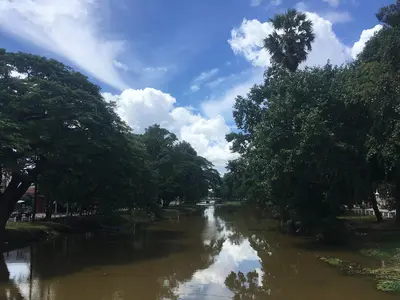
    Siem Reap is the gateway to the temples of Angkor, which begin about 6 km north of the city. The provincial capital, with just under 250,000 inhabitants (2019 census), offers all necessities: hotels of every category, modern Khmer restaurants, handicrafts, and in the evenings, the Phare Circus.The center is located along the Siem Reap River, around the Old Market and Pub Street. Quieter neighborhoods are found around Wat Bo east of the river and Wat Damnak to the south, where some of the city's best restaurants are located.

    Christophe95·CC BY-SA 4.0

    Banteay Srei and Phnom Kulen

    Banteay Srei and Phnom Kulen

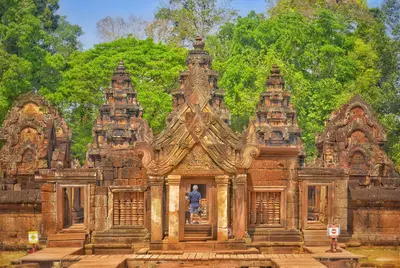
    Northeast of Angkor's main temples lie some of the most rewarding destinations for a dedicated day trip: the red sandstone temple Banteay Srei, featuring the finest reliefs of Khmer art, the riverbed reliefs of Kbal Spean, and the sacred mountain Phnom Kulen, where the Angkor Empire began in the 9th century.Banteay Srei is located about 25 km northeast of Angkor Thom and approximately 35 km from Siem Reap, while Kbal Spean and Phnom Kulen are each about 50 km north of the city.

    Angkor wat tuktuk driver By kakada·Pexels

    Tonle Sap and Stilt Villages

    Tonle Sap and Stilt Villages

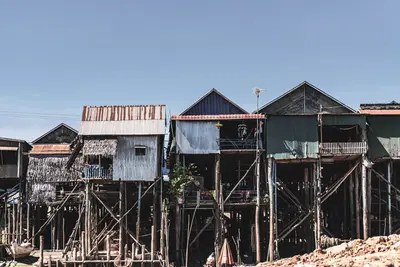
    South of Siem Reap, Tonle Sap has been a UNESCO Biosphere Reserve since 1997 and changes with the seasons: measuring around 2,500 km² in the dry season, it expands to many times that during high water. Its northern shore is home to stilt and floating villages like Kampong Phluk, Kampong Khleang, Mechrey, and Chong Kneas, where houses stand either in the lake or on meter-high stilts, depending on the water level.A boat trip reveals the life of the fishermen and the flooded forest; bird lovers can visit the Prek Toal sanctuary, where colonies of storks, adjutants, and pelicans breed from October to June.

    Karolina·Pexels

    Northwest

    Northwest

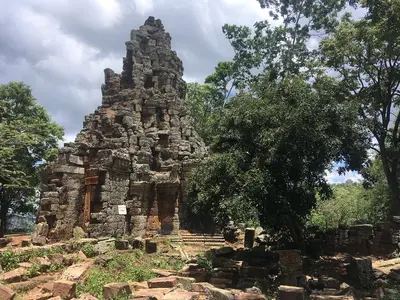
    The UK FCDO advises against all but essential travel to within 20 km of the land border with Thailand; all border crossings with Thailand are suspended. Check the current FCDO advice before any trip near the border.The northwest between the Tonle Sap and the Thai border is Cambodia's rice bowl. The main destination is Battambang on the Sangker River with French colonial architecture, the Phare Ponleu Selpak circus school, the bamboo train and hilltop temples such as Phnom Sampeau and Wat Banan. The border temple of Preah Vihear has been closed to visitors since the 2025 border clashes.

    Christophe95·CC BY-SA 4.0

    Your next steps

    Temple of Angkor is in Cambodia. Ways to carry on from here.

    • More in Cambodia

      Highlights, areas, routes and the best time to travel for all of Cambodia.

      Cambodia travel guide
    • Round trips in Cambodia

      Ready-made routes through Cambodia, with stops, nights and a map.

      See the routes
    • Plan a trip with Temple of Angkor

      The Guide asks about season, length and who is coming, and suggests a trip with Temple of Angkor.

      Plan the trip

    Sources & method

    • Photos: Wikimedia Commons, Unsplash. Each photo carries its credit.
    • Place data such as addresses and ratings comes from Google Maps.
    • The content is based on web research from public, traceable sources. How the content is made · The role of AI