Fernweh: Home
ExploreGuideDestinationsMy tripsMy trip
de|en
All Places & RegionsRound tripsNight trains in EuropeAll highlightsAbout FernwehFAQPrivacy PolicyImprint
Download on the App StoreGet it on Google Play
ExploreGuideDestinationsMy tripsMy trip
    • Places in the region
    • Getting around
    • Round trips
    • Nearby
    Siem Reap and Angkor

    Photo by Vicky T on Unsplash

    Cambodia

    Siem Reap and Angkor

    Region

    The region around Siem Reap is the main reason for most trips to Cambodia: It is home to the Angkor Archaeological Park with Angkor Wat, Angkor Thom, and the Bayon, a UNESCO World Heritage site since 1992 and covering around 400 km².

    by Felix Gillen

    1. Home
    2. Destinations
    3. Cambodia
    4. Siem Reap and Angkor
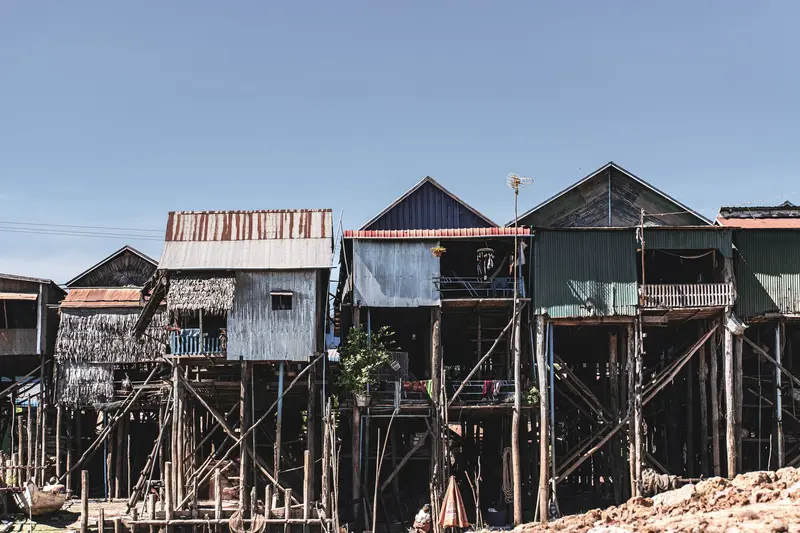
    The region around Siem Reap is the main reason for most trips to Cambodia: It is home to the Angkor Archaeological Park with Angkor Wat, Angkor Thom, and the Bayon, a UNESCO World Heritage site since 1992 and covering around 400 km². Siem Reap itself serves as the base, offering hotels, restaurants, museums, and the Phare Circus.Further afield are the delicate temple of Banteay Srei, the riverbed reliefs of Kbal Spean, the sacred mountain Phnom Kulen, the overgrown complex of Beng Mealea, the temple city of Koh Ker (UNESCO since 2023), and on the Tonle Sap, stilt villages that stand either in the lake or on high stilts depending on the water level.
    Cambodia travel guideSee the round tripPlan a trip with Siem Reap and Angkor

    Contents

    • Places in the region
    • Getting around
    • Round trips
    • Nearby
    Tonle Sap and Stilt Villages

    Photo by Karolina on Pexels

    Place 1 of 4

    Tonle Sap and Stilt Villages

    South of Siem Reap, Tonle Sap has been a UNESCO Biosphere Reserve since 1997 and changes with the seasons: measuring around 2,500 km² in the dry season, it expands to many times that during high water.

    Discover
    Siem Reap

    Christophe95 / Wikimedia Commons / CC BY-SA 4.0, mod.
    Place 2 of 4

    Siem Reap

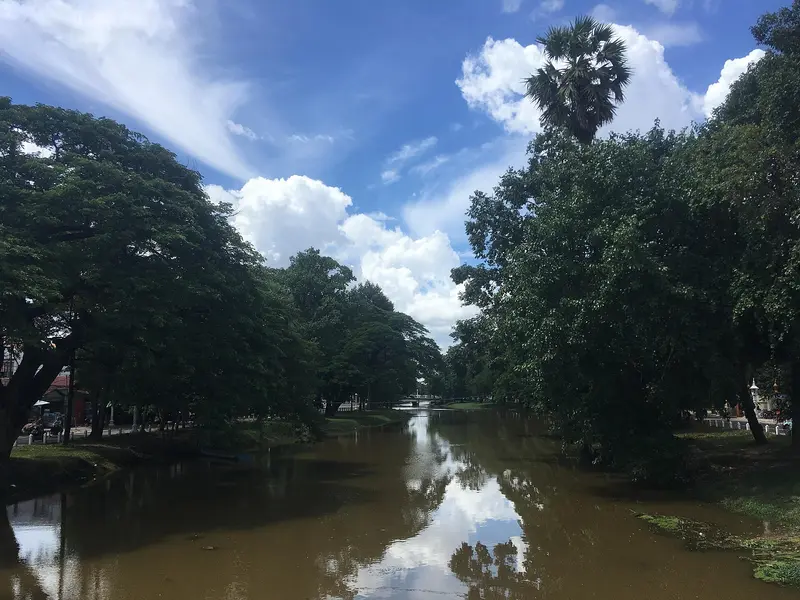
    Siem Reap is the gateway to the temples of Angkor, which begin about 6 km north of the city.

    Discover
    Beng Mealea

    PsamatheM / Wikimedia Commons / CC BY-SA 4.0, mod.
    Place 3 of 4

    Beng Mealea

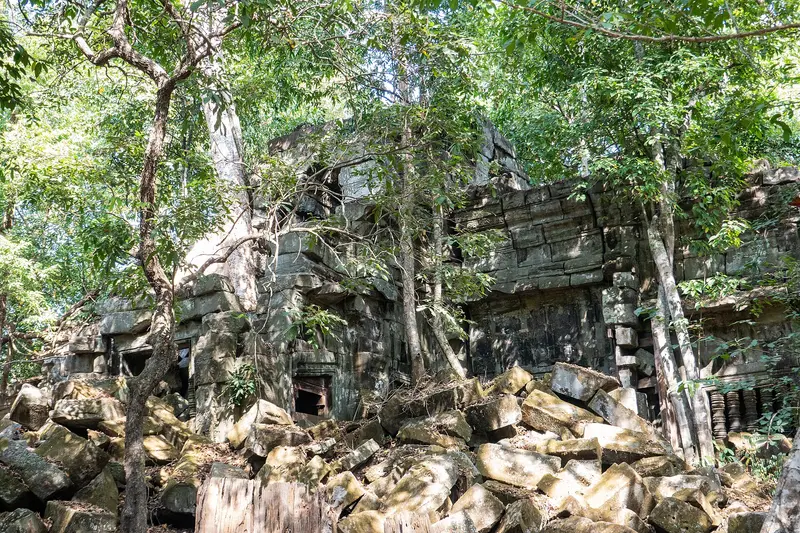
    Beng Mealea is a large jungle temple east of Angkor, largely left as the jungle has overgrown it: collapsed galleries, piles of stones, and tree roots, over which wooden walkways lead. If Ta Prohm feels too crowded, this offers a true sense of discovery.

    Discover
    Banteay Srei and Phnom Kulen

    Photo by Angkor wat tuktuk driver By kakada on Pexels

    Place 4 of 4

    Banteay Srei and Phnom Kulen

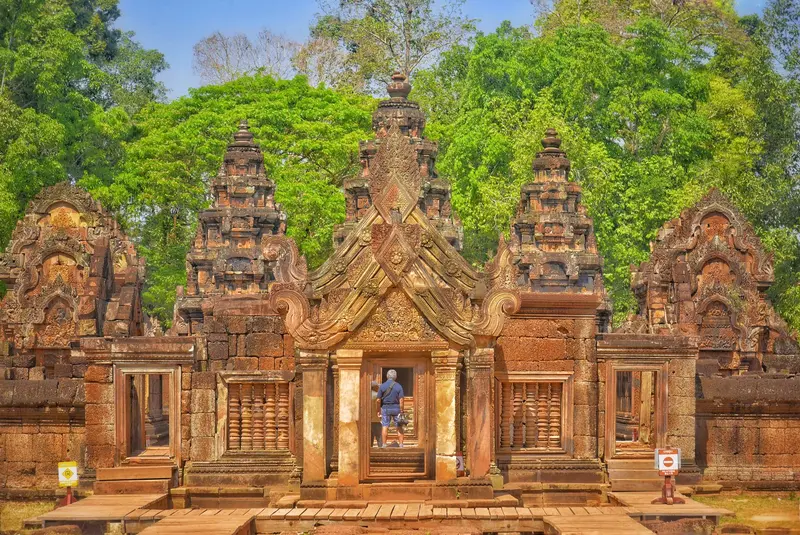
    Northeast of Angkor's main temples lie some of the most rewarding destinations for a dedicated day trip: the red sandstone temple Banteay Srei, featuring the finest reliefs of Khmer art, the riverbed reliefs of Kbal Spean, and the sacred mountain Phnom Kulen…

    Discover

    More places in Siem Reap and Angkor

    Koh Ker

    Lohen11·CC BY 4.0

    Koh Ker

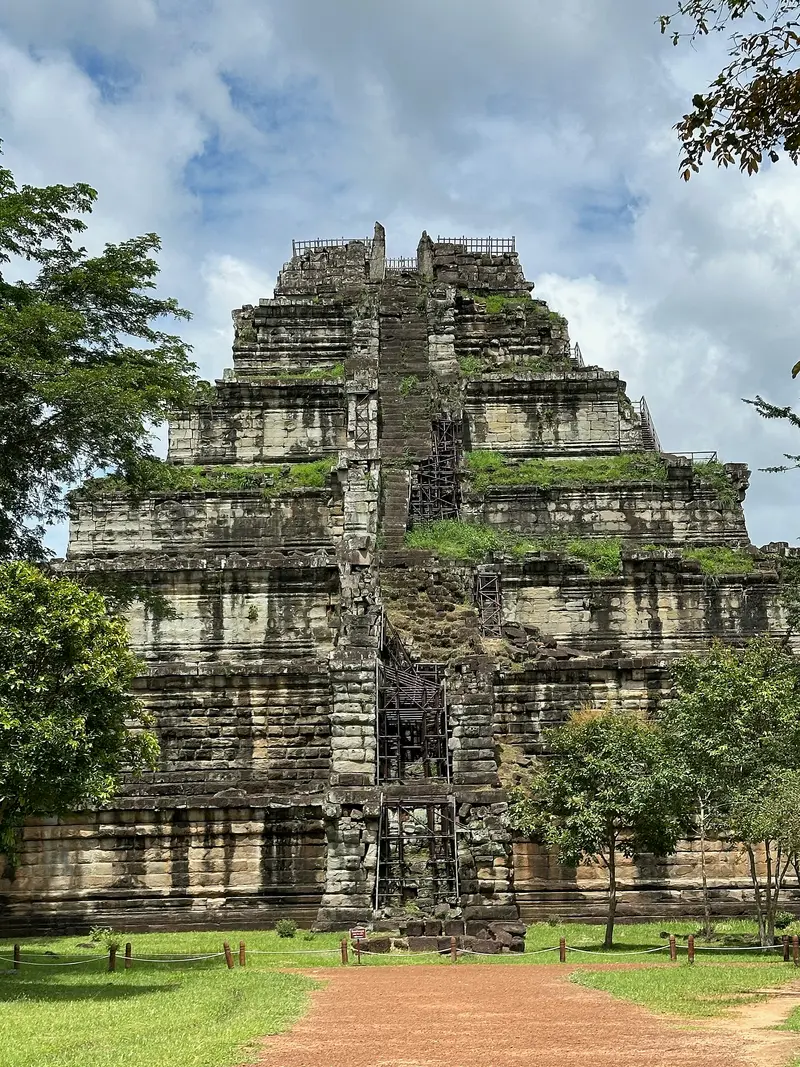
    Koh Ker is a remote temple city of the Khmer Empire, around 80 km northeast of Angkor, and a UNESCO World Heritage site since 2023. King Jayavarman IV founded the capital Lingapura here in 921, which was the sole royal seat from 928 to 944; it is known for its unique sculptural style and monolithic giant blocks; the main temple is Prasat Thom.The site is located in Preah Vihear Province, but well outside the border warning zone of the Foreign Office. From Siem Reap, the drive takes about one and a half hours or longer; many visitors combine Koh Ker with Beng Mealea.
    Temple of Angkor

    Armand Mckenzie·Unsplash

    Temple of Angkor

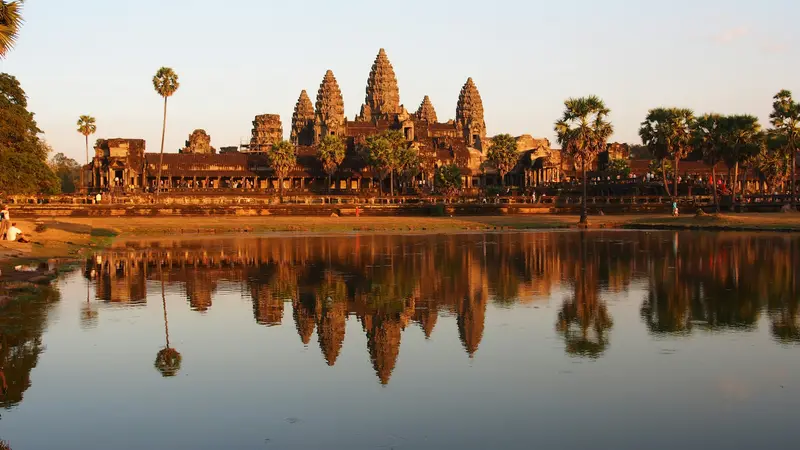
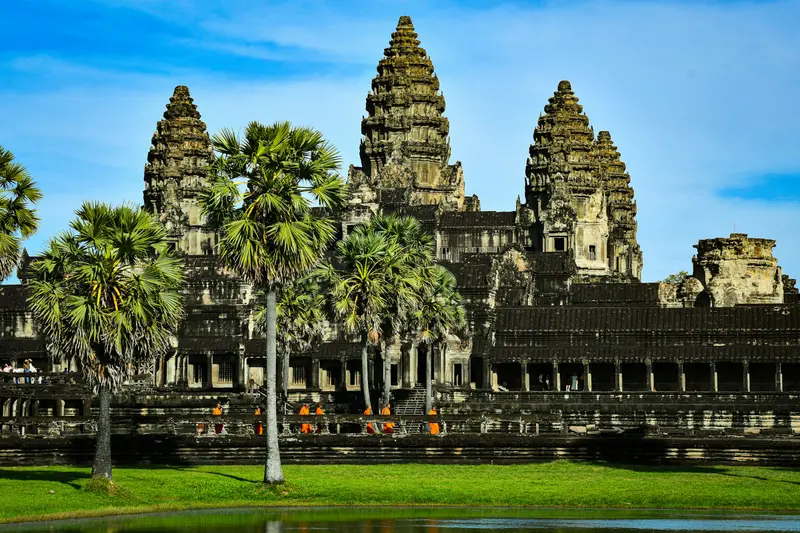
    The temples of Angkor, north of Siem Reap, are Cambodia's most important cultural heritage and have been a UNESCO World Heritage site since 1992: Within the approximately 400 km² archaeological park lie the capitals of the Khmer Empire from the 9th to 15th centuries, including Angkor Wat, the walled royal city of Angkor Thom with the Bayon, and the tree-entwined Ta Prohm.For a first impression, one day on the Small Circuit is sufficient, but Lonely Planet author Nick Ray and Rough Guides recommend at least three days. Entry is only possible with the Angkor Pass (1, 3 or 7 days).

    Arrival and on the road

    Fly to Siem Reap-Angkor International Airport (SAI), approx. 50 km east of the city; shuttle bus $8.Bus from Phnom Penh approx. six hours, from Battambang approx. three hours.For the temples, a Tuk-Tuk or driver for the whole day; for Koh Ker, Beng Mealea and Phnom Kulen, a car with driver.

    Round trips through this region
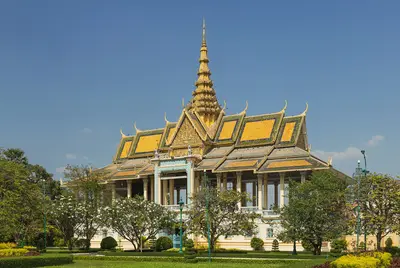
    Cambodia Classic: Phnom Penh, South Coast, Battambang and Angkor

    Cambodia Classic: Phnom Penh, South Coast, Battambang and Angkor

    The route connects the capital with the south coast, the colonial city of Battambang, and the temples of Angkor. All stages are feasible by bus or minibus; journey times stem from data by the Ministry of Tourism, Lonely Planet, Rough Guides, and booking portals, and vary depending on traffic.

    15 Days
    5 stops
    Open jaw

    Marcin Konsek·CC BY-SA 4.0

    Nearby

    Northwest

    Northwest

    The UK FCDO advises against all but essential travel to within 20 km of the land border with Thailand; all border crossings with Thailand are suspended. Check the current FCDO advice before any trip near the border.The northwest between the Tonle Sap and the Thai border is Cambodia's rice bowl. The main destination is Battambang on the Sangker River with French colonial architecture, the Phare Ponleu Selpak circus school, the bamboo train and hilltop temples such as Phnom Sampeau and Wat Banan. The border temple of Preah Vihear has been closed to visitors since the 2025 border clashes.

    Christophe95·CC BY-SA 4.0

    Battambang

    Battambang

    Battambang is a relaxed provincial town on the Sangker River, boasting some of Cambodia's most beautiful French colonial buildings, notably shophouses on the east bank and the former Governor's Residence. In the evenings, the Phare Ponleu Selpak circus school performs, the cradle of Cambodian circus.In the surrounding area, you can reach by tuk-tuk the Bamboo Train, Phnom Sampeau hill with its caves and the evening bat exodus, as well as the hill temples Wat Banan and Ek Phnom.

    Siborey Sean·Unsplash

    Preah Vihear

    Preah Vihear

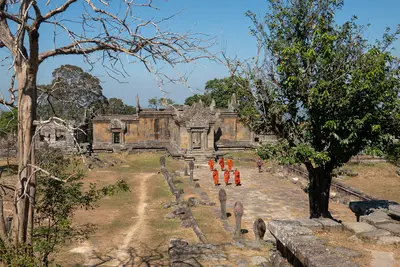
    The temple lies directly on the border with Thailand, within the area where the UK FCDO advises against all but essential travel (within 20 km of the land border). According to AP (March 2026) and Cambodianess (July 2026) it is closed to visitors because of war damage and unexploded ordnance; no reopening date has been set.Prasat Preah Vihear is a Shiva sanctuary built mainly in the first half of the 11th century on a cliff of the Dangrek Mountains and has been a UNESCO World Heritage Site since 2008. Its sanctuaries line up along an axis of about 800 m that climbs by stairs and paths to the cliff edge overlooking the Cambodian plain.

    PsamatheM·CC BY-SA 4.0

    Sambor Prei Kuk

    Sambor Prei Kuk

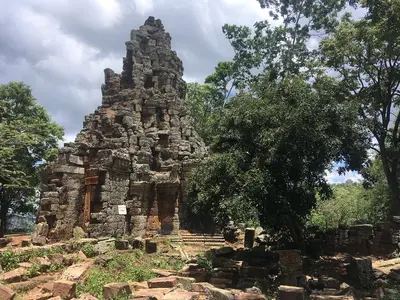
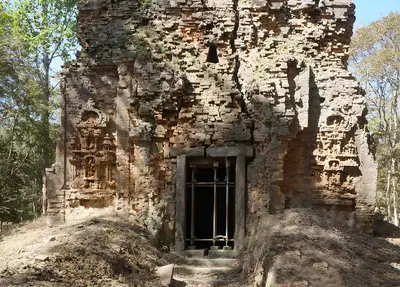
    Sambor Prei Kuk is the ruin site of Isanapura, the 7th-century capital of the Chenla Empire, and a UNESCO World Heritage site since 2017. In the forest, temple towers stand in three main groups, centuries older than Angkor Wat and much less visited.The complex is located about 30 km north of the provincial town Kampong Thom, roughly halfway between Phnom Penh and Siem Reap, and is ideal as a stopover on this route.

    Pierre André·CC BY-SA 4.0

    Phanom Rung Historical Park

    Phanom Rung Historical Park

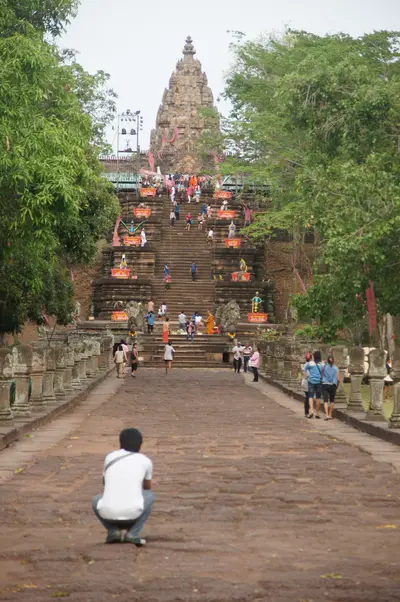
    Prasat Hin Phanom Rung stands on the rim of an extinct volcano in Buriram province and is one of the most complete Khmer sites in Thailand. The temple was built in several phases from the 10th to the 13th century and was dedicated to the Hindu god Shiva. The mountain was considered an image of his abode, Kailash.Access is via a paved processional road, across a bridge lined with Naga snakes, and up a staircase to the main prang. Lintels and pediments with scenes from Hindu mythology are preserved at the portals, including the Narai-Bandhomsindhu lintel, which returned from Chicago in 1988.On a few days annually, the sun aligns through all 15 doorways at sunrise or sunset. Crowds are huge then. Shade is minimal; come early morning. The smaller sanctuary Prasat Muang Tam lies a few kilometers away at the mountain's foot.

    Z3144228·CC BY-SA 4.0

    Your next steps

    Siem Reap and Angkor is in Cambodia. Ways to carry on from here.

    • More in Cambodia

      Highlights, areas, routes and the best time to travel for all of Cambodia.

      Cambodia travel guide
    • Round trips with Siem Reap and Angkor

      One route passes through Siem Reap and Angkor, with stops, nights and a map.

      See the round trip
    • Plan a trip with Siem Reap and Angkor

      The Guide asks about season, length and who is coming, and suggests a trip with Siem Reap and Angkor.

      Plan the trip

    Sources & method

    • Photos: Unsplash. Each photo carries its credit.
    • The content is based on web research from public, traceable sources. How the content is made · The role of AI