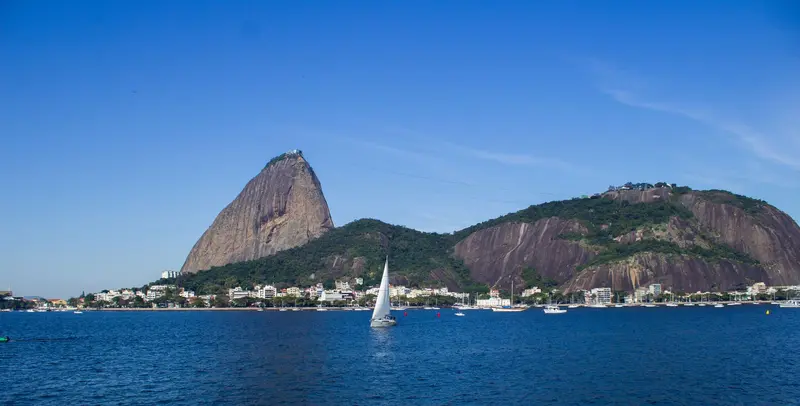
Photo by Arnaldo Silva on Pexels
Round trip · Brazil
Brazil Classics: Rio, Costa Verde, Iguaçu and Bahia
by Felix Gillen
- 17 Days / 16 Nights
- Rio de Janeiro → Chapada Diamantina and Lençóis
The route connects the four destinations most travelers come to Brazil for: Rio de Janeiro with Sugarloaf Mountain and Corcovado, the colonial town of Paraty and car-free Ilha Grande on the Costa Verde, the Iguaçu Falls and Bahia with Salvador's historic old town and the table mountains of Chapada Diamantina. You travel the coast by bus, and cover long distances by domestic flight.
At a glance
- Duration
- 17 Days / 16 Nights
- Stops
- 6 · Rio de Janeiro → Chapada Diamantina and Lençóis
- Arrival
- Flight · Rio de Janeiro Galeão (GIG)
- Departure
- Flight · São Paulo Guarulhos (GRU)
- Best Time to Go
- May to October (Rio experiences most rain from November to April, Salvador from April to July)
6 stops
Why This Route?
In just over two and a half weeks, it reveals city, colonial history, the rainforest coast, the waterfalls, and Bahia's Afro-Brazilian culture, with just three domestic flights and bus journeys of 4.5 to 7 hours.
Hidden Gems
- Sugarloaf better just after 8 AM instead of at sunset (Lonely Planet)
- Corcovado tickets only online, not at the cog railway station (Lonely Planet)
- On Ilha Grande, bring cash along, as the ATMs are considered unreliable
- In Poço Azul of Chapada Diamantina, a ray of light shines into the water around midday until early October.
Getting there and back
Open jaw: start and end are in different places
- Arrival
- Flight · Rio de Janeiro Galeão (GIG)Lufthansa flies daily nonstop from Frankfurt to Rio de Janeiro Galeão. According to the Auswärtiges Amt, you must collect and re-check luggage at the first Brazilian airport.
- Departure
- Flight · São Paulo Guarulhos (GRU)From Salvador, you fly with a domestic airline to São Paulo Guarulhos, then nonstop with Lufthansa or LATAM for about 12 hours to Frankfurt.
Itinerary
Rio de Janeiro
The Federal Foreign Office provides safety advice for Rio, concerning favelas, beaches at night, and K.O. drops in Lapa; this information is linked on its country page.With around 6.7 million inhabitants, Rio de Janeiro is Brazil's second-largest city, situated between granite mountains, rainforest, and Guanabara Bay. Since 2012, its urban landscape, "Carioca Landscapes between the Mountain and the Sea," has been on the UNESCO World Heritage List – the first urban cultural landscape ever. People come for the Christ the Redeemer statue on Corcovado, the Sugarloaf cable car, the beaches of Copacabana and Ipanema, and Lapa's samba nights.The city was founded on March 1, 1565; it was the capital from 1763 to 1960, and home to the Portuguese court from 1808. Its districts vary greatly: The Centro preserves monasteries and Belle Époque buildings, Santa Teresa is located on a hill above it, and the beach districts of Zona Sul stretch southwest.
Corcovado, Sugarloaf, Centro, Santa Teresa, Beaches of Zona Sul
12 Sights
Culture and Lifestyle
Samba and CarnivalFor four nights of Carnival, samba schools parade through the Sambódromo. Year-round, you can hear samba in Lapa, for example at Rio Scenarium on Rua do Lavradio or at Carioca da Gema, and on Mondays at the free Roda at Pedra do Sal in the Saúde port district, which is considered the cradle of samba.Afro-Brazilian HeritageAt Cais do Valongo, a UNESCO World Heritage site since 2017, enslaved Africans were brought ashore from 1811 onwards; the remnants of the pier were rediscovered in 2011. The surrounding district is now called Pequena África.Beach LifeCopacabana's promenade, with its wave pattern of black and white stone, redesigned by Roberto Burle Marx in the early 1970s, is the city's catwalk. His country estate, Sítio Roberto Burle Marx, has also been a World Heritage site since 2021.
Bus
Costa Verde from Rodoviária Novo Rio, about 4 hours 45 minutes
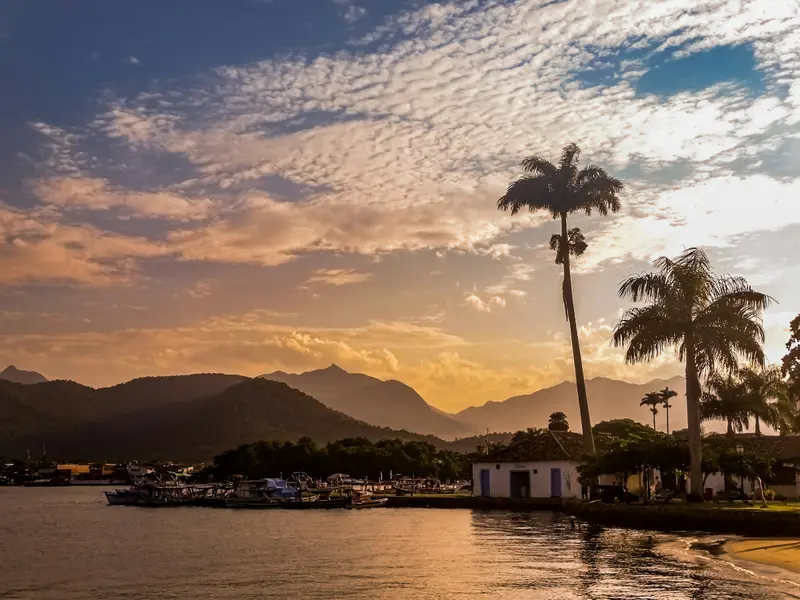
Paraty
Paraty is a small colonial town on the Costa Verde between Rio de Janeiro and São Paulo, with whitewashed houses, cobblestone streets, and 18th-century churches. Founded in 1597, it became the port for the Caminho do Ouro, from where gold from Minas Gerais was shipped. Since 2019, its historic center has been part of the UNESCO World Heritage Site Paraty and Ilha Grande.During full moon and high tide, seawater flows 15 to 25 centimeters high into the old town alleys. From Paraty, you can reach islands and bays by boat, such as the fjord-like Saco do Mamanguá, and the beaches of Trindade by bus.
Boat trip to Saco do Mamanguá, beaches of Trindade
5 Sights
Culture and Lifestyle
Gold, Churches, and CachaçaThe Capela de Santa Rita, completed in 1722, is the city's oldest church and its most famous photo spot by the water. Sugarcane spirit has been distilled in Paraty since the 16th century; by 1820 there were over 150 distilleries; since 2007, "Cachaça de Paraty" has been a protected designation of origin.Literature in JulyEvery July, the FLIP Literary Festival transforms the old town into an open-air reading room; in 2026, it attracted around 40,000 visitors.Bays and BeachesSaco do Mamanguá is a narrow, approximately 8-kilometer-long sea inlet with 33 beaches, often described as a tropical fjord. In the fishing village of Trindade are beaches like Cepilho, popular with surfers, and Cachadaço.
Bus
Bus to Angra dos Reis approx. 2 hours, then ferry to Abraão approx. 80 minutes
Stop 3 • 2 Nights
Ilha Grande
Ilha Grande, off Angra dos Reis on the Costa Verde, is an almost entirely forested, car-free mountainous island with hiking trails through the Atlantic Rainforest and secluded beaches. Its main settlement and boat pier is Vila do Abraão, with around 2,000 inhabitants. The Parque Estadual da Ilha Grande covers about 62.5% of the island, part of the UNESCO World Heritage site 'Paraty and Ilha Grande' since 2019.Until 1994, Dois Rios was home to a penal colony, a reason the island remained undeveloped for so long. Its highest peak is Pico da Pedra d'Água, at 1,031 meters.
Lopes Mendes, Lagoa Azul
4 Sights
Nature and Island Life
BeachesLopes Mendes, with approximately three kilometers of light sand, can be reached on foot from Abraão in about two hours, or by boat. Boat tours also lead to the lagoons Lagoa Azul and Lagoa Verde, featuring clear water for snorkeling.HikingA network of numbered trails crisscrosses the island. The ascent to Pico do Papagaio from Abraão takes approximately three and a half hours each way and is considered challenging; a guide is recommended.Car-FreeMotorized vehicles are prohibited on the island; bays can only be reached on foot or by boat.
Flight
Speedboat to Conceição de Jacareí approx. 25 minutes, bus back to Rio, flight Rio to Foz do Iguaçu nonstop a good 2 hours
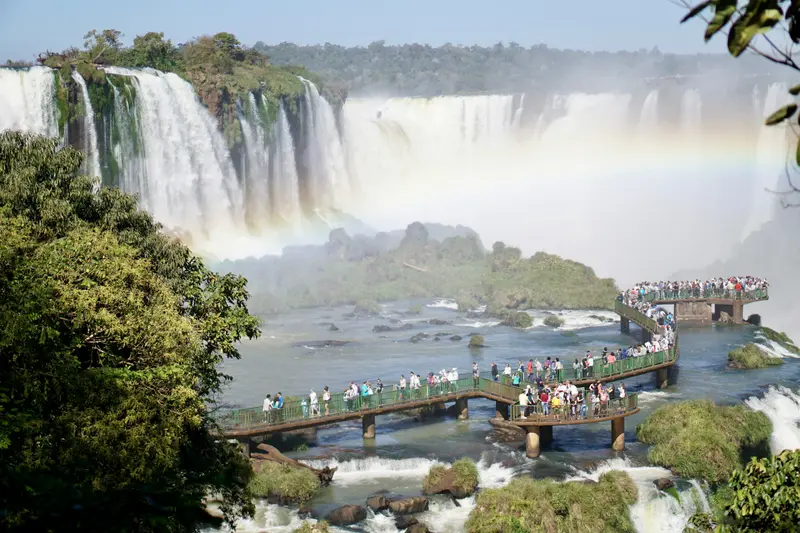
Iguaçu Falls and Foz do Iguaçu
The Iguaçu Falls, on the border with Argentina, are one of South America's great natural wonders: the Rio Iguaçu plunges up to 80 meters deep across a width of around 2.7 kilometers. The Brazilian national park, founded in 1939 and a UNESCO World Heritage site since 1986, is located in the far west of Paraná state. Because the larger part of the falls lies on the Argentinian side, Brazil primarily offers you the grand panorama, plus the walkway leading right up to the Garganta do Diabo.The city of Foz do Iguaçu is the starting point for the park, the Parque das Aves bird park, the Itaipu Dam, and the Triple Frontier with Argentina and Paraguay. For the Argentinian side (Iguazú), see the Argentina page.
Book timed entry National Park tickets online
4 Sights
3 Restaurants
Nature and History
National Park and World Heritage SiteThe Parque Nacional do Iguaçu was established on January 10, 1939, and protects the Atlantic Forest (Mata Atlântica) bordering Argentina's Iguazú National Park. It has been on the UNESCO World Heritage list since 1986. The conservation agency ICMBio oversees it, while a concessionaire manages visitor operations.Water LevelsThe river typically carries the most water from December to February; from June to August, water levels are lower, but visibility is often clearer. During high water, the walkway to the Garganta do Diabo is closed: this occurred in 2026 in September and from October 11 to 31, when a record flow of 17.7 million liters per second was measured on October 26.ItaipuThe Itaipu Dam on the Paraná, operated jointly with Paraguay, started operations in 1984 and has 20 turbines with a combined output of 14,000 megawatts.
Flight
No direct flight, one stop, around 5 to 8 hours
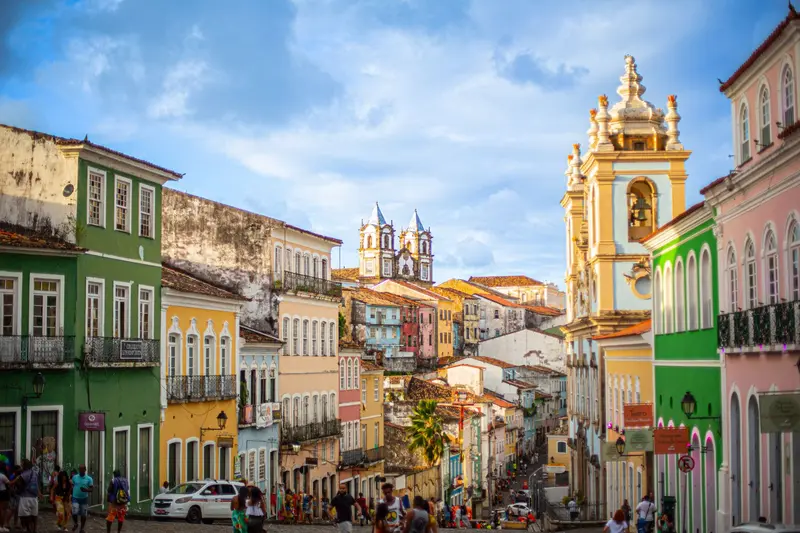
Salvador da Bahia
The Federal Foreign Office explicitly lists Salvador among cities with high crime rates; before your trip, consult the travel advice linked on the country page.Salvador was Brazil's first capital from 1549 to 1763 and is now one of the country's largest cities, with around 2.6 million inhabitants. Its Old Town, home to the Pelourinho and a UNESCO World Heritage site since 1985, is located in the Upper City (Cidade Alta) overlooking All Saints' Bay; the Elevador Lacerda connects it with the Lower City (Cidade Baixa) and the Mercado Modelo. You come for the colonial churches and squares, Afro-Brazilian music and religion, and a cuisine featuring Acarajé and Moqueca.
Pelourinho, Elevador Lacerda, Bonfim
5 Sights
4 Restaurants
Culture and Fests
Afro-Brazilian HeritageFrom 1558, Salvador was home to one of the New World's first slave markets; African roots continue to shape its religion, music, and cuisine to this day. In the Basilika do Bonfim, Catholic and Candomblé traditions converge, while at the Igreja do Rosário dos Pretos, a mass with Atabaque drums is celebrated on Tuesdays. The Acarajé vendors in white traditional dress, known as Baianas, have been a national cultural heritage since 2005.Annual FestivalsJanuary: Festa do Bonfim, a national cultural heritage since 2013; during the Lavagem, Baianas walk from the Conceição da Praia Church to the Basilica and wash its steps.February 2: Festival of the sea goddess Iemanjá in the Rio Vermelho district with flowers and offerings brought to the sea.MusicIn the evenings, you can hear live music in Pelourinho, especially on Tuesdays and Sundays. Samba de Roda from the Recôncavo, the bay's hinterland, has been a UNESCO cultural heritage since 2008.
Bus
Rápido Federal around 6 to 7 hours
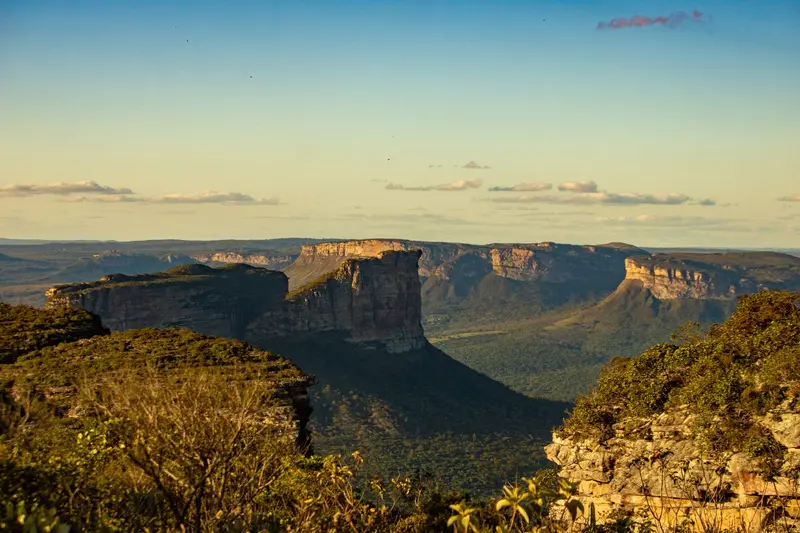
Chapada Diamantina and Lençóis
Chapada Diamantina, in the interior of Bahia, is a plateau with table mountains, waterfalls, caves, and clear spring-fed pools, about six bus hours west of Salvador. The National Park was established in 1985 and covers about 152,000 hectares. Lençóis is the starting point: The small town was the world's largest diamond producer from 1845 to 1871, its historic ensemble has been protected since 1973.
Morro do Pai Inácio, Poço Azul; back to Salvador and flight to São Paulo
3 Sights
1 Restaurant
Diamonds and Nature
Diamond City LençóisFrom 1845 to 1871, Lençóis was the world's largest diamond producer. Its historic ensemble, with around 570 buildings, has been a protected heritage site since 1973.National ParkThe Parque Nacional da Chapada Diamantina was founded on September 17, 1985, and extends over approximately 152,000 hectares across six municipalities.
Plan this route as your trip
All stops, trains and nights go into your trip planner. You adjust dates and places to stay afterwards.
This route is a suggestion from our research. Please check timetables, times in port, opening hours and prices before you book – what your tour operator or carrier says is what counts.
Fernweh is a free travel guide and trip planner: routes researched by people, taken over in one click, used day by day on the road. More about Fernweh
6 stops
Route Summary
Duration17 Days
Stops6 Places
TypeMixed