Fernweh: Home
ExploreGuideDestinationsMy tripsMy trip
de|en
All Places & RegionsRound tripsNight trains in EuropeAll highlightsAbout FernwehFAQPrivacy PolicyImprint
Download on the App StoreGet it on Google Play
ExploreGuideDestinationsMy tripsMy trip
    • Neighborhoods & highlights
    • Recommendations
    • Walking tours
    • Tours
    • Eat & drink
    • Culture
    • Getting around
    • Accommodation
    • Plan trip
    • Round trips
    • Nearby
    Rio de Janeiro

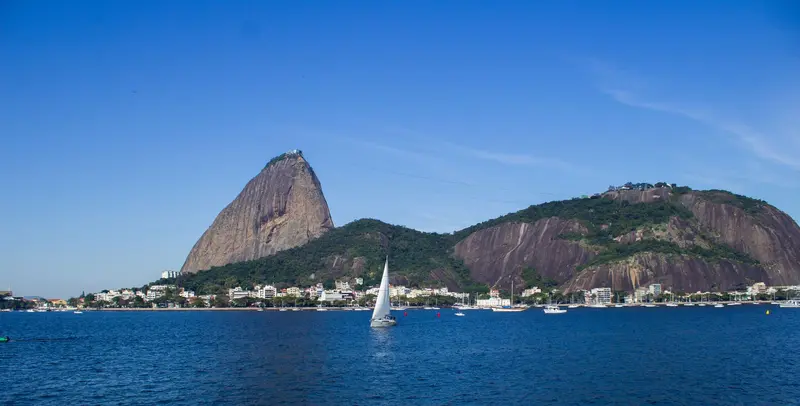
    Photo by Arnaldo Silva on Pexels

    Brazil

    Rio de Janeiro

    City

    The Federal Foreign Office provides safety advice for Rio, concerning favelas, beaches at night, and K. O.

    by Felix Gillen

    1. Home
    2. Destinations
    3. Brazil
    4. Rio de Janeiro
    The Federal Foreign Office provides safety advice for Rio, concerning favelas, beaches at night, and K.O. drops in Lapa; this information is linked on its country page.With around 6.7 million inhabitants, Rio de Janeiro is Brazil's second-largest city, situated between granite mountains, rainforest, and Guanabara Bay. Since 2012, its urban landscape, "Carioca Landscapes between the Mountain and the Sea," has been on the UNESCO World Heritage List – the first urban cultural landscape ever. People come for the Christ the Redeemer statue on Corcovado, the Sugarloaf cable car, the beaches of Copacabana and Ipanema, and Lapa's samba nights.The city was founded on March 1, 1565; it was the capital from 1763 to 1960, and home to the Portuguese court from 1808. Its districts vary greatly: The Centro preserves monasteries and Belle Époque buildings, Santa Teresa is located on a hill above it, and the beach districts of Zona Sul stretch southwest.
    Brazil travel guideSee the round tripPlan a trip with Rio de Janeiro

    Contents

    • Neighborhoods & highlights
    • Recommendations
    • Walking tours
    • Tours
    • Eat & drink
    • Culture
    • Getting around
    • Accommodation
    • Round trips
    • Nearby

    More districts in Rio de Janeiro

    Santa Teresa and Lapa

    Santa Teresa is the artists' quarter on the hill above the city center; Time Out calls it Rio's "bohemian district." The historic Bonde goes up over the Arcos da Lapa; at the top await restaurants like Aprazível and Bar do Mineiro's feijoada. Down in Lapa are the Escadaria Selarón and samba houses like Rio Scenarium and Carioca da Gema.For Lapa, the German Foreign Office explicitly warns of K.O. drops; for your evening return, take a ride service.

    Ipanema and Leblon

    Ipanema and Leblon are the beach neighborhoods west of Copacabana; at the eastern end, the Arpoador rock juts into the sea. Behind the beach, the city's top gastronomy is clustered together, with Michelin-starred restaurants like Oro, Oseille, and Madame Olympe, and several Bib Gourmand addresses.

    Urca and Botafogo

    The quiet residential district of Urca lies at the foot of Sugarloaf Mountain, where the cable car departs from Praia Vermelha, and on the seawall in front of Bar Urca, you can eat snacks with a view of Guanabara Bay. In neighboring Botafogo, restaurants like the Michelin-starred Oteque and several Bib Gourmand establishments have settled.

    Downtown and Port

    Centro is Rio's historic heart: Here stand the São Bento Monastery, the Paço Imperial, where King João VI resided from 1808, the Candelária Church, and the Belle Époque halls of Confeitaria Colombo. North of it lies the revamped port district with the Museu do Amanhã and "Pequena África" around Cais do Valongo and Pedra do Sal.The Foreign Office points out that the district is deserted and unsafe after business hours, on weekends, and public holidays; therefore, visit it on weekdays during the day.

    Copacabana and Leme

    The Auswärtige Amt names Copacabana among the districts where thefts and muggings occur even during the day, and advises against nocturnal beach walks; the warnings are linked on their country page.Copacabana is Rio’s most famous beach district: roughly four kilometers of sand stretch from Leme rock in the northeast to Forte de Copacabana in the southwest, lined by the promenade with Roberto Burle Marx's wave pattern. Leme, at its eastern end, is a quieter, small enclave. Here, the grand Réveillon fireworks take place on New Year’s Eve.The surf is strong, and after rain, the water is often polluted: The environmental agency INEA shows the bathing water quality; green means swim, red means better stay on the beach.

    Sights in Rio de Janeiro

    Discover the most important sights and attractions

    Attraction

    1Cristo Redentor on the Corcovado

    The Christ the Redeemer statue on the approximately 700-meter-high Corcovado is Rio’s landmark: 30 meters tall on an 8-meter pedestal, with an arm span of 28 meters, inaugurated on October 12, 1931, and since 2007, one of the “New Seven Wonders of the World”. You can get up there by cog railway from Rua Cosme Velho 513 (approx. 20 minutes, according to the operator R$ 139 for adults, as of November 2026; tickets online only, not at the station), by vans from Copacabana, Largo do Machado, or Paineiras, or on foot through Parque Lage. Because capacity is expected to be halved until May 2027 due to construction work at the summit, it’s best to book in advance and arrive early in the morning.

    Open in Google Maps
    Park

    2Sugarloaf (Pão de Açúcar) with Cable Car

    The cable car from Praia Vermelha ascends in two stages, first to Morro da Urca and then to the 396-meter-high Sugarloaf Mountain; the first section opened in 1912, the second in 1913. According to the operator, tickets start from R$ 205 (as of November 2026), children aged 3 to 12 pay half price. The cable car operates Monday to Friday from 8:30 AM, on weekends from 7:30 AM, with the last ascent at 7:30 PM; opening and sunset are great times to visit.
    Open in Google Maps
    Attraction

    3Praia de Copacabana and Promenade

    The promenade stretches for approximately four kilometers from Leme to Forte de Copacabana. Its wave pattern of black and white stone dates back to the Rossio Square in Lisbon; when the beach was widened starting in 1970, Roberto Burle Marx redesigned the promenade. Germany's Foreign Office advises against night walks on the beach in Rio.
    Open in Google Maps
    Attraction

    4Praia de Ipanema

    Ipanema Beach connects to Copacabana to its west and transitions into Leblon Beach; at its eastern end, Arpoador rock juts into the sea. Behind it are the neighborhoods with the city's highest concentration of top restaurants. As everywhere in Rio, the rule is: leave valuables in your hotel and avoid the beach after dark, as advised by the German Federal Foreign Office.
    Open in Google Maps
    Attraction

    5Escadaria Selarón

    The approximately 125-meter long staircase between Lapa and Santa Teresa was adorned by artist Jorge Selarón starting in 1990 with more than 2,000 tiles from over 60 countries; in 2013 he was found dead on the staircase. It runs between Rua Joaquim Silva and Rua Pinto Martins and is freely accessible.
    Open in Google Maps
    Attraction

    6Arcos da Lapa

    The 270-meter aqueduct, with 42 two-tiered arches, was completed in 1750 to supply water to the city. Since 1896, the Santa Teresa Bonde runs over its arches. Around the Arcos, Lapa's samba nightlife comes alive in the evening.
    Open in Google Maps

    City walks in Rio de Janeiro

    Curated walking tours through the city's highlights, handpicked by experienced travel journalists.

    Rio de Janeiro: Old Town Walking Tour through Centro
    About 2.5 km north-south, from São Bento Monastery, past Praça XV, to Theatro Municipal, with an optional extension to Cathedral, Arcos da Lapa, and Escadaria Selarón. Go weekdays during the day; German Foreign Office warns: after business hours and on weekends, the center is deserted and unsafe.
    Open in Google Maps
    Stops (9)

    Tours & experiences in Rio de Janeiro

    Search tours for Rio de Janeiro on GetYourGuide* (Affiliate link)On GetYourGuide, with reviews from other travellers

    * Affiliate link: if you book through it, we earn a small commission. The price stays the same for you.

    Restaurants in Rio de Janeiro

    Culture and Lifestyle

    Samba and CarnivalFor four nights of Carnival, samba schools parade through the Sambódromo. Year-round, you can hear samba in Lapa, for example at Rio Scenarium on Rua do Lavradio or at Carioca da Gema, and on Mondays at the free Roda at Pedra do Sal in the Saúde port district, which is considered the cradle of samba.Afro-Brazilian HeritageAt Cais do Valongo, a UNESCO World Heritage site since 2017, enslaved Africans were brought ashore from 1811 onwards; the remnants of the pier were rediscovered in 2011. The surrounding district is now called Pequena África.Beach LifeCopacabana's promenade, with its wave pattern of black and white stone, redesigned by Roberto Burle Marx in the early 1970s, is the city's catwalk. His country estate, Sítio Roberto Burle Marx, has also been a World Heritage site since 2021.

    Getting here and about

    AirportsGaleão (GIG): International airport about 20 km from Centro, Lufthansa flies direct from Frankfurt. Ride-share services to Zona Sul cost around R$ 60 to 80 (as of 2026); fixed-fare taxis can be booked at the counter in the arrivals hall, the BRT express bus to Terminal Gentileza costs R$ 15.Santos Dumont (SDU): Centrally located airport for domestic flights, especially the shuttle service to São Paulo.In the CityA Metrô ride costs R$ 7.90 until the end of 2026.The historic Bonde runs from Largo da Carioca via Arcos da Lapa to Santa Teresa, R$ 20 round-trip for visitors.At night and for journeys between neighborhoods, ride-share apps are best.Practical Tips for Main AttractionsCorcovado: As of August 2026, van capacity is halved due to construction work at the summit, expected until May 2027, so buy tickets for the cog railway or van online in advance.Sugarloaf: Come at opening time, on weekdays or for sunset; allow about two and a half hours for the ascent and descent, including stops at both peaks.

    Accommodations in Rio de Janeiro

    Find perfect stay in Rio de Janeiro

    Booking.com* (Affiliate link)
    Search Hotels
    Agoda* (Affiliate link)
    Search Hotels
    Airbnb
    Vacation Rentals

    * Affiliate link: if you book through it, we earn a small commission. The price stays the same for you.

    Plan your trip to Rio de Janeiro

    Save places, build a route and plan your city trip, all in one place.

    1. 1
      Sunrise over alpine peaks and a sea of clouds
      1234

      Round trip

      12 days · 4 stops

      Saved

      Pick a route

      Pick a ready-made one or save places and plan your own.

      Open bookmarks
    2. 2

      Trip to Rio de Janeiro

      Live
      • 1Cristo Redentor on the Corcovado3 days
      • 2Sugarloaf (Pão de Açúcar) with Cable Car4 days
      • 3Praia de Copacabana and Promenade5 days
      Budget

      Plan your trip

      The planner sorts stops, days and budget. Plan together in real time.

      Start trip planning
    3. 3
      9:41 No signal
      Rio de Janeiro
      Available offline

      Photo by Arnaldo Silva on Pexels

      Use it on the road

      Download the guide to your phone and use it on site, even offline.

    Round trips with Rio de Janeiro

    Brazil Classics: Rio, Costa Verde, Iguaçu and Bahia

    Brazil Classics: Rio, Costa Verde, Iguaçu and Bahia

    The route connects the four destinations most travelers come to Brazil for: Rio de Janeiro with Sugarloaf Mountain and Corcovado, the colonial town of Paraty and car-free Ilha Grande on the Costa Verde, the Iguaçu Falls and Bahia with Salvador's historic old town and the table mountains of Chapada Diamantina. You travel the coast by bus, and cover long distances by domestic flight.

    17 Days
    6 stops
    Open jaw

    Arnaldo Silva·Pexels

    Nearby

    Ilha Grande

    Ilha Grande, off Angra dos Reis on the Costa Verde, is an almost entirely forested, car-free mountainous island with hiking trails through the Atlantic Rainforest and secluded beaches. Its main settlement and boat pier is Vila do Abraão, with around 2,000 inhabitants. The Parque Estadual da Ilha Grande covers about 62.5% of the island, part of the UNESCO World Heritage site 'Paraty and Ilha Grande' since 2019.Until 1994, Dois Rios was home to a penal colony, a reason the island remained undeveloped for so long. Its highest peak is Pico da Pedra d'Água, at 1,031 meters.

    Costa Verde

    The Costa Verde, the Green Coast, stretches southwest of Rio de Janeiro between the Atlantic rainforest of the Serra do Mar and a bay full of islands. Its two highlights are the colonial town of Paraty and the car-free Ilha Grande. Since 2019, both have been on the UNESCO World Heritage List as "Paraty and Ilha Grande: Culture and Biodiversity," as Brazil's first mixed cultural and natural heritage site.From Rio, the bus journey to Angra dos Reis takes around three hours, and to Paraty just under five hours.
    Paraty

    Paraty

    Paraty is a small colonial town on the Costa Verde between Rio de Janeiro and São Paulo, with whitewashed houses, cobblestone streets, and 18th-century churches. Founded in 1597, it became the port for the Caminho do Ouro, from where gold from Minas Gerais was shipped. Since 2019, its historic center has been part of the UNESCO World Heritage Site Paraty and Ilha Grande.During full moon and high tide, seawater flows 15 to 25 centimeters high into the old town alleys. From Paraty, you can reach islands and bays by boat, such as the fjord-like Saco do Mamanguá, and the beaches of Trindade by bus.

    Filipe Freitas·Unsplash

    Ouro Preto

    Ouro Preto

    Ouro Preto in Minas Gerais, southeast of Belo Horizonte, is the most renowned of Brazil's baroque gold cities. Steep cobblestone streets connect squares and hills with numerous churches. In 1980, it became Brazil's first cultural property to be designated a UNESCO World Heritage site.From 1720 to 1897, Ouro Preto served as the capital of Minas Gerais and the heart of the gold rush; in 1789, it was the setting for the Inconfidência Mineira, a conspiracy against the Portuguese Crown. The sculptor and architect Aleijadinho designed the Igreja de São Francisco de Assis here.

    Nathalia Segato·Unsplash

    Minas Gerais

    The state of Minas Gerais, in the hinterland north of Rio, was the center of the Brazilian gold rush in the 18th century. From this period date the baroque mountain towns of Ouro Preto, Congonhas, Tiradentes, and Diamantina, featuring churches by the sculptor and architect Aleijadinho. Four World Heritage Sites are located here: Ouro Preto (1980), the Sanctuary of Congonhas (1985), Diamantina (1999), and Oscar Niemeyer's Pampulha Modern Ensemble in Belo Horizonte (2016).Also found here are the Inhotim Art Park near Brumadinho and a cuisine renowned throughout Brazil, from Pão de queijo to Queijo Minas, whose artisanal production was recognized by UNESCO in 2024 as intangible cultural heritage.

    Your next steps

    Rio de Janeiro is in Brazil. Ways to carry on from here.

    • More in Brazil

      Highlights, areas, routes and the best time to travel for all of Brazil.

      Brazil travel guide
    • Round trips with Rio de Janeiro

      One route passes through Rio de Janeiro, with stops, nights and a map.

      See the round trip

    Sources & method

    • Photos: Wikimedia Commons, Pexels. Each photo carries its credit.
    • Place data such as addresses and ratings comes from Google Maps.
    • The content is based on web research from public, traceable sources. How the content is made · The role of AI