Fernweh: Home
ExploreGuideDestinationsMy tripsMy trip
de|en
All Places & RegionsRound tripsNight trains in EuropeAll highlightsAbout FernwehFAQPrivacy PolicyImprint
Download on the App StoreGet it on Google Play
ExploreGuideDestinationsMy tripsMy trip
    • Neighborhoods & highlights
    • Recommendations
    • Eat & drink
    • Culture
    • Getting around
    • Accommodation
    • Plan trip
    • Nearby
    Downtown and Port

    Brazil

    Downtown and Port

    City

    Centro is Rio's historic heart: Here stand the São Bento Monastery, the Paço Imperial, where King João VI resided from 1808, the Candelária Church, and the Belle Époque halls of Confeitaria Colombo.

    by Felix Gillen

    1. Home
    2. Destinations
    3. Brazil
    4. Rio de Janeiro
    5. Downtown and Port
    Centro is Rio's historic heart: Here stand the São Bento Monastery, the Paço Imperial, where King João VI resided from 1808, the Candelária Church, and the Belle Époque halls of Confeitaria Colombo. North of it lies the revamped port district with the Museu do Amanhã and "Pequena África" around Cais do Valongo and Pedra do Sal.The Foreign Office points out that the district is deserted and unsafe after business hours, on weekends, and public holidays; therefore, visit it on weekdays during the day.
    Brazil travel guideRound trips in BrazilPlan a trip with Downtown and Port

    Contents

    • Neighborhoods & highlights
    • Recommendations
    • Eat & drink
    • Culture
    • Getting around
    • Accommodation
    • Nearby

    Sights in Downtown and Port

    Discover the most important sights and attractions

    Church

    1Monastery of São Bento

    The Benedictine monastery was founded in 1586, with the church built from 1633: Behind its simple Mannerist facade, an interior of gilded Baroque and Rococo unfolds. On Sundays at 10 AM, the monks sing Gregorian chant during mass; arrive about half an hour earlier.
    Open in Google Maps
    Museum

    2Paço Imperial and Praça XV

    The Palace on Praça XV was built from 1738 to 1743, served from 1763 as the seat of the viceroys, and from 1808 as the residence of King João VI. Today it is a cultural center with rotating exhibitions. Directly opposite, the Arco do Teles leads into the old town streets.
    Open in Google Maps
    Attraction

    3Real Gabinete Português de Leitura

    Founded in 1837, the Royal Portuguese Reading Room houses over 350,000 volumes in its Neo-Manueline building. Rua Luís de Camões 30, open Monday to Friday from 10 AM to 5 PM.
    Open in Google Maps
    Historic Landmark

    4Cais do Valongo

    At this pier in the Saúde district, enslaved Africans were brought ashore from 1811. Its remains were rediscovered in 2011; since 2017, it's a UNESCO World Heritage site commemorating the slave trade.
    Open in Google Maps
    Museum

    5Centro Cultural Banco do Brasil (CCBB)

    The 1906 bank and commercial building has been a cultural center since 1989, with exhibitions, cinema, and theater. Confeitaria Colombo has a branch inside.
    Open in Google Maps
    Igreja da Candelária

    Rubens Trindade / Wikimedia Commons / CC BY-SA 4.0, mod.

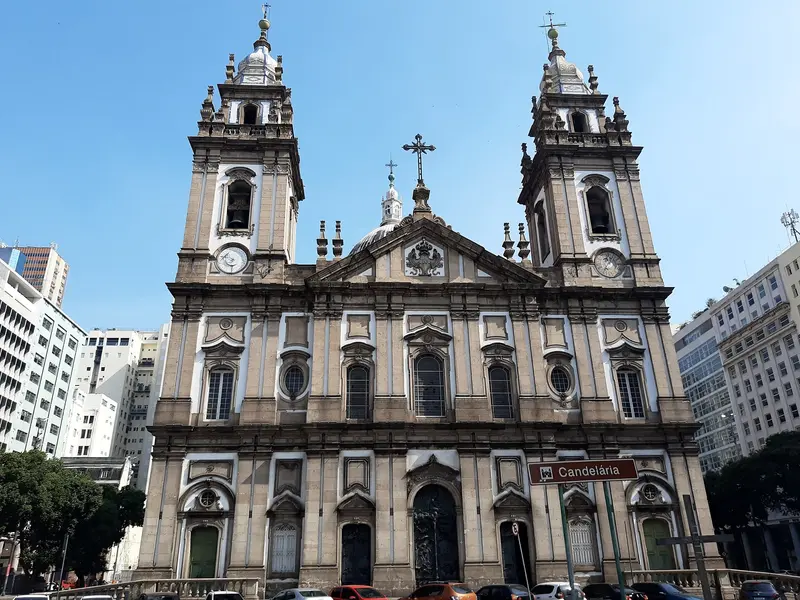
    6Igreja da Candelária

    The mighty church was built from 1775, consecrated in 1811, and its dome added in 1877. It lies right next to the CCBB and combines well with Kloster São Bento and Praça XV for a tour.
    Open in Google Maps

    Restaurants in Downtown and Port

    1

    Confeitaria Colombo

    Founded in 1894, this café with Belle Époque and Art Nouveau halls is an institution in Centro, known for pastries, desserts, and coffee under grand mirrors. Branches are located at CCBB and Forte de Copacabana. Rua Gonçalves Dias 32.
    Show on Google Maps

    History in the Centro

    Court and Colonial EraFrom 1763, the viceroys resided in the Paço Imperial, and from 1808, King João VI with the Portuguese court. Monasteries like São Bento (founded 1586) and churches such as the Candelária characterize the district.Pequena ÁfricaIn the port district of Saúde, the Cais do Valongo and Pedra do Sal recall the Afro-Brazilian heritage; the Pedra do Sal is considered the birthplace of Samba and has been recognized as a Quilombo territory since 2005.

    Out and about in Centro

    Getting ThereFrom the beach districts, take the Metrô to the Centro (Fare R$ 7.90, as of 2026). Santos Dumont Airport is on the edge of the Centro.When to GoVisit during weekdays, daytime; according to the Foreign Office, the center is deserted and unsafe after business hours, on weekends, and public holidays.For the walking tour from São Bento via Candelária, Praça XV, and Colombo to the Theatro Municipal, allow half a day, including visits.Exception: The Samba-Roda at Pedra do Sal takes place on Monday evenings; use a ride-hailing service for the round trip.

    Accommodations in Downtown and Port

    Find perfect stay in Downtown and Port

    Booking.com* (Affiliate link)
    Search Hotels
    Agoda* (Affiliate link)
    Search Hotels
    Airbnb
    Vacation Rentals

    * Affiliate link: if you book through it, we earn a small commission. The price stays the same for you.

    Plan your trip to Downtown and Port

    Save places, build a route and plan your city trip, all in one place.

    1. 1
      Sunrise over alpine peaks and a sea of clouds
      1234

      Round trip

      12 days · 4 stops

      Saved

      Pick a route

      Pick a ready-made one or save places and plan your own.

      Open bookmarks
    2. 2

      Trip to Downtown and Port

      Live
      • 1Monastery of São Bento3 days
      • 2Paço Imperial and Praça XV4 days
      • 3Real Gabinete Português de Leitura5 days
      Budget

      Plan your trip

      The planner sorts stops, days and budget. Plan together in real time.

      Start trip planning
    3. 3
      9:41 No signal
      Downtown and Port
      Available offline

      Use it on the road

      Download the guide to your phone and use it on site, even offline.

    Nearby

    Santa Teresa and Lapa

    Santa Teresa is the artists' quarter on the hill above the city center; Time Out calls it Rio's "bohemian district." The historic Bonde goes up over the Arcos da Lapa; at the top await restaurants like Aprazível and Bar do Mineiro's feijoada. Down in Lapa are the Escadaria Selarón and samba houses like Rio Scenarium and Carioca da Gema.For Lapa, the German Foreign Office explicitly warns of K.O. drops; for your evening return, take a ride service.
    Rio de Janeiro

    Rio de Janeiro

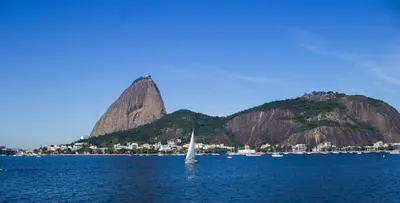
    The Federal Foreign Office provides safety advice for Rio, concerning favelas, beaches at night, and K.O. drops in Lapa; this information is linked on its country page.With around 6.7 million inhabitants, Rio de Janeiro is Brazil's second-largest city, situated between granite mountains, rainforest, and Guanabara Bay. Since 2012, its urban landscape, "Carioca Landscapes between the Mountain and the Sea," has been on the UNESCO World Heritage List – the first urban cultural landscape ever. People come for the Christ the Redeemer statue on Corcovado, the Sugarloaf cable car, the beaches of Copacabana and Ipanema, and Lapa's samba nights.The city was founded on March 1, 1565; it was the capital from 1763 to 1960, and home to the Portuguese court from 1808. Its districts vary greatly: The Centro preserves monasteries and Belle Époque buildings, Santa Teresa is located on a hill above it, and the beach districts of Zona Sul stretch southwest.

    Arnaldo Silva·Pexels

    Urca and Botafogo

    The quiet residential district of Urca lies at the foot of Sugarloaf Mountain, where the cable car departs from Praia Vermelha, and on the seawall in front of Bar Urca, you can eat snacks with a view of Guanabara Bay. In neighboring Botafogo, restaurants like the Michelin-starred Oteque and several Bib Gourmand establishments have settled.

    Copacabana and Leme

    The Auswärtige Amt names Copacabana among the districts where thefts and muggings occur even during the day, and advises against nocturnal beach walks; the warnings are linked on their country page.Copacabana is Rio’s most famous beach district: roughly four kilometers of sand stretch from Leme rock in the northeast to Forte de Copacabana in the southwest, lined by the promenade with Roberto Burle Marx's wave pattern. Leme, at its eastern end, is a quieter, small enclave. Here, the grand Réveillon fireworks take place on New Year’s Eve.The surf is strong, and after rain, the water is often polluted: The environmental agency INEA shows the bathing water quality; green means swim, red means better stay on the beach.

    Ipanema and Leblon

    Ipanema and Leblon are the beach neighborhoods west of Copacabana; at the eastern end, the Arpoador rock juts into the sea. Behind the beach, the city's top gastronomy is clustered together, with Michelin-starred restaurants like Oro, Oseille, and Madame Olympe, and several Bib Gourmand addresses.

    Your next steps

    Downtown and Port is in Brazil. Ways to carry on from here.

    • More in Brazil

      Highlights, areas, routes and the best time to travel for all of Brazil.

      Brazil travel guide
    • Round trips in Brazil

      Ready-made routes through Brazil, with stops, nights and a map.

      See the routes

    Sources & method

    • Photos: Wikimedia Commons. Each photo carries its credit.
    • Place data such as addresses and ratings comes from Google Maps.
    • The content is based on web research from public, traceable sources. How the content is made · The role of AI