The most popular circuit through Costa Rica connects the capital with the canal system of Tortuguero on the Caribbean, Arenal Volcano, the Monteverde cloud forest, and the beach coves of Manuel Antonio on the Pacific coast. It can be explored by rental car, tourist shuttles, or as an organized tour.
14 Days / 13 Nights
December to April
5 stops
Why This Route?
The route covers the Caribbean coast, volcanic landscapes, cloud forests, and Pacific beaches in two weeks, without long domestic flights. The Arenal-Monteverde leg can be shortened by a boat-road combination across Lake Arenal.
Hidden Gems
Peninsula sector in Arenal National Park with lake views
Santa Elena Reserve as a quieter alternative to Monteverde Reserve
early morning to Manuel Antonio Park entrance, when it's not busy
Getting there and back
Round trip, returning to where you started
Arrival
Flight · San José (SJO)Juan Santamaría Airport is about 20 kilometers from downtown San José; taxis, shuttles, and rental cars are available.
Departure
Flight · San José (SJO)From Manuel Antonio to SJO Airport, you'll need about three and a half hours by car.
Itinerary
Stop 1 • 2 Nights
San José
City
Route highlight
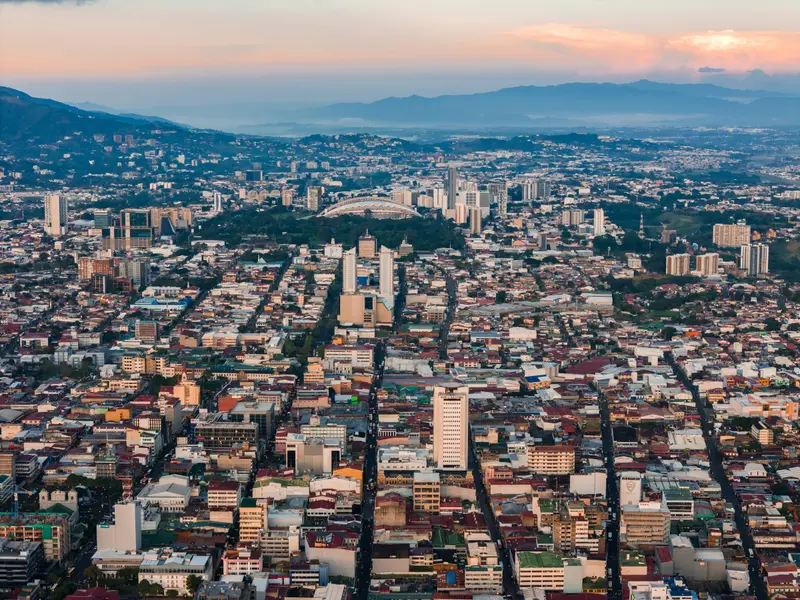
San José is the capital of Costa Rica and the heart of the Central Valley. Almost all travelers arrive here. One to two days are sufficient to visit the museums of pre-Columbian gold and jade, the National Theater, and the market halls before continuing on to volcanoes and coasts. The city lies at an altitude of approximately 1,030 meters and has been the capital since 1823; Juan Santamaría International Airport is located a good 20 kilometers away in Alajuela.The center around the Plaza de la Cultura is compact and easily explored on foot. Here you'll find the Teatro Nacional, which opened in 1897, and below it the Museo del Oro Precolombino. A few blocks to the east are the Museo del Jade and the Museo Nacional, located in the former Bellavista army barracks. West of the Cathedral, the Mercado Central has occupied an entire block on Avenida Central since 1880, featuring over 200 stalls and simple sodas in narrow passageways.Barrio Amón, north of the center, emerged in the late 19th century as a residential quarter for the coffee oligarchy. Among low wooden houses with verandas and wrought-iron railings stand buildings like the 1930 Mudéjar-style Castillo del Moro or the prefabricated metal building from 1890, which has housed the Alianza Francesa since 1965. Many of the restored villas now accommodate small hotels, cafés, and galleries. Some streets are considered sparsely populated in the evenings, so you're better off taking a taxi at night there.Barrio Escalante in the east is the city's restaurant district. Around Calle 33, eateries have set up shop in old residential buildings: vegan cafés, specialty coffee, craft beer pubs, and cuisines ranging from Mediterranean to Mexican. This area is liveliest in the evenings, and accordingly, most of the city's bars are located in this neighborhood.
Museums and market hall in the center, dinner in Barrio Escalante
6 Sights
3 Restaurants
Culture in San Jose
Coffee and RepresentationCoffee exports financed modern San José in the 19th century. The Teatro Nacional was paid for by a coffee tax, and inside, the mural “Alegoría al café y el banano” by Aleardo Villa depicts the two export goods that shaped the country. The villas in Barrio Amón date from the same period.A Country Without an ArmyCosta Rica abolished its army in 1948. Its former headquarters, Cuartel Bellavista, is now the National Museum; a wall there commemorates the symbolic act. The exhibitions span from pre-Columbian cultures to the present day.
Tortuguero is a national park and a small village on Costa Rica's northern Caribbean coast, accessible only by boat or small plane. You come here for boat tours through a network of rainforest canals and lagoons, and for the sea turtles that lay their eggs on the beaches.The national park was founded in 1975 and covers approximately 312 square kilometers. On its beaches, Green Sea Turtles, Leatherback Sea Turtles, Hawksbill Sea Turtles, and Loggerhead Sea Turtles nest. The Green Sea Turtle is the most common and arrives from July to October, peaking in September and October; Leatherback Turtles nest less frequently and from March to May.The village, with around 1,200 inhabitants, is located on a narrow strip of land between the Caribbean and the canal. A car-free path connects the boat dock with the ranger station at the south end of the village. At the north end, the Sea Turtle Conservancy, which began its research in Tortuguero in 1959, operates a small visitor center with a museum.The park is best experienced via its waterways. Guided canoe or boat tours show you monkeys, sloths, birds, and caimans, which you often miss on your own; you can also rent kayaks yourself. On land, there are only a few, often muddy paths. Admission for foreign visitors costs 15 US dollars and is purchased online from SINAC; the ticket is valid for land and water trails.Turtle observation on the beach is only permitted at night with a certified guide. Cameras and white light are prohibited, and dark clothing is expected. Not far from the village rises the 119-meter-high Cerro Tortuguero, an old volcanic cone with panoramic views over canals and coastline.
Arrival by road to La Pavona, then by boat; canal tours in the National Park
3 Sights
Canal Village Life
A Place Without RoadsAs no roads lead to Tortuguero, people and goods arrive by boat. There are no cars in the village; movement is by foot or bicycle. Many lodges are situated on the opposite canal bank and are only accessible by boat.Turtle ConservationTurtles are central to the identity of the place. The Sea Turtle Conservancy has been researching nesting sites here since 1959. Night tours are strictly regulated and only possible with certified guides. The village's small restaurants offer Caribbean dishes.
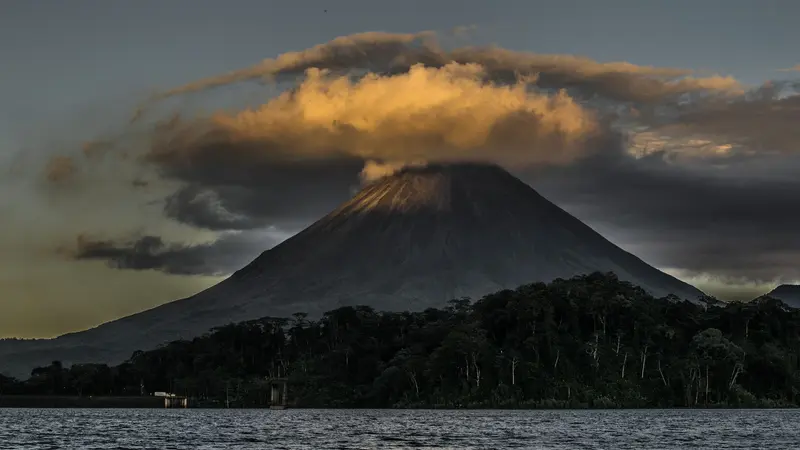
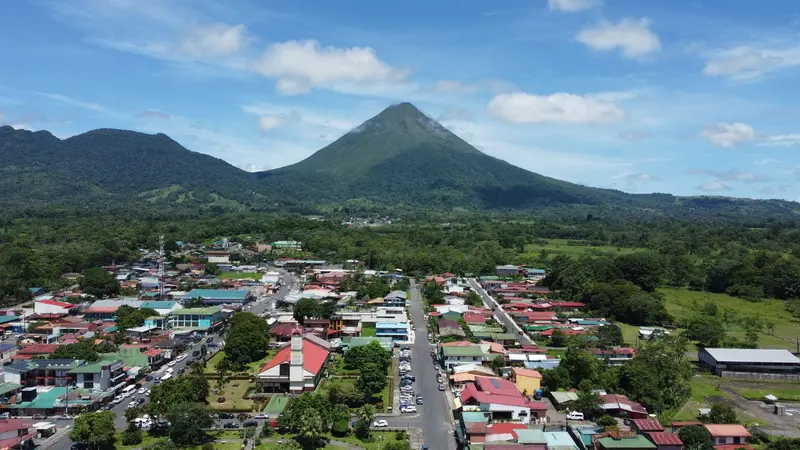
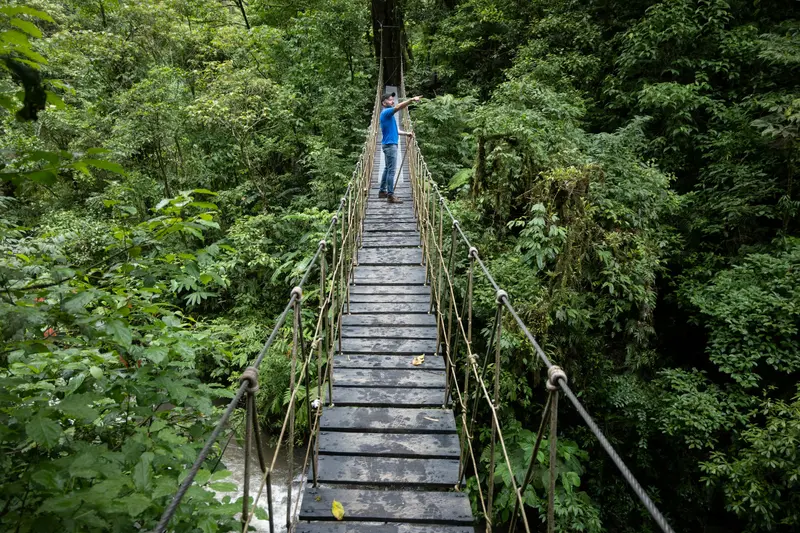
La Fortuna is the main town at the foot of Arenal Volcano in the Arenal and Monteverde region, about three to three-and-a-half hours' drive northwest of San José. You come here because the Arenal Volcano National Park, the Río Fortuna waterfall, and the surrounding hot springs are all easily accessible from the town.The town was founded in the mid-1930s by settlers from Ciudad Quesada, Grecia, and Alajuela, and was originally called El Burío. It owes its current name to the fertile soil, not, as is often recounted, to the 1968 eruption which hit the villages west of the volcano and spared La Fortuna.The town center spans just a few streets. Most accommodations, restaurants, and tour operators are located along the main road and around Parque Central with its church, behind which the cone of Arenal rises on clear days.The range of activities is wide: horseback riding, rafting, canyoning, ziplines, and hanging bridges are all available, as are the warm springs, which emerge at around 30 to 50 degrees Celsius, including along the Río Tabacón. Plan at least two full days, as the peak region is often shrouded in clouds.
Base for Arenal Volcano National Park, waterfall and hot springs
4 Sights
3 Restaurants
Culture and History
A Young Place in the Shadow of the VolcanoLa Fortuna only emerged in the 1930s as a farming settlement in the canton of San Carlos. The eruption of Arenal on July 29, 1968, buried the villages of Tabacón, Pueblo Nuevo, and San Luís on its west side. The subsequent activity, which continued for decades, made La Fortuna one of the country's most important tourist destinations.Life After the Active PhaseSince the end of the eruptions in 2010, the town has reoriented itself: hiking, hot springs, and nature observation are now the focus. A non-profit development association from the town manages the Río Fortuna waterfall.
Monteverde is the cloud forest highlands in the Arenal and Monteverde region, about a four-hour drive from the Valle Central around San José. You come here to hike through the Monteverde and Santa Elena cloud forest reserves, where mosses, epiphytes, and with a bit of luck, the quetzal can be seen.The settlement lies at around 1,300 to 1,400 meters. The main town and supply center is Santa Elena, with most accommodations, restaurants, and tour offices; along the road towards the reserve are Cerro Plano and the Quaker-founded Monteverde settlement.The climate is cool and often foggy. Besides the reserves, private parks like Selvatura offer hanging bridges and ziplines; several operators lead night walks in the evenings.Plan at least two nights. Early mornings are best for birdwatching, and a local guide increases your chances of spotting animals.
Arrival by boat across Lake Arenal and road; guided hike in the cloud forest
3 Sights
3 Restaurants
Culture and History
The Quakers of MonteverdeIn 1951, eleven Quaker families from Fairhope, Alabama, settled on the ridge. Several young men in the community had previously refused military conscription. The cool climate suited dairy farming, and in 1952, the Monteverde Cheese Factory was founded, processing milk from numerous local farms to this day.Protection of the Cloud ForestIn 1972, settler Wilford Guindon and biologist George Powell founded the Monteverde Cloud Forest Reserve, for which the Tropical Science Center acquired the land. The Golden Toad, endemic to this area, was last seen in 1989; its disappearance is linked to an amphibian fungal disease.
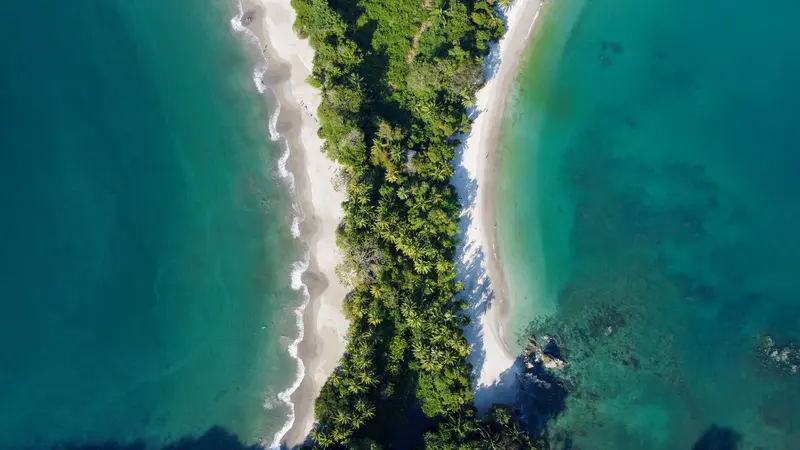
Manuel Antonio is the small town on the Central Pacific coast south of Quepos, where the national park of the same name begins, approximately 157 road kilometers from San José. You come for the park, where rainforest borders directly on bright sandy coves and sloths, capuchin monkeys, and squirrel monkeys are often seen up close.The national park, founded in 1972, covers almost 2,000 hectares of land and a significantly larger marine area. Although it is one of the smallest national parks in the country, it attracts the most visitors: Between 2012 and 2022, approximately 4.4 million people visited. Four beaches are located within the park, including Playa Manuel Antonio and Playa Espadilla Sur, separated by a land bridge leading to the rock formation Punta Catedral.The town itself consists of hotels, restaurants, and tour operators along the winding road that leads from Quepos over the hill down to Playa Espadilla. You can visit the public Playa Espadilla in front of the park entrance without a ticket.Important for planning: The park is closed on Tuesdays and otherwise open from 7 AM to 4 PM; the beaches within the park close an hour earlier. Tickets are available exclusively online through the SINAC national park authority system and not at the entrance; they are limited and often sell out early on many days.
National Park with sandy coves; tickets online, closed Tuesdays.
4 Sights
Park, Animals and Rules
Protected Area Under PressureManuel Antonio exemplifies the conflict between nature conservation and tourism. To limit the strain, visitor numbers are capped, single-use plastic is banned, and bags are checked at the entrance. Food is not allowed, only water in reusable bottles; feeding or approaching animals is prohibited.Guided ExplorationMany visitors book a certified nature guide with a spotting scope, who spots sloths, snakes, or frogs in the foliage that you might easily overlook alone. Check if the entrance ticket is included in the tour price. The park is home to three monkey species: Mantled Howler Monkeys, Capuchin Monkeys, and the endangered Central American Squirrel Monkeys.