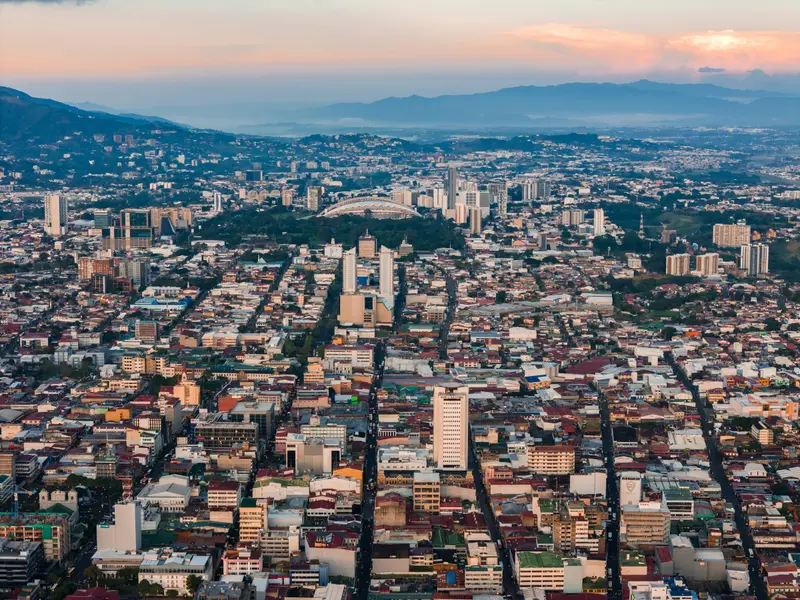
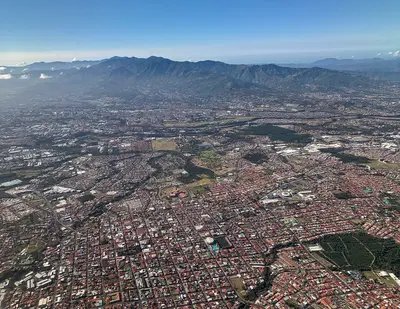
San José is the capital of Costa Rica and the heart of the Central Valley. Almost all travelers arrive here. One to two days are sufficient to visit the museums of pre-Columbian gold and jade, the National Theater, and the market halls before continuing on to volcanoes and coasts. The city lies at an altitude of approximately 1,030 meters and has been the capital since 1823; Juan Santamaría International Airport is located a good 20 kilometers away in Alajuela.The center around the Plaza de la Cultura is compact and easily explored on foot. Here you'll find the Teatro Nacional, which opened in 1897, and below it the Museo del Oro Precolombino. A few blocks to the east are the Museo del Jade and the Museo Nacional, located in the former Bellavista army barracks. West of the Cathedral, the Mercado Central has occupied an entire block on Avenida Central since 1880, featuring over 200 stalls and simple sodas in narrow passageways.Barrio Amón, north of the center, emerged in the late 19th century as a residential quarter for the coffee oligarchy. Among low wooden houses with verandas and wrought-iron railings stand buildings like the 1930 Mudéjar-style Castillo del Moro or the prefabricated metal building from 1890, which has housed the Alianza Francesa since 1965. Many of the restored villas now accommodate small hotels, cafés, and galleries. Some streets are considered sparsely populated in the evenings, so you're better off taking a taxi at night there.Barrio Escalante in the east is the city's restaurant district. Around Calle 33, eateries have set up shop in old residential buildings: vegan cafés, specialty coffee, craft beer pubs, and cuisines ranging from Mediterranean to Mexican. This area is liveliest in the evenings, and accordingly, most of the city's bars are located in this neighborhood.
Sights in San José
Discover the most important sights and attractions
Historic Landmark
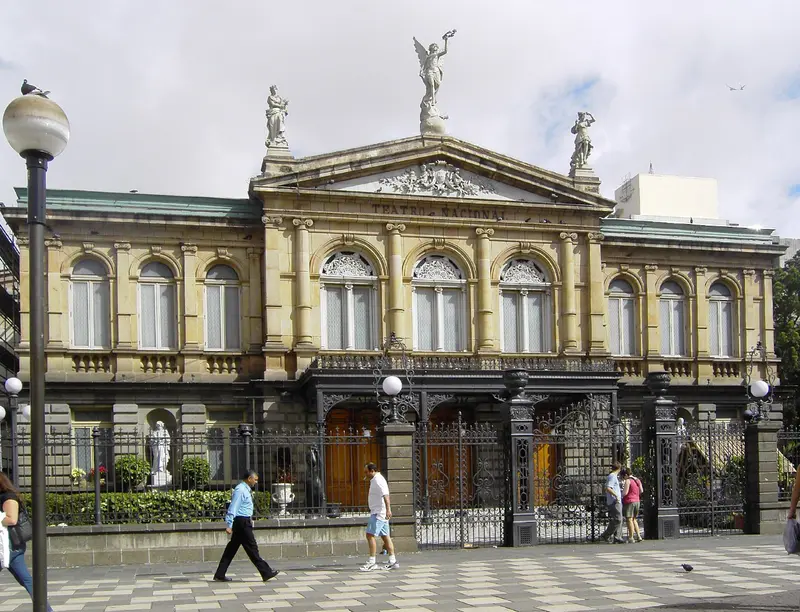
1National Theatre of Costa Rica
The neoclassical National Theatre was opened on October 21, 1897, and financed by a tax on coffee, then the country's main export. Inside hangs the mural „Alegoría al café y el banano“ by the Milanese painter Aleardo Villa. Since 1965, the building has been a National Monument; performances take place here several times a week.
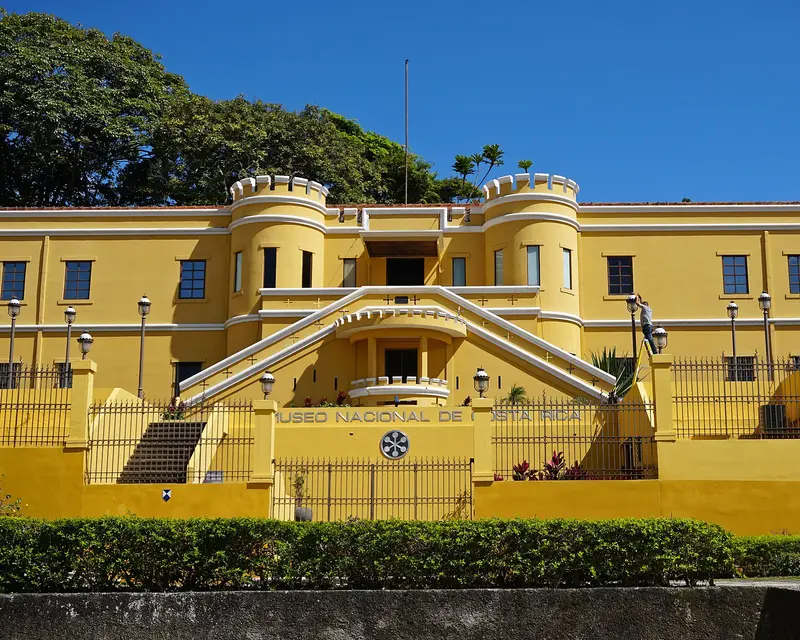
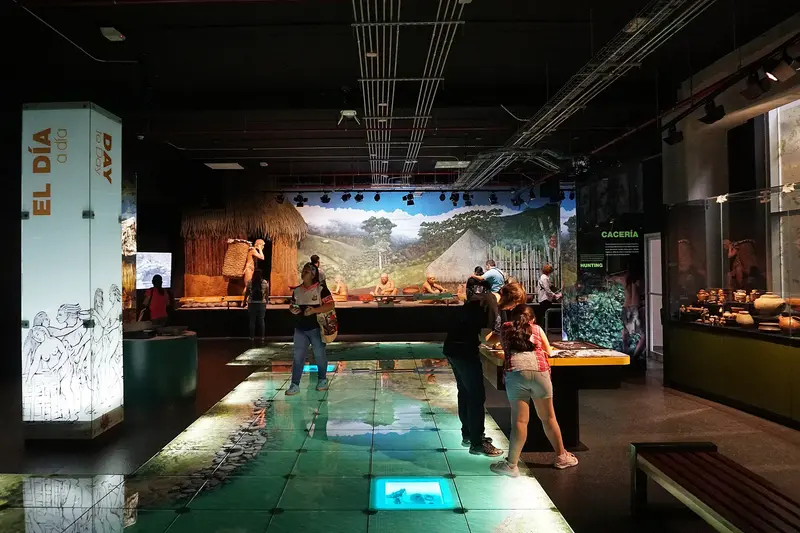
The National Museum occupies the former Cuartel Bellavista, until 1948 the army headquarters. A wall commemorates the symbolic blow that abolished the army. Exhibits range from pre-Columbian ceramic, stone, gold, and jade objects to the country's history; in the old cells, graffiti by prisoners from the 1940s is preserved. Open Tuesday to Sunday.
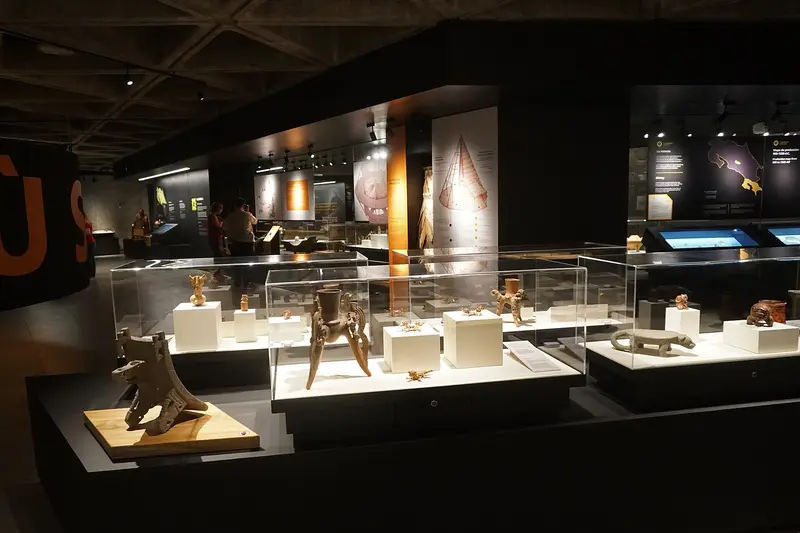
The Gold Museum is located underground beneath the Plaza de la Cultura, right next to the National Theater. It showcases gold artifacts of indigenous cultures from the pre-Columbian era, including figures and jewelry, as well as a coin collection. It combines well with the Jade Museum and the National Museum in one day.
The Jade Museum showcases a large collection of pre-Columbian jade, plus archaeological, anthropological, and geological exhibits. It's just a few blocks east of the Plaza de la Cultura, near the National Museum, making both easily visitable in sequence.
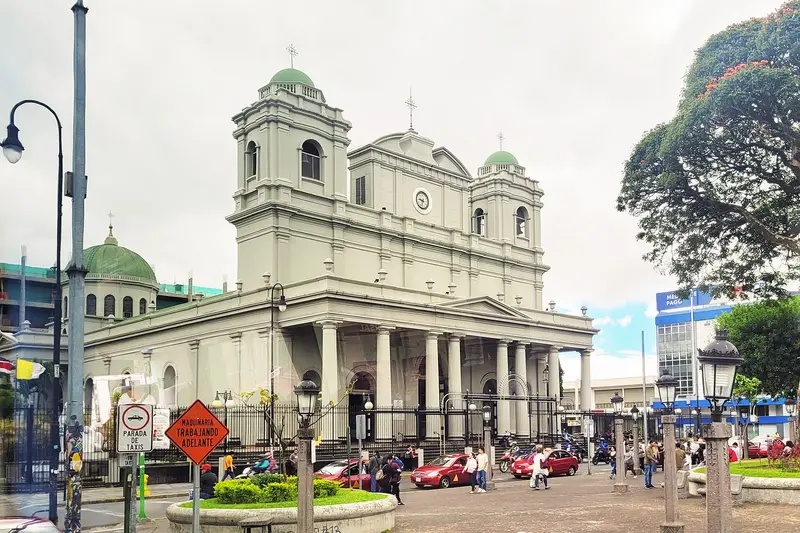
The Metropolitan Cathedral is the main church of the capital and stands on Calle Central between Avenidas 2 and 4, a few minutes' walk from the Plaza de la Cultura. The first building from 1802 was destroyed by an earthquake; today's building is a later reconstruction.
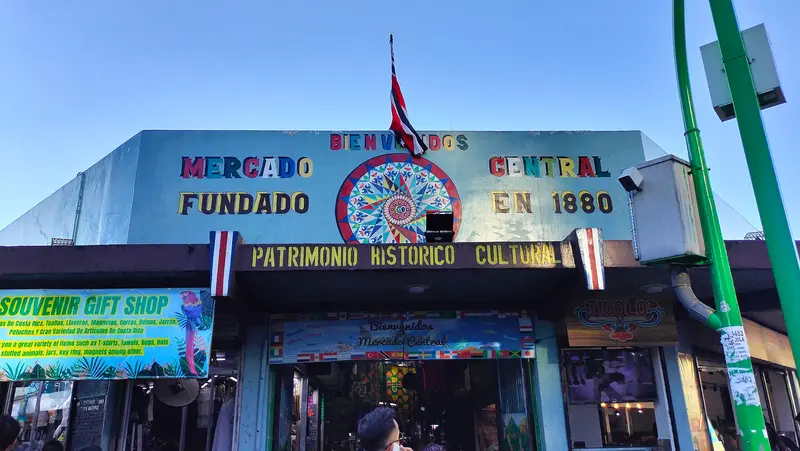
The 1880 market hall occupies an entire block on Avenida Central, about 250 meters northwest of Parque Central. In its narrow aisles, over 200 stalls jostle with fruit, meat, fish, coffee, spices, medicinal herbs, leather goods, and souvenirs. In between are simple Sodas, where you can eat inexpensive Costa Rican food. Two blocks north is the Mercado Borbón, specializing in food.
The restaurant on Calle 11 offers pan-Asian cuisine, with dishes from China, Japan, Thailand, India, and Korea on the menu. It's a short walk southeast of downtown museums.
The cafe is in the Teatro Nacional, perfect for coffee and cake in a historic setting, such as before or after a theater tour or a visit to the adjacent Gold Museum.
Coffee and RepresentationCoffee exports financed modern San José in the 19th century. The Teatro Nacional was paid for by a coffee tax, and inside, the mural “Alegoría al café y el banano” by Aleardo Villa depicts the two export goods that shaped the country. The villas in Barrio Amón date from the same period.A Country Without an ArmyCosta Rica abolished its army in 1948. Its former headquarters, Cuartel Bellavista, is now the National Museum; a wall there commemorates the symbolic act. The exhibitions span from pre-Columbian cultures to the present day.
Gastropub with craft beer in Barrio Escalante, the entertainment district east of the center. A good starting point for an evening around Calle 33, where many more bars and restaurants are located.
On Foot and by TaxiThe city center, with its Plaza de la Cultura, museums, and Mercado Central, is best explored on foot. For trips to Barrio Escalante or in the evenings, take a taxi: Official taxis are red and have a yellow triangle on the door; make sure the driver switches on the meter, known as “la maría.” Uber operates in San José but legally remains in a gray area.Bus and TrainPrivate bus companies connect the city with the airport and the rest of the Valle Central, while long-distance buses to other parts of the country depart from various terminals. The state railway INCOFER operates commuter trains on three lines to neighboring towns.