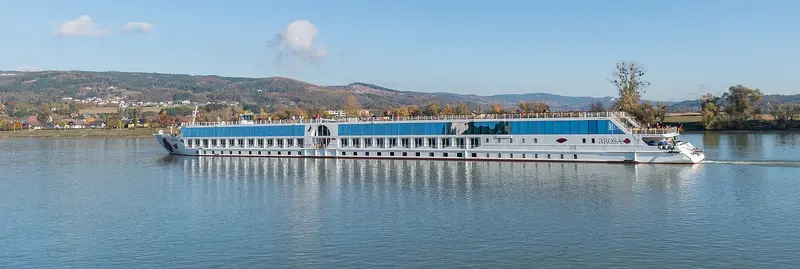
Tournasol7 / Wikimedia Commons / CC BY 4.0, mod.
Cruise · A-ROSA · A-ROSA Mia, Bella, Donna
A-ROSA Danube Short Cruise: Passau, Vienna, Wachau and Linz
by Felix Gillen
- 5 Days / 4 Nights
- Passau → Passau
- Sails Mar 7, 2027
A four-night river cruise on the Danube, from Passau to Vienna and back via the Wachau and to Linz. The ship sails not on the sea, but on the river, docks right in the towns, and from the deck you'll see vineyards, monasteries, and castle ruins along the banks. The ship cruises through the Wachau on the morning of the second day; in Vienna you have the afternoon and evening; and a full day each in Dürnstein and Linz. Departures: March 7, 2027, with A-ROSA MIA; March 10, with A-ROSA BELLA; November 4 and 8, with A-ROSA DONNA or A-ROSA MIA.
A cruise by A-ROSA
- You book the trip with A-ROSA. Fernweh does not sell trips.
- “Plan Trip” adds the ports, times in port and sea days to your trip planner, with the way there and back.
- For every port you find tips for going ashore on your own.
At a glance
- Duration
- 5 Days / 4 Nights
- Stops
- 5 · Passau → Passau
- Countries on the route
- Germany, Austria
- Arrival
- Train · Passau Hbf
- Ship
- A-ROSA Mia, Bella, Donna (A-ROSA)
- Sailings
- Mar 7, 2027, Mar 10, 2027, Nov 4, 2027, Nov 8, 2027
- Best Time to Go
- March and November, when places are quiet
More on when to go
Expect cool, often foggy days and warm clothing on deck
5 stops
Why This Route?
In four nights, you'll see the Danube between Bavaria and Vienna without packing a suitcase or flying – you travel by train. The Wachau is a UNESCO World Heritage site, and in Dürnstein, the ship moors directly in town for a whole day, letting you climb to the castle ruins and enjoy lunch at a Heuriger. In March and November, it's peaceful on board and in the towns, with the large summer groups gone.
Hidden Gems
- Dürnstein Castle Ruin: climb above the town where Richard the Lionheart was imprisoned, with Danube views
- Danube Cycle Path to Krems: approx. seven kilometers downstream from Dürnstein, flat along the bank
- Pöstlingberg in Linz: take the mountain railway up to the pilgrimage church above the city
Getting there and back
Round trip, returning to where you started
- Arrival
- Train · Passau HbfYou can reach Passau by ICE and regional train. On your arrival and departure days, A-ROSA offers a transfer from Passau train station to the ship, costing around 32 Euros per person for a round trip. The exact location of the ship can be found in your travel documents. Departure is at 4 PM, on the last day you will be back by 7 AM and can travel home in the morning.
- Departure
- Train · Passau Hbf
Itinerary
Passau
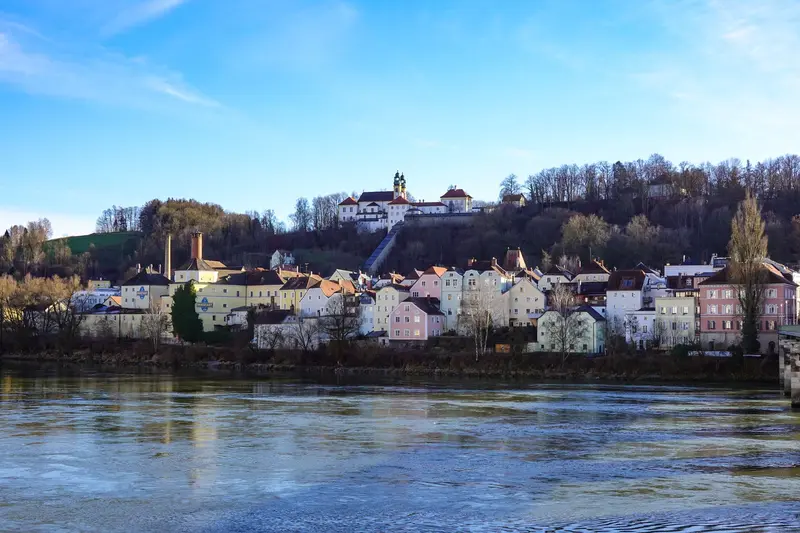
Passau is located at the border with Austria, where the Inn and Ilz rivers flow into the Danube, which is why it is called the Three Rivers City. The baroque Old Town on the narrow peninsula between the Danube and Inn is dominated by St. Stephen's Cathedral, whose organ is one of the largest in the world.On the other bank of the Danube, the Veste Oberhaus fortress stands on the hill, and river cruise ships depart from the quays for Vienna and Budapest.
Depart at 4 PM. If arriving at noon, first walk through the old town to St. Stephen's Cathedral and the tip of the headland where Inn and Danube meet. Here, the Danube is green-grey, the Inn light green; note the two colours side by side.
Departs 16:00
Vienna
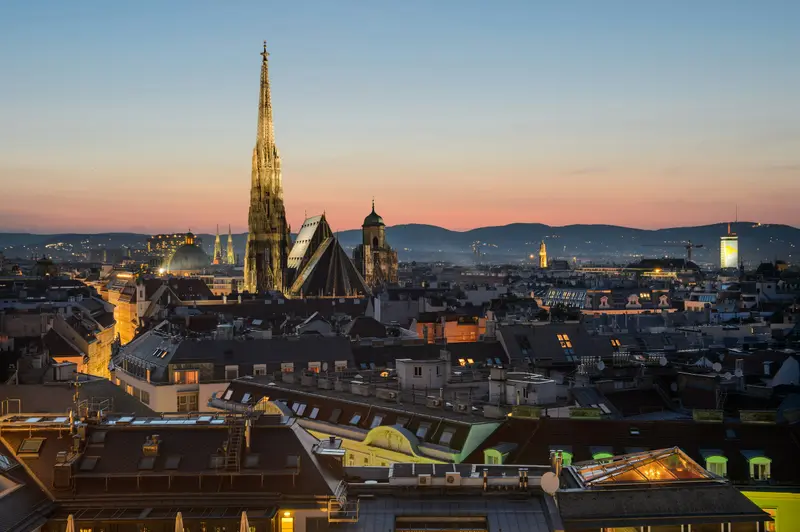
Austria's capital on the Danube was for centuries the residence of the Habsburgs. Around St. Stephen's Cathedral are the Hofburg, State Opera and the Ringstrasse; to the west is Schönbrunn Palace, and in the Prater, the Giant Ferris Wheel spins. Coffeehouse culture and Heurige are part of UNESCO's intangible cultural heritage.
The ship sails through the Wachau in the morning, docking in Vienna from 2 PM. The river cruise berths are located at Handelskai or in Nussdorf, a few kilometers from the city center; you can reach the center by subway in about half an hour. With nine and a half hours, you can manage St. Stephen's Cathedral and the Inner City, a stroll through Naschmarkt, and dinner at a Beisl before the ship departs at 11:30 PM.
9 Sights
5 Restaurants
Kaffeehaus, Heuriger and Music
Coffee House and HeurigerViennese coffee house culture and Heuriger culture are part of the intangible cultural heritage. In a coffee house, you can stay as long as you like; at a Heuriger, vintners on the city's outskirts serve their own wine. A pine branch and the sign "Ausg’steckt" indicate that it's open. "Heuriger" also refers to the young wine, traditionally available until St. Martin's Day on November 11.Imperial LegacyFor centuries, Vienna was the residence of the Habsburgs. The Hofburg houses the Imperial Apartments, Sisi Museum, and Imperial Treasury; in the west of the city lies Schönbrunn Palace with its Tiergarten (zoo), founded in 1752, the world's oldest still-existing zoo. The Habsburgs have been interred in the Imperial Crypt (Kaisergruft) beneath the Capuchin Church since 1633.Art and MusicGustav Klimt's "The Kiss" is in the Upper Belvedere; the Leopold Museum (MuseumsQuartier) showcases Egon Schiele and Klimt.The Kunsthistorisches Museum at Maria-Theresien-Platz holds the world's largest Bruegel collection.UNESCO honors Vienna as a leading European music center from the 16th to 20th centuries. The State Opera on the Ringstrasse is its musical heart, and the Opera Ball one of the nation's most famous social events.
In port 14:00–23:30
Dürnstein
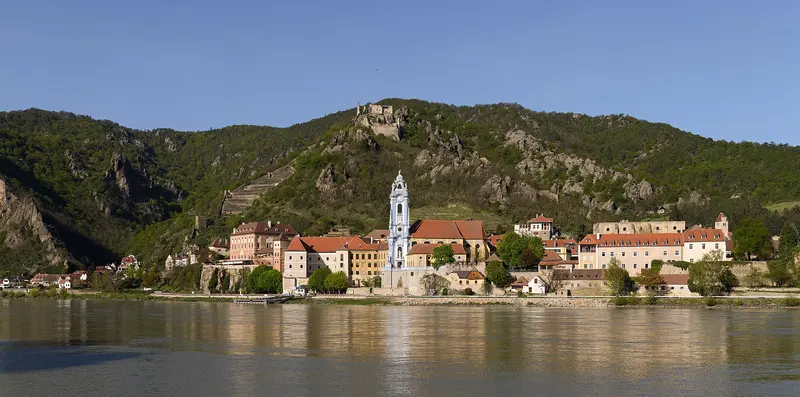
One of the main towns of the Wachau, identifiable by the white and blue tower of Dürnstein Abbey. Above the town lies the castle ruin where English King Richard the Lionheart was held after his capture.
The ship docks right in the village. In the morning, climb to the castle ruins where Richard the Lionheart was held captive; from there, you'll see across the Danube Valley. Below, in the village, stands the Collegiate Church with its blue tower. At midday, enjoy Wachau specialties at a Heuriger or Gasthaus. For those who wish, a rental bike offers a ride downstream to Krems on the Danube Cycle Path.
2 Sights
1 Restaurant
In port 07:00–18:00
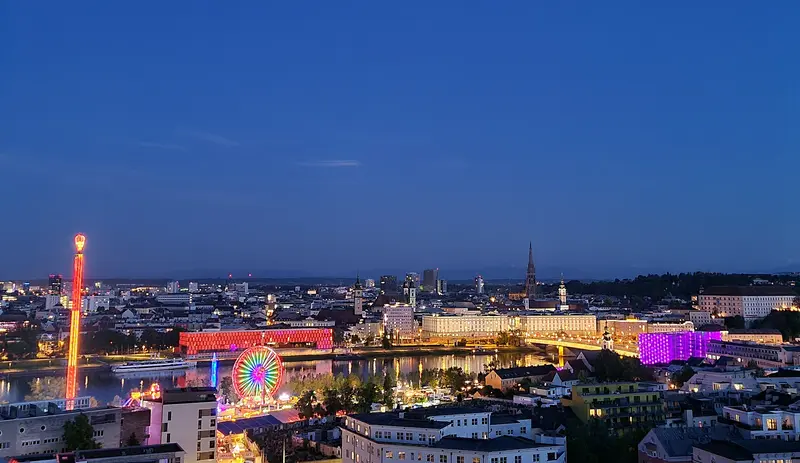
Linz
The capital of Upper Austria and the country's third-largest city lies on both sides of the Danube. The former steel city has transformed into a cultural hub with Ars Electronica, the Lentos Art Museum, and the Brucknerfest; Linz was European Capital of Culture in 2009.
The mooring points are on the Donaulände, close to the Lentos Art Museum and Main Square, so you can walk to the city center. Across the river on the opposite bank is the Ars Electronica Center. Take the Pöstlingbergbahn up to the pilgrimage church, and from the top, enjoy views of the city and river. Don't miss trying Linzer Torte in one of the Old Town's confectioneries.
6 Sights
3 Restaurants
Culture in Linz
Churches and SquaresThe main square, spanning approximately 13,200 square meters, was created in the 13th century. The Mariendom, completed in 1924, seats up to 20,000 people. During guided tours, 633 steps, the so-called Himmelsstiege, lead you to a stone balcony 112 meters high.Music and Media ArtLinz was European Capital of Culture in 2009. Along the Danube riverbank are the Ars Electronica Center with Deep Space 8K, the Lentos Art Museum, and the Brucknerhaus (opened in 1974), while the Musiktheater (2013) is in the Volksgarten. Anton Bruckner is buried under the organ named after him in Stift St. Florian, south of the city.Linzer TorteThe oldest known recipe for Linzer Torte dates back to 1653, and you can find it in many of the city's patisseries.
In port 07:00–19:30
Passau
Passau is located at the border with Austria, where the Inn and Ilz rivers flow into the Danube, which is why it is called the Three Rivers City. The baroque Old Town on the narrow peninsula between the Danube and Inn is dominated by St. Stephen's Cathedral, whose organ is one of the largest in the world.On the other bank of the Danube, the Veste Oberhaus fortress stands on the hill, and river cruise ships depart from the quays for Vienna and Budapest.
Arrive at 7 AM; after breakfast, disembark. Reach the main station by transfer or on foot. If you still have time, ascend to Veste Oberhaus.
Arrives 07:00
Plan this route as your trip
All stops, trains and nights go into your trip planner. You adjust dates and places to stay afterwards.
This route is a suggestion from our research. Please check timetables, times in port, opening hours and prices before you book – what your tour operator or carrier says is what counts.
Fernweh is a free travel guide and trip planner: routes researched by people, taken over in one click, used day by day on the road. More about Fernweh
5 stops
Route Summary
Duration5 Days
Stops5 Places
TypeCulture