The classic route connects the capital with medieval Kilkenny, the lakes and peninsulas of Kerry, and the west coast between the Cliffs of Moher and Galway. Along the way lie the Rock of Cashel, the Ring of Kerry, the Dingle Peninsula, and the Burren; from Galway you can reach Connemara or the Aran Islands as a day trip.
13 Days / 12 Nights
May to September
RV Friendly
7 stops
Why This Route?
The route covers in under two weeks most places travellers visit Ireland for, and avoids long backtracks: From Dublin, it loops via the Southeast to Kerry and up the West Coast, returning through the Midlands.
Hidden Gems
Instead of just the Ring of Kerry, drive the quieter Skellig Ring via Portmagee
In Kilkenny, visit Rothe House with Ireland's only fully preserved medieval urban plot
If it rains in the Burren, visit Aillwee Cave with an underground waterfall
On the way back to Dublin, stop in Clonmacnoise on the Shannon.
Getting there and back
Round trip, returning to where you started
Arrival
Flight · Dublin (DUB)Airport express buses to the center; pick up your rental car on day three – you won't need one in Dublin.
Departure
Flight · Dublin (DUB)
Itinerary
Stop 1 • 2 Nights
Dublin
City
Route highlight
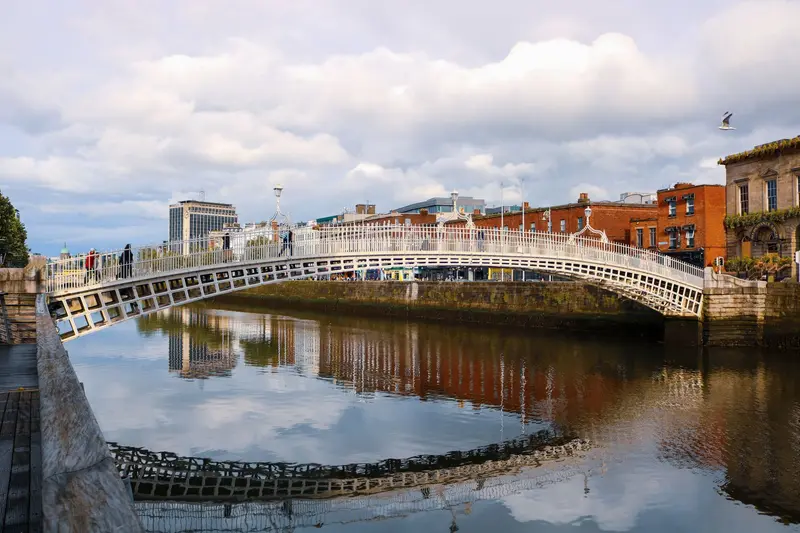
Dublin is the capital of Ireland and, with around 1.26 million inhabitants in the urban area including suburbs, is by far the country's largest city. The Liffey divides it into Northside and Southside; on its banks, Vikings established a fortified base in 841.You can easily reach the Book of Kells at Trinity College, the medieval cathedrals Christ Church and St Patrick's, Dublin Castle and Kilmainham Gaol prison, where 14 leaders of the 1916 Easter Rising were executed. You'll also find Georgian squares like Merrion Square, the brewery district The Liberties with the Guinness Storehouse, the modern Docklands and the fishing village of Howth at the end of the DART coastal line.
Trinity College, Cathedrals, Kilmainham Gaol (book in advance), Evening in a pub with live music
5 Sights
3 Restaurants
History and Culture
From Viking Settlement to Capital CityIn 841, Vikings established a fortified stronghold on the Liffey; the city officially dates its founding to 988. From 1204, under the Normans, Dublin, with Dublin Castle, became the seat of English, later British, rule, which remained here until 1922. Christ Church Cathedral dates back to a foundation around 1030, St Patrick's Cathedral was consecrated in 1191 and is Ireland's largest church; Jonathan Swift served as dean here and is buried here.Georgian Dublin and 1916The 18th century saw the development of Georgian squares in the city's southeast, such as Merrion Square, laid out from 1762, where Oscar Wilde spent his childhood. In the 20th century, Dublin became the scene of the Easter Rising; 14 of its leaders were executed at Kilmainham Gaol.Museums and LiteratureTrinity College hosts an exhibition featuring the Book of Kells, an illuminated Gospel manuscript, and the Long Room of the Old Library.The National Museum of Ireland on Kildare Street displays archaeological treasures such as the Tara Brooch and bog bodies.EPIC in the Docklands tells the story of Irish emigration.
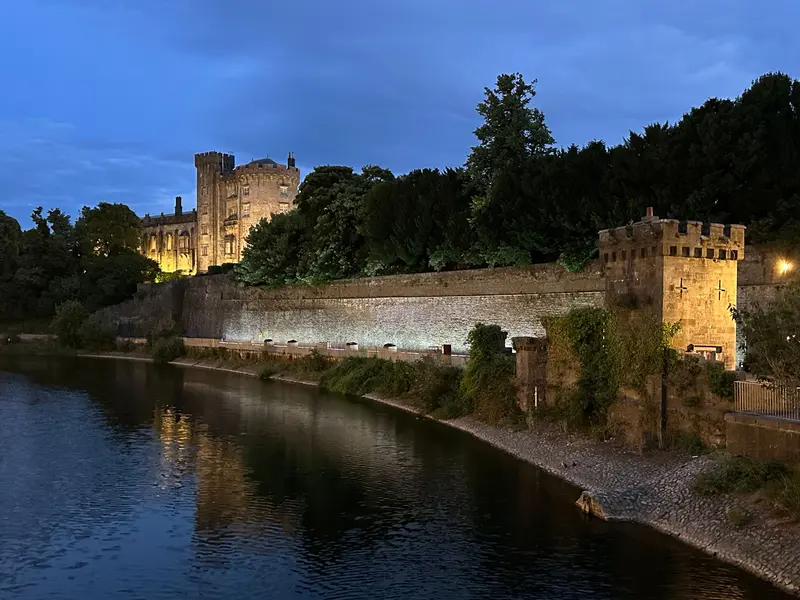
Kilkenny in southeast Ireland is a city with approximately 27,000 inhabitants and one of the best-preserved medieval cityscapes in the country. It lies on both banks of the River Nore; it owes its nickname "Marble City" to the dark limestone of the area, and from 1642 to 1649, the Confederation of Kilkenny met here.The Medieval Mile connects Kilkenny Castle, a 13th-century castle with Victorian alterations and a freely accessible park, with St Canice's Cathedral (1202–1285), whose approximately 30-meter-high 9th-century round tower you can climb. Along the way are the Medieval Mile Museum, Rothe House, the merchant's house, the Black Abbey, and the Smithwick's Experience, dedicated to the city's brewing tradition.
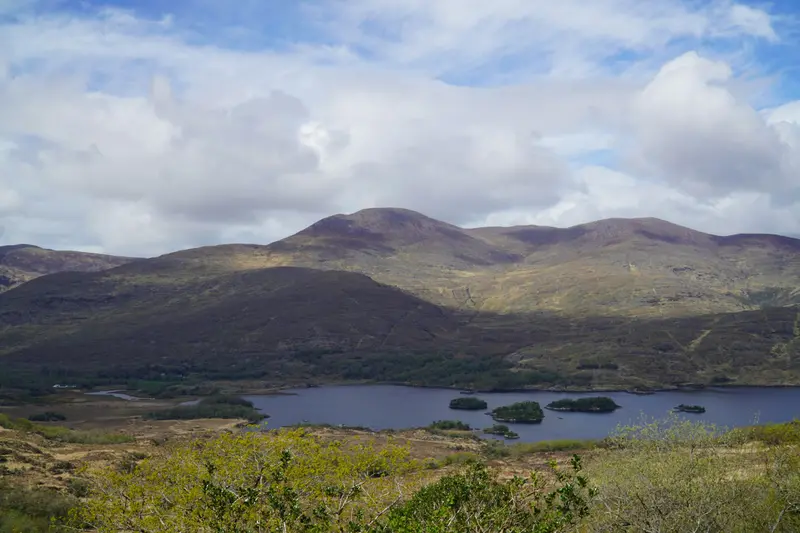
Killarney National Park in County Kerry, Ireland's first national park, was founded in 1932. It covers some 10,000 hectares, with three lakes, oak forests, and the foothills of the MacGillycuddy's Reeks. It is home to Ireland's only native red deer herd; since 1981, the area has been a UNESCO Biosphere Reserve.Classic sights include Muckross House (completed 1843), Ross Castle on Lough Leane, and the approx. 20-meter-high Torc Waterfall, only minutes from the car park. The Gap of Dunloe, an 11-kilometer glacial pass, can be explored on foot, by bike, or horse-drawn carriage; return by boat across the lakes to Ross Castle.
En route Rock of Cashel; a day Ring of Kerry, a day Muckross House and Gap of Dunloe
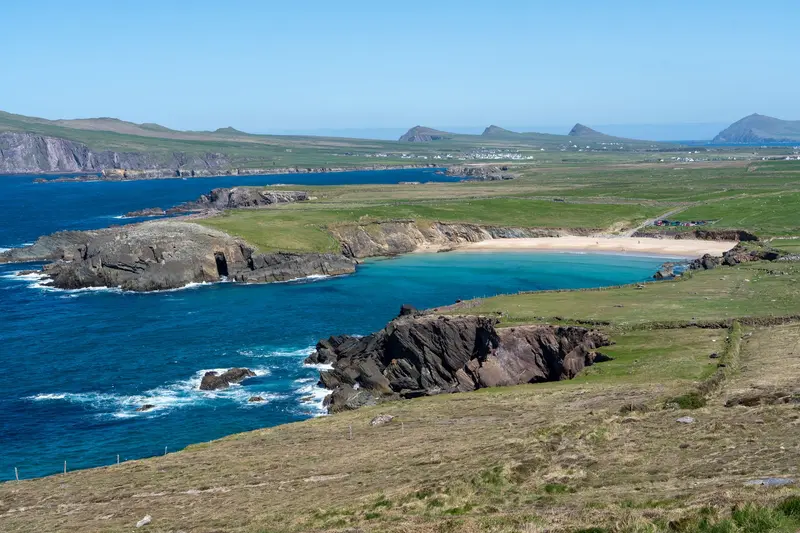
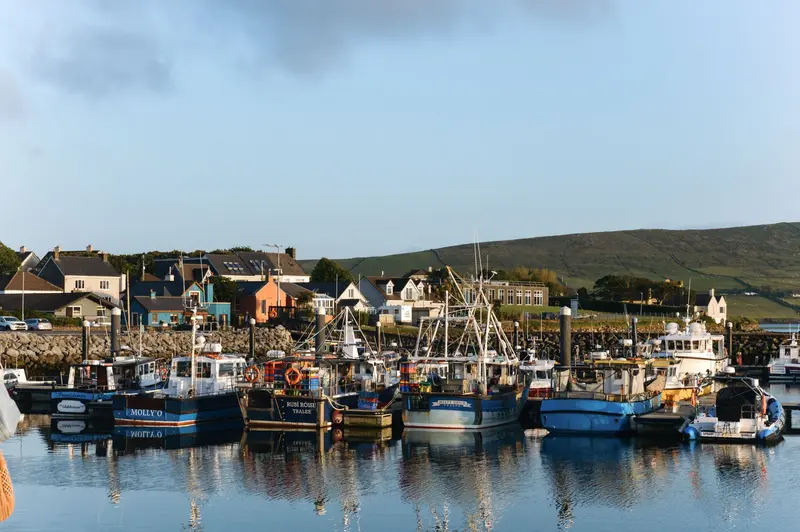
Dingle is a small harbour town on the southwest coast in County Kerry and a starting point for the Dingle Peninsula, whose cliffs, beaches, and stone monuments are among Ireland's most impressive landscapes. The town (An Daingean) is located in the Irish-speaking region of Corca Dhuibhne; you'll find colourful rows of houses, pubs with live music, a whiskey distillery, and fish restaurants by the harbour.The Slea Head Drive is a circular route along the western tip of the peninsula, passing the stone fort Dunbeg, beehive-shaped stone huts, the Blasket Centre, and the early Christian Gallarus Oratory. Drive it clockwise and follow the signage. Buses, caravans, and motorhomes are not permitted to drive over the Conor Pass northbound; the limit is 2 tons in weight.
Slea Head Drive clockwise; do not go over Conor Pass with a motorhome.
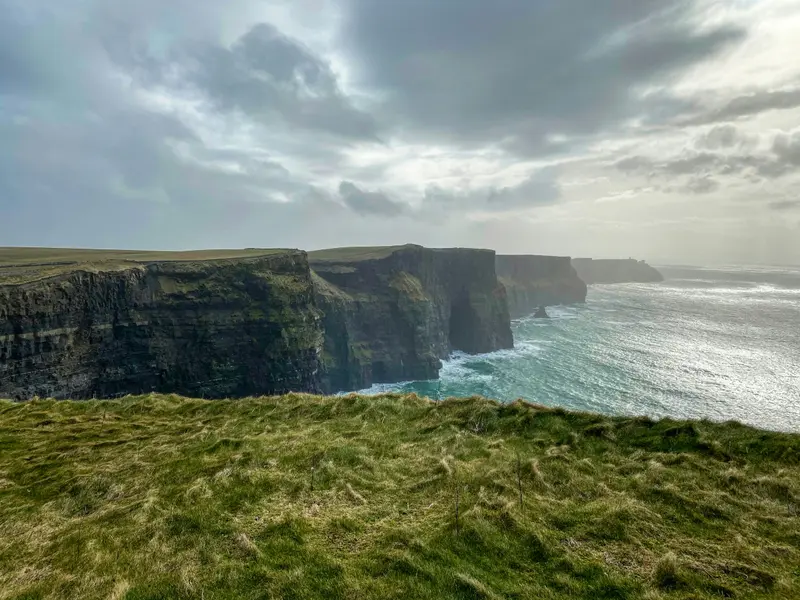
The Cliffs of Moher on the Atlantic coast of County Clare reach a height of 214 meters north of O'Brien's Tower and are Ireland's most visited natural attraction. From the viewing platforms, on a clear day, you can see as far as the Aran Islands; seabirds breed on the rock ledges, including puffins in early summer.The Cliffs of Moher Experience, whose visitor center is built into the hillside, is open daily; the ticket includes parking and is cheaper online. The coastal path is only partially accessible in 2026: The southern section towards Hag's Head is completely closed; the visitor center cannot be reached from Doolin. Around the visitor center, about 3.5 km of path is open. Boat tours from Doolin offer a different perspective.
Overnight stay in Doolin; Cliffs and Burren with Poulnabrone Dolmen
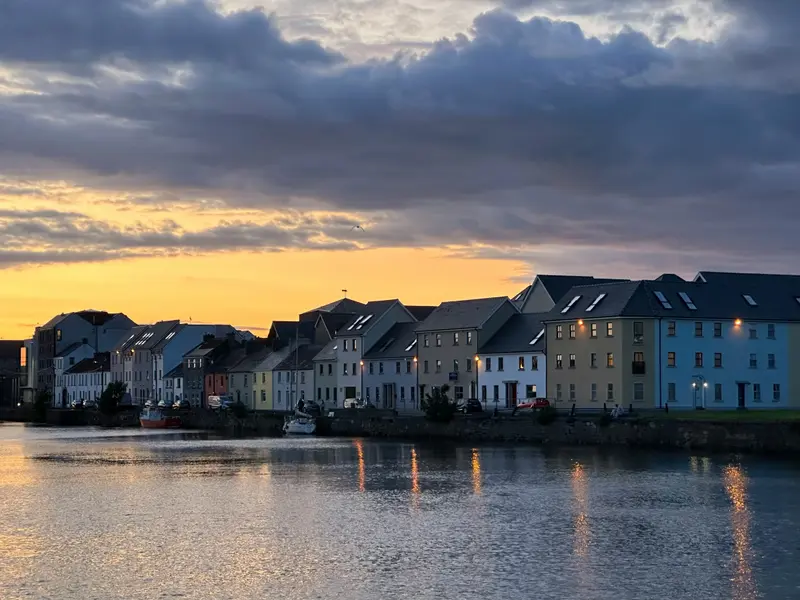
With around 86,000 inhabitants, Galway is the largest city on the west coast and was European Capital of Culture in 2020. Life revolves around the Latin Quarter near Quay Street, with pubs, street music, and small shops; on the riverbank stands the Spanish Arch, a remnant of the medieval city wall, right next to it the Galway City Museum.Eyre Square marks the center of the new town, and to the west, the Salthill promenade stretches about two kilometers along Galway Bay. The city is a starting point for Connemara and the Aran Islands, with year-round ferries departing from Rossaveal, located about 37 kilometers away.
Latin Quarter; Day trip to Connemara or the Aran Islands
Dublin is the capital of Ireland and, with around 1.26 million inhabitants in the urban area including suburbs, is by far the country's largest city. The Liffey divides it into Northside and Southside; on its banks, Vikings established a fortified base in 841.You can easily reach the Book of Kells at Trinity College, the medieval cathedrals Christ Church and St Patrick's, Dublin Castle and Kilmainham Gaol prison, where 14 leaders of the 1916 Easter Rising were executed. You'll also find Georgian squares like Merrion Square, the brewery district The Liberties with the Guinness Storehouse, the modern Docklands and the fishing village of Howth at the end of the DART coastal line.
Return trip via Clonmacnoise
5 Sights
3 Restaurants
History and Culture
From Viking Settlement to Capital CityIn 841, Vikings established a fortified stronghold on the Liffey; the city officially dates its founding to 988. From 1204, under the Normans, Dublin, with Dublin Castle, became the seat of English, later British, rule, which remained here until 1922. Christ Church Cathedral dates back to a foundation around 1030, St Patrick's Cathedral was consecrated in 1191 and is Ireland's largest church; Jonathan Swift served as dean here and is buried here.Georgian Dublin and 1916The 18th century saw the development of Georgian squares in the city's southeast, such as Merrion Square, laid out from 1762, where Oscar Wilde spent his childhood. In the 20th century, Dublin became the scene of the Easter Rising; 14 of its leaders were executed at Kilmainham Gaol.Museums and LiteratureTrinity College hosts an exhibition featuring the Book of Kells, an illuminated Gospel manuscript, and the Long Room of the Old Library.The National Museum of Ireland on Kildare Street displays archaeological treasures such as the Tara Brooch and bog bodies.EPIC in the Docklands tells the story of Irish emigration.