The tour begins in Olbia, taking a ferry from Palau to the La Maddalena Archipelago, crossing the north to Alghero, then continuing down the west coast via Bosa and Oristano to Cagliari. Without a rental car or campervan, you'll barely reach the bays. From La Maddalena to Alghero, the drive is about three hours.
14 Days / 13 Nights
May–October
RV Friendly
6 stops
Why This Route?
For campers and beach holidaymakers who want to connect Sardinia's coasts at a relaxed pace with small towns like Alghero and Bosa.
Hidden Gems
Escala del Cabirol at Capo Caccia near Alghero, rock steps down to Neptune's Grotto
S'Archittu, a rock arch in the sea between Bosa and Oristano
Tharros on the Sinis Peninsula near Oristano, a Punic-Roman ruined city by the water.
Itinerary
Stop 1 • 2 Nights
Olbia
City
Rich in culture and history. Dreamy beaches and Ideal for road trips and car travel.
Olbia is located on a bay in northeastern Sardinia. The port is the island's most important passenger harbor, and Olbia Costa Smeralda Airport lies south of the city.CityThe most significant building is the Romanesque Basilica di San Simplicio, mostly of granite.HistoryPhoenicians and Greeks came to the coast; the Carthaginians built a fortified city, and the Romans followed later. The Archaeological Museum at the harbor displays Roman ship parts; nearby are a well sanctuary and a giant's tomb.
5 Sights
4 Restaurants
Culture
The name Olbia derives from the Greek word ólbios, meaning "happy." Remains of a Roman aqueduct from the 1st and 2nd centuries, which carried water about seven kilometers to the city's thermal baths, are preserved near Tilibbas. In the Middle Ages, the city was called Civita, later Terranova, and from 1862 Terranova Pausania; in 1939, it regained its ancient name.On May 15, Olbia celebrates the feast of its patron saint, Simplicius.
La Maddalena is the main town of the archipelago of the same name off Sardinia's northeast coast. From Palau, you can reach the port by ferry in 15 to 20 minutes. The town is a starting point for boat tours through the National Park and for excursions to Caprera with Garibaldi's house.
5 Sights
5 Restaurants
History and Culture
Naval TownIn 1767, the Kingdom of Sardinia militarily occupied the island, and three years later, the first settlement was established at Cala Gavetta. On February 23, 1793, a French attack, involving the young Napoleon Bonaparte, failed. Early in the 19th century, Admiral Nelson used the archipelago as a base for the blockade against France.Garibaldi on CapreraIn 1855, Giuseppe Garibaldi bought half of Caprera, settled there in 1856, and lived there until his death on June 2, 1882. His estate, including his tomb, is now a state museum.Military and Present DayUntil January 25, 2008, the US Navy maintained a submarine base on the neighboring island of Santo Stefano. The Italian Navy continues to operate a non-commissioned officer school on the island.
Rich in culture and history. Dreamy beaches and Stunning nature and outdoors.
Alghero is located on Sardinia's northwest coast and features a walled old town by the sea. Since the Catalans occupied the city in 1354, it has been influenced by Catalan culture; Algherese, a Catalan variety, is recognized as a minority language.Old Town and BastionsThe Old Town is home to the Cathedral and the Catalan-Gothic Church of San Francesco, while the bastions with a promenade line the seaward side.SurroundingsWest of the city lie the Bay of Porto Conte and Capo Caccia with Neptune's Grotto. Along the coast are beaches such as Le Bombarde and Lazzaretto.
5 Sights
3 Restaurants
Culture
According to tradition, Alghero was founded in the early 12th century by the Genoese Doria family, though some researchers date the founding later. After a naval battle in 1353, the Catalans occupied the city from 1354 and settled new colonists; hence its nickname "Barceloneta". Algherese is recognized as a minority language, and many street names in the old town are bilingual.Red coral is fished off the city, and a coral branch appears on the city's coat of arms. The Holy Week celebrations have Spanish roots.
Rich in culture and history. Great for exploring on foot and Perfect for relaxed travel without rush.
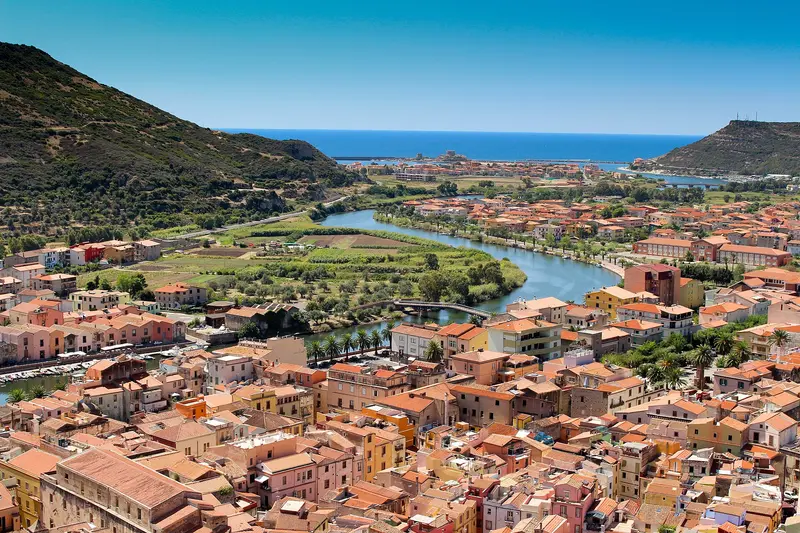
Bosa is located on Sardinia's west coast in the Temo Valley. The colorfully painted houses of the Sa Costa district stretch up the Serravalle hill to the Malaspina Castle. On the left bank of the river, the former tanneries stand.
6 Sights
5 Restaurants
History and Culture
Castle and Old TownThe Malaspina Castle, belonging to a Tuscan noble family, overlooks the town, with the Sa Costa quarter situated on the hillside below. The castle chapel, Nostra Signora de Sos Regnos Altos, preserves 14th and 15th-century frescoes.ChurchesThe Romanesque church of San Pietro extra muros, about two kilometres from the medieval town, was the bishopric's cathedral in the Middle Ages. The current cathedral was built from 1803 and consecrated in 1809.Crafts and FestivalsLeather was tanned on the Temo's left bank; the last tanneries closed in 1962. The Sas Conzas buildings are now a national monument. Bosa is also known for its filet lace. The Karrasegare Osincu carnival is among Sardinia's most famous.
Rich in culture and history. Dreamy beaches and Perfect for relaxation.
Oristano, provincial capital in western Sardinia, was in the Middle Ages capital of the Judicate of Arborea. The old town, with Piazza Eleonora, the cathedral, and the Tower of Mariano II, is small. In the neighboring municipality of Cabras lie the Sinis Peninsula with the excavations of Tharros and beaches like Is Arutas, Maimoni and Mari Ermi.
7 Sights
3 Restaurants
Historical and Cultural
Capital of ArboreaAround 1070, the Archbishop of Arborea moved his seat from Tharros to Oristano, after which Judge Orzocco I. made the city the capital of the Judicate of Arborea. Eleonora d'Arborea issued the Carta de Logu, traditionally dated to 1392, a code of law that remained in force on the island until 1827. Her monument was inaugurated in 1881.BuildingsThe Tower of Mariano II, dating from 1290, was one of the two main gates of the city wall. The Cathedral has been documented since 1131, acquiring its current Baroque appearance from 1729 onwards.SartigliaThe Sartiglia takes place on the last Sunday and last Tuesday of Carnival. The Sunday ride is organized by the Farmers' Guild, the Tuesday ride by the Carpenters' Guild.
Rich in culture and history. Dreamy beaches and Ideal for city trips and urban experiences.
Cagliari is located on the gulf on the south coast of Sardinia and is the island's capital. On the city's outskirts are lagoons and salt pans, and flamingos have been nesting in Molentargius since 1993.Historic QuartersThe old town consists of four quarters: the fortified Castello on the hill, as well as Marina, Stampace, and Villanova. The Bastione di Saint Remy connects Castello with Villanova and Marina.Antiquity and MuseumsPhoenicians settled here early on, and the Romans left behind an amphitheater half-carved into the rock. The National Archaeological Museum displays bronze figures from the Nuragic culture and statues from Mont'e Prama.SeaPoetto is the city beach, approximately eight kilometers long, and at its western end lies the Sella del Diavolo.
6 Sights
6 Restaurants
Culture
Phoenicians used Cagliari's port from the 8th century BC; later, the city came under Carthaginian influence and passed to Rome in 238 BC. In the 13th century, the Pisans founded and fortified the Castello; in 1326, the Aragonese took over the city. After Spanish rule ended, Sardinia fell to the House of Savoy in 1720.On May 1st, the procession in honor of Saint Efisio takes place, a vow from the plague of 1652. Groups in traditional costumes parade through the center; afterwards, the statue of the Saint is brought to Nora.