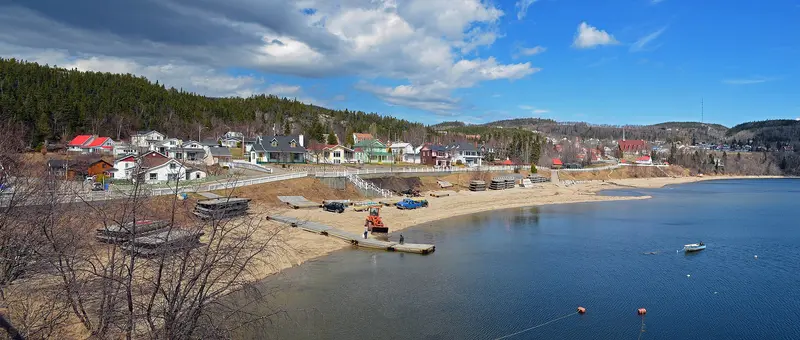
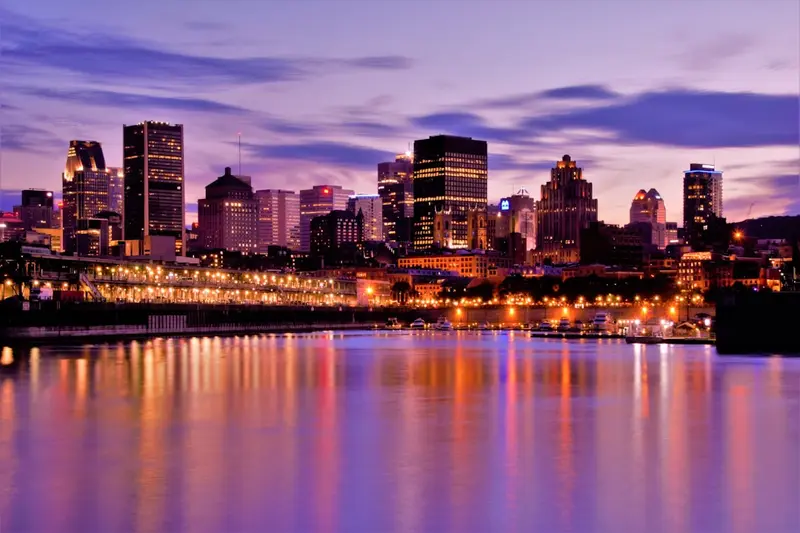
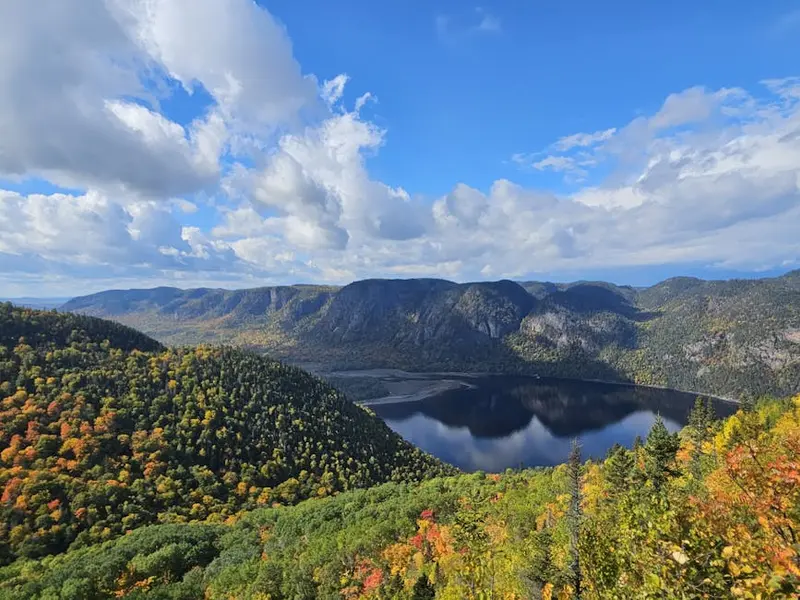
From Montréal, we head to La Mauricie National Park, with lakes and canoe routes, then to Québec City, with its walled old town. Further northeast, you'll find the hills and villages of Charlevoix along the St. Lawrence River and the Saguenay Fjord near Tadoussac, where whales can be seen from June to October. No leg of the trip lasts longer than three hours.
18 Days / 17 Nights
June–September
RV Friendly
5 stops
Why This Route?
For travelers wanting to combine French-flair cities with lakes, forests, and a fjord.
Hidden Gems
Lac Wapizagonke in La Mauricie National Park, an elongated lake for canoe trips
Parc national des Hautes-Gorges-de-la-Rivière-Malbaie in Charlevoix with steep valley walls
Baie-Éternité in Parc national du Fjord-du-Saguenay with the path to the Notre-Dame-du-Saguenay Statue
Itinerary
Stop 1 • 3 Nights
Montreal
Region
Route highlight
Montreal lies on an island in the St. Lawrence River and is Canada's second-largest city. French is the everyday language; the old town Vieux-Montréal, the local mountain Mont Royal and districts like the Plateau shape the cityscape, plus bagels, smoked meat, and a packed festival calendar.
5 Sights
5 Restaurants
Montreal's historic and cultural identity
Montreal, originally founded in 1642 as Ville-Marie by French settlers, is deeply rooted in its colonial past. The city quickly developed into a strategically important missionary outpost and a center for the fur trade in New France. Following the British conquest in 1760, Montreal surprisingly retained its French language and culture, making it a unique bilingual metropolis in North America.Montreal's architecture bears witness to this rich history, from the charming cobblestone streets and stone buildings of Vieux-Montréal to the impressive Neo-Gothic Notre-Dame Basilica. Alongside these, modern structures and the extensive underground city, the RÉSO, shape the cityscape and way of life. Culturally, Montreal stands out with a vibrant and diverse arts scene, manifesting in numerous museums, theaters, and internationally renowned festivals such as the International Jazz Festival, combining European elegance with North American dynamism.
Immerse yourself in the pristine wilderness of Mauricie National Park, a breathtaking natural paradise in the heart of Quebec. Here, rolling hills, dense forests, glistening lakes, and rushing rivers invite you to unforgettable adventures. This national park is the ideal place to escape the everyday and experience the impressive Canadian nature up close.
3 Sights
4 Restaurants
Culture & History
The Roots of the Indigenous PeoplesBefore Europeans arrived in the area of what is now Parc national de la Mauricie, it was for millennia the traditional territory of the Atikamekw Nehirowisiwok. These Indigenous peoples used the abundant forests, rivers, and lakes for hunting, fishing, and trapping. Their deep connection to the land manifested in a sustainable way of life and the use of natural resources, such as birch bark for canoes and shelters. Even today, traces of their presence and culture can be found in the park area, testifying to the long and rich history of these first inhabitants.The Logging EraWith the arrival of Europeans in the 17th century, a new phase of land use began. The Saint-Maurice River, in particular, became a lifeline for Canada's timber industry in the 19th and early 20th centuries. The region became a hub for logging, with immense quantities of logs floated down the river to the sawmills in Trois-Rivières – a process known as "la drave". This era profoundly shaped the landscape and economic development of the entire Mauricie region. Today, you can still find scattered remnants from this period, such as old dams or sawmills, bearing witness to the former industrial activity.From Economic Hub to National ParkThe intensive use of forests and rivers by the timber industry led to a growing awareness of nature conservation during the 20th century. In 1970, the area was finally designated as Parc national de la Mauricie. The goal was to preserve a representative section of the southern Laurentian Mountains while also making it accessible to the public. The transformation from a former economic hub into a sanctuary for flora and fauna reflects the changing approach to nature. Today, the park offers you the opportunity to experience both pristine nature and the traces of human history in harmony, and to understand how the landscape has evolved over the centuries.
Québec City, founded in 1608 by Samuel de Champlain, is the capital of the province of Québec and one of the oldest cities in North America. Its walled old town above the St. Lawrence River is a UNESCO World Heritage site; French is the everyday language here.
8 Sights
4 Restaurants
Culture & History
Québec City, the capital of the province of Québec, is a vibrant testament to a rich and complex history deeply rooted in the French colonial era. Here, you'll encounter a unique blend of European charm and North American resilience, reflected in every alleyway and building.
French Heritage and the Old Town
Québec City's historic Old Town, a UNESCO World Heritage site since 1985, forms the heart of its cultural and historical legacy. Here, you'll experience one of North America's best-preserved fortified cities. The city's history began in 1608 with its founding by Samuel de Champlain as the first permanent French settlement in North America. This heritage continues to shape its architecture, language, and way of life to this day.
The Upper Town (Haute-Ville) perches atop Cap Diamant, housing magnificent buildings such as the Château Frontenac and the Notre-Dame de Québec Basilica-Cathedral.
In the Lower Town (Basse-Ville), you'll find the picturesque Place Royale, the birthplace of French America, along with the charming Rue du Petit Champlain with its historic houses and artisan workshops.
The architectural diversity reflects the city's various eras, from the French colonial period to British rule.
Fortifications and Military History
Québec City's military history is closely intertwined with its fortifications, which protected the city from attackers for centuries. The Fortifications of Québec are the only remaining city walls in North America north of Mexico and offer a striking glimpse into the defensive strategies of past eras.
The Citadel of Québec, an active military base and the official residence of the Governor General of Canada, is an excellent example of a star-shaped fortress and can be visited.
The Plains of Abraham, now an extensive urban park, was the scene of the decisive 1759 battle between French and British troops that sealed the fall of New France. Here, you can retrace the steps of these events and experience history firsthand.
The numerous gates, bastions, and cannons along the walls recount the strategic efforts made to secure this vital trading post.
Cultural Identity and the French Language
Québec City's cultural identity is inseparable from the French language and Franco-Canadian culture. Here, you'll immerse yourself in a predominantly French-speaking environment that distinctly sets it apart from other North American cities. This cultural distinctiveness is a central aspect of your travel experience.
The Musée de la civilisation (Museum of Civilization) offers in-depth insights into the history and ethnology of the province of Québec, from its Indigenous peoples to contemporary society.
Cultural life is shaped by festivals, art galleries, and a profound awareness of its own heritage, expressed in music, gastronomy, and daily life.
Although English is understood in tourist areas, an effort to use a few French phrases is highly appreciated by locals and allows for a more authentic interaction.
The Charlevoix region in Québec is a breathtaking natural wonder, known for its dramatic landscapes shaped by an ancient meteorite impact, and as a UNESCO Biosphere Reserve. Along the majestic St. Lawrence River, it offers a unique blend of picturesque coastal towns, impressive fjords, and a vibrant arts and culinary scene.
1 Sight
5 Restaurants
History, Art and Culture in Charlevoix
The Charlevoix region boasts a rich cultural and historical past, stretching from the presence of indigenous peoples like the Innu and Huron-Wendat to French colonization in the early 17th century. Its geographical isolation significantly contributed to the development of a distinct culture, manifesting itself in unique customs and traditions.Charlevoix's architecture reflects this history, from traditional Québécoiser farmhouses to imposing grand hotels like the Manoir Richelieu, which emerged in the late 19th century during the heyday of tourism. These structures continue to shape the landscape and bear witness to bygone eras.Charlevoix is also a center for art, inspiring painters, sculptors, and artisans for generations with its dramatic nature. Local traditions include the production of renowned cheeses and ciders, which, along with handicrafts, shape the region's cultural identity and offer visitors authentic insights.
The Saguenay Fjord is a majestic natural wonder in Quebec, Canada, that will enchant you with its dramatic cliffs, deep blue waters, and lush forests. Immerse yourself in a world where adventure and pristine beauty go hand in hand, and discover a unique ecosystem waiting to be explored. This is the perfect place to escape the hustle and bustle of everyday life and experience the breathtaking power of nature firsthand.
3 Sights
3 Restaurants
Culture and History
The region around the Saguenay Fjord, nestled deep in the heart of Québec, holds a rich and multifaceted history as well as a distinct cultural identity. Here, you'll find traces of millennia of Indigenous settlement, testimonies of French colonization, and the profound influences of a robust industrial history that has shaped both the landscape and its people.
Indigenous Heritage and Origins
Long before European settlers reached the region, the Saguenay Fjord area was the ancestral home of the Innu (formerly Montagnais). You'll encounter a deeply rooted heritage that highlights the Innu's connection to the land, rivers, and the fjord. Their culture was based on hunting, fishing, and gathering, and their knowledge of nature was crucial for their survival.
The Innu used the fjord and surrounding forests as hunting grounds and transportation routes.
Their oral traditions and spiritual practices remain part of the regional identity to this day.
French Settlement and the Fur Trade Era
With the arrival of Europeans in the 17th century, particularly French explorers and missionaries, a new chapter began. The Saguenay became a crucial axis in the fur trade. You'll find that trade relations were established with the Innu, granting the French access to the region's rich fur resources.
Historical records attest to early expeditions that recognized the potential of the Saguenay area.
The establishment of the first trading posts laid the groundwork for later settlements.
The Era of Industrial Development
The 19th and 20th centuries profoundly shaped the Saguenay Fjord through massive industrial expansion. The abundant natural resources – forests and hydropower – became the engine of progress. You can still see the effects of this era today, from the colossal dams to the industrial towns.
Forestry: The untouched forests led to the establishment of numerous sawmills that exported wood products worldwide.
Hydropower: The strong currents of the Saguenay River made it ideal for energy generation. The construction of large hydroelectric power plants, such as Shipshaw and Chute-à-Caron, created the foundation for energy-intensive industries.
Aluminum Production: Attracted by the favorable electricity supply, aluminum smelting, particularly by companies like Alcan (today Rio Tinto Alcan) in towns like Arvida (today part of Saguenay), became a crucial economic sector.
Cultural Identity and Preservation
The cultural identity of the Saguenay region is shaped by a mix of its Indigenous heritage, the influence of French-speaking settlers, and its industrial history. You'll experience a community proud of its roots, nurturing its stories through local museums, festivals, and the preservation of its natural heritage.
Visit the Musée du Fjord in La Baie to learn more about the maritime and industrial history.
Regional festivals celebrate logging traditions and local cuisine.
The resilience of the people and their strong connection to nature are characteristic features.