Back to Croatia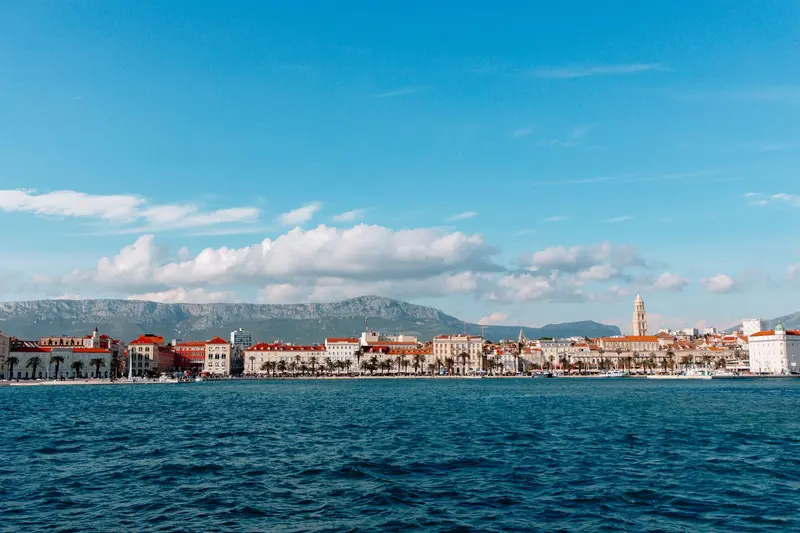
Dalmatian Coast from Split to Dubrovnik
by Felix Gillen
Inselhopping und Altstädte: von Split mit Fähren und Katamaranen über Hvar und Korčula nach Dubrovnik, mit Abstechern nach Trogir und Ston.
6 stops
Why This Route?
This route links Dalmatia's top old towns with two islands, and is doable without a car: ferries, catamarans, and buses connect the stops. Buses via Pelješac to Ston are rare; allow more time there.
Hidden Gems
- Konoba Mate im Inseldorf Pupnat auf Korčula
- Austern direkt in Mali Ston
- die Buža Bar vor der Stadtmauer von Dubrovnik
Getting there and back
Open jaw: start and end are in different places
- Arrival
- Flight · Split (SPU)
- Departure
- Flight · Dubrovnik (DBV)
Itinerary
Stop 1 • 2 Nights
Split
Route highlight
Split is Croatia's second-largest city and the center of Dalmatia. Its heart is the palace, which the Roman Emperor Diocletian had built around 300 AD, and where people still live, run cafés, and shop today.From the port, ferries and catamarans depart for the islands of Brač, Hvar, and Vis. West of the old town lies the forested city hill Marjan.
Palace and Old Town, day trip to Trogir.
5 Sights
2 Restaurants
Palace, Klapa and Alka
Diocletian's Palace, built around 295–305, has been a UNESCO World Heritage site since 1979 as the historical core of Split. The emperor's mausoleum was transformed into the Cathedral of Saint Domnius. Dalmatia's multi-part Klapa singing has been on UNESCO's Intangible Cultural Heritage List since 2012. In the hinterland, during the Sinjska alka knightly tournament in Sinj each August, riders charge towards a ring; this tradition is also UNESCO cultural heritage.
Stop 2 • 0 Nights
Trogir
Route highlight
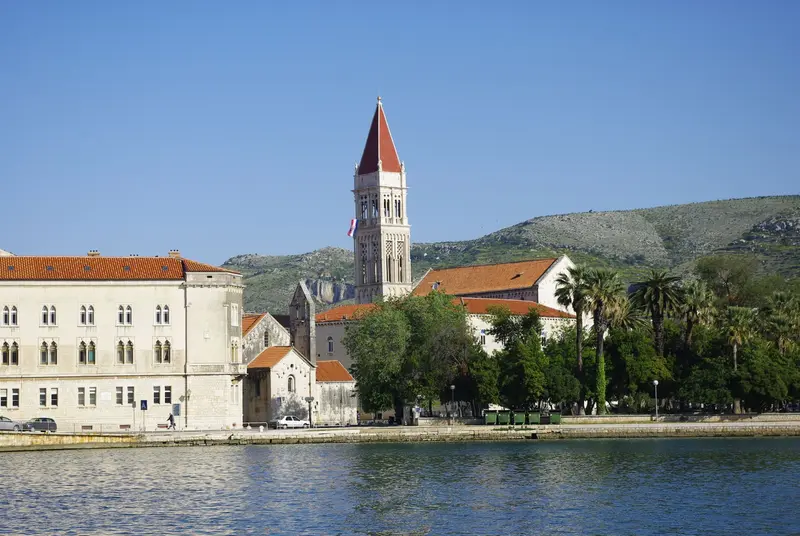
Trogir is a small old town located on an island between the mainland and the island of Čiovo, approximately 27 kilometres west of Split. Its Hellenistic street network, the cathedral with Master Radovan's portal, and Kamerlengo Fortress have been on the UNESCO World Heritage List since 1997.
Day excursion from Split.
2 Sights
2 Restaurants
Culture
The rectangular street grid dates back to the Greek foundation, with buildings from Romanesque, Gothic, Renaissance, and Baroque periods. The West Portal of the Cathedral of St. Lawrence by Master Radovan from the 13th century is considered Croatia's most significant Romanesque-Gothic work.
Stop 3 • 2 Nights
Hvar
Route highlight
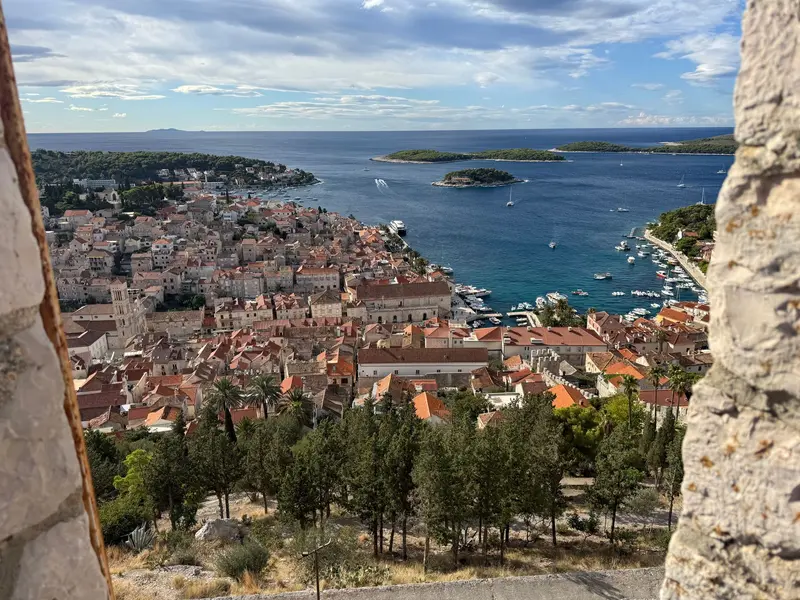
Hvar, a long, narrow island south of Split, is one of the most famous in the Adriatic. Its namesake town blends a Venetian harbour, a fortress above the rooftops, and a vibrant nightlife, while in the Stari Grad plain, farmers still tend fields laid out by Greek settlers.
Old Town, Fortress and Plain of Stari Grad.
2 Sights
2 Restaurants
History and Rules
From 1278, Hvar served as a base for the Venetian fleet. The theatre on the main square, dating from 1612, is considered one of Europe's oldest public theatres. In 1868, a Hygiene Society was founded here, one of Europe's first tourism associations. The Stari Grad Plain was divided into parcels with dry stone walls by Greek colonists from Paros in 384 BC and has been on the UNESCO World Heritage list since 2008. In Hvar's Old Town, rules prohibit swimwear on the street, public drinking, and noise; violations are punishable by fines.
Stop 4 • 2 Nights
Korčula
Route highlight
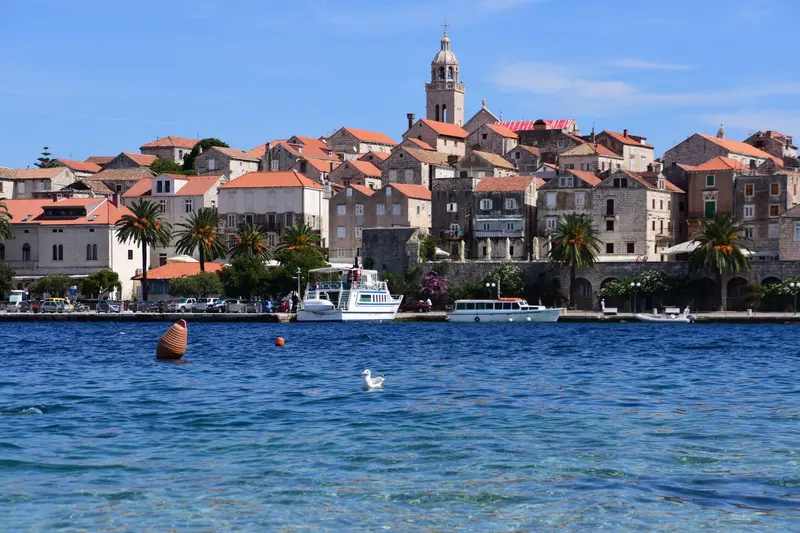
Korčula is an island in South Dalmatia, its main town lying on a small peninsula, surrounded by walls and towers. In summer, the historical sword dance Moreška is performed there.
Altstadt, Moreška und Weindörfer im Inselinneren.
1 Sight
3 Restaurants
Moreška and Walls
The Moreška is a medieval sword dance traditionally performed on July 29th. During the season, there are regular evening performances. Of the original twelve towers of the city walls, seven still stand. St. Mark's Cathedral was built from 1301 to 1806 at the highest point of the peninsula.
Stop 5 • 1 Night
Ston und Pelješac
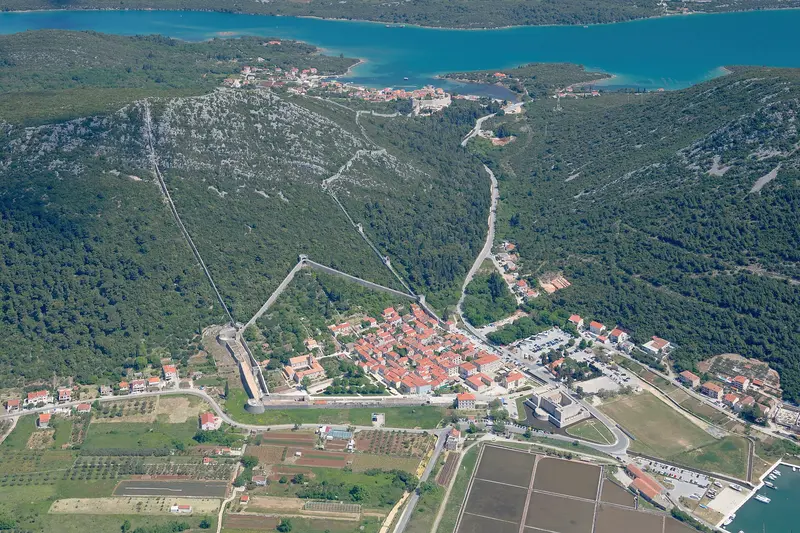
Ston is located on the isthmus to the Pelješac peninsula northwest of Dubrovnik. The Walls of Ston once protected the salt pans of the Republic of Ragusa and stretch over the hill to Mali Ston, where oysters are cultivated in the bay.
Mauern von Ston und Austern in Mali Ston.
3 Sights
1 Restaurant
Walls, Salt and Oysters
In 1333, Ragusa bought Ston. From 1358, fortifications were built, originally stretching over seven kilometers; today they measure around 5.5 kilometers. These protected the salt pans, which brought high revenues to Dubrovnik. The oysters of Mali Ston have been protected since 1787 and today bear an EU protected designation of origin. On Pelješac, the wines from the Dingač and Postup sites grow.
Stop 6 • 3 Nights
Dubrovnik
Route highlight
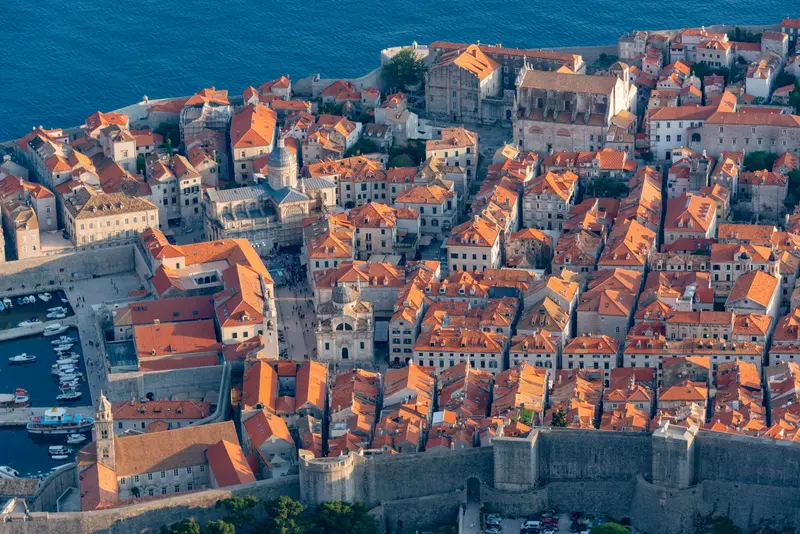
Dubrovnik is a port city in the very south of Croatia, whose Old Town is entirely enclosed by an almost two-kilometer-long city wall. As the capital of the Republic of Ragusa, it was an independent mercantile republic for centuries and is now the country's most famous travel destination.The Old Town has been on the UNESCO World Heritage List since 1979. In summer, it is very crowded; you'll experience it most peacefully early in the morning and in the evening.
Stadtmauer, Lovrijenac und Ausflug nach Cavtat.
4 Sights
2 Restaurants
Republic and Festivals
From 1358 to 1808, Dubrovnik was independent as the Republic of Ragusa. Above Lovrijenac Fortress stands the motto “Non bene pro toto libertas venditur auro”, freedom is not sold for all gold. On February 3, the city celebrates its patron saint, Saint Blaise. Since 1950, the Dubrovnik Summer Festival takes place in summer with theater and concerts at historical venues. With the “Respect the City” program, the city limits the number of cruise ship guests.
6 stops
Route Summary
Duration11 Days
Stops6 Places
TypeCulture
Best Time to GoMai bis Juni, September bis Oktober