After Oaxaca de Juárez, you'll head for two nights to the weaving village of Teotitlán del Valle, then it's on to the mountain village of San José del Pacífico at around 2,350 meters and down to the Pacific coast at Puerto Escondido. Teotitlán is about 30 kilometers east of Oaxaca; the road over the Sierra Sur is winding, allow a full travel day for it.
14 Days / 13 Nights
November–February
4 stops
Why This Route?
For travelers preferring longer stays in fewer places, immersing themselves in Oaxaca's crafts, mountain villages, and coast.
Hidden Gems
Presa Piedra Azul just outside Teotitlán del Valle
Sunday market in Tlacolula de Matamoros, about 10 kilometers east of Teotitlán
Playa Manzanillo in Puerto Escondido, a sheltered swimming cove
Getting there and back
Open jaw: start and end are in different places
Arrival
Flight · Oaxaca (OAX)Oaxaca Airport is about 7 kilometers south of the city; most flights come via Mexico City.
Departure
Flight · Puerto Escondido (PXM)From Puerto Escondido, you fly directly to Mexico City in about 1 hour 15 minutes.
Itinerary
Stop 1 • 4 Nights
Oaxaca de Juárez
City
Rich in culture and history. Culinary highlights and Perfect for an exciting city trip.
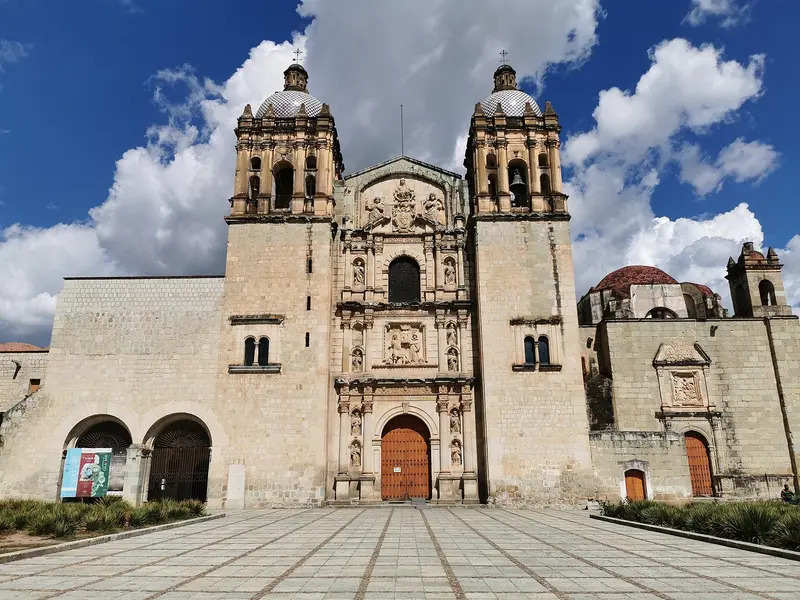
Oaxaca de Juárez is the capital of the eponymous state in southern Mexico, located at an altitude of around 1,550 meters in the Oaxaca Valley at the foot of the Sierra Madre del Sur. Visitors are drawn by its colonial center built from green Cantera stone, which, along with the Zapotec site Monte Albán, has been a UNESCO World Heritage site since 1987, and by one of the country's most distinctive cuisines.The city also offers large markets, numerous museums and galleries, and handicrafts from the surrounding villages. It also serves as a starting point for tours to Mezcal distilleries, markets, and archaeological sites in the Valley of Oaxaca.
22 Sights
12 Restaurants
Culture & Character
Culture & CharacterOaxaca was founded by the Spanish in 1529 in the valley below Monte Albán. Earthquakes necessitated a low, massive building style; hence, one and two-story houses and thick-walled churches made of green Cantera stone characterize the cityscape. The city center has been on the UNESCO World Heritage list since 1987.The city is the center of a state with many indigenous peoples, and this is visible in everyday life: in the markets, during processions, and at the Guelaguetza, where dance groups from all regions of Oaxaca perform in July. Additionally, there's an active art scene with print workshops, galleries, and street art, closely linked to political engagement.
Rich in culture and history. routes.tagDescriptions.kunsthandwerk.
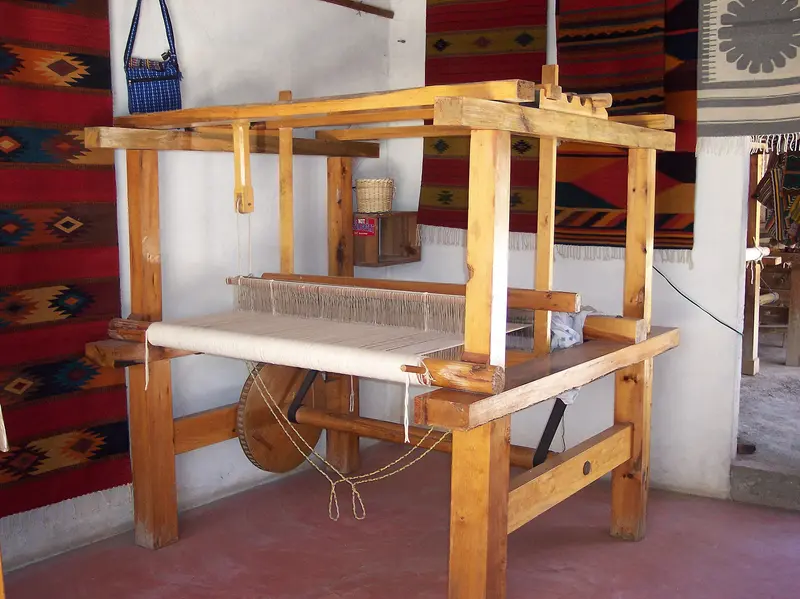
Teotitlán del Valle is a Zapotec village situated about 30 kilometers east of Oaxaca de Juárez at the foot of the Sierra Juárez. It is known for its wool carpets, many of which are produced by families on treadle looms, often using natural dyes. In daily life, Zapotec is still spoken alongside Spanish.
4 Sights
3 Restaurants
Culture & Character
Weaving and CommunityWeaving has been practiced in Teotitlán since pre-Hispanic times, initially on backstrap looms. Around 1535, the Dominican bishop Juan López de Zárate introduced sheep and the pedal loom, which made larger pieces like rugs and sarapes possible. Patterns often incorporate geometric motifs from Mitla and other Zapotec sites. Like many communities in Oaxaca, Teotitlán is governed by customary law: offices are held voluntarily and on a rotating basis.Important festivals include the Feast of the Preciosa Sangre de Cristo in July and the patron saint festival of the Virgen de la Natividad on September 8th, during which the Danza de la Pluma is danced with large feathered headdresses, as well as the Día de Muertos.
Breathtaking mountain views. Stunning nature and outdoors and Great hiking spots.
San José del Pacífico is located at almost 2,400 meters on Federal Highway 175, between Oaxaca de Juárez and the Pacific coast near Pochutla. The small village is surrounded by pine and cloud forests; in the mornings, clouds often drift through the valleys. Travelers stop here to break up the long journey, stay overnight in wooden cabins with fireplaces, and hike in the surroundings.
3 Sights
3 Restaurants
Culture & Character
Culture & CharacterSan José del Pacífico is part of the territory of the Zapotec of the Sierra Sur. Its inhabitants rely on agriculture, timber, coffee from lower altitudes, and increasingly on tourism. For decades, the village has also attracted travelers interested in the region's ritual mushroom culture; it gets particularly busy during the rainy season. Today, the audience is a mix of hikers, families on their way to the coast, and long-term travelers.
Dreamy beaches. routes.tagDescriptions.surfen and Stunning nature and outdoors.
Puerto Escondido, on Oaxaca's Pacific coast, grew from a fishing village into a small town and one of Mexico's most famous surf destinations. Besides Playa Zicatela's heavy waves, there are calm swimming coves, mangrove lagoons, and a relaxed scene of cafés, beach restaurants, and bars.
6 Sights
4 Restaurants
Culture & Spirit
Culture & CharacterFor a long time, Puerto Escondido served only temporarily as a coffee loading port and was only permanently settled in the 1930s. After the construction of the coastal road in the 1960s, surfers discovered the beaches, and tourism began; today, Zicatela hosts international surfing competitions.The town is a blend of a Mexican small town, complete with market, church, and fishermen in the center, and an international scene in La Punta and Rinconada. In the beach neighborhoods, you'll manage with English, but in the center, Spanish is more useful.