
ExploreTravel GuidesMy Trips
    de|en
    All Places & RegionsAbout FernwehFAQPrivacy PolicyImprint
    ExploreTravel GuidesMy Trips
    • Neighborhoods & highlights
    • Eat & drink
    • Food culture
    • Culture
    • Nightlife
    • Getting around
    • Excursions
    • Accommodation
    • Plan trip
    • Nearby
    Oaxaca de Juárez
    CityCulture

    Oaxaca de Juárez

    Oaxaca de Juárez is the capital of the eponymous state and lies at approximately 1,550 meters in a high valley of the Sierra Madre del Sur.

    More
    1. Home
    2. Destinations
    3. Mexico
    4. Oaxaca
    5. Oaxaca de Juárez
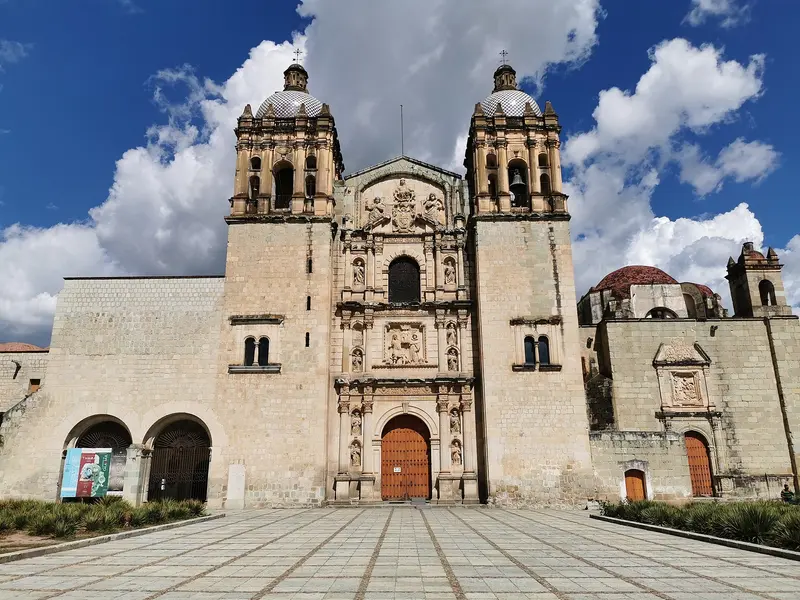
    Oaxaca de Juárez is the capital of the eponymous state and lies at approximately 1,550 meters in a high valley of the Sierra Madre del Sur. Its historic center, with its colonial buildings made of green cantera stone, has been a UNESCO World Heritage site since 1987, along with the Zapotec archaeological site of Monte Albán.Here you'll find one of Mexico's most unique cuisines, large markets, numerous museums and galleries, as well as handicrafts from the surrounding villages. The city is also a starting point for tours to Mezcal distilleries, markets, and archaeological sites in the Valle de Oaxaca.
    Oaxaca de Juárez is a mid-sized city whose historic center is easily explored on foot. The colonial street grid stretches north from the Zócalo, through the Macedonio Alcalá pedestrian zone, to Santo Domingo; to the south are the large markets. Surrounding it are quieter barrios like Jalatlaco, with its painted facades, and Xochimilco, with its aqueduct. Key features include the many museums and galleries spearheaded by artists like Francisco Toledo, a vibrant food scene ranging from market halls to fine dining restaurants, and a dense festival calendar featuring Guelaguetza in July and Día de Muertos at the end of October.
    Most attractions are located in the Historic Center. For living and quiet evenings, the adjacent neighborhoods are a good option, reachable within a few minutes on foot.
    Jalatlaco

    District 1 of 2

    Jalatlaco

    Jalatlaco, located east of the Old Town beyond Avenida Juárez, is one of Oaxaca's oldest barrios. Its cobblestone streets, featuring low, brightly painted houses and murals, are quieter than the city center.

    Discover
    Xochimilco

    District 2 of 2

    Xochimilco

    Barrio Xochimilco, north of the old town, is among Oaxaca's oldest neighborhoods. Defined by the San Felipe Aqueduct's arches, cobbled streets, and Santo Tomás Church.

    Discover

    Sights in Oaxaca de Juárez

    Discover the most important sights and attractions

    Monte Albán
    WendyAvilesR / Wikimedia Commons / CC BY 4.0

    1Monte Albán

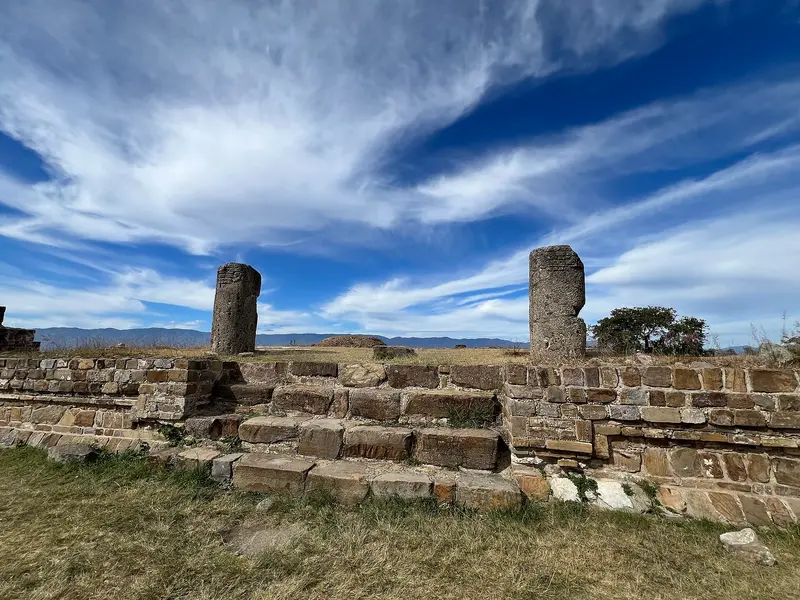
    The former capital of the Zapotec lies about 9 kilometers west of the city on an artificially leveled ridge, approximately 400 meters above the valley. It was settled from approximately 500 BC to 800 AD. Around the Great Plaza are grouped pyramids, palaces, a ball court, and the Danzantes building with its stone reliefs. A UNESCO World Heritage site since 1987; buses run from the center.
    Open in Google Maps
    Museo de las Culturas de Oaxaca

    2Museo de las Culturas de Oaxaca

    The Regional Museum occupies the cloisters of the former Dominican monastery next to the Church of Santo Domingo. The exhibition ranges from pre-Hispanic times to the present day. Its star exhibit is the Mixtec tomb treasure from Tomb 7 of Monte Albán, featuring gold jewelry, jade, and carved bones. From the upper galleries, you look out over the Ethnobotanical Garden.
    Open in Google Maps

    3Museum of Philately (MUFI)

    The small stamp museum near Santo Domingo showcases collections on Mexican postal history and rotating exhibitions on graphic arts and design. Its inner courtyard with a café is a quiet place for a break away from the pedestrian zone.
    Open in Google Maps

    4Basílica de Nuestra Señora de la Soledad

    The late 17th-century Basilica of Oaxaca's patron saint has a multi-story green stone Baroque facade. Inside is the revered figure of the Virgen de la Soledad. Her feast day, December 18th, is one of the city's most important. In the forecourt, stalls sell traditional sorbet (nieves).
    Open in Google Maps

    5Centro Cultural San Pablo

    The former 16th-century San Pablo convent is one of the city's oldest buildings. After its restoration, it serves as a cultural center with exhibitions, events, and a research library on the indigenous languages and cultures of Oaxaca. The inner courtyard is open to the public.
    Open in Google Maps

    6Institute of Graphic Arts of Oaxaca (IAGO)

    The painter Francisco Toledo founded the institute in 1988 in a colonial house opposite Santo Domingo. It features rotating exhibitions of printmaking and drawing and has a large public art library. Admission is free.
    Open in Google Maps

    Restaurants in Oaxaca de Juárez

    1

    Casa Oaxaca el Restaurante

    Chef Alejandro Ruiz's restaurant reinterprets Oaxaca's cuisine with local ingredients. Dine on a rooftop terrace overlooking Santo Domingo. Upscale pricing; reservations are recommended for dinner.
    Show on Google Maps
    2

    Los Danzantes

    Restaurant on the Macedonio Alcalá pedestrian zone with a covered courtyard. The menu offers contemporary Oaxaca cuisine, complemented by mezcal from their own eponymous brand.
    Show on Google Maps
    3

    Catedral Restaurant

    Restaurant with Oaxacan cuisine in a colonial house with a courtyard, a few steps north of the Cathedral.
    Show on Google Maps
    4

    Cafe Bistrot Epicuro

    Small café-bistro east of the Zócalo for breakfast, coffee, and light lunch dishes.
    Show on Google Maps
    5

    La Jícara Librespacio Cultural

    Cultural center with a café and restaurant in the north of the Old Town. Besides food and drinks, there are book sales, exhibitions, and events.
    Show on Google Maps
    6

    Rey de Oros

    Restaurant in the southern Old Town, near the main markets.
    Show on Google Maps
    7

    Origen

    Chef Rodolfo Castellanos's restaurant combines traditional Oaxacan recipes with modern techniques, for example, in moles and dishes with local herbs. Upscale pricing, reservations recommended.
    Show on Google Maps
    8

    Tomás Inn Cantina por Tradición

    Cantina in the north of the Old Town with Mexican home-style cooking and drinks in a traditional atmosphere.
    Show on Google Maps
    9

    La Olla

    Chef Pilar Cabrera's restaurant near Santo Domingo serves classic Oaxaca dishes like Moles, Tlayudas, and soups at moderate prices. A daily menu is offered for lunch.
    Show on Google Maps

    El Fogoncito

    Restaurant in Margarita Maza de Juárez No. 905-B.
    Show on Google Maps

    El Pescador

    Bar in Miguel Cabrera 510.
    Show on Google Maps

    Casa de Arte

    Gallery in Calz. Porfirio Díaz #221.
    Show on Google Maps

    Pollo Brujo

    Restaurant in Prol. Melchor Ocampo 1001 A.
    Show on Google Maps

    Dining & Drinks

    Oaxaca is known as one of Mexico's premier culinary cities. The range extends from a market grill stall to restaurants with internationally renowned chefs.

    Mole

    Seven classic varieties, from black Mole negro to yellow Amarillo and green Verde. You can buy mole pastes at Mercado Benito Juárez.

    Tlayuda

    Large, crispy tortilla with bean paste, Quesillo and meat, evenings at grill stands city-wide.

    Chocolate

    Cocoa is ground with sugar, almonds, and cinnamon and served as a hot drink with water or milk, often together with Pan de yema.

    Mezcal

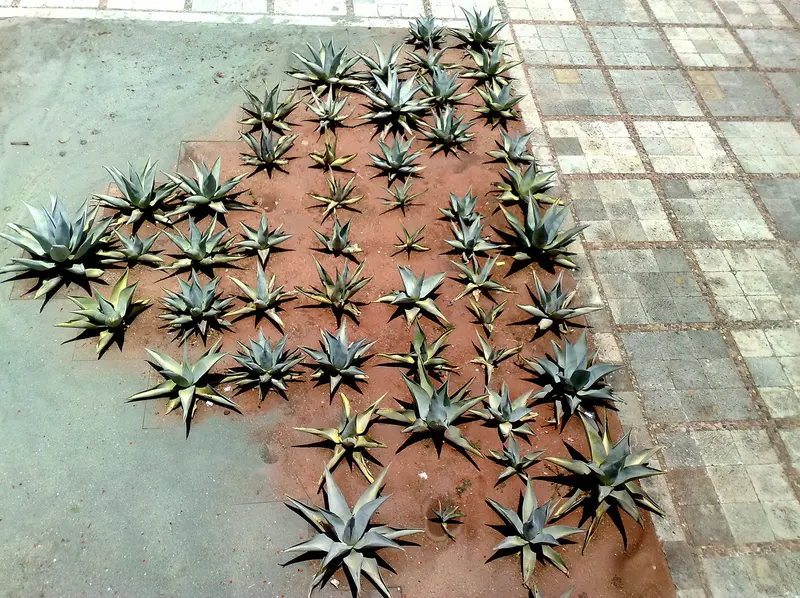
    The agave spirit largely originates from Oaxaca state. In old town mezcalerías, you can taste different agave varieties.

    Chapulines

    Roasted grasshoppers with garlic, lime, and chili, a traditional snack sold in the markets.

    Culture & Character

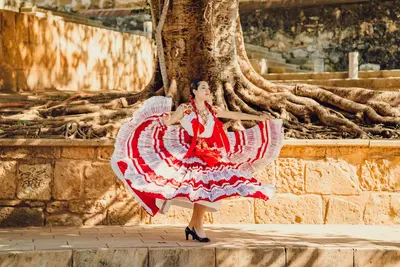
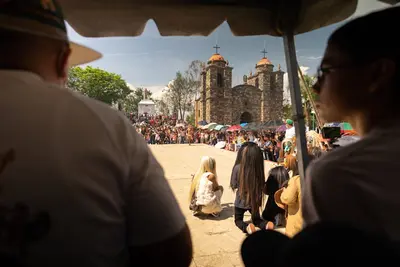
    Culture & CharacterOaxaca was founded by the Spanish in 1529 in the valley below Monte Albán. Earthquakes necessitated a low, massive building style; hence, one and two-story houses and thick-walled churches made of green Cantera stone characterize the cityscape. The city center has been on the UNESCO World Heritage list since 1987.The city is the center of a state with many indigenous peoples, and this is visible in everyday life: in the markets, during processions, and at the Guelaguetza, where dance groups from all regions of Oaxaca perform in July. Additionally, there's an active art scene with print workshops, galleries, and street art, closely linked to political engagement.

    Nightlife

    1

    El Hijuelo Mezcalería

    Mezcalería on the edge of Jalatlaco, east of the center. They serve Mezcales of various agave varieties, along with small dishes.
    Show on Google Maps
    2

    Cozanian Republic

    Popular bar on Calle Murguía, just a few steps from the Macedonio Alcalá pedestrian street.
    Show on Google Maps
    3

    Vino & Vinyl

    Wine bar on Calle Reforma, where vinyl music accompanies your wine.
    Show on Google Maps

    Exploring the area

    Getting Around LocallyThe city center is compact and flat; most distances can be covered on foot. For longer journeys, take taxis, which wait at stands and charge fixed zone-based fares. The airport is located about 7 kilometers south, and ADO long-distance buses stop at the terminal on Calzada Niños Héroes de Chapultepec, north of the old town.You can reach Monte Albán by shuttle bus from the city center.Colectivos and shared taxis run to the villages in the valley; for multiple stops in one day, a guided tour or a driver is more practical.The new highway to the Pacific coast shortens the trip to Puerto Escondido to about three hours.

    Day Trips

    Monte Albán

    The Zapotec site on a ridge 9 km west, a half-day by shuttle bus.

    Árbol del Tule and Mitla

    On the road heading east, in Santa María del Tule, stands a Montezuma cypress with one of the thickest trunks in the world. Further east lies Mitla with stone mosaic friezes.

    Hierve el Agua

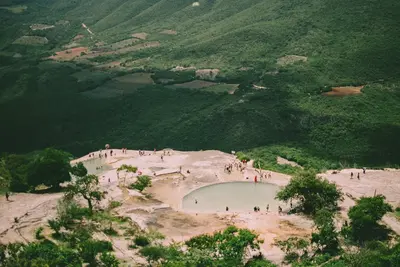
    Petrified waterfalls with natural pools about 70 kilometers east, often combined with Mitla and a Mezcal distillery in Santiago Matatlán.

    Teotitlán del Valle

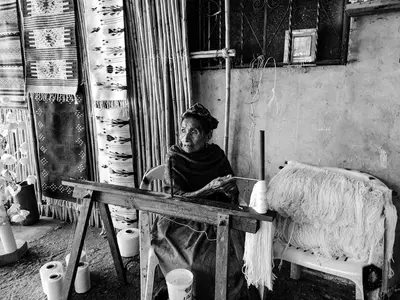
    Weaving village about 30 kilometers east, where carpets are woven with natural dyes.

    Tlacolula

    The Sunday market is one of the largest traditional markets in the Valley of Oaxaca.

    San Bartolo Coyotepec

    The village south of the city is known for its black glossy pottery (barro negro).

    Accommodations in Oaxaca de Juárez

    Find perfect stay in Oaxaca de Juárez

    Booking.com* (Affiliate link)
    Search Hotels
    Agoda* (Affiliate link)
    Search Hotels
    Airbnb
    Vacation Rentals

    * Affiliate link: if you book through it, we earn a small commission. The price stays the same for you.

    Plan your trip to Oaxaca de Juárez

    Save places, build a route and plan your city trip, all in one place.

    1. 1
      1234

      Round trip

      12 days · 4 stops

      Saved

      Pick a route

      Take a ready-made round trip or build your own from saved places.

      Open bookmarks
    2. 2

      Trip to Oaxaca de Juárez

      Live
      • 1Monte Albán3 days
      • 2Museo de las Culturas de Oaxaca4 days
      • 3Museum of Philately (MUFI)5 days
      Budget

      Plan your trip

      The planner sorts stops, days and budget. Plan together in real time.

      Start trip planning
    3. 3
      9:41 No signal
      Available offline

      Use it on the road

      Download the guide to your phone and use it offline on location.

    Nearby

    Jalatlaco

    Jalatlaco

    Jalatlaco, located east of the Old Town beyond Avenida Juárez, is one of Oaxaca's oldest barrios. Its cobblestone streets, featuring low, brightly painted houses and murals, are quieter than the city center. Its focal point is the San Matías Jalatlaco church. In recent years, many cafés, small restaurants, and guesthouses have emerged; Santo Domingo is about a ten-minute walk away.
    Oaxaca

    Oaxaca

    The state of Oaxaca in southern Mexico stretches from the highlands of the Sierra Madre del Sur to the Pacific coast. With 16 officially recognized indigenous peoples, including Zapotec and Mixtec, it is culturally one of the most diverse regions of the country.At its heart lies the capital, Oaxaca de Juárez, with Monte Albán and the artisan villages of the Oaxaca Valley. Over the mountains, for instance through San José del Pacífico, roads lead to the coast, home to Puerto Escondido, Mazunte, and Zipolite.
    Xochimilco

    Xochimilco

    Barrio Xochimilco, north of the old town, is among Oaxaca's oldest neighborhoods. Defined by the San Felipe Aqueduct's arches, cobbled streets, and Santo Tomás Church. The neighborhood still has workshops weaving tablecloths and fabrics on pedal looms. A 20-minute walk to the Zócalo.
    Teotitlán del Valle

    Teotitlán del Valle

    Teotitlán del Valle is a Zapotec village situated about 30 kilometers east of Oaxaca de Juárez at the foot of the Sierra Juárez. It is known for its wool carpets, many of which are produced by families on treadle looms, often using natural dyes. In daily life, Zapotec is still spoken alongside Spanish.
    Hierve el Agua

    Hierve el Agua

    Hierve el Agua is located about 70 kilometers east of Oaxaca de Juárez in the mountains above the Mitla Valley. Over millennia, calcareous spring water has flowed down the cliffs here, creating deposits that look like petrified waterfalls. Above are pools of spring water and expansive views over the Sierra.