Fernweh: Home
    ExploreTravel GuidesPlan a tripMy tripLast visited
    de|en
    All Places & RegionsAll highlightsAbout FernwehFAQPrivacy PolicyImprint
    ExploreTravel GuidesPlan a tripMy tripLast visited
    • Overview
    • Places in the region
    • Best travel time
    • Culture
    • Getting around
    • Round trips
    • Nearby
    Oaxaca

    Mexico

    Oaxaca

    Region

    The state of Oaxaca in southern Mexico stretches from the highlands of the Sierra Madre del Sur to the Pacific coast.

    by Felix Gillen

    1. Home
    2. Destinations
    3. Mexico
    4. Oaxaca
    The state of Oaxaca in southern Mexico stretches from the highlands of the Sierra Madre del Sur to the Pacific coast. With 16 officially recognized indigenous peoples, including Zapotec and Mixtec, it is culturally one of the most diverse regions of the country.At its heart lies the capital, Oaxaca de Juárez, with Monte Albán and the artisan villages of the Oaxaca Valley. Over the mountains, for instance through San José del Pacífico, roads lead to the coast, home to Puerto Escondido, Mazunte, and Zipolite.
    For travelers, Oaxaca is divided into three zones. The Valles Centrales around the capital Oaxaca de Juárez concentrate colonial architecture, markets, and archaeological sites like Monte Albán and Mitla. In the surrounding villages, carpets (Teotitlán del Valle), black pottery (San Bartolo Coyotepec), and Mezcal (Santiago Matatlán) are produced; the petrified waterfalls of Hierve el Agua are located about 70 kilometers east.The Sierra Sur, with its pine forests and cool mountain villages, separates the highlands from the Costa. Surf spots and small beach towns line the coast between Puerto Escondido and Huatulco. Travel from Oaxaca to the coast takes about three hours on the new highway, or six to seven via the mountain road through San José del Pacífico. Domestic flights link the capital with Puerto Escondido and Huatulco. The dry season (October to May) is the best time to visit; July hosts the Guelaguetza in the capital, and the Día de Muertos runs from late October to early November.
    Puerto Escondido

    Place 1 of 4

    Puerto Escondido

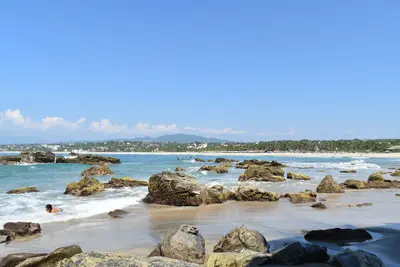
    Puerto Escondido, on Oaxaca's Pacific coast, grew from a fishing village into a small town and one of Mexico's most famous surf destinations.

    Discover
    Hierve el Agua

    Place 2 of 4

    Hierve el Agua

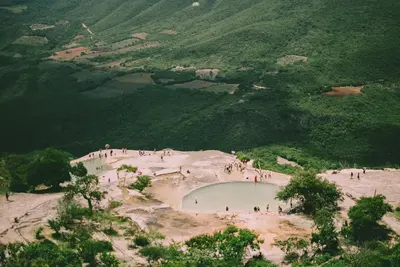
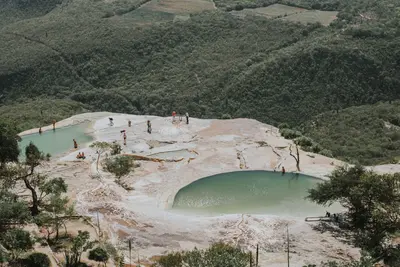
    Hierve el Agua is located about 70 kilometers east of Oaxaca de Juárez in the mountains above the Mitla Valley. Over millennia, calcareous spring water has flowed down the cliffs here, creating deposits that look like petrified waterfalls.

    Discover
    Teotitlán del Valle

    Place 3 of 4

    Teotitlán del Valle

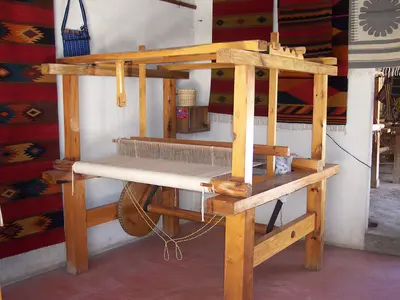
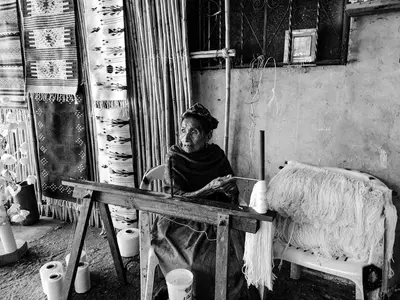
    Teotitlán del Valle is a Zapotec village situated about 30 kilometers east of Oaxaca de Juárez at the foot of the Sierra Juárez. It is known for its wool carpets, many of which are produced by families on treadle looms, often using natural dyes.

    Discover
    San José del Pacífico

    Place 4 of 4

    San José del Pacífico

    San José del Pacífico is located at almost 2,400 meters on Federal Highway 175, between Oaxaca de Juárez and the Pacific coast near Pochutla. The small village is surrounded by pine and cloud forests; in the mornings, clouds often drift through the valleys.

    Discover

    More places in Oaxaca

    Oaxaca de Juárez

    Oaxaca de Juárez

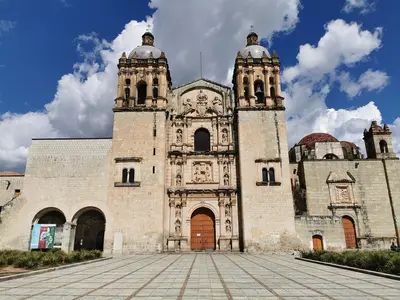
    Oaxaca de Juárez is the capital of the eponymous state in southern Mexico, located at an altitude of around 1,550 meters in the Oaxaca Valley at the foot of the Sierra Madre del Sur. Visitors are drawn by its colonial center built from green Cantera stone, which, along with the Zapotec site Monte Albán, has been a UNESCO World Heritage site since 1987, and by one of the country's most distinctive cuisines.The city also offers large markets, numerous museums and galleries, and handicrafts from the surrounding villages. It also serves as a starting point for tours to Mezcal distilleries, markets, and archaeological sites in the Valley of Oaxaca.

    Mazunte

    Mazunte is a small village located on a bay of Oaxaca's Pacific coast, a good hour east of Puerto Escondido. Until the 1990 ban, the village thrived on sea turtle fishing; today, turtle conservation, small guesthouses, yoga offerings, and a tranquil beach define its character. Since 2015, Mazunte has held the title of Pueblo Mágico.

    Sights in Oaxaca

    Discover the most important sights and attractions

    Monte Albán

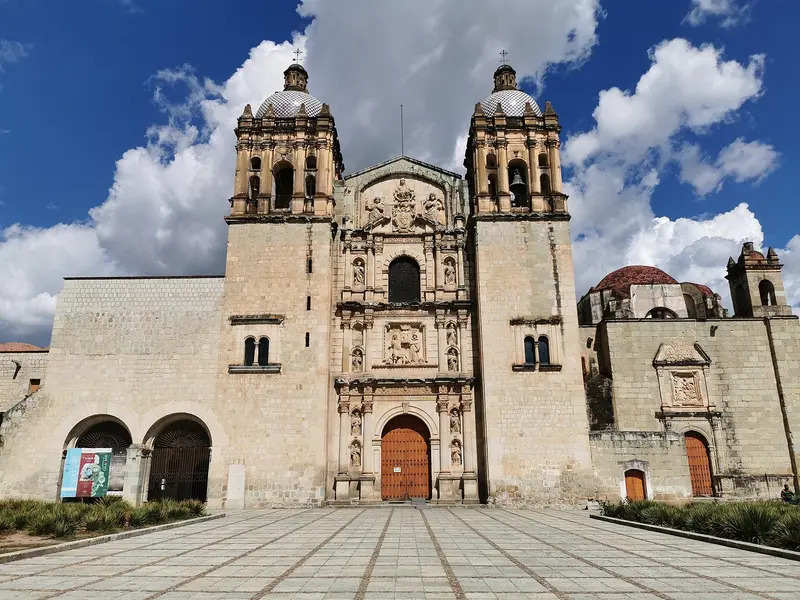
    The former Zapotec capital is situated on a flattened mountaintop above the Valley of Oaxaca, about 9 kilometers west of the city. Pyramids, palaces, a ball court, and the Danzantes reliefs are grouped around the Great Plaza. Founded around 500 BC, the city was largely abandoned by approximately 900 to 1000 AD; a UNESCO World Heritage site since 1987.
    Open in Google Maps

    Mitla

    The Zapotec archaeological site approximately 40 kilometers east of Oaxaca de Juárez is known for its wall friezes made of thousands of precisely fitted stones with geometric patterns. In the 16th century, the Spanish built the Church of San Pablo using stones from the demolished palaces. Mitla is often combined with the Árbol del Tule and Hierve el Agua.
    Open in Google Maps

    Tree of Tule

    The Montezuma Cypress in the churchyard of Santa María del Tule, about 9 kilometers east of the capital on the road to Mitla, is considered the tree with the thickest trunk in the world. Its age is estimated at around 1,400 to 1,600 years.
    Open in Google Maps

    Best Time to Visit

    When is the best time for your trip?

    October
    November
    December
    January
    February
    March
    18–21°C·3–50 mm(little rain)
    From October to March, the highlands are dry and pleasantly warm during the day, cool at night. Día de Muertos begins at the end of October. During the rainy season, there are usually short, heavy afternoon showers, and in July, Guelaguetza entices.
    The values apply to the high valley around Oaxaca de Juárez at approx. 1,550 meters. The Pacific coast is much warmer year-round (monthly average 27-29 degrees); its rainy season is similar.

    Seasons

    Jan
    Feb
    Mar
    Apr
    May
    Jun
    Jul
    Aug
    Sep
    Oct
    Nov
    Dec
    Dry season
    Wet time
    Transfer
    Best Time to Visit
    ▶Show detailed monthly data
    MonthTemp (°C)Rain (mm)
    January18.03
    February19.05
    March21.010
    April22.030
    May23.070
    June22.0160
    July21.0110
    August21.0120
    September21.0150
    October20.050
    November19.010
    December18.04

    Culture & Character

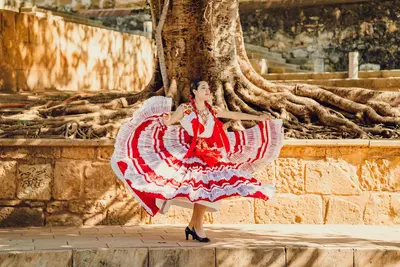
    Culture & CharacterOaxaca’s law recognizes 16 indigenous peoples, also Afro-Mexican communities on the coast. Zapotec, Mixtec, Mazatec, Chatino and other groups speak unique languages; many communities govern by traditional customary law (usos y costumbres). This diversity shows in dress, festivals, and crafts, often village-specific: Teotitlán carpets, San Bartolo Coyotepec black pottery, San Martín Tilcajete painted wooden figures.Annual highlights include the Guelaguetza in July, where groups from all regions dance in the capital, and the Día de Muertos from late October to early November, with altars, cemetery vigils, and markets.

    On the road in Oaxaca

    Traveling in OaxacaThe capital is the hub with its airport and bus terminals. You can reach the villages of the Valles Centrales by colectivos, shared taxis, or on guided day trips. Two routes lead to the coast: the highway to Puerto Escondido, opened in 2024 (approx. three hours), and the winding mountain road via San José del Pacífico to Pochutla (approx. six hours). Puerto Escondido and Huatulco have their own airports with connections to Mexico City.Motion sickness is common on mountain roads; shared taxis drive quickly.On mountain routes, it's best to travel during daylight. For current safety information, consult the UK FCDO Travel Advice.

    Round trips through this region

    Oaxaca Culture & Pacific

    Oaxaca Culture & Pacific

    After four days in Oaxaca de Juárez with markets, Monte Albán, and a trip to Hierve el Agua, we head to the Pacific coast: Mazunte, then Puerto Escondido. Since 2024, a new highway reaches Puerto Escondido in about three hours; Mazunte is roughly an hour east from there. The old mountain road via the Sierra Sur takes around six hours. A domestic flight to Huatulco or Puerto Escondido is faster.

    14 Days
    3 stops
    Open jaw
    Oaxaca vibrant & tranquil

    Oaxaca vibrant & tranquil

    After Oaxaca de Juárez, you'll head for two nights to the weaving village of Teotitlán del Valle, then it's on to the mountain village of San José del Pacífico at around 2,350 meters and down to the Pacific coast at Puerto Escondido. Teotitlán is about 30 kilometers east of Oaxaca; the road over the Sierra Sur is winding, allow a full travel day for it.

    14 Days
    4 stops
    Open jaw
    Mexico Delight & Sea

    Mexico Delight & Sea

    After four days in Mexico City – markets, museums, cuisine, plus a trip to the Teotihuacán pyramids – you fly in approx. 1h 15m to Puerto Escondido, Oaxaca's Pacific coast. Eight nights there are for beaches, surfing, and seafood restaurants.

    13 Days
    2 stops
    Open jaw

    Nearby

    Oaxaca de Juárez

    Oaxaca de Juárez

    Oaxaca de Juárez is the capital of the eponymous state in southern Mexico, located at an altitude of around 1,550 meters in the Oaxaca Valley at the foot of the Sierra Madre del Sur. Visitors are drawn by its colonial center built from green Cantera stone, which, along with the Zapotec site Monte Albán, has been a UNESCO World Heritage site since 1987, and by one of the country's most distinctive cuisines.The city also offers large markets, numerous museums and galleries, and handicrafts from the surrounding villages. It also serves as a starting point for tours to Mezcal distilleries, markets, and archaeological sites in the Valley of Oaxaca.
    Jalatlaco

    Jalatlaco

    Jalatlaco is located east of the Old Town and is one of Oaxaca's oldest barrios; according to tradition, it was founded in 1486, and later primarily tanners lived here. The cobblestone streets with low, brightly painted houses and murals are quieter than the center. Its focal point is the Church of San Matías Jalatlaco. In 2023, the district was named Oaxaca's first Barrio Mágico. In recent years, many cafés, small restaurants, and guesthouses have emerged; Santo Domingo can be reached in about ten minutes on foot.
    Xochimilco

    Xochimilco

    The Barrio Xochimilco is located north of the old town and is considered one of Oaxaca's oldest neighborhoods: According to tradition, it was founded around 1486 by warriors from Xochimilco in the Valley of Mexico. Characteristic features are the arches of the 18th-century San Felipe Aqueduct, cobblestone streets, and the parish church of Santo Tomás. From Santo Domingo, you can reach the neighborhood on foot in about ten minutes.
    Teotitlán del Valle

    Teotitlán del Valle

    Teotitlán del Valle is a Zapotec village situated about 30 kilometers east of Oaxaca de Juárez at the foot of the Sierra Juárez. It is known for its wool carpets, many of which are produced by families on treadle looms, often using natural dyes. In daily life, Zapotec is still spoken alongside Spanish.
    Hierve el Agua

    Hierve el Agua

    Hierve el Agua is located about 70 kilometers east of Oaxaca de Juárez in the mountains above the Mitla Valley. Over millennia, calcareous spring water has flowed down the cliffs here, creating deposits that look like petrified waterfalls. Above are pools of spring water and expansive views over the Sierra.

    Sources & method

    • Photos: Pexels. Each photo carries its credit.
    • Place data such as addresses and ratings comes from Google Maps.
    • The content is based on web research from public, traceable sources. How the content is made · The role of AI