Fernweh: Home
    ExploreTravel GuidesPlan a tripMy tripLast visited
    de|en
    All Places & RegionsAll highlightsAbout FernwehFAQPrivacy PolicyImprint
    ExploreTravel GuidesPlan a tripMy tripLast visited
    Teotitlán del Valle

    Mexico

    Teotitlán del Valle

    VillageCulture

    Teotitlán del Valle is a Zapotec village situated about 30 kilometers east of Oaxaca de Juárez at the foot of the Sierra Juárez.

    by Felix Gillen

    1. Home
    2. Destinations
    3. Mexico
    4. Oaxaca
    5. Teotitlán del Valle
    Teotitlán del Valle is a Zapotec village situated about 30 kilometers east of Oaxaca de Juárez at the foot of the Sierra Juárez. It is known for its wool carpets, many of which are produced by families on treadle looms, often using natural dyes. In daily life, Zapotec is still spoken alongside Spanish.

    Sights

    Discover the most important sights and attractions

    Templo Preciosa Sangre de Cristo (Church of the Precious Blood of Christ)

    1Templo Preciosa Sangre de Cristo (Church of the Precious Blood of Christ)

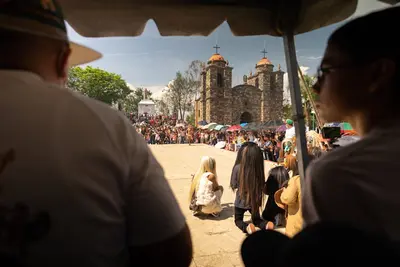
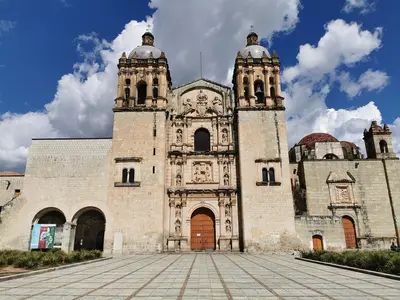
    The village church, built from 1581 on the site of a Zapotec temple, was completed in 1758. Remains of the previous structure can be seen in the foundations, while inside, 16th-century decoration features pre-Hispanic motifs. In front of the church lies the main square with the market.
    Open in Google Maps
    Mercado de Artesanías

    2Mercado de Artesanías

    On the main square next to the church, weaver families sell their carpets, wall hangings, and bags. Quality ranges from simple souvenirs to large pieces with natural dyes; ask about the dyes used and compare prices.
    Open in Google Maps
    Balaa Xtee Guech Gulal Community Museum

    3Balaa Xtee Guech Gulal Community Museum

    The small community museum on the Main Square displays archaeological finds from the area, photos of festivals, and explanations about weaving with natural dyes like cochineal and indigo. The exhibition was designed by the community itself.
    Open in Google Maps
    Village Weavings

    4Village Weavings

    Many families weave at home and welcome visitors to their workshops. There, you'll see how wool is carded, spun, and dyed with plants, lichens, or cochineal insects, before it's worked on treadle looms. A purchase directly from the weaver is customary, but not obligatory.
    Open in Google Maps

    City walks in Teotitlán del Valle

    Curated walking tours through the city's highlights, handpicked by experienced travel journalists.

    The Colours of the Earth: Nature, Agave & Mezcal around Teotitlán

    This walk leads you out of the village centre and into the surrounding countryside of Teotitlán del Valle. Discover the natural sources of the region's famous dyes, dive into the world of agave cultivation and taste traditionally made mezcal. Experience how nature shapes the culture and craftsmanship of this special place.

    ~2 Std.
    Open in Google Maps
    Stops (5)

    Restaurants & Cafés

    1

    Restaurant Tlamanalli

    The restaurant of Zapotec chef Abigail Mendoza and her sisters on Avenida Juárez serves traditional cuisine from Teotitlán, including Moles. Opening hours are limited; it's best to check in advance.
    Show on Google Maps
    2

    Restaurante Zapoteca

    Simple restaurant near the main square with regional cuisine.
    Show on Google Maps
    3

    La Azucena de Teotitlán

    Central restaurant with Oaxacan dishes, great for a break between workshop visits.
    Show on Google Maps

    Food & Drink

    In Teotitlán, families cook Zapotec recipes, many ingredients come from the valley.

    Mole

    Black and red mole are a must at every festival and also feature on restaurant menus.

    Chocolate of water

    Hot chocolate with water, ground on a metate, often with Pan de yema.

    Culture & Character

    Weaving and CommunityWeaving has been practiced in Teotitlán since pre-Hispanic times, initially on backstrap looms. Around 1535, the Dominican bishop Juan López de Zárate introduced sheep and the pedal loom, which made larger pieces like rugs and sarapes possible. Patterns often incorporate geometric motifs from Mitla and other Zapotec sites. Like many communities in Oaxaca, Teotitlán is governed by customary law: offices are held voluntarily and on a rotating basis.Important festivals include the Feast of the Preciosa Sangre de Cristo in July and the patron saint festival of the Virgen de la Natividad on September 8th, during which the Danza de la Pluma is danced with large feathered headdresses, as well as the Día de Muertos.

    Arrival

    Getting ThereFrom Oaxaca de Juárez, you drive on Federal Highway 190 towards Mitla and then turn north into the village; in total, it's around 30 kilometers. Shared taxis operate from the turn-off to the village; many day tours to Mitla and Hierve el Agua make a stop here.

    Accommodations in Teotitlán del Valle

    Find perfect stay in Teotitlán del Valle

    Booking.com* (Affiliate link)
    Search Hotels
    Agoda* (Affiliate link)
    Search Hotels
    Airbnb
    Vacation Rentals

    * Affiliate link: if you book through it, we earn a small commission. The price stays the same for you.

    Nearby

    Jalatlaco

    Jalatlaco

    Jalatlaco is located east of the Old Town and is one of Oaxaca's oldest barrios; according to tradition, it was founded in 1486, and later primarily tanners lived here. The cobblestone streets with low, brightly painted houses and murals are quieter than the center. Its focal point is the Church of San Matías Jalatlaco. In 2023, the district was named Oaxaca's first Barrio Mágico. In recent years, many cafés, small restaurants, and guesthouses have emerged; Santo Domingo can be reached in about ten minutes on foot.
    Oaxaca

    Oaxaca

    The state of Oaxaca in southern Mexico stretches from the highlands of the Sierra Madre del Sur to the Pacific coast. With 16 officially recognized indigenous peoples, including Zapotec and Mixtec, it is culturally one of the most diverse regions of the country.At its heart lies the capital, Oaxaca de Juárez, with Monte Albán and the artisan villages of the Oaxaca Valley. Over the mountains, for instance through San José del Pacífico, roads lead to the coast, home to Puerto Escondido, Mazunte, and Zipolite.
    Oaxaca de Juárez

    Oaxaca de Juárez

    Oaxaca de Juárez is the capital of the eponymous state in southern Mexico, located at an altitude of around 1,550 meters in the Oaxaca Valley at the foot of the Sierra Madre del Sur. Visitors are drawn by its colonial center built from green Cantera stone, which, along with the Zapotec site Monte Albán, has been a UNESCO World Heritage site since 1987, and by one of the country's most distinctive cuisines.The city also offers large markets, numerous museums and galleries, and handicrafts from the surrounding villages. It also serves as a starting point for tours to Mezcal distilleries, markets, and archaeological sites in the Valley of Oaxaca.
    Xochimilco

    Xochimilco

    The Barrio Xochimilco is located north of the old town and is considered one of Oaxaca's oldest neighborhoods: According to tradition, it was founded around 1486 by warriors from Xochimilco in the Valley of Mexico. Characteristic features are the arches of the 18th-century San Felipe Aqueduct, cobblestone streets, and the parish church of Santo Tomás. From Santo Domingo, you can reach the neighborhood on foot in about ten minutes.
    Hierve el Agua

    Hierve el Agua

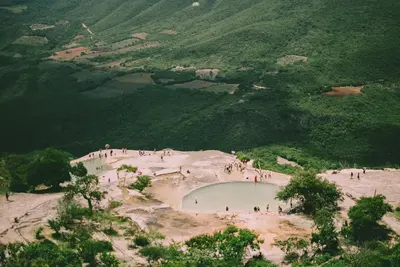
    Hierve el Agua is located about 70 kilometers east of Oaxaca de Juárez in the mountains above the Mitla Valley. Over millennia, calcareous spring water has flowed down the cliffs here, creating deposits that look like petrified waterfalls. Above are pools of spring water and expansive views over the Sierra.

    Sources & method

    • Photos: Pexels. Each photo carries its credit.
    • Place data such as addresses and ratings comes from Google Maps.
    • The content is based on web research from public, traceable sources. How the content is made · The role of AI