Twelve days from Lima to the Cordillera Blanca in Huaraz and on to the North Coast in Trujillo. Between Lima, Huaraz, and Trujillo, you travel by long-distance buses, returning to Lima by plane.
12 Days / 11 Nights
May–September
5 stops
Why This Route?
This route unveils a Peru most travelers miss. In the Cordillera Blanca, hike among the world's highest tropical mountains. On the North Coast, explore the mud-brick cities of the Moche and Chimú, predating the Inca. The routes are manageable, keeping you mostly away from major tourist crowds.
Hidden Gems
Head to Laguna Churup early in the morning, then you'll have the lagoon almost to yourself
In Huanchaco, the sunset on the beach beside the displayed Caballitos de Totora is worthwhile
At Huaca de la Luna, plan time for the museum, which displays the finds from the temple.
Getting there and back
Round trip, returning to where you started
Arrival
Flight · Lima (LIM)From Jorge Chávez Airport to Miraflores, you'll need just under an hour to a good hour and a half, depending on traffic. Take an official airport taxi or a pre-booked transfer.
Departure
Flight · Lima (LIM)From Trujillo, you fly back to Lima in about an hour, where your flight home departs.
Itinerary
Stop 1 • 2 Nights
Lima
City
Route highlight
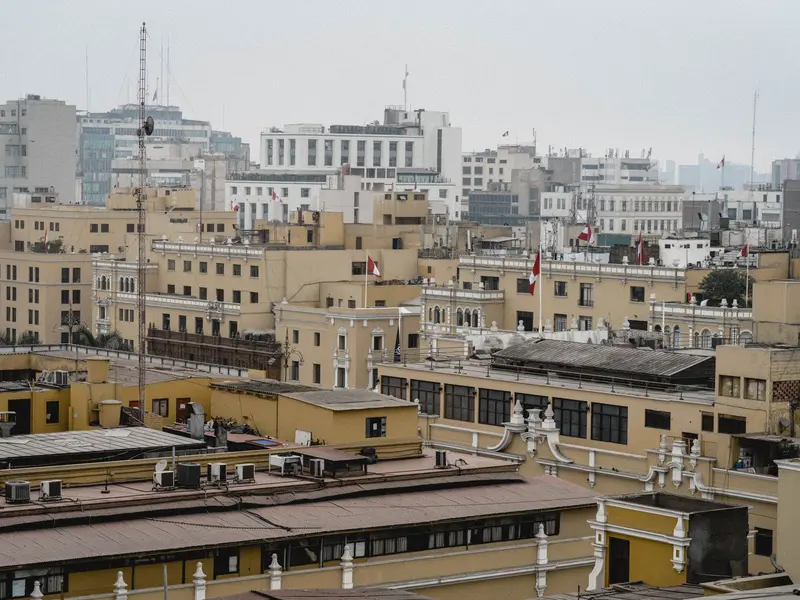
Peru's capital lies on the Pacific coast and is the first stop for most travelers. Francisco Pizarro founded it in 1535; as the seat of the Viceroyalty, it became Spanish South America's most important city. Its historic center, with its cathedral, monasteries, and wooden balconies, has been a UNESCO World Heritage site since 1988.For travelers, three districts are particularly important: the Centro Histórico with Plaza Mayor and the San Francisco Monastery, Miraflores with the Malecón along the cliffs and the adobe pyramid Huaca Pucllana, and Barranco, the bohemian district with galleries, murals, and the Puente de los Suspiros. In the Pueblo Libre district, the Museo Larco displays one of the country's great collections of pre-Columbian art.
Arrival, Old Town and Barranco, side trip to Caral possible.
1 Sight
Culture
Culinary CapitalIn Lima, Spanish, indigenous, African, Chinese, and Japanese influences converge, and nowhere is this more evident than on your plate. Here, you eat ceviche for lunch; Chifa is Peruvian-Chinese cuisine, Nikkei the Peruvian-Japanese.Colonial HeritageThe Spanish founded Lima in 1535 as the capital of their Viceroyalty. The old town, with its wooden balconies, monasteries, and churches, is now a UNESCO World Heritage site.Museums and ArtThe Museo Larco displays pre-Columbian ceramics spanning millennia; in Barranco, galleries and murals shape the streetscape. Those who want to hear Peruvian music go to a Peña in the evening.
Huaraz is the capital of the Ancash region and the hub for hikers and mountaineers in the Cordillera Blanca. The city itself primarily serves as a base: Here you book tours, organize equipment, and acclimatize before heading into Huascarán National Park.From Lima, you can reach Huaraz by overnight bus in approximately eight hours or by flight. Note that travel advisories caution against overnight intercity bus journeys.Two to three days of acclimatization in Huaraz are recommended before longer high-altitude tours.Mountaineers can register in advance with the Peruvian Mountain Rescue service.
First Laguna Churup to acclimatize, then Laguna 69 and the Llanganuco Lakes.
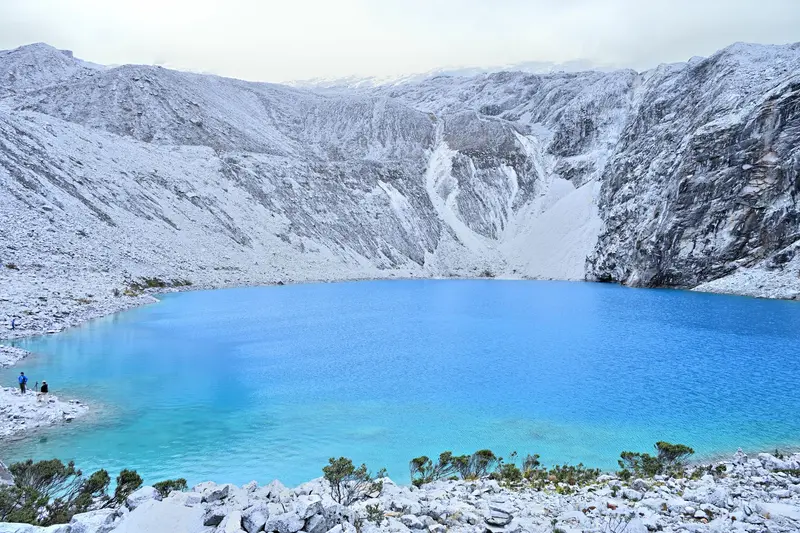
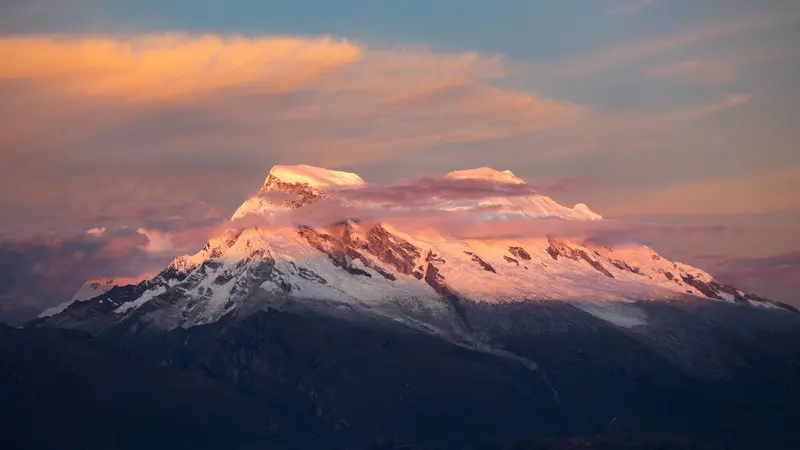
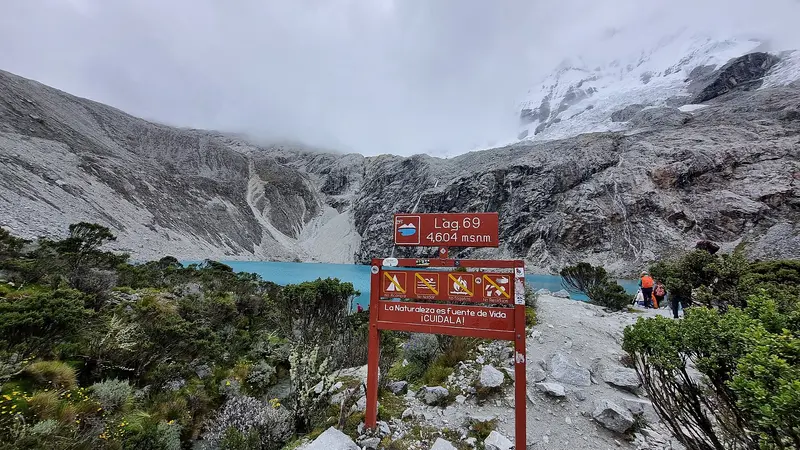
Huascarán National Park encompasses almost the entire Cordillera Blanca: glaciers, hundreds of high-altitude lakes, and Huascarán, Peru's highest mountain at 6,768 meters. The park was founded in 1975, has been a biosphere reserve since 1977, and a UNESCO World Heritage site since 1985.Laguna 69: the most famous day hike, a turquoise glacial lake at around 4,600 meters. The starting point is Cebollapampa, and the round trip takes about six to seven hours.Lagunas de Llanganuco: two lakes at around 3,850 meters on the way to Laguna 69, also a stop for day trips from Huaraz.Laguna Churup above Huaraz is suitable as an acclimatization hike.You need a ticket for the park, available as a day, three-day, or month pass. Camping is not allowed at Laguna 69.
Optional: Overnight stay in a tent or in a village in the Callejón de Huaylas.
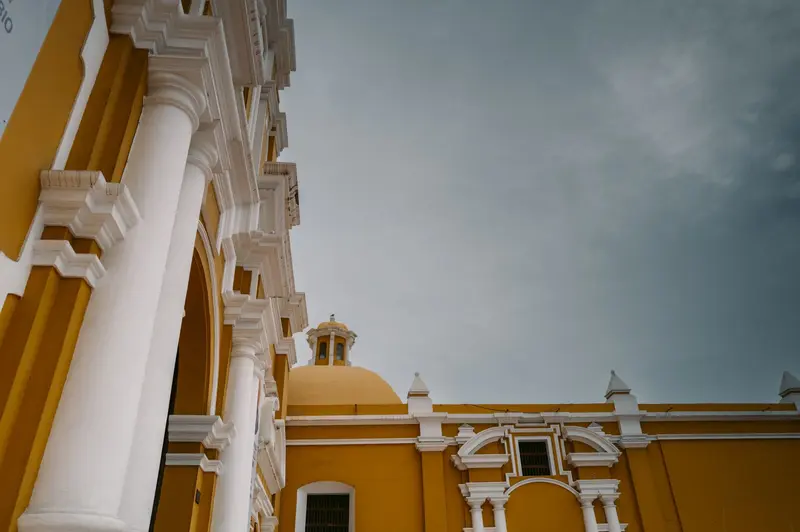
Trujillo, the capital of the La Libertad region, was founded in 1534 and named after Francisco Pizarro's hometown in Extremadura. The city center features a grid of streets with colorful colonial houses and wrought-iron window grilles surrounding the Plaza de Armas with its cathedral.Most visitors come for the archaeological sites on the outskirts of the city: Chan Chan, the Chimú capital, and the temple pyramids Huaca del Sol and Huaca de la Luna of the Moche. In the nearby seaside town of Huanchaco, fishermen still go out to sea in traditional reed boats, the Caballitos de Totora, while the waves attract surfers.The Federal Foreign Office reports a current state of emergency in Trujillo. Check the current situation there before traveling.
Chan Chan, the Huacas del Sol y de la Luna and surfing in Huanchaco.
Peru's capital lies on the Pacific coast and is the first stop for most travelers. Francisco Pizarro founded it in 1535; as the seat of the Viceroyalty, it became Spanish South America's most important city. Its historic center, with its cathedral, monasteries, and wooden balconies, has been a UNESCO World Heritage site since 1988.For travelers, three districts are particularly important: the Centro Histórico with Plaza Mayor and the San Francisco Monastery, Miraflores with the Malecón along the cliffs and the adobe pyramid Huaca Pucllana, and Barranco, the bohemian district with galleries, murals, and the Puente de los Suspiros. In the Pueblo Libre district, the Museo Larco displays one of the country's great collections of pre-Columbian art.
Return flight to Lima, last evening in Miraflores.
1 Sight
Culture
Culinary CapitalIn Lima, Spanish, indigenous, African, Chinese, and Japanese influences converge, and nowhere is this more evident than on your plate. Here, you eat ceviche for lunch; Chifa is Peruvian-Chinese cuisine, Nikkei the Peruvian-Japanese.Colonial HeritageThe Spanish founded Lima in 1535 as the capital of their Viceroyalty. The old town, with its wooden balconies, monasteries, and churches, is now a UNESCO World Heritage site.Museums and ArtThe Museo Larco displays pre-Columbian ceramics spanning millennia; in Barranco, galleries and murals shape the streetscape. Those who want to hear Peruvian music go to a Peña in the evening.