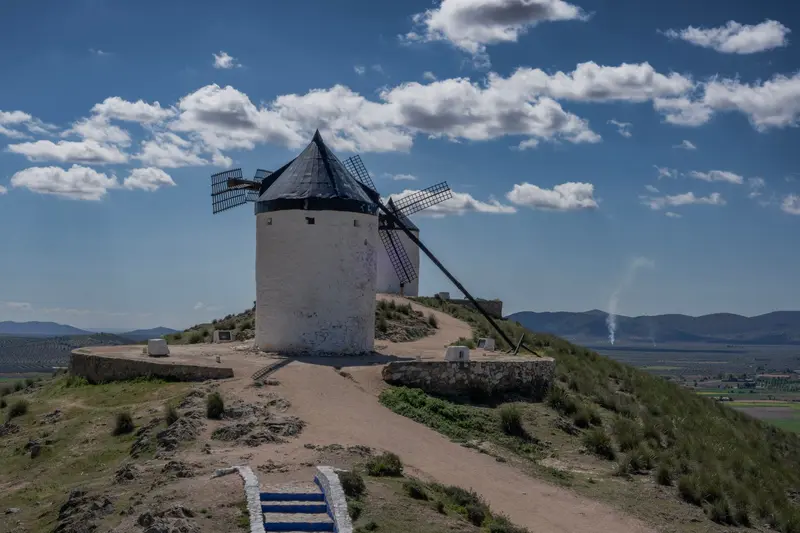
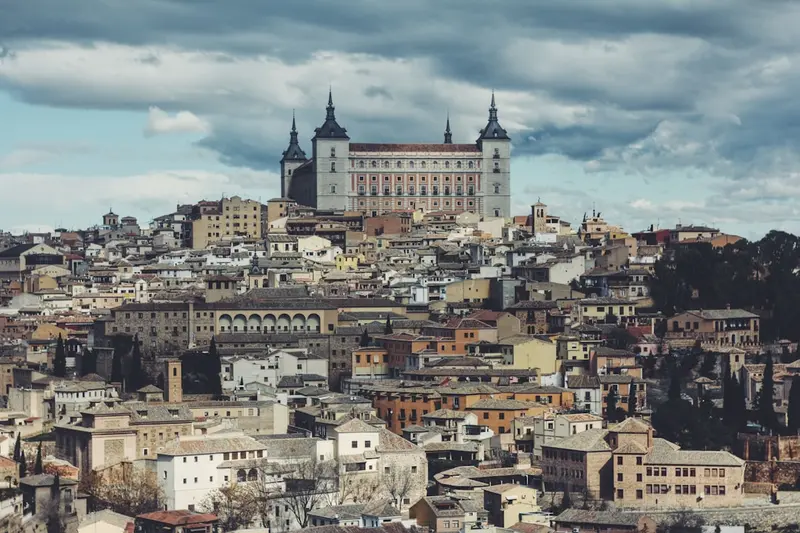
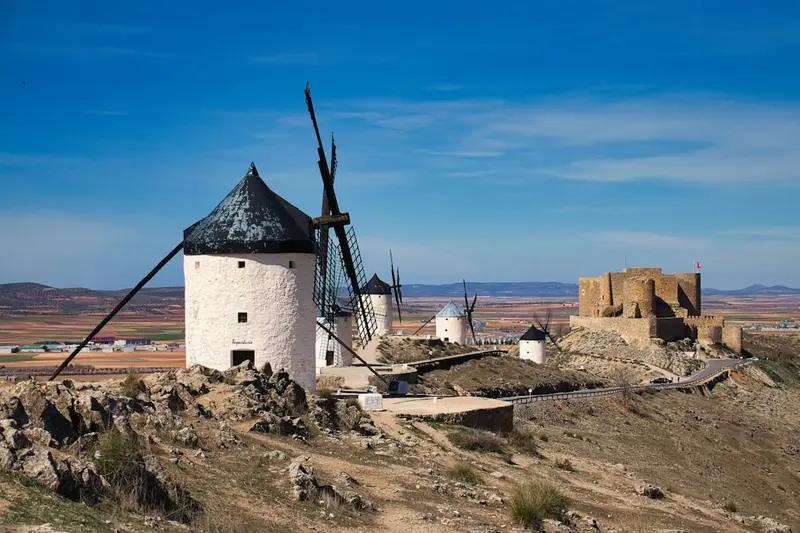
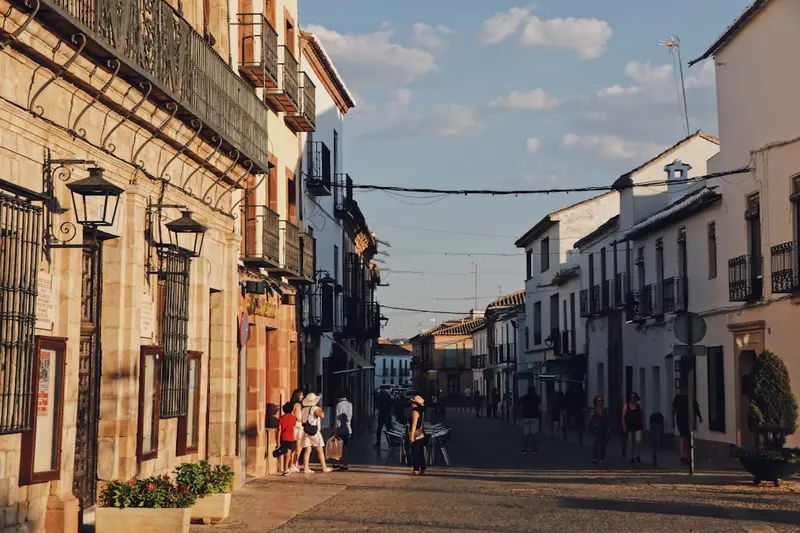
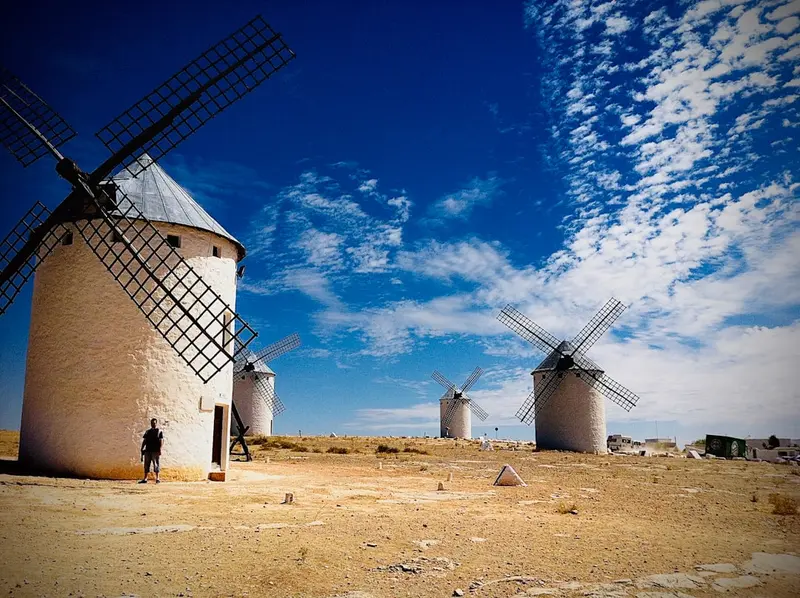
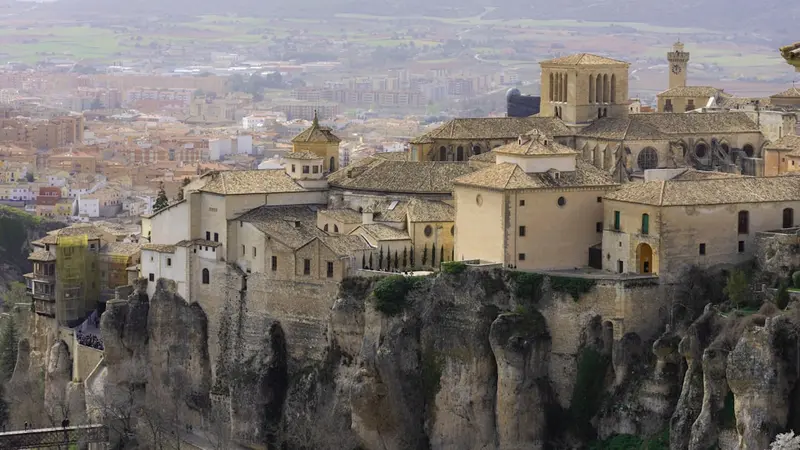
The route begins in Toledo and leads to the windmills of Consuegra, then south to Almagro with its 17th-century theatre courtyard, and back north to the windmills of Campo de Criptana. Finally, you reach Cuenca with its hanging houses. No leg lasts longer than approximately two hours.
10 Days / 9 Nights
April–June & September–October
RV Friendly
5 stops
Why This Route?
For literature and history enthusiasts wanting to experience windmills, castles, and old towns in a quiet, expansive landscape.
Hidden Gems
Mirador del Valle in Toledo, overlooking the Tagus River and the old town
Castillo de la Muela in Consuegra, right beside the windmills
the Burleta, Infanto, and Sardinero windmills in Campo de Criptana, still retaining their 16th-century grinding mechanisms.
Itinerary
Stop 1 • 3 Nights
Toledo
City
Rich in culture and history. Perfect for an exciting city trip and Route highlight.
Toledo was the seat of the Castilian royal court until 1561 and has been a UNESCO World Heritage site since 1986. The city is known as the "City of Three Cultures": Christian, Jewish, and Muslim influences shape its architecture and history. The Cathedral of Toledo, the Alcázar, and the Synagogue Santa María la Blanca are key landmarks. In the narrow streets, you'll also find the El Greco Museum and other historical testimonies. Explore the Old Town best on foot; spring or autumn offers ideal conditions with fewer visitors.
Rich in culture and history. Perfect for an exciting city trip.
Almagro, a historic town in the region of Castilla-La Mancha, fascinates with its well-preserved cultural heritage. At the heart of the town lies the Plaza Mayor, an elongated square with arcades on Tuscan stone columns and two-story glazed galleries that invites you to linger. A highlight is the Corral de Comedias of 1628, the only fully preserved theater of its kind from the 17th century, still used for performances today. You will also find the National Theater Museum and the Palacio de los Fúcares, which the Augsburg banking family Fugger had built as a warehouse in the 16th century. The town is also known for its traditional bobbin lace. Ideally, visit Almagro during the International Festival of Classical Theatre in July to experience the vibrant cultural scene up close.
4 Sights
4 Restaurants
Almagro's Cultural Heritage and Golden Age
Almagro, a town of historical significance in Castile-La Mancha, is deeply rooted in its past. Finds such as Roman coins and a tombstone indicate settlement as early as Roman times. In the 13th century, the Order of Calatrava chose Almagro as its seat, making the town its administrative center. In the 16th and 17th centuries, the town grew, noble families and merchants settled, and Renaissance and Baroque buildings still define its cityscape today.The Plaza Mayor, with its arcades on Tuscan stone columns and glazed galleries, is the heart of Almagro. On the Plaza lies the Corral de Comedias, a courtyard theatre dating back to 1628, which is still in use today. It is the only fully preserved theatre of its kind and bears witness to the rich theatrical culture of that era.Traditions play a significant role in Almagro. Since 1978, the International Classical Theatre Festival has been held here every July, including performances in the Corral de Comedias. Craftsmanship, particularly bobbin lace (Encaje de Bolillos), is also a vibrant part of the local culture, with a dedicated museum showcasing pieces from the town.
Campo de Criptana is located in the middle of La Mancha, and its windmills on the hill above the town are among Spain's most famous images. Here you move through Don Quijote's landscape: whitewashed houses, vast plains, and a quiet village life away from major tourist crowds.
3 Sights
4 Restaurants
Cultural Heritage and Windmills
Campo de Criptana is a place of great cultural significance, closely linked to Spain's literary heritage. The windmills, associated with the windmill episode in Miguel de Cervantes' “Don Quijote,” are not only landmarks but also symbols of the enduring local traditions.The history of the area extends far beyond the time of the “Knight of the Sorrowful Countenance.” It has been inhabited since the Neolithic Age, with the Roman historian Livy mentioning settlements in the area. During Moorish rule, the region was part of Toledo's sphere of influence. After the Battle of Las Navas de Tolosa, it came under the Order of Santiago, and around 1300, the village of “El Campo” emerged, from which Campo de Criptana developed.Architecturally, traditional, whitewashed houses define the townscape. Besides the windmills, the Iglesia Parroquial de Nuestra Señora de la Asunción in the town center is an important edifice. The most significant patron saint festivals are dedicated to the Santísima Virgen de Criptana and the Santísimo Cristo de Villajos, in addition to Carnival and Semana Santa.