Fernweh: Home
    ExploreTravel GuidesPlan a tripMy tripLast visited
    de|en
    All Places & RegionsAll highlightsAbout FernwehFAQPrivacy PolicyImprint
    ExploreTravel GuidesPlan a tripMy tripLast visited
    • Why go
    • Highlights
    • Explore regions
    • Round trips
    • Local food
    • Good to know
    • Best time to visit
    • Travel advice
    Spain

    Travel Guide Spain

    Spain stretches from the green coasts of Galicia to the semi-deserts of Almería. Moorish palaces, Romanesque churches, long Mediterranean beaches, and a distinctly regional cuisine make the country diverse.

    by Felix Gillen

    Contents

    • Why go
    • Highlights
    • Explore regions
    • Round trips
    • Local food
    • Good to know
    • Best time to visit
    • Travel advice

    Why Go To Spain?

    Spain boasts a remarkable diversity of landscapes: the Pyrenees and Picos de Europa in the north, the plateaus of Castile, the Mediterranean coast, and two island groups. Cities like Seville, Granada, Toledo, and Barcelona tell tales of Romans, Moors, and the Golden Age, while each region cultivates its own unique cuisine, language, and festivals. A dense network of high-speed trains and long-distance buses makes it easy to combine several of these regions on one journey.

    Where in Spain?

    Pick a region. The highlights, road trips and places below follow your choice.
    Madrid
    Highlight 1 of 8

    Madrid

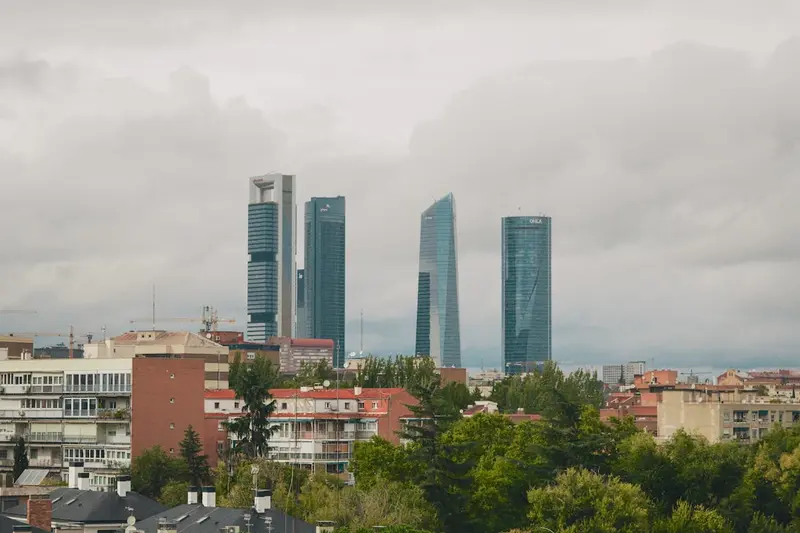
    Madrid is the capital of Spain and its largest city, home to some 3.4 million inhabitants.

    Discover
    Toledo
    Highlight 2 of 8

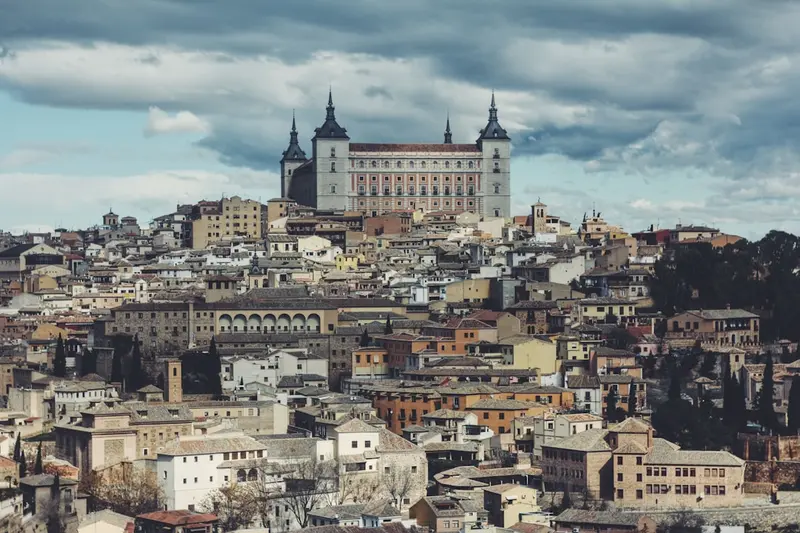
    Toledo

    Toledo was the seat of the Castilian royal court until 1561 and has been a UNESCO World Heritage site since 1986. The city is known as the "City of Three Cultures": Christian, Jewish, and Muslim influences shape its architecture and history.

    Discover
    Córdoba
    Highlight 3 of 8

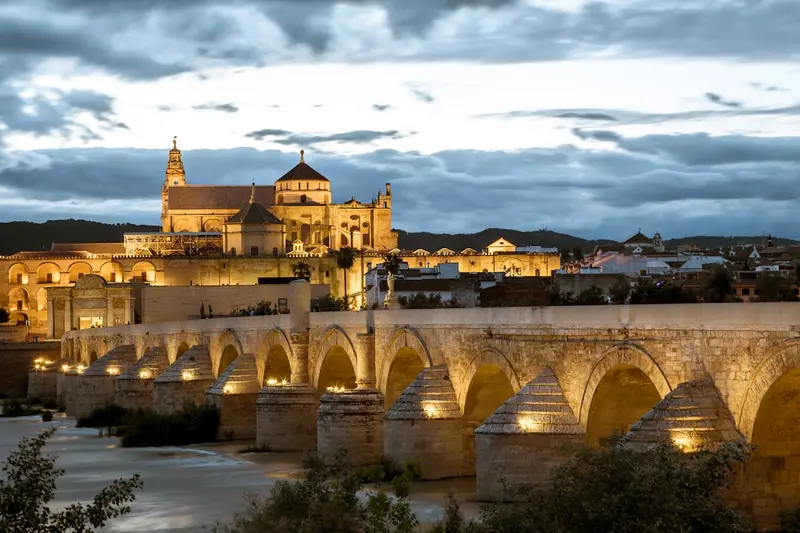
    Córdoba

    Córdoba is located on the Guadalquivir in Andalusia and was the capital of the Emirate and later the Caliphate of Córdoba, from which the Umayyads ruled Al-Andalus.

    Discover
    Seville
    Highlight 4 of 8

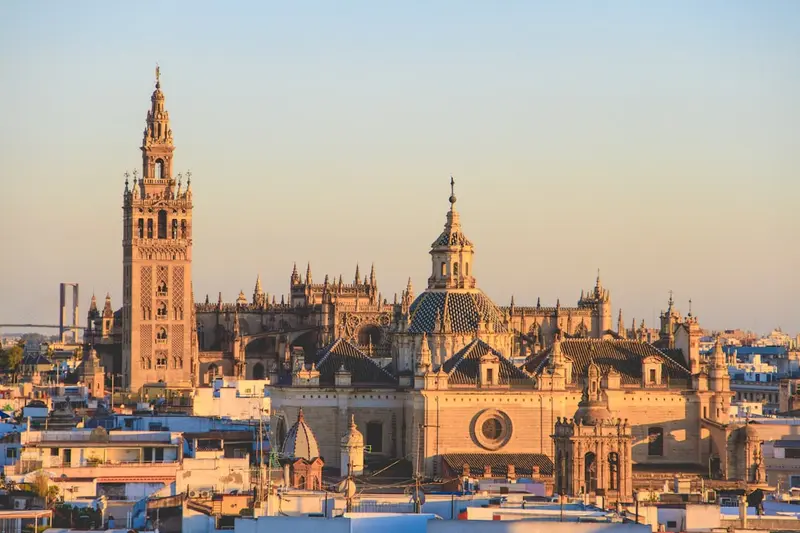
    Seville

    Seville, the capital of Andalusia on the Guadalquivir River, blends Moorish heritage with vibrant street culture.

    Discover
    Granada
    Highlight 5 of 8

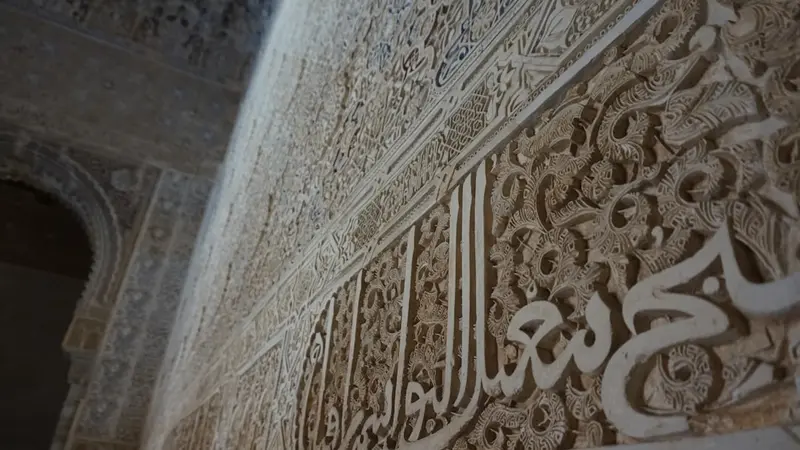
    Granada

    Granada in Andalusia lies at the foot of the Sierra Nevada and was, from the 13th century, the capital of the Nasrid kingdom, the last Muslim-ruled state on the Iberian Peninsula.

    Discover
    Valencia
    Highlight 6 of 8

    Valencia

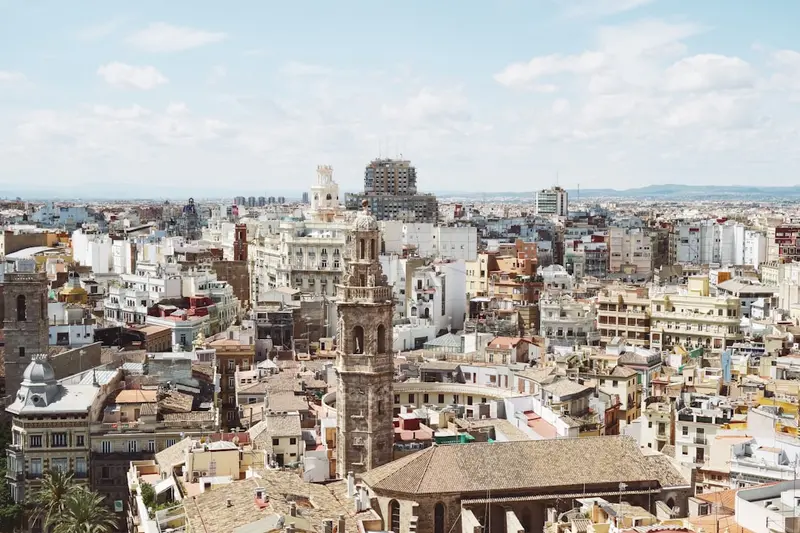
    Valencia is the third-largest city in Spain and is located on the Mediterranean coast between rice fields and orange groves.

    Discover
    Barcelona
    Highlight 7 of 8

    Barcelona

    Barcelona, the capital of Catalonia and Spain's second-largest city, lies right on the Mediterranean and combines a Gothic old town, a city beach and the buildings of Catalan Modernisme.

    Discover
    San Sebastián (Donostia)
    Highlight 8 of 8

    San Sebastián (Donostia)

    San Sebastián (Basque Donostia) is a coastal city in the Basque Country on La Concha Bay.

    Discover

    More highlights in Spain

    Unique experiences that make Spain unforgettable.
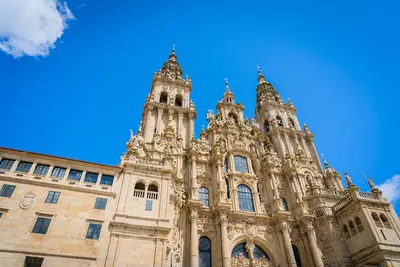
    Santiago de Compostela

    Santiago de Compostela

    Santiago de Compostela, the capital of Galicia, is the destination of the Way of St. James and one of Europe's most famous pilgrimage sites. It's worth visiting for the Cathedral above the tomb of Apostle James, with its Romanesque Pórtico da Gloria, and for the Old Town, a UNESCO World Heritage site since 1985. In its alleys, pilgrims, students, and travelers mingle, and Romanesque, Gothic, and Baroque buildings stand close together.
    Salamanca

    Salamanca

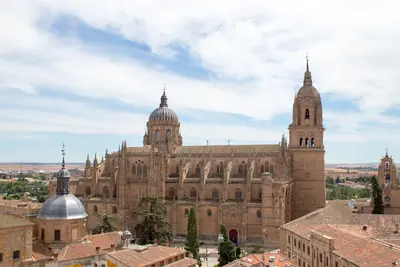
    Salamanca is one of Europe's oldest university cities. The Old Town of golden-yellow sandstone, with the baroque Plaza Mayor, two cathedrals, and the university founded in 1218, is a UNESCO World Heritage site. Tens of thousands of students create a vibrant city life.
    Mallorca

    Mallorca

    The largest of the Balearic Islands boasts an impressive variety of picturesque mountain landscapes, golden sandy beaches, and charming villages.
    Tenerife

    Tenerife

    The largest and most populous island of the Canary Islands is known for the Teide volcano, at 3,715 meters, the highest mountain in Spain, for diverse beaches and a vibrant nightlife.

    How to plan your trip to Spain

    From the guide to the road: here is what comes next.

    1. 1
      Sunrise over alpine peaks and a sea of clouds
      1234

      Round trip

      12 days · 4 stops

      Saved

      Pick a route

      Pick a ready-made one or save places and plan your own.

      Browse routes
    2. 2

      Trip to Spain

      Live
      • 1Madrid3 days
      • 2Toledo4 days
      • 3Córdoba5 days
      Budget

      Plan your trip

      The planner sorts stops, days and budget. Plan together in real time.

      Go to My Trips
    3. 3
      9:41 No signal
      Spain
      Available offline

      Use it on the road

      Download the guide to your phone and use it on site, even offline.

    Regions to Discover

    Explore the diverse regions of Spain.
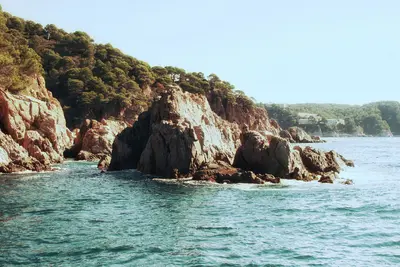
    Costa Brava

    Costa Brava

    The Costa Brava spans some 200 km from Blanes to the French border at Portbou. Rocky cliffs, small pine-fringed coves, and whitewashed fishing villages like Calella de Palafrugell or Cadaqués characterise Catalonia's north coast. Inland, medieval Girona and Figueres host the Dalí Theatre-Museum.
    Catalonia

    Catalonia

    Welcome to Catalonia, a fascinating region in northeastern Spain that will captivate you with its unparalleled blend of vibrant city life, breathtaking coastal landscapes, and alpine beauty. Here, you'll experience a unique culture, reflected in Gaudí's distinctive architecture, its rich history, and excellent gastronomy.
    Extremadura

    Extremadura

    Extremadura, in western Spain, bordering Portugal, lies off the beaten path of mass tourism. Here you'll discover vast Dehesa landscapes, a history spanning from the Romans to the Conquistadors, and a cuisine featuring everything from Ibérico ham to smoked paprika from La Vera. The region is sparsely populated, ideal for travelers seeking to experience history and nature in tranquility.
    Cantabria

    Cantabria

    Cantabria lies between Asturias and the Basque Country on the Bay of Biscay. The capital Santander with its bay, medieval Santillana del Mar, and the Modernisme buildings of Comillas are located close to each other. Inland rise the Picos de Europa, and in caves like Altamira are found some of the most significant Paleolithic cave paintings.
    Comunitat Valenciana

    Comunitat Valenciana

    The Valencia region on Spain's east coast extends from the orange groves of the Huerta to the old towns along the Mediterranean. Its capital, Valencia, combines its Gothic Old Town, the City of Arts and Sciences, and the home of paella. To its north, on the Costa del Azahar, lies the castle town of Peñíscola, and to the south, the Costa Blanca adjoins.
    Andalusia

    Andalusia

    Andalucía in the south of Spain combines Moorish palaces, white villages, long beaches, Flamenco and a distinct tapas culture. The autonomous community is Spain's most populous and one of the country's most versatile travel regions.
    Aragon

    Aragon

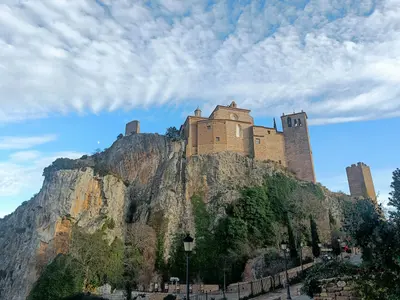
    Aragón, a historic autonomous community in northeastern Spain, combines Pyrenean landscapes, UNESCO World Heritage Mudéjar architecture, and a vibrant capital. Here you'll discover a region full of history, culture, and nature, that appeals to outdoor enthusiasts as much as to culture lovers.
    Asturias

    Asturias

    Asturias is located between the Cantabrian Sea and the Cantabrian Mountains, combining green landscapes, rugged coastlines, and a long cultural history. The region is known for its Pre-Romanesque architecture, the Picos de Europa, and its cuisine. It is ideal for both nature and cultural travel.
    Castile-La Mancha

    Castile-La Mancha

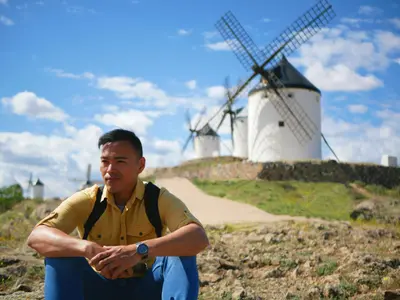
    Castilla-La Mancha lies in the heart of Spain and is the land of Cervantes' Don Quijote. This extensive region is known for its windmills, historic cities with UNESCO World Heritage sites like Toledo and Cuenca, and a deeply rooted culture reflected in its cuisine and architecture. Beyond the well-known places, you'll find vast plains, wine regions, and tranquil villages.
    Castile and León

    Castile and León

    Castile and León is Spain's largest region by area and includes a large part of the northern plateau. Here lie cities like Salamanca, Segovia, Ávila, Burgos and León, whose old towns and cathedrals are UNESCO World Heritage sites.
    Madrid Region

    Madrid Region

    The Madrid region is located in the center of the Iberian Peninsula, at an elevation of around 650 meters. In addition to the capital, it includes the royal sites of El Escorial and Aranjuez, the university city of Alcalá de Henares, and the Sierra de Guadarrama mountains in the north.
    Costa Blanca

    Costa Blanca

    The coast of Alicante province, known as Costa Blanca, stretches from Dénia in the north to Pilar de la Horadada on the Murcia border. To the north, limestone mountains like Montgó and Penyal d'Ifac drop steeply into the sea, dotted with coves and small ports. South of Alicante, the coast becomes flat, featuring long sandy beaches, salt flats, and dunes.You'll find resorts like Benidorm, old towns such as Altea, Elche's palm grove, and a mountainous interior with villages like Guadalest.
    Costa de la Luz

    Costa de la Luz

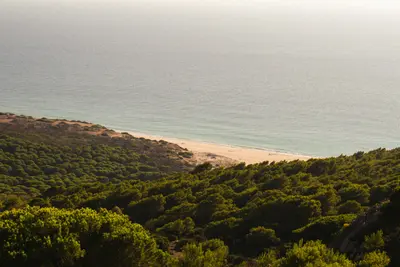
    The Costa de la Luz, the "Coast of Light", stretches along the Atlantic from the Portuguese border to Tarifa. It is characterized by long, wide sandy beaches and a particularly clear light, plus historic cities like Cádiz and Jerez, white villages like Vejer, excellent conditions for wind and kitesurfing, and a cuisine rich in fish and sherry.
    Costa del Sol

    Costa del Sol

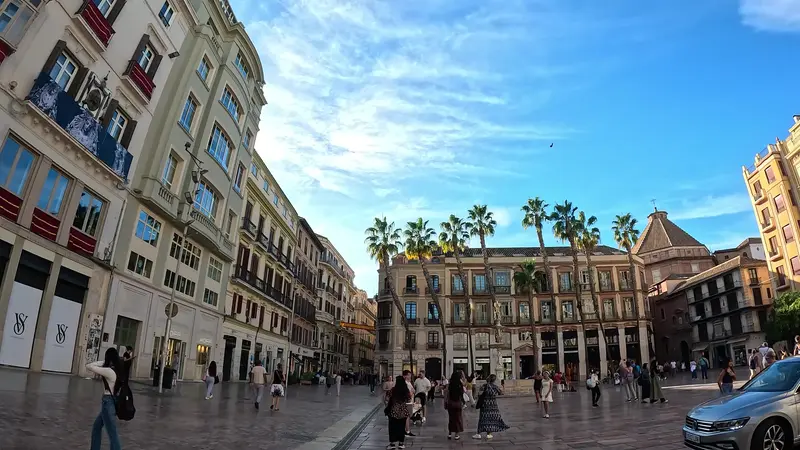
    The Costa del Sol, on the Mediterranean coast of Málaga province, is one of Spain's most famous coastal regions, attracting millions of visitors every year thanks to its sunny climate. It combines sandy beaches, vibrant nightlife, white villages, and a cultural history ranging from Moorish influences to modern art in Málaga.
    Galicia

    Galicia

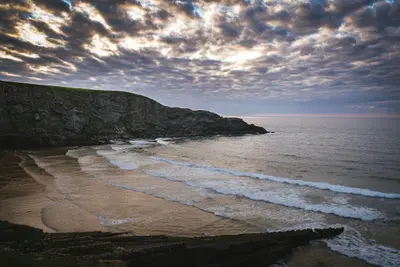
    Galicia is in Spain's northwestern tip, characterized by a rugged Atlantic coast, green landscapes, and a distinct culture with its own language, Galician. It is the Camino's destination, known for its seafood, historic cities, and varied coastal scenery.
    Balearics

    Balearics

    The Balearic Islands (Illes Balears) are a Spanish archipelago in the western Mediterranean, with Mallorca, Menorca, Ibiza and Formentera as main islands. Expect clear waters, small coves, and a distinctive Catalan-speaking culture. Mallorca offers the Serra de Tramuntana, Ibiza with its nightlife, and Menorca with largely unspoiled coasts.
    Canary Islands

    Canary Islands

    The Canary Islands are an archipelago of volcanic origin in the Atlantic off the coast of Northwest Africa. They are known for their mild year-round climate and very diverse landscapes: From barren lava fields and dunes to humid laurel forests, you'll find room here for hiking, swimming, and culture.
    La Rioja

    La Rioja

    La Rioja, located in northern Spain, is a paradise for wine lovers and history enthusiasts. Known for its world-renowned wines, this autonomous community offers a fascinating blend of idyllic vineyards, medieval towns, and a vibrant gastronomy that invites you to linger.
    Navarra

    Navarra

    Navarra in northern Spain is a region of contrasts, extending from the Pyrenees to the semi-desert of Bardenas Reales. It has a long history as an independent kingdom, a vibrant culture, and is located along a central section of the Camino de Santiago. Here you will find medieval towns, green valleys, and the internationally renowned Sanfermines in Pamplona.
    Basqueland

    Basqueland

    The Basque Country (País Vasco, Basque Euskadi) is an autonomous community in northern Spain with its own language, distinct culture, and long history. The Atlantic coast with sandy beaches and steep cliffs, green hills and mountains inland, vibrant cities, an internationally renowned cuisine, and modern architecture characterize the region.
    Spanish Pyrenees

    Spanish Pyrenees

    The Spanish Pyrenees stretch along the border with France and Andorra, with rugged peaks, deep valleys, and national parks like Ordesa y Monte Perdido and Aigüestortes. The region is suitable for challenging hikes and climbing tours as well as strolls through medieval villages. Here you'll discover a mix of nature, history, and local culture.
    Murcia

    Murcia

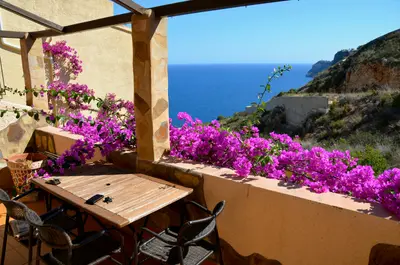
    The Murcia region in southeast Spain has a dry, sunny climate with mild winters. The capital, Murcia, is known for its baroque cathedral facade and the Huerta, a traditional fruit and vegetable growing area. On the coast are the port city of Cartagena with its Roman theatre and the Mar Menor, a large saltwater lagoon.

    Recommended Itineraries

    Discover the best routes through Spain.
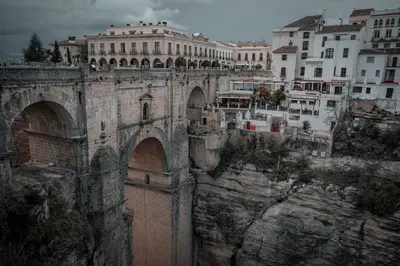
    Andalusia Classics

    Andalusia Classics

    From Seville, travel to Córdoba for the Mezquita, then on to Granada for the Alhambra, over the mountains to Ronda and down to the coast at Málaga. Each stage takes two to three hours. Alhambra tickets should be booked several weeks in advance.

    14 Days
    Stops at a glance
    1. 1.Seville
    2. 2.Córdoba
    3. 3.Granada
    4. 4.Ronda
    5. 5.Málaga
    View Route Details →
    North Spain & Atlantic Coast

    North Spain & Atlantic Coast

    The route starts in Santiago de Compostela, leads to the Atlantic coast to A Coruña, and continues to Ribadeo on the border with Asturias. From there, it's about four hours along the Cantabrian Coast to Bilbao. In summer, it's cooler and quieter here than in southern Spain.
    9 Days
    4 stops
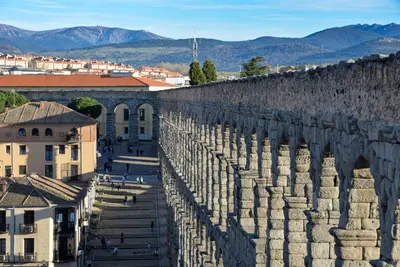
    Catalonia & Pyrenees

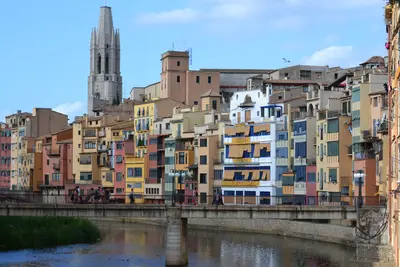
    Catalonia & Pyrenees

    The route begins in Barcelona and leads to Girona with its Old Town on the Onyar, then into the Pyrenees to Vall de Núria, only via rack railway from Ribes de Freser or Queralbs, or on foot. It concludes in Western Catalonia, in Lleida. The longest leg from Núria to Lleida takes a good three hours.
    10 Days
    4 stops
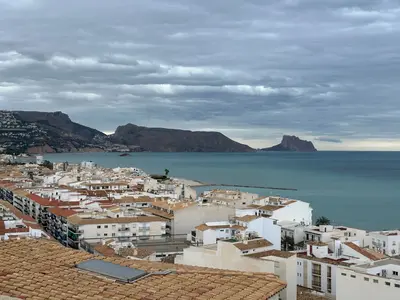
    Castilla y León & Madrid

    Castilla y León & Madrid

    The route leads through the historical heart of Spain, where it's noticeably less crowded than on the coasts. From Madrid, the journey takes you via Segovia and Ávila to Salamanca and Burgos; from there, it's about two and a half hours back to Madrid. The legs are short and driven on well-maintained motorways.
    9 Days
    5 stops
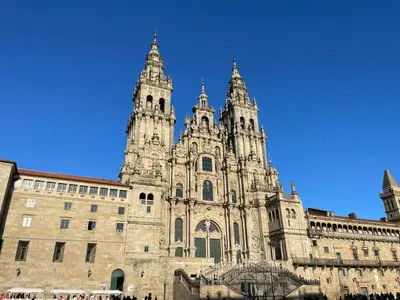
    Valencia & Costa Blanca

    Valencia & Costa Blanca

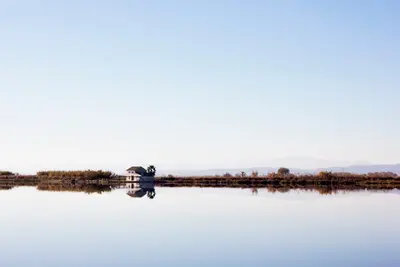
    The route runs from Valencia, with the Albufera Natural Park just outside the city, to Dénia at the foot of Montgó, and on to Altea with its white old town. Each leg takes about an hour. Between Dénia and Altea lie quiet rocky coves near Jávea and Moraira.
    8 Days
    3 stops
    Spain Motorhome North–South (2–3 Weeks)

    Spain Motorhome North–South (2–3 Weeks)

    The motorhome route leads from Bilbao on the Bay of Biscay to Santiago de Compostela in Galicia, then through Castile to Salamanca and via Extremadura to Córdoba and Seville. Several stages are 400 to 600 kilometers long; plan full driving days or stopovers for these.

    14 Days
    5 stops

    What you eat in Spain

    Paella Valenciana

    Paella Valenciana

    Rice dish from Valencia

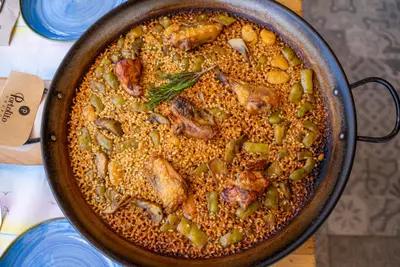
    The original Paella comes from the Huerta around Valencia and is cooked with chicken, rabbit, green beans, white Garrofó beans, saffron, and round-grain rice in a shallow pan. Seafood belongs in Paella de marisco, not in the Valencian version. The slightly toasted bottom, the Socarrat, is highly prized. In Valencia, Paella is traditionally eaten at lunchtime.
    Gazpacho

    Gazpacho

    Cold Vegetable Soup

    Cold soup from Andalusia, puréed from ripe tomatoes, cucumber, bell pepper, garlic, olive oil, vinegar, and a little stale bread. In summer, it's often served in a glass. The thicker version from Córdoba is called Salmorejo and comes to the table with egg and ham pieces.
    Churros con Chocolate

    Churros con Chocolate

    Frittiertes Gebäck mit Schokolade

    Deep-fried pastry sticks, dipped in thick, hot chocolate. Enjoy them for breakfast, as an afternoon snack, or after a long night. Madrid's Chocolaterías are famous for them; the thicker Porras are a regional variant.
    Tortilla de patatas

    Tortilla de patatas

    Potato omelette

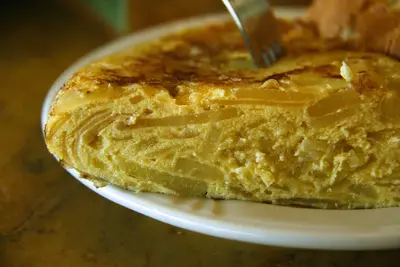
    Thick omelette of eggs and potatoes slow-cooked in olive oil, region-dependent with or without onions. Eaten warm or cold, often in bars as a pincho on bread.
    Jamón Ibérico

    Jamón Ibérico

    Naturally air-dried ham

    Air-dried Iberian ham, aged for at least two years (often much longer), depending on its weight. The highest grade, de bellota, comes from animals that freely feed on acorns in the Dehesa oak forests during the Montanera (autumn to winter), primarily in Extremadura, Andalusia, and Salamanca.
    Pulpo a la Gallega

    Pulpo a la Gallega

    Octopus Galician Style

    Boiled octopus, sliced and served on a wooden plate with olive oil, coarse salt, and paprika powder. In Galicia, it is traditionally offered in Pulperías and at village festivals.

    Good to Know

    Essential info for your trip planning.

    Land & People

    A Land of RegionsSpain is divided into 17 autonomous communities, plus the cities of Ceuta and Melilla on the North…

    History & Society

    Romans, Visigoths, and al-AndalusFrom 218 BC, the Romans conquered the Iberian Peninsula, making it Hispania, one of…

    Food & Drink

    Regional CuisinesA single, unified Spanish cuisine is rare; each region cooks with its own ingredients.

    Practical Info

    Entry Requirements and DocumentsAs an EU citizen, you can enter with a valid ID card or passport; children require…

    Getting Around

    Spain boasts an excellent infrastructure that enables effortless mobility during your trip.

    RV Travel

    Spain is an excellent destination for RV travel, from the green coasts of the north, across the inland plateaus, to the…

    Traveling with Kids

    Children are naturally a part of public life in Spain. They are welcome in restaurants and bars, and in the evenings,…

    Best Time to Visit

    When is the best time for your trip?

    April
    May
    September
    October
    18–26°C·40–60 mm(little rain)
    Die Monate April, Mai, September und Oktober bieten angenehme Temperaturen, weniger Touristenandrang als im Sommer und eine geringere Wahrscheinlichkeit für extreme Hitze. Das Wetter ist ideal für Sightseeing und Aktivitäten im Freien.
    Das Klima in Spanien ist vielfältig und variiert je nach Region. Die Mittelmeerküste (z.B. Barcelona, Valencia) zeichnet sich durch milde Winter und heiße, trockene Sommer aus. Im Landesinneren (z.B. Madrid) herrscht ein kontinentales Klima mit größeren Temperaturunterschieden zwischen Sommer und Winter. Die Nordküste (z.B. Bilbao, San Sebastián) hat ein ozeanisches Klima mit milden Temperaturen und häufigeren Niederschlägen. Die Kanarischen Inseln genießen das ganze Jahr über ein frühlingshaftes Klima. Es ist wichtig zu beachten, dass Hitzewellen im Sommer, besonders im Landesinneren und im Süden, auftreten können. Im Winter kann es in den höheren Lagen der Pyrenäen und der Sierra Nevada zu Schneefall kommen. Norden: Mildes, feuchtes Klima, ideal für Wanderungen und Naturerlebnisse. Zentralspanien: Heiße, trockene Sommer und kalte Winter. Mittelmeerküste: Angenehme Temperaturen das ganze Jahr über, ideal für Strandurlaub. Kanarische Inseln: Subtropisches Klima, ganzjährig mild und sonnig.

    Seasons

    Jan
    Feb
    Mar
    Apr
    May
    Jun
    Jul
    Aug
    Sep
    Oct
    Nov
    Dec
    Hauptsaison
    Übergangszeit
    Nebensaison
    Best Time to Visit
    ▶Show detailed monthly data
    MonthTemp (°C)Rain (mm)Sun (h)
    January10.0555.0
    February12.0456.0
    March15.0407.0
    April18.0508.0
    May22.0459.0
    June27.02511.0
    July30.01512.0
    August30.02011.0
    September26.0409.0
    October20.0607.0
    November14.0705.0
    December11.0654.0

    Travel advice

    Safety, entry requirements and health: the official, up-to-date advice for Spain is published by the UK government on GOV.UK.

    Go to GOV.UK
    Sources & method

    • Photos: Wikimedia Commons, Unsplash, Pexels. Each photo carries its credit.
    • The content is based on web research from public, traceable sources. How the content is made · The role of AI
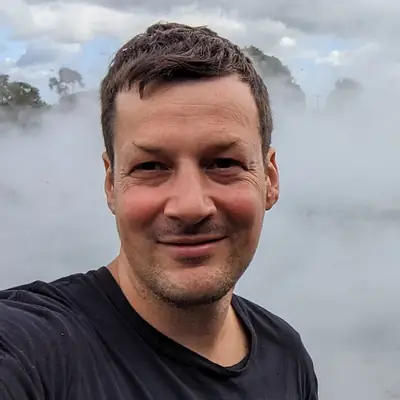
    Felix at Kuirau Park in Rotorua, New Zealand

    Who's behind Fernweh?

    Hi, I'm Felix.

    I love to travel, and I love planning even more. Fernweh.guide is my attempt at building a really good online travel guide.

    About Fernweh

    All places in Spain

    • A Coruña
    • Aínsa
    • Alicante
    • Almagro
    • Altea
    • Andalusia
    • Aragon
    • Aranjuez
    • Asturias
    • Ávila
    • Balearics
    • Barcelona
    • Bardenas Reales
    • Barrio de Salamanca
    • Basqueland
    • Begur
    • Benidorm
    • Bilbao
    • Burgos
    • Cabo de Gata-Níjar
    • Cáceres
    • Cádiz
    • Calahorra
    • Calella de Palafrugell
    • Calp (Calpe)
    • Campo de Criptana
    • Canary Islands
    • Cantabria
    • Cartagena
    • Castile and León
    • Castile-La Mancha
    • Catalonia
    • Comillas
    • Comunitat Valenciana
    • Conil de la Frontera
    • Consuegra
    • Córdoba
    • Costa Blanca
    • Costa Brava
    • Costa da Morte
    • Costa de la Luz
    • Costa del Sol
    • Cuenca
    • Dénia
    • Doñana National Park
    • El Hierro
    • El Retiro
    • Elche (Elx)
    • Estella-Lizarra
    • Estepona
    • Extremadura
    • Ezcaray
    • Figueres
    • Formentera
    • Frigiliana
    • Fuerteventura
    • Galicia
    • Gijón
    • Girona
    • Gran Canaria
    • Granada
    • Haro
    • Huesca
    • Ibiza
    • Jaca
    • Jávea (Xàbia)
    • Jerez de la Frontera
    • La Gomera
    • La Graciosa
    • La Palma
    • La Rioja
    • Lanzarote
    • Lastres and Tazones
    • Llanes
    • Lleida
    • Logroño
    • Lugo
    • Madrid
    • Madrid Region
    • Málaga
    • Mallorca
    • Marbella
    • Menorca
    • Mérida
    • Mijas Pueblo
    • Monasterios de San Millán de la Cogolla (Suso und Yuso)
    • Monfragüe National Park
    • Montserrat
    • Murcia
    • Murcia
    • National Park Aigüestortes i Estany de Sant Maurici
    • Navarra
    • Nerja
    • Olite
    • Ordesa y Monte Perdido National Park
    • Oviedo
    • Palma de Mallorca
    • Pamplona (Iruñea)
    • Penedès
    • Peñíscola
    • Picos de Europa Nationalpark (Cangas de Onís)
    • Plasencia
    • Rías Baixas
    • Ribadeo
    • Rioja Alavesa
    • Ronda
    • Salamanca
    • San Lorenzo de El Escorial
    • San Sebastián (Donostia)
    • Santander
    • Santiago de Compostela
    • Santillana del Mar
    • Santo Domingo de la Calzada
    • Segovia
    • Serra de Tramuntana
    • Seville
    • Sierra and Canyons of Guara
    • Sigüenza
    • Sitges
    • Spanish Pyrenees
    • Tarifa
    • Tarragona
    • Tenerife
    • Teruel
    • Toledo
    • Tossa de Mar
    • Trujillo
    • Tudela
    • Valencia
    • Vall de Núria
    • Valle de Arán
    • Valle de Baztan
    • Valle de Benasque
    • Vejer de la Frontera
    • Vigo
    • Vitoria-Gasteiz
    • Zaragoza
    • Zumaia und die Flysch-Route

    More about Spain

    • Best Time to Visit Spain
    • Spain with Kids
    • Spain by RV