Fernweh: Home
    ExploreTravel GuidesPlan a tripMy tripLast visited
    de|en
    All Places & RegionsAll highlightsAbout FernwehFAQPrivacy PolicyImprint
    ExploreTravel GuidesPlan a tripMy tripLast visited
    • Neighborhoods & highlights
    • Walking tours
    • Eat & drink
    • Culture
    • Nightlife
    • Getting around
    • Accommodation
    • Plan trip
    • Nearby
    A Coruña

    Spain

    A Coruña

    CityCulture

    This vibrant port city on the Galician Atlantic coast is known for its Roman Tower of Hercules, which is considered the world's oldest continuously operating lighthouse and a UNESCO World Heritage site, as well as for its glazed balconies…

    by Felix Gillen

    1. Home
    2. Destinations
    3. Spain
    4. Galicia
    5. A Coruña
    This vibrant port city on the Galician Atlantic coast is known for its Roman Tower of Hercules, which is considered the world's oldest continuously operating lighthouse and a UNESCO World Heritage site, as well as for its glazed balconies (Galerías).

    Sights in A Coruña

    Discover the most important sights and attractions

    Torre de Hércules

    1Torre de Hércules

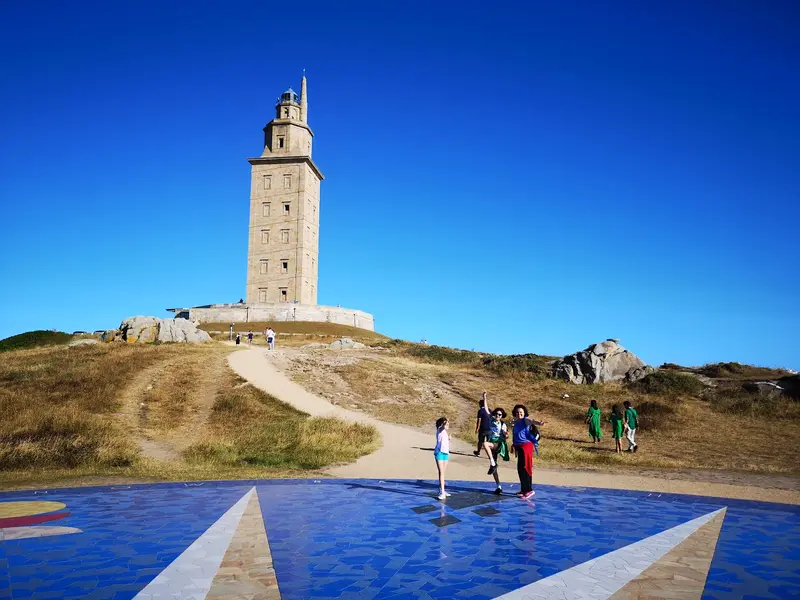
    The Torre de Hércules in A Coruña is considered the world's oldest continually operating lighthouse and stands as a testament to Roman engineering. The tower was built in the late 1st or early 2nd century AD and was declared a UNESCO World Heritage site in 2009. Climb over 234 steps to reach the top and enjoy panoramic views of the city, the Atlantic, and the coastline. Its current neoclassical cladding dates from a restoration completed in 1791 under architect Eustaquio Giannini, enclosing its Roman core. Surrounding the tower is a sculpture park featuring works by 20th-century artists. Our Tip: Early morning or late afternoon is usually less crowded, and the light is better for photos. From the sculpture park, you can photograph the tower with the sea in the background. At the visitor center, you can learn more about its history.
    Open in Google Maps
    Museo Nacional de Ciencia e Tecnología

    2Museo Nacional de Ciencia e Tecnología

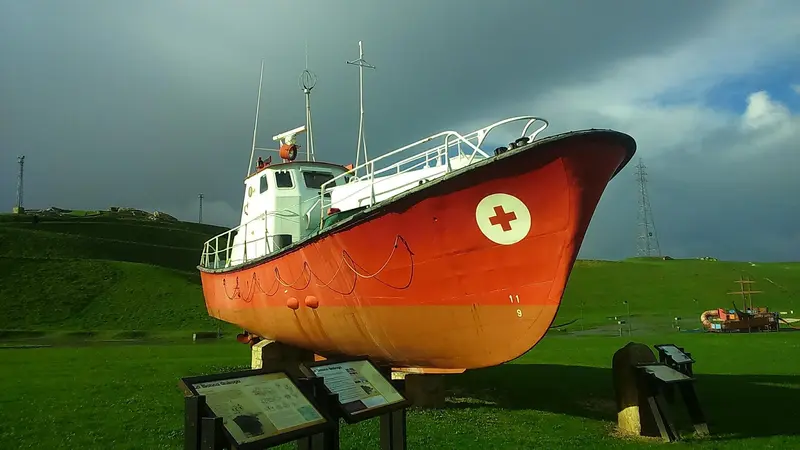
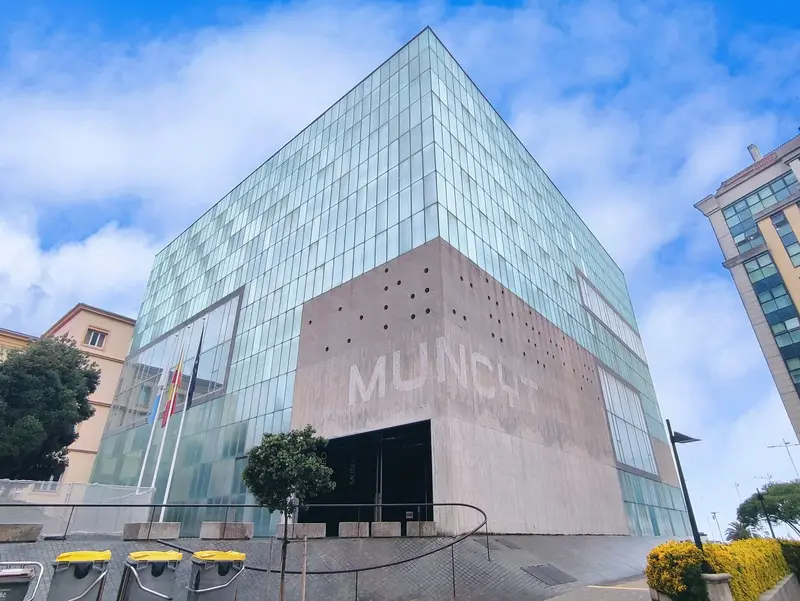
    The National Museum of Science and Technology (MUNCYT) in A Coruña is the Galician branch of Spain's National Museum for Science and Technology, and opened in 2012. The collection traces the development of technology, featuring historical instruments, means of transport, and communication devices through which principles of physics and engineering can be clearly demonstrated. A highlight is the front section of the Iberia-Boeing 747 „Lope de Vega“, which brought Picasso's painting Guernica to Spain in 1981. The interactive exhibitions appeal to a wide audience. Practical tip: Allow two to three hours for your visit. It's usually quieter on weekdays and in the morning.
    Open in Google Maps
    Parque de Bens

    3Parque de Bens

    The Parque de Bens is A Coruña’s largest green space. It was created on the site of the former Bens landfill and opened in 2001, serving as an example of transforming a contaminated area into a recreational space. On the terraced grounds, you'll find hiking trails, two ponds, and a playground. From the higher elevations, you can gaze upon the coast and the Atlantic. Our Tip: Visit in the late afternoon to witness the sunset over the sea.
    Open in Google Maps
    Museo de Belas Artes da Coruña

    4Museo de Belas Artes da Coruña

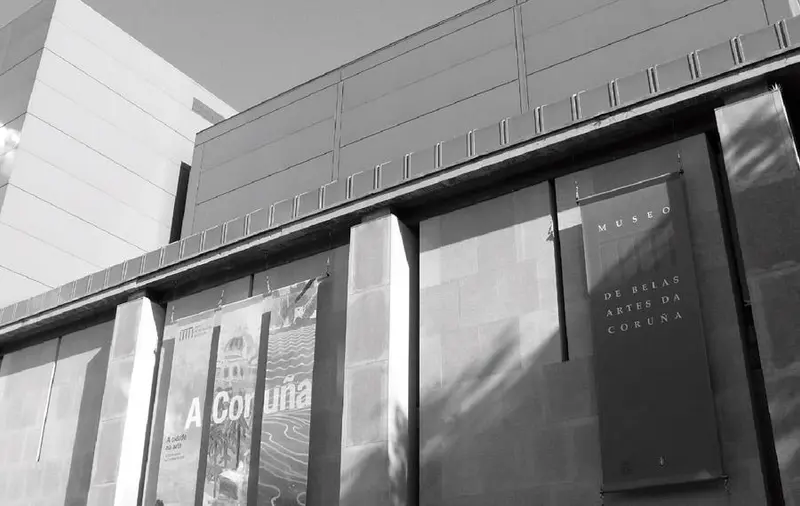
    The Museo de Belas Artes da Coruña is one of Galicia's most important art collections. The modern building, designed by architect Manuel Gallego Jorreto, opened in 1995 and was built on the remains of a former monastery; it received the Spanish National Architecture Award. The collection spans the 16th to the 20th century, featuring paintings, sculptures, drawings, and handicrafts, including works by Rubens and Sorolla, etchings by Goya, and ceramics from Sargadelos. Galician artists such as Luis Seoane are a particular focus. Our Tip: Visit the museum on a weekday morning for quieter halls. Plan about two hours and look out for temporary exhibitions.
    Open in Google Maps
    Campo da Rata

    5Campo da Rata

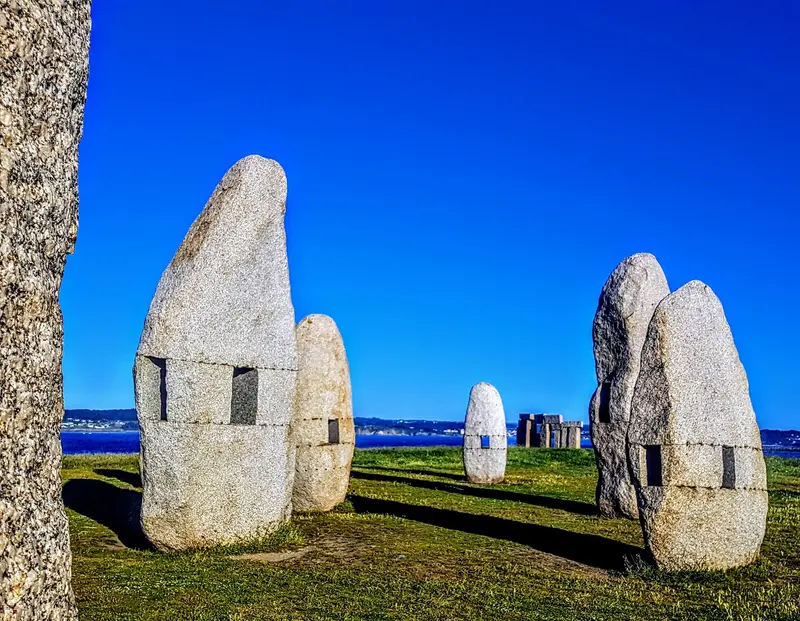
    The Campo da Rata in A Coruña is a place of remembrance. On this stretch of coast near the Torre de Hércules, numerous opponents of the insurgents were shot after the military coup of 1936. A simple monument today commemorates the victims of repression during the Spanish Civil War and the early Franco era. It stands in open landscape overlooking the Atlantic and is an important part of the city's and Galicia's culture of remembrance. Our tip: It is particularly peaceful here in the early morning or late afternoon. From here, you also have a wide view of the sea and the lighthouse.
    Open in Google Maps
    Castle of San Antón
    Museum

    6Castle of San Antón

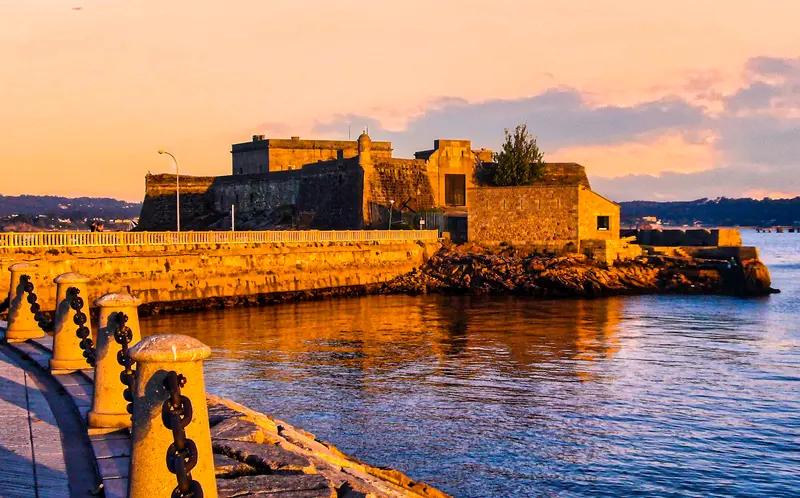
    The 16th-century fortress stands on A Coruña's harbor and defended the city. Today, it houses the Museo Arqueolóxico e Histórico, with finds from Galicia's Prehistory and Antiquity, including the Gold Helmet of Leiro and the Torques of Xanceda. Other halls cover medieval art and the history of the city and fortress.
    Open in Google Maps

    City walks in A Coruña

    Curated walking tours through the city's highlights, handpicked by experienced travel journalists.

    A Coruña: Maritime Charm and Historic Lanes

    Discover the soul of A Coruña on this walk of about two hours. Immerse yourself in the historic old town, admire the iconic glass galleries by the harbour and let the Atlantic wind enchant you on the Paseo Marítimo. A perfect mix of culture, urban life and coastal flair.

    ~2 Std.
    Open in Google Maps
    Stops (6)

    Essen & Trinken

    Restaurante Artabria

    Restaurant in Rúa Fernando Macías.
    Show on Google Maps

    La Flor del Jamón

    Restaurant in R. Cordelería.
    Show on Google Maps

    Hamburgueseria Carnivale Burger Orillamar

    Bar in Rúa Orillamar.
    Show on Google Maps

    Meson As Cavas

    Restaurant in Rúa Galera.
    Show on Google Maps

    Restaurante El Rincón del Reino

    Restaurant in Rúa Castiñeiras de Abaixo.
    Show on Google Maps

    Culture, Arts, and Heritage

    A Coruña boasts a rich and complex history, stretching from pre-Roman settlements like the Castro de Elviña to Roman rule. The Tower of Hercules, a UNESCO World Heritage site and the oldest operating lighthouse in the world, attests to the city's significance as the ancient settlement of Brigantium. Its coastal location shaped its development over centuries as a port and trade center.During the Middle Ages and early modern period, A Coruña was a vital defensive point and port, from where the Spanish Armada departed in July 1588. The Cidade Vella (Old Town) reflects these eras, with narrow streets and the Romanesque Collegiate Church of Santa María do Campo from the 12th and 13th centuries. The cityscape is characterized by the "Galerías," glass-enclosed balconies, especially along the Avenida de la Marina.The city is deeply rooted in Galician culture, reflected in the preservation of the Galician language and local traditions. Figures like María Pita, who distinguished herself in 1589 during the defense against the English fleet under Sir Francis Drake, are firmly embedded in the collective memory.

    Nightlife

    In A Coruña, you can expect a diverse nightlife, ranging from traditional taverns in the Old Town to modern bars in the Orzán district. Here you'll find a good selection of beer pubs like Cervecería Rochester and cozy pubs where you can linger until the early hours.
    1

    Cervecería Rochester

    Bar in Rúa Panaderas.
    Show on Google Maps
    2

    Ummagumma

    Bar in Praza Xeneral Azcárraga.
    Show on Google Maps
    3

    Murphy

    Bar in 15002 A Coruña.
    Show on Google Maps
    4

    Bar El Cañahueca

    Bar in Rúa Cordonería.
    Show on Google Maps
    5

    Cervecería Tatone

    Bar in Av. Rubine.
    Show on Google Maps
    6

    El Patio

    Bar in Rúa de Zapatería.
    Show on Google Maps
    7

    Jazz Bar Picasso

    Bar in Rúa Sol.
    Show on Google Maps
    8

    Taberna da Penela Samaná

    Bar in Rúa Rosalía de Castro.
    Show on Google Maps
    9

    Chroma

    Bar in Rúa Asturias.
    Show on Google Maps
    10

    The Breen's Tavern

    Bar in Pr. de María Pita.
    Show on Google Maps
    11

    La Mansión 1783

    Bar in Avenida Marina.
    Show on Google Maps

    Out exploring there

    A Coruña is easy to explore on foot. There is no metro or tram network, but there is a well-developed bus network, operated by the Compañía de Tranvías de La Coruña. For longer stays, the rechargeable Tarjeta Millennium is worthwhile, allowing you to transfer within the city.The promenade and the old town invite you for a stroll, with many destinations reachable on foot. For longer distances, you can use a bicycle, for example to cycle along the coast. Taxis are numerous. It's best to plan your routes with a transport app.

    Accommodations in A Coruña

    Find perfect stay in A Coruña

    Booking.com* (Affiliate link)
    Search Hotels
    Agoda* (Affiliate link)
    Search Hotels
    Airbnb
    Vacation Rentals

    * Affiliate link: if you book through it, we earn a small commission. The price stays the same for you.

    Campgrounds in A Coruña

    Find perfect campground in A Coruña

    Search via Google Maps
    Campgrounds nearby (15km)
    Camping.info
    Find Campgrounds
    Park4Night
    RV Parks & Camping

    Plan your trip to A Coruña

    Save places, build a route and plan your city trip, all in one place.

    1. 1
      Sunrise over alpine peaks and a sea of clouds
      1234

      Round trip

      12 days · 4 stops

      Saved

      Pick a route

      Pick a ready-made one or save places and plan your own.

      Open bookmarks
    2. 2

      Trip to A Coruña

      Live
      • 1Torre de Hércules3 days
      • 2Museo Nacional de Ciencia e Tecnología4 days
      • 3Parque de Bens5 days
      Budget

      Plan your trip

      The planner sorts stops, days and budget. Plan together in real time.

      Start trip planning
    3. 3
      9:41 No signal
      A Coruña
      Available offline

      Use it on the road

      Download the guide to your phone and use it on site, even offline.

    Nearby

    Santiago de Compostela

    Santiago de Compostela

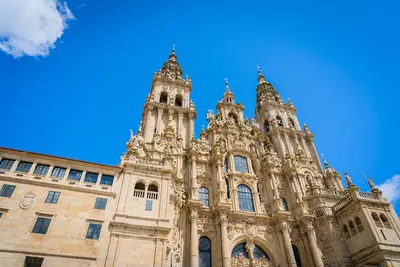
    Santiago de Compostela, the capital of Galicia, is the destination of the Way of St. James and one of Europe's most famous pilgrimage sites. It's worth visiting for the Cathedral above the tomb of Apostle James, with its Romanesque Pórtico da Gloria, and for the Old Town, a UNESCO World Heritage site since 1985. In its alleys, pilgrims, students, and travelers mingle, and Romanesque, Gothic, and Baroque buildings stand close together.
    Galicia

    Galicia

    Galicia is in Spain's northwestern tip, characterized by a rugged Atlantic coast, green landscapes, and a distinct culture with its own language, Galician. It is the Camino's destination, known for its seafood, historic cities, and varied coastal scenery.
    Lugo

    Lugo

    Lugo in Galicia is primarily known for its fully preserved Roman city wall. The Muralla Romana was built between around 260 and 325, has been a UNESCO World Heritage site since 2000, and defines the cityscape. On its good 2.2-kilometer-long wall-walk, you can walk around the old town once.Within the walls lies the Catedral de Santa María de Lugo, whose construction began in 1129 in Romanesque style. Remains of Roman baths are preserved in the city's thermal spa. Lugo is known for its tapas bars; in some, you get a small tapa with your drink. Spring and autumn offer pleasant temperatures and fewer crowds.
    Costa da Morte

    Costa da Morte

    The rugged "Coast of Death" in western Galicia is known for its wild landscapes, steep cliffs, secluded beaches, and numerous lighthouses. Its name recalls the many shipwrecks off this coast.
    Rías Baixas

    Rías Baixas

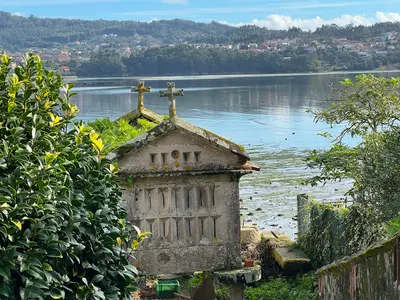
    This coastal region in southwest Galicia is known for its deep, fjord-like inlets, the Rías, and as home to Albariño wine from the Rías Baixas Designation of Origin. Vineyards and small fishing villages shape the landscape.

    Sources & method

    • Photos: Unsplash, Google Maps. Each photo carries its credit.
    • Place data such as addresses and ratings comes from Google Maps.
    • The content is based on web research from public, traceable sources. How the content is made · The role of AI