Fernweh: Home
    ExploreTravel GuidesPlan a tripMy tripLast visited
    de|en
    All Places & RegionsAll highlightsAbout FernwehFAQPrivacy PolicyImprint
    ExploreTravel GuidesPlan a tripMy tripLast visited
    • Neighborhoods & highlights
    • Recommendations
    • Eat & drink
    • Accommodation
    • Plan trip
    • Nearby
    Santiago de Compostela

    Spain

    Santiago de Compostela

    CityCulture

    Santiago de Compostela, the capital of Galicia, is the destination of the Way of St. James and one of Europe's most famous pilgrimage sites.

    by Felix Gillen

    1. Home
    2. Destinations
    3. Spain
    4. Galicia
    5. Santiago de Compostela
    Santiago de Compostela, the capital of Galicia, is the destination of the Way of St. James and one of Europe's most famous pilgrimage sites. It's worth visiting for the Cathedral above the tomb of Apostle James, with its Romanesque Pórtico da Gloria, and for the Old Town, a UNESCO World Heritage site since 1985. In its alleys, pilgrims, students, and travelers mingle, and Romanesque, Gothic, and Baroque buildings stand close together.

    Sights in Santiago de Compostela

    Discover the most important sights and attractions

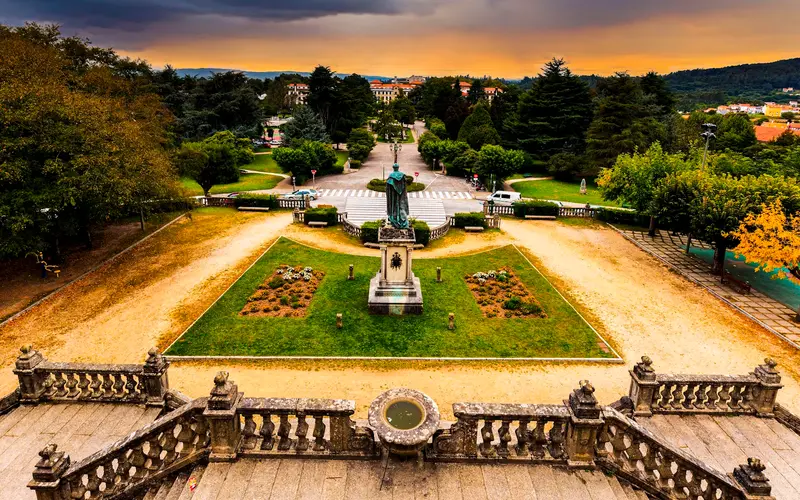
    Parque da Alameda

    1Parque da Alameda

    Park aus dem 16. Jh. mit historischen Monumenten und einem Garten mit vielen Zierbäumen und -sträuchern.
    Open in Google Maps
    Pórtico da Gloria

    2Pórtico da Gloria

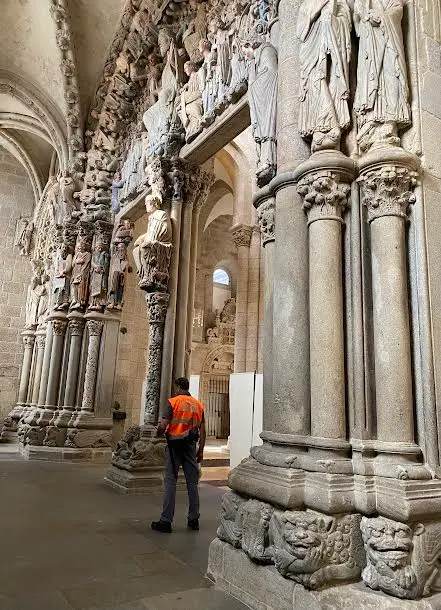
    The Romanesque portal inside the cathedral, behind the façade facing Praza do Obradoiro, was created by Master Mateo; an inscription names the year 1188. The figures of prophets and apostles are among the most significant works of Romanesque sculpture in Spain.
    Open in Google Maps
    Cathedral of Santiago de Compostela
    Church

    3Cathedral of Santiago de Compostela

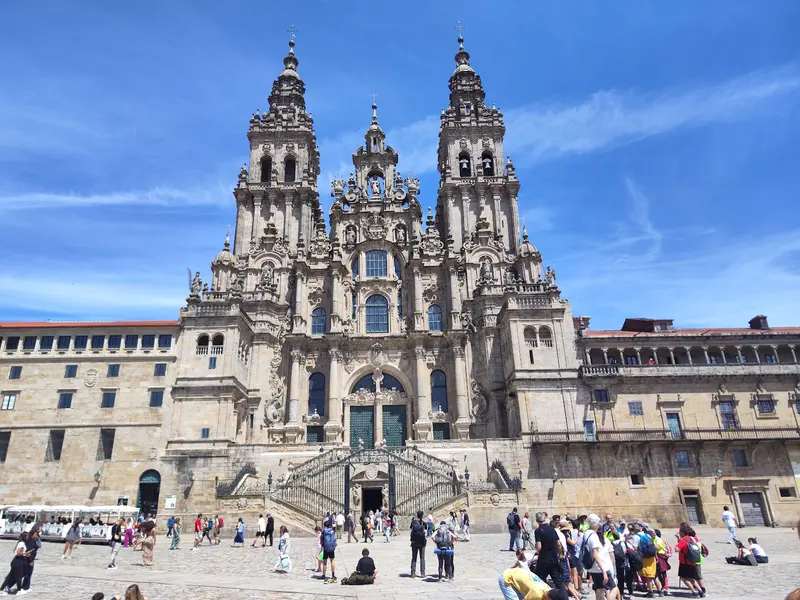
    The Cathedral is the destination of all Camino de Santiago routes and stands over the tomb attributed to the Apostle St. James; his relics lie in a silver shrine in the crypt. The Romanesque structure was begun in 1075 under Alfonso VI and later complemented by the Baroque west facade facing the Obradoiro. On high feast days, eight men swing the approximately 1.60-meter-large Botafumeiro incense burner through the transept.
    Open in Google Maps
    Mosteiro de San Martiño Pinario
    Museum

    4Mosteiro de San Martiño Pinario

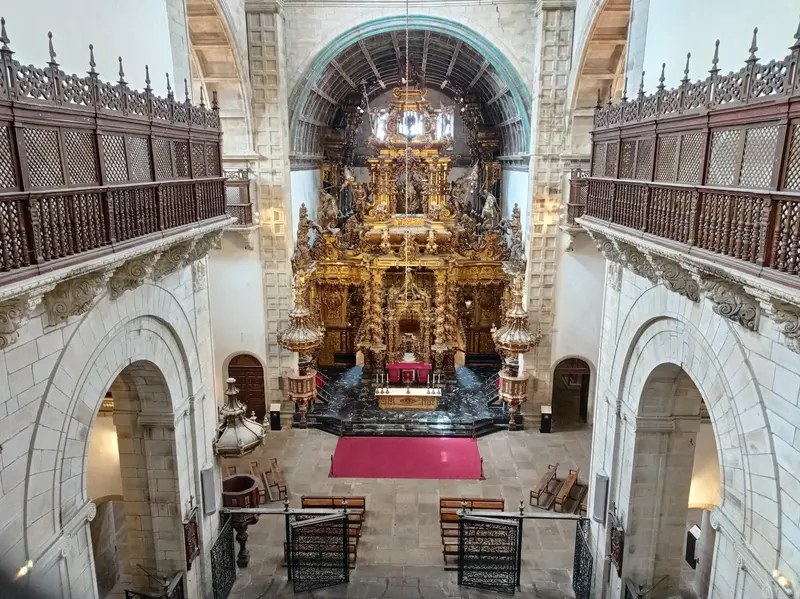
    The Benedictine monastery north of the cathedral dates back to the 10th century and was largely rebuilt from the 16th century. Completed in 1652, the church is a major Baroque building in the city; its transept altarpieces by Fernando de Casas y Novoa. Today, the buildings serve as a seminary, museum, and guesthouse.
    Open in Google Maps
    Praza do Obradoiro
    Attraction

    5Praza do Obradoiro

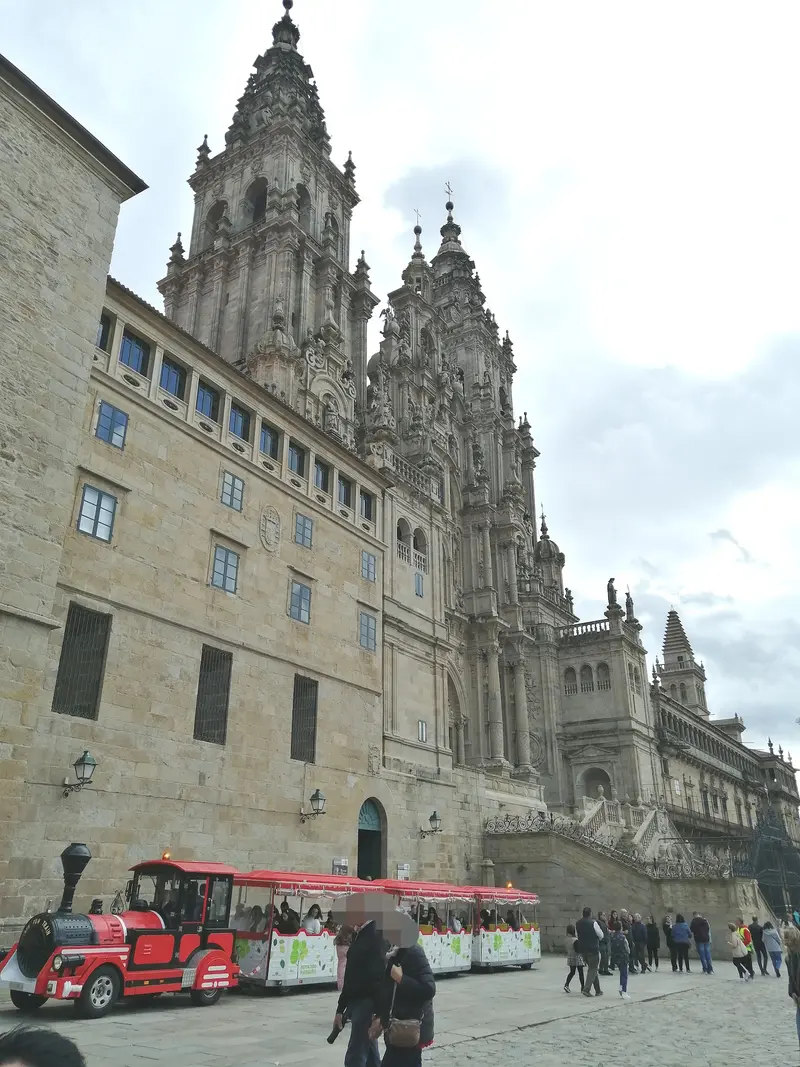
    The large square fronting the cathedral's west facade is where pilgrims arrive, its center the Camino de Santiago's kilometer zero. Flanking it are the Pazo de Raxoi housing the City Hall, the plateresque Hostal dos Reis Católicos, once a pilgrims' hostel, and the Colexio de San Xerome with the University's Rectorate. The name recalls the stonemasons' workshops active here during the cathedral's construction.
    Open in Google Maps

    Essen & Trinken

    1

    Garum

    Bar in Praza das Penas.
    Show on Google Maps
    2

    Los Caracoles Restaurante

    Restaurant in Rúa da Raíña.
    Show on Google Maps
    3

    Curro da Parra

    Kreative Varianten klassischer galizischer Fisch- und Fleischgerichte in einem Restaurant mit Sichtmauerwerk und intimer Atmosphäre.
    Show on Google Maps
    4

    Restaurante San Jaime

    Galicische Tapas, Meeresfrüchte und Fleischgerichte in einem stilvollen, modernen Lokal mit Gartenterrasse.
    Show on Google Maps

    Accommodations in Santiago de Compostela

    Find perfect stay in Santiago de Compostela

    Booking.com* (Affiliate link)
    Search Hotels
    Agoda* (Affiliate link)
    Search Hotels
    Airbnb
    Vacation Rentals

    * Affiliate link: if you book through it, we earn a small commission. The price stays the same for you.

    Campgrounds in Santiago de Compostela

    Find perfect campground in Santiago de Compostela

    Search via Google Maps
    Campgrounds nearby (15km)
    Camping.info
    Find Campgrounds
    Park4Night
    RV Parks & Camping

    Plan your trip to Santiago de Compostela

    Save places, build a route and plan your city trip, all in one place.

    1. 1
      Sunrise over alpine peaks and a sea of clouds
      1234

      Round trip

      12 days · 4 stops

      Saved

      Pick a route

      Pick a ready-made one or save places and plan your own.

      Open bookmarks
    2. 2

      Trip to Santiago de Compostela

      Live
      • 1Parque da Alameda3 days
      • 2Pórtico da Gloria4 days
      • 3Cathedral of Santiago de Compostela5 days
      Budget

      Plan your trip

      The planner sorts stops, days and budget. Plan together in real time.

      Start trip planning
    3. 3
      9:41 No signal
      Santiago de Compostela
      Available offline

      Use it on the road

      Download the guide to your phone and use it on site, even offline.

    Nearby

    Galicia

    Galicia

    Galicia is in Spain's northwestern tip, characterized by a rugged Atlantic coast, green landscapes, and a distinct culture with its own language, Galician. It is the Camino's destination, known for its seafood, historic cities, and varied coastal scenery.
    Rías Baixas

    Rías Baixas

    This coastal region in southwest Galicia is known for its deep, fjord-like inlets, the Rías, and as home to Albariño wine from the Rías Baixas Designation of Origin. Vineyards and small fishing villages shape the landscape.
    A Coruña

    A Coruña

    This vibrant port city on the Galician Atlantic coast is known for its Roman Tower of Hercules, which is considered the world's oldest continuously operating lighthouse and a UNESCO World Heritage site, as well as for its glazed balconies (Galerías).
    Costa da Morte

    Costa da Morte

    The rugged "Coast of Death" in western Galicia is known for its wild landscapes, steep cliffs, secluded beaches, and numerous lighthouses. Its name recalls the many shipwrecks off this coast.
    Vigo

    Vigo

    Vigo is Galicia's largest city and one of Europe's most important fishing ports. The city combines a small old town with modern districts and is a departure point for trips to the Cíes Islands.

    Sources & method

    • Photos: Unsplash, Google Maps. Each photo carries its credit.
    • Place data such as addresses and ratings comes from Google Maps.
    • The content is based on web research from public, traceable sources. How the content is made · The role of AI