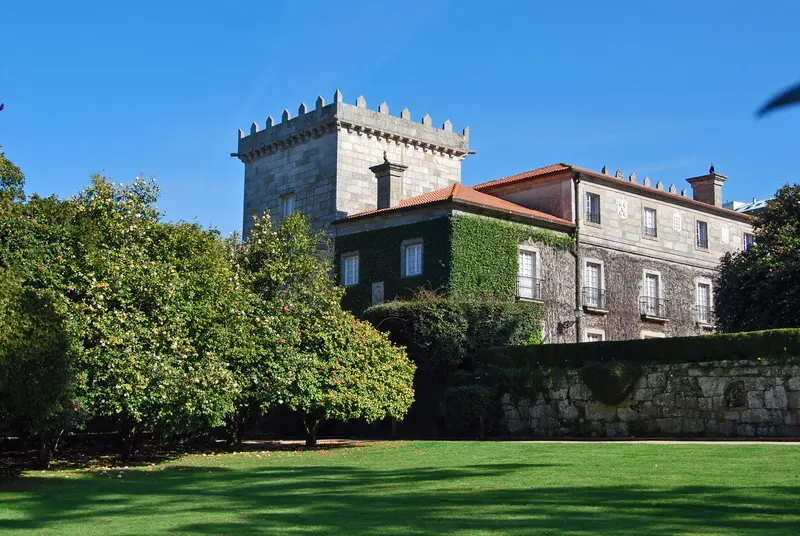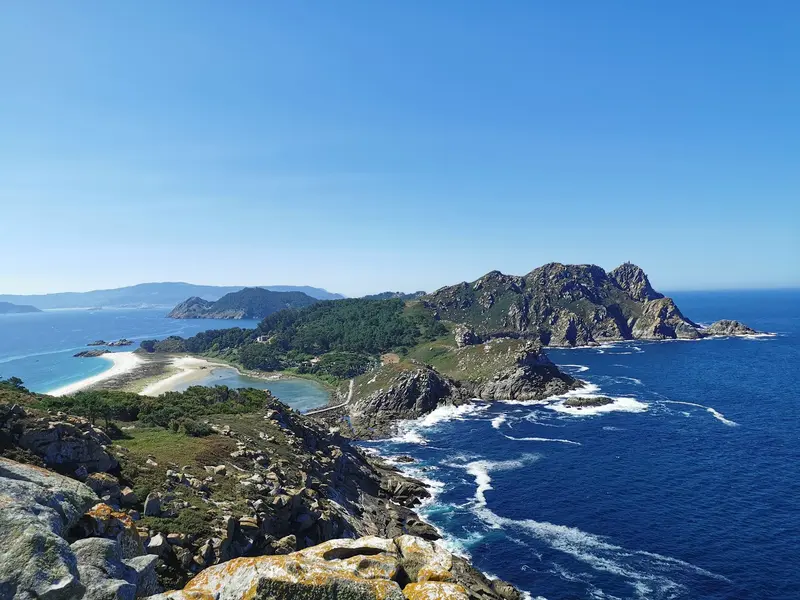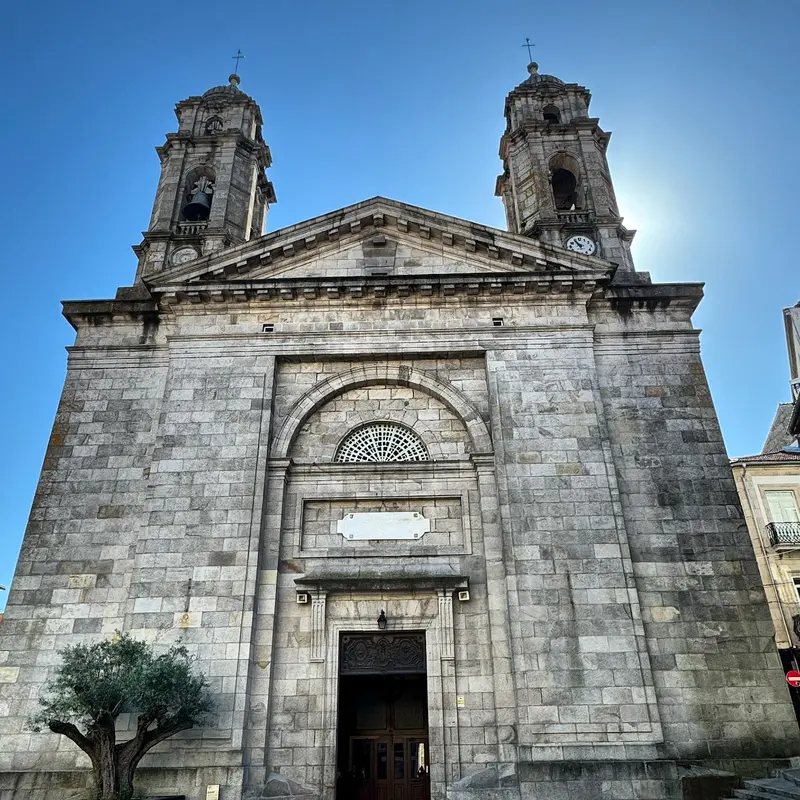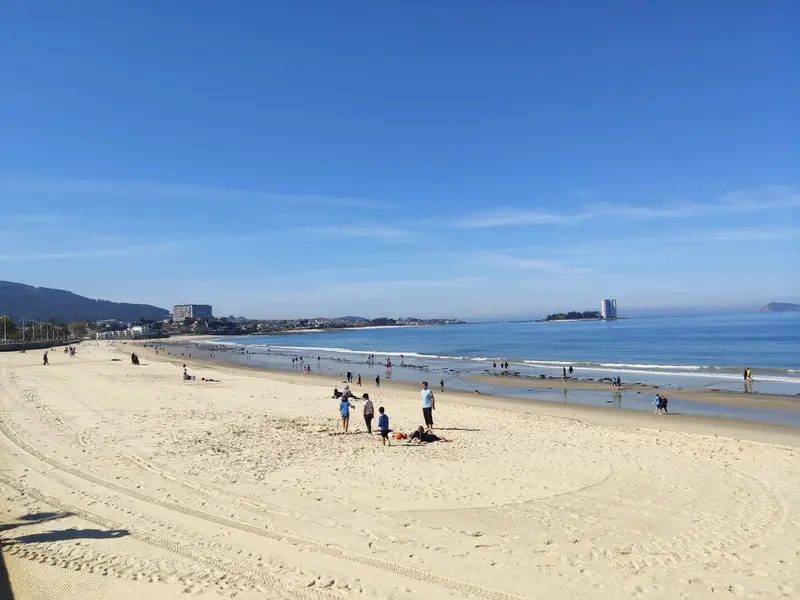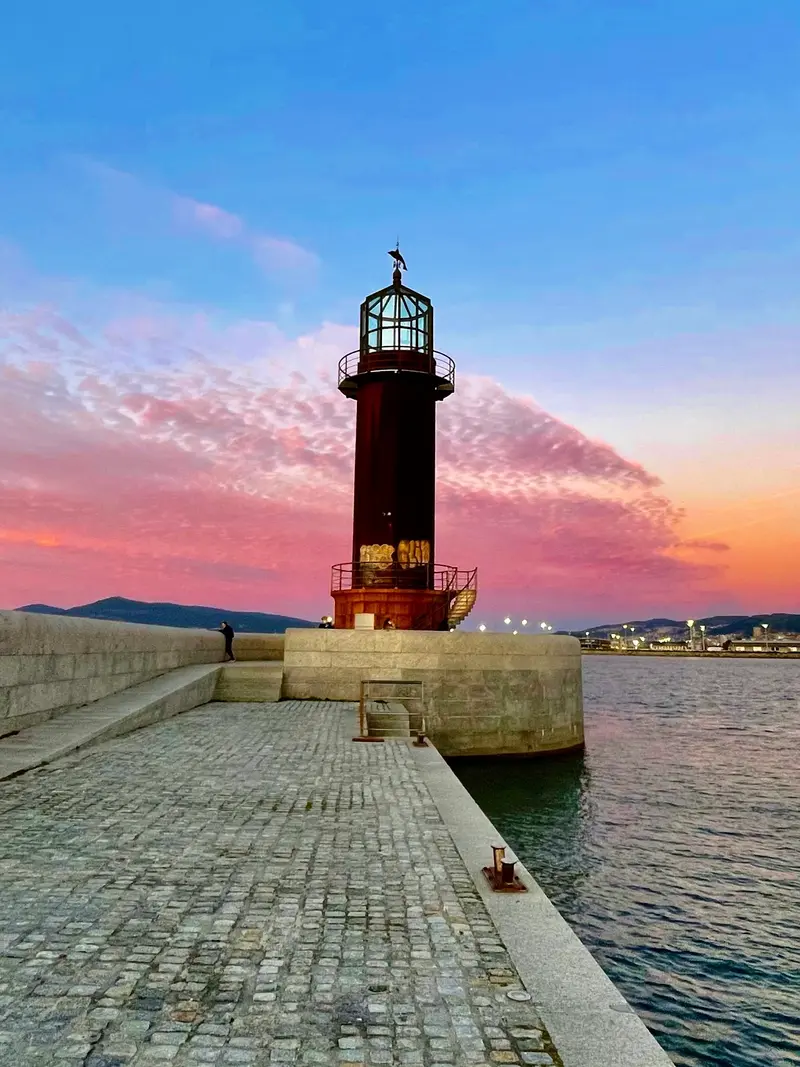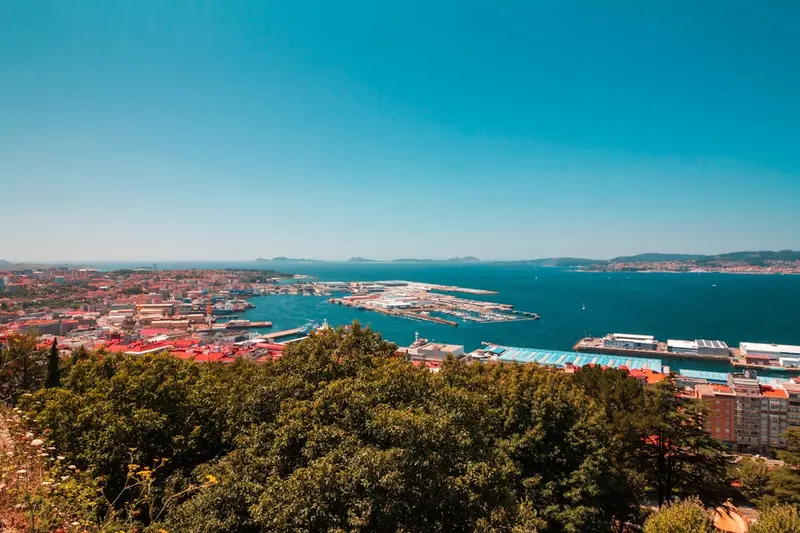
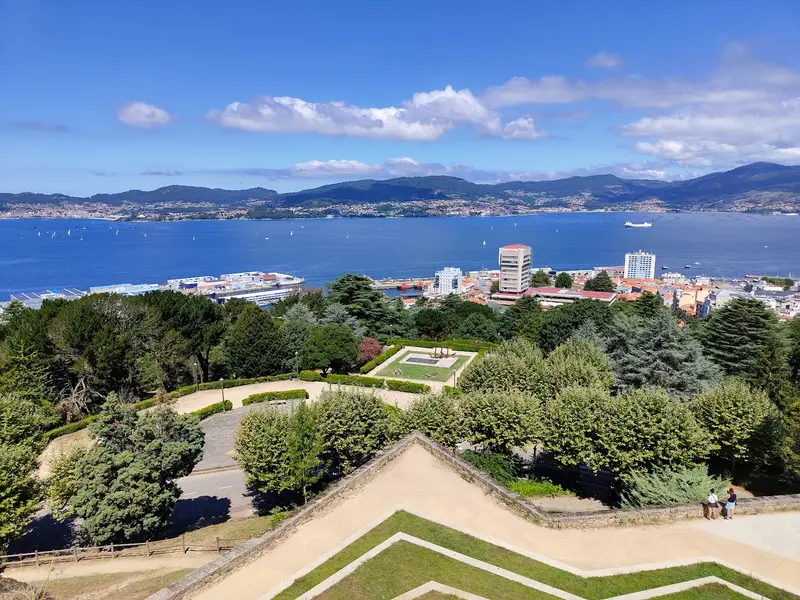
Als größte Stadt Galiciens und wichtigster Fischereihafen ist Vigo ein dynamisches Zentrum mit einer reizvollen Altstadt, modernen Vierteln und dem Tor zu den paradiesischen Cíes-Inseln.
These places are nearby — perfect for additional days or a day trip.
Rías Baixas
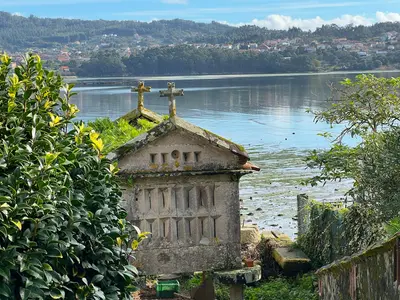
Diese Küstenregion ist berühmt für ihre fjordähnlichen Flussmündungen und als Heimat des Albariño-Weins, umgeben von malerischen Weinbergen und charmanten Fischerdörfern.
Viana do Castelo
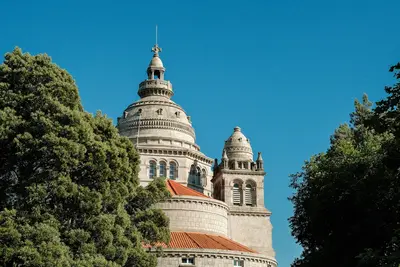
Viana do Castelo, an elegant coastal city in northern Portugal, will impress you with its rich maritime history and magnificent architecture. In the heart of the city, you'll find the Praça da República, lined by the historic City Hall, the Misericórdia Building, and a Renaissance fountain. Towering above the city is the Santuário de Santa Luzia, offering breathtaking panoramic views over the city, the Lima River, and the Atlantic. Stroll through the narrow streets of the old town, discover traditional shops, and admire the mansions that bear witness to its former wealth. The city is also renowned for its traditional gold filigree art and the annual maritime festival Romaria de Nossa Senhora da Agonia in August. For a quieter visit, spring or early autumn are recommended, allowing you to experience the sights without the biggest crowds.
Peneda-Gerês Nationalpark
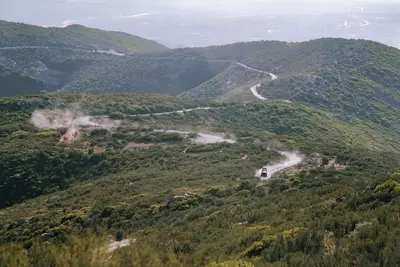
Portugal's only national park is a protected area of breathtaking natural beauty, featuring wild landscapes, spectacular waterfalls, and traditional stone villages.
Santiago de Compostela
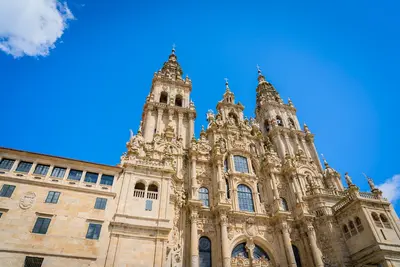
Die Hauptstadt Galiciens und das weltberühmte Ziel des Jakobswegs ist ein UNESCO-Welterbe, das Pilger und Reisende mit seiner beeindruckenden Kathedrale und seiner pulsierenden Altstadt anzieht.
Braga
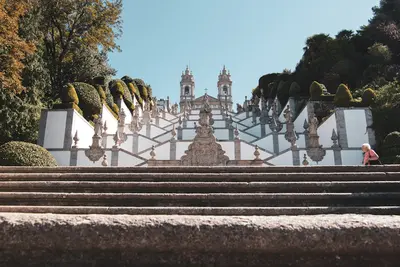
Braga, often called the "Portuguese Rome," is a city rich in history and religious significance in northern Portugal. Here you'll find Portugal's oldest cathedral, the Sé de Braga, whose construction began in the 11th century and reflects various architectural eras. The most famous landmark is the Sanctuary of Bom Jesus do Monte, a UNESCO World Heritage site, which you can reach via an impressive Baroque staircase or the historic water-powered funicular. The city is also a vibrant university town, reflected in its pulsating atmosphere and numerous cafes in the center. Stroll through the charming old town with its narrow streets and discover the Jardim de Santa Bárbara, a picturesque garden next to the former Archbishop's Palace. For a comprehensive impression of religious architecture, plan a visit to the nearby Santuário do Sameiro. The best time to visit is spring or autumn to enjoy mild weather and avoid the high summer crowds.