Fernweh
    ExploreTravel GuidesMy Trips
    de|en
    About FernwehImprintFAQPrivacy Policy
    ExploreTravel GuidesMy Trips
    Braga

    Braga

    CityCulture
    1. Home
    2. Destinations
    3. Portugal
    4. Norte (Northern Portugal)
    5. Braga
    Braga, often called the "Portuguese Rome," is a city rich in history and religious significance in northern Portugal. Here you'll find Portugal's oldest cathedral, the Sé de Braga, whose construction began in the 11th century and reflects various architectural eras. The most famous landmark is the Sanctuary of Bom Jesus do Monte, a UNESCO World Heritage site, which you can reach via an impressive Baroque staircase or the historic water-powered funicular. The city is also a vibrant university town, reflected in its pulsating atmosphere and numerous cafes in the center. Stroll through the charming old town with its narrow streets and discover the Jardim de Santa Bárbara, a picturesque garden next to the former Archbishop's Palace. For a comprehensive impression of religious architecture, plan a visit to the nearby Santuário do Sameiro. The best time to visit is spring or autumn to enjoy mild weather and avoid the high summer crowds.
    • Neighborhoods & highlights
    • Walking tours
    • Eat & drink
    • Culture
    • Getting around
    • Accommodation
    • Plan trip
    • Nearby
    • Neighborhoods & highlights
    • Walking tours
    • Eat & drink
    • Culture
    • Getting around
    • Accommodation
    • Plan trip
    • Nearby

    Overview

    Braga, "the Portuguese Rome", is a historically, religiously, and academically significant city. You'll visit the Sé de Braga, Portugal's oldest cathedral (11th century), and the vibrant city center. You reach the Sanctuary of Bom Jesus do Monte, a UNESCO World Heritage site, via a baroque staircase or by funicular. Explore the old town with the Jardim de Santa Bárbara. The nearby Santuário do Sameiro offers more religious architecture. Spring and autumn are ideal for enjoying mild weather and avoiding peak season.

    Places in Braga

    Discover the most important sights and attractions

    Sights in Braga

    Bom Jesus do Monte

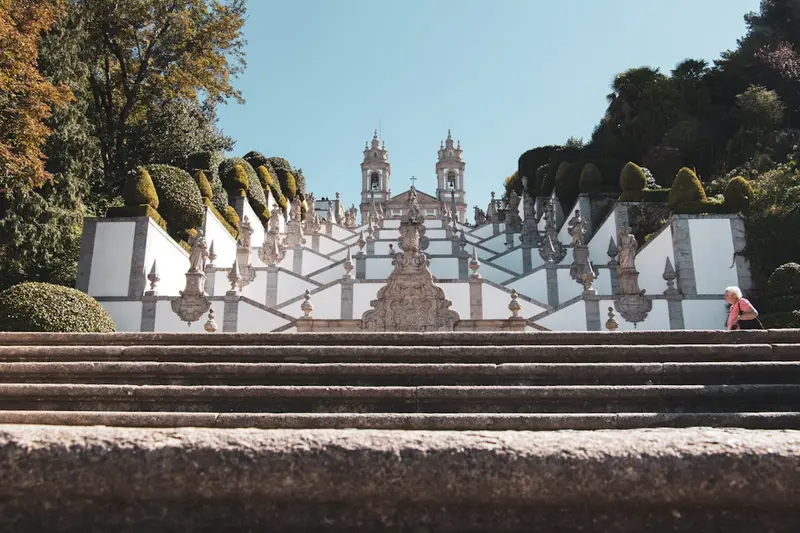
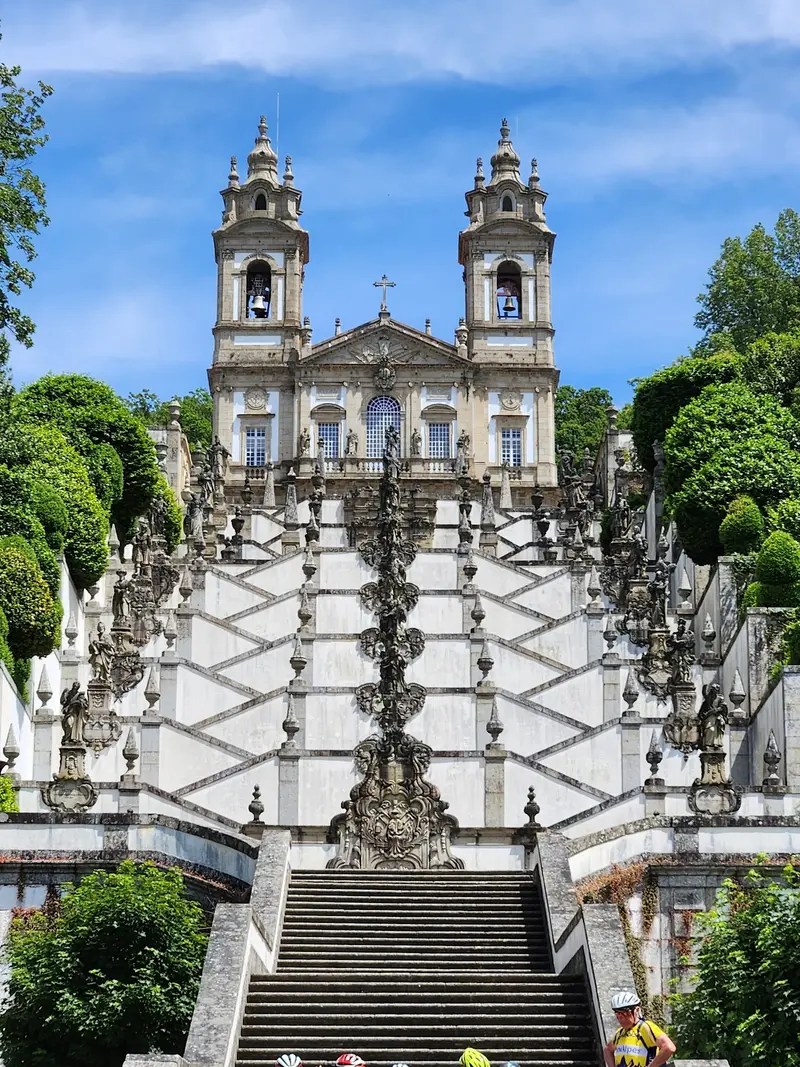
    The Bom Jesus do Monte in Braga is an outstanding example of Baroque pilgrimage architecture and has been a UNESCO World Heritage site since 2019. Here you'll experience an impressive pilgrimage site, renowned for its monumental staircase. This winds its way up the hill in switchbacks, symbolizing the Way of the Cross. Along the way, you'll pass several chapels depicting scenes of the Passion, as well as fountains representing the five senses and the three theological virtues. The carefully crafted statues and water features make the ascent a meditative experience. At the top, the magnificent basilica awaits, offering expansive views over Braga and the surrounding landscape. Our Tip: Start your visit early in the morning to enjoy the tranquility and capture the best photos without large crowds. For the descent, you can use the historic water-balance funicular, the oldest of its kind on the Iberian Peninsula.
    Open in Google Maps

    Basilika Unserer Lieben Frau von Sameiro

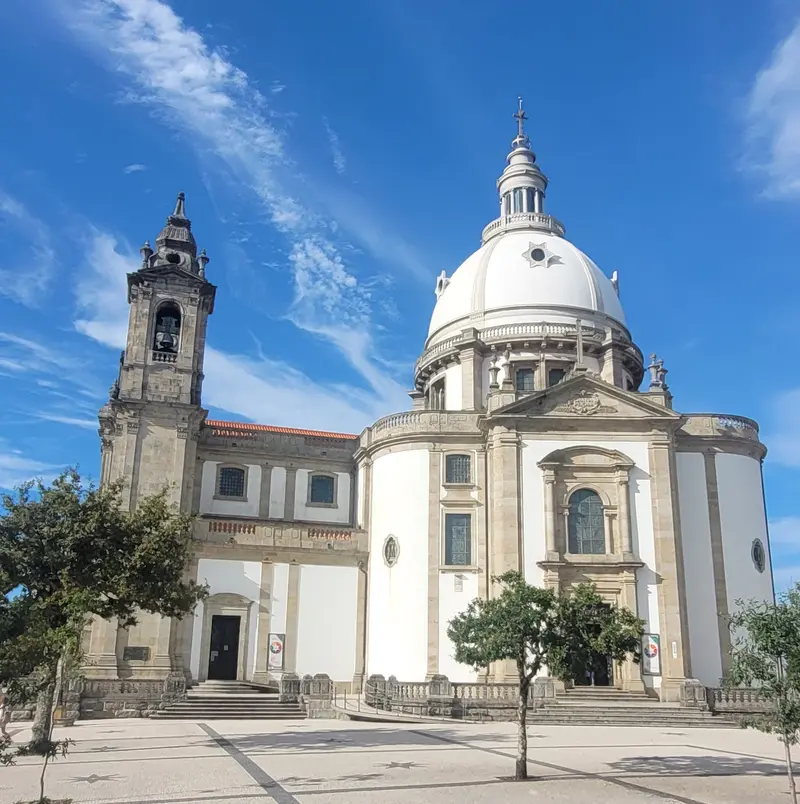
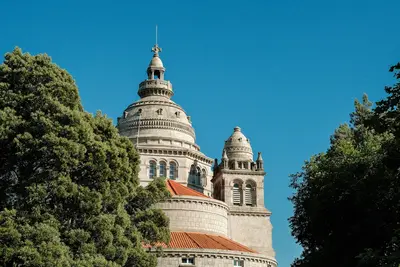
    Near Braga, the Basilica of Our Lady of Sameiro is a major Marian sanctuary in Portugal, drawing many annual pilgrims. Built from 1890 and elevated to a basilica in 1982, it holds deep religious and cultural significance. Impressive neoclassical architecture centers on a striking dome. Vast gardens and tranquil atmosphere invite contemplation. From its elevated position, enjoy a spectacular panoramic view of Braga and its green surroundings, especially clear on sunny days. For tranquility and optimal photos, an early morning or late afternoon visit is recommended. Access is easiest by car or local bus from Braga.
    Open in Google Maps

    Park Avenida Central

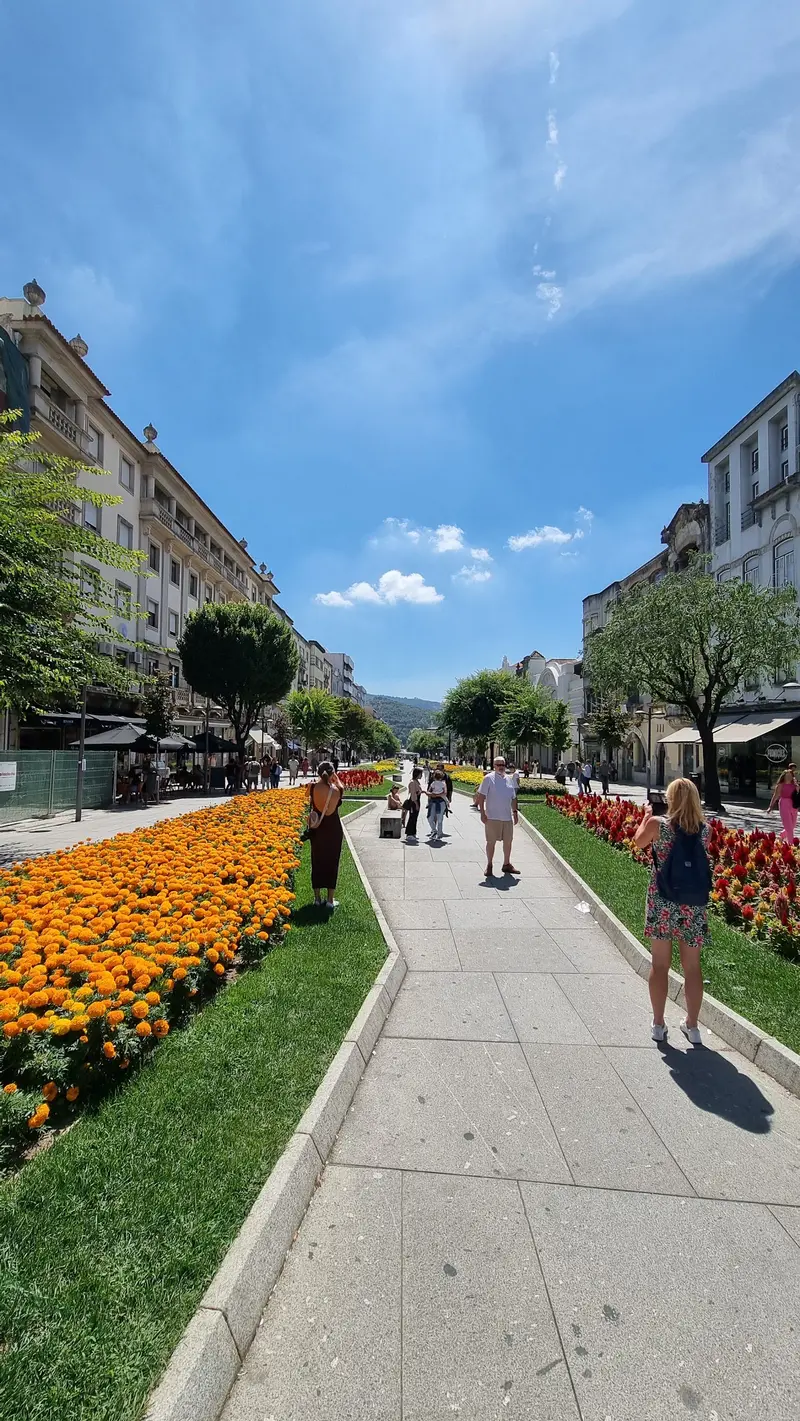
    The Park Avenida Central forms the pulsating heart of Braga and is a central axis connecting historical significance with modern city life. Here you'll find a spacious promenade, lined with meticulously maintained gardens, ancient trees, and elegant statues, often depicting local personalities or religious motifs. This avenue has been an an important meeting point and strolling area for Braga's residents for centuries. It serves not only as the city's green lung but also as a stage for public events and festivals. Along Avenida Central, historical buildings and modern shops line up side-by-side, creating an interesting architectural contrast. Our Tip: Visit the park in the late afternoon to observe the bustling activity and experience the special atmosphere as locals take their evening stroll. For quieter moments, an early morning visit is recommended.
    Open in Google Maps

    Congregados Basilica

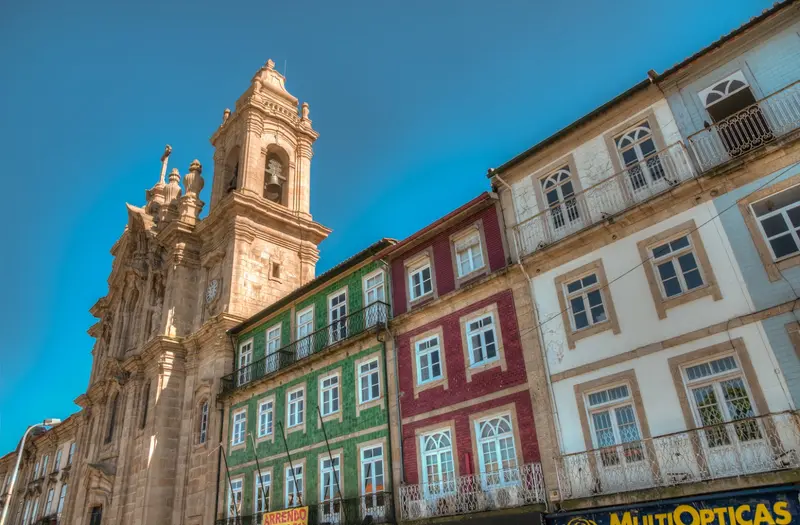
    The Basílica dos Congregados in Braga is a remarkable example of Baroque sacred architecture, whose construction began in the late 17th century and extended into the 18th century. It was erected by the Oratorians of Saint Philip Neri and elevated to a minor basilica in 1957. From the outside, it presents an imposing Baroque facade, flanked by two bell towers that shape the city's skyline. Inside, you'll find a single-nave church whose rich gilded woodcarving (Talha Dourada) and artistic Azulejos are impressive. Particularly noteworthy is the magnificent high altar, dedicated to the order's founder and underscoring the spiritual significance of the site. The basilica is not only an active place of worship but also an important testament to Portugal's religious art and architecture. To admire the details of the carvings in peace, a morning visit is recommended, when the light is optimal and visitor numbers are still low. For an atmospheric photo of the facade, it's best to position yourself on Largo dos Congregados to capture its full width.
    Open in Google Maps

    Santa Maria de Braga Cathedral

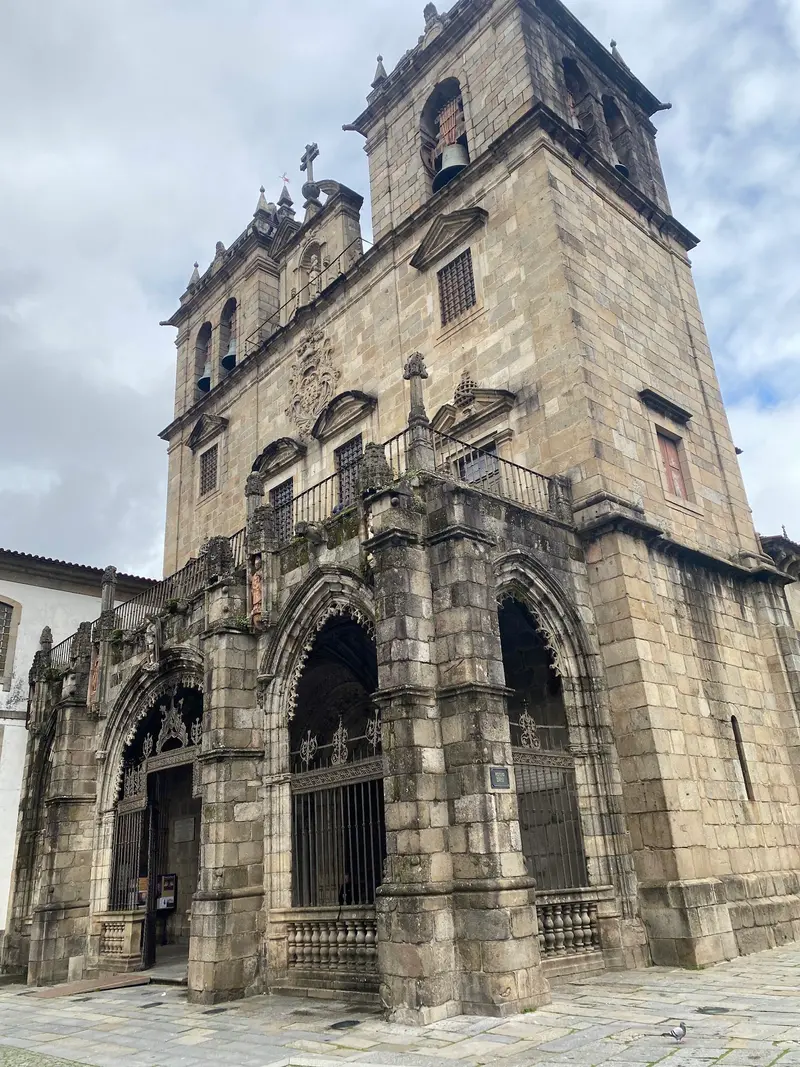
    The Santa Maria de Braga Cathedral, often simply called Sé de Braga, is one of Portugal's oldest, most significant cathedrals. Its origins date back to the late 11th century, making it a central testament to Portuguese church history. Over the centuries, it has been repeatedly expanded and renovated, displaying a fascinating mix of Romanesque, Gothic, Manueline, and Baroque styles. Note the richly adorned chapels, like the Capela dos Reis with the tombs of the first Portuguese king's parents, and the impressive gilded chancel carvings. The cloister and the adjoining Tesouro-Museu da Sé house a collection of sacred art and artifacts, illustrating the diocese's long history. Our Tip: To explore the architectural details at leisure and fully absorb the spiritual atmosphere, we recommend visiting the cathedral in the morning, before larger groups arrive. A good photo spot for the exterior is the forecourt, offering a full view of the façade.
    Open in Google Maps

    City walks in Braga

    Curated walking tours through the city's highlights — handpicked by experienced travel journalists.

    Bragas barocke Seele: Ein Spaziergang durch Geschichte und Charme

    Entdecken Sie auf diesem angenehmen Rundgang die Seele Bragas, einer der ältesten Städte Portugals. Tauchen Sie ein in die reiche Geschichte, bestaunen Sie beeindruckende Barockarchitektur und genießen Sie die lebendige Atmosphäre der "Stadt der Erzbischöfe". Dieser Spaziergang führt Sie zu den wichtigsten Sehenswürdigkeiten und charmantesten Ecken des historischen Zentrums.

    ~2 Std.
    In Google Maps öffnen
    Stopps (8)

    Dining & Drinks

    Braga's cultural and historical heritage

    Braga, once the Roman Bracara Augusta, boasts over 2,000 years of history and is one of Portugal's oldest Christian centers. The city has been an episcopal see since Late Antiquity and developed into an influential religious center on the Iberian Peninsula, which shapes its identity to this day.Braga's architectural landscape bears witness to this rich past. The Sé de Braga, the city's cathedral, is a remarkable example, combining elements of Romanesque, Gothic, Renaissance, and Baroque, expanded over centuries. Another outstanding example is the Sanctuary of Bom Jesus do Monte with its iconic Baroque staircase, which is a UNESCO World Heritage site and is known for its symbolic architecture and landscaping.Local traditions play a central role in Braga's cultural life. Holy Week (Semana Santa) is a highlight, marked by solemn processions and deeply rooted customs that attract pilgrims and visitors alike. These festivities underscore Braga's status as the "City of Archbishops" and reflect the population's deep connection to its historical and religious heritage.

    Getting Around Here

    Braga is excellent to explore thanks to its compact size and well-organised infrastructure. While the city has no metro or tram, the efficient bus network of TUB (Transportes Urbanos de Braga) forms the backbone of public transport, making it easy to reach even more distant neighbourhoods. Single tickets can be bought directly from the driver; for longer stays, rechargeable cards are worthwhile.Braga's historic centre is extremely pedestrian-friendly; most attractions are close together and invite leisurely strolls. For longer distances or quick trips, taxis and ride-sharing services like Uber and Bolt are available. E-scooters and rental bikes are also available in the city, offering a flexible alternative for shorter distances, especially along the river or to university areas. It's best to plan your routes with a navigation app to always stay informed.

    Accommodations in Braga

    Accommodations in Braga

    Find perfect stay in Braga

    Booking.com
    Search Hotels
    Agoda
    Search Hotels
    Airbnb
    Vacation Rentals
    Hotels.com
    Hotels Worldwide
    Hostelworld
    Hostels

    Campgrounds in Braga

    Find perfect campground in Braga

    Search via Google Maps
    Campgrounds nearby (15km)
    Camping.info
    Find Campgrounds
    Park4Night
    RV Parks & Camping

    Plan your trip to Braga

    Save places, build a route and plan your city trip — all in one place.

    Save places

    Bookmark sights, restaurants and neighborhoods you're interested in.

    Build your route

    Turn your bookmarks into a route — define order, days and budget.

    Refine with AI

    Let Mein Fernweh suggest experiences and put together a tailored daily plan.

    Start trip planningOpen bookmarks

    Locations nearby

    These places are nearby — perfect for additional days or a day trip.

    Guimarães

    Guimarães

    Guimarães is considered the birthplace of the Portuguese nation and is a UNESCO World Heritage site, known for its well-preserved medieval architecture. Here you'll discover the imposing Castelo de Guimarães, which overlooks the city, and the adjacent Paço dos Duques de Bragança, a magnificent palace. The historic city centre is characterized by its narrow streets, the charming Largo da Oliveira, and traditional squares that invite you to linger. The city played a central role in the founding of Portugal in the 12th century, which is reflected in numerous monuments and museums. Allow ample time to explore the old town on foot and soak up its authentic atmosphere. The best months to visit are spring or autumn, to avoid the tourist crowds.
    Viana do Castelo

    Viana do Castelo

    Viana do Castelo, an elegant coastal city in northern Portugal, will impress you with its rich maritime history and magnificent architecture. In the heart of the city, you'll find the Praça da República, lined by the historic City Hall, the Misericórdia Building, and a Renaissance fountain. Towering above the city is the Santuário de Santa Luzia, offering breathtaking panoramic views over the city, the Lima River, and the Atlantic. Stroll through the narrow streets of the old town, discover traditional shops, and admire the mansions that bear witness to its former wealth. The city is also renowned for its traditional gold filigree art and the annual maritime festival Romaria de Nossa Senhora da Agonia in August. For a quieter visit, spring or early autumn are recommended, allowing you to experience the sights without the biggest crowds.
    Peneda-Gerês Nationalpark

    Peneda-Gerês Nationalpark

    Portugal's only national park is a protected area of breathtaking natural beauty, featuring wild landscapes, spectacular waterfalls, and traditional stone villages.
    Norte (Northern Portugal)

    Norte (Northern Portugal)

    Northern Portugal, also known as Norte, is a region full of contrasts, stretching from the rugged beauty of the Atlantic coast to the terraced vineyards of the Douro Valley. It is home to the vibrant city of Porto, UNESCO World Heritage Sites, and is considered the cradle of Portugal with a deeply rooted history and unparalleled gastronomy.
    Porto

    Porto

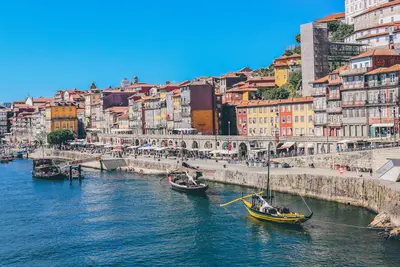
    Porto, the charming city on the Douro, captivates with its historic old town and famous Port wine. The UNESCO World Heritage Site Ribeira district, with its colorful houses and narrow streets, invites exploration. Cross the impressive Ponte Dom Luís I to visit the Port wine cellars in Vila Nova de Gaia and experience a tasting. Admire the artistic Azulejos in São Bento station and climb the Clérigos Tower for expansive views over the city. The historic bookstore Livraria Lello fascinates with its architecture, but often requires wait times. The best time to visit is spring or autumn, to enjoy the mild temperatures and fewer crowds.