Fernweh: Home
    ExploreTravel GuidesPlan a tripMy tripLast visited
    de|en
    All Places & RegionsAll highlightsAbout FernwehFAQPrivacy PolicyImprint
    ExploreTravel GuidesPlan a tripMy tripLast visited
    Cabo de Gata-Níjar

    Spain

    Cabo de Gata-Níjar

    National Park

    The Cabo de Gata-Níjar Natural Park in southeastern Andalusia protects a Mediterranean coast of volcanic origin, featuring around 63 kilometers of cliffs and coves.

    by Felix Gillen

    1. Home
    2. Destinations
    3. Spain
    4. Andalusia
    5. Cabo de Gata-Níjar
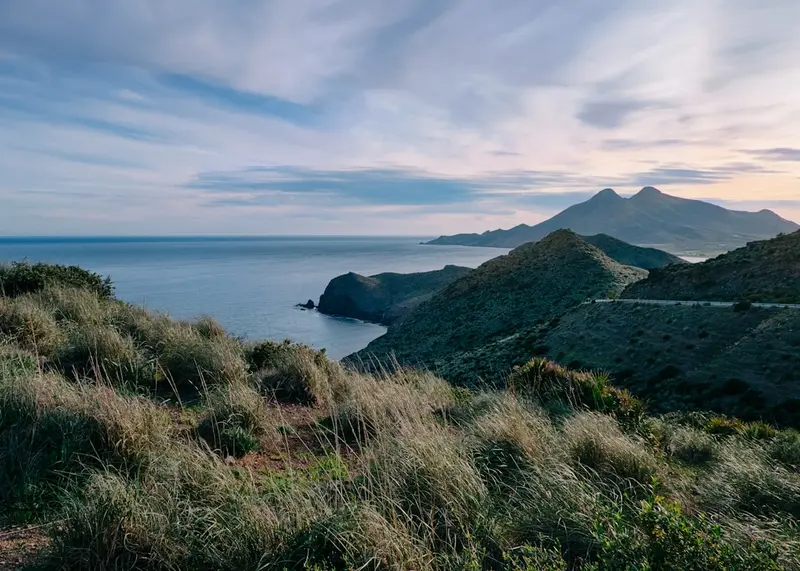
    The Cabo de Gata-Níjar Natural Park in southeastern Andalusia protects a Mediterranean coast of volcanic origin, featuring around 63 kilometers of cliffs and coves. Volcanic rock, secluded bays, clear water, and sparse, almost desert-like vegetation define the landscape, along with small fishing villages like San José and La Isleta del Moro.

    Sights

    Discover the most important sights and attractions

    1Playa de los Genoveses & Playa de Mónsul

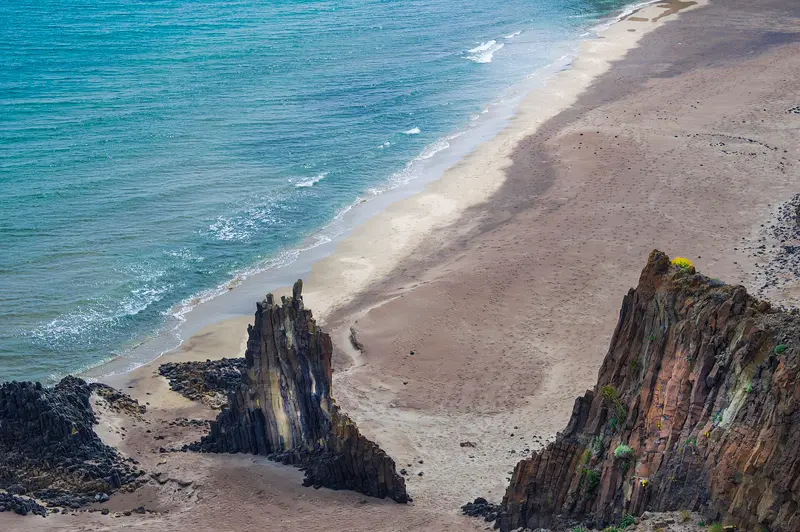
    Playa de los Genoveses, approximately 2.5 kilometers from San José, and Playa de Mónsul are two unspoiled beaches of the park. Behind Mónsul lie fossil dunes and a large wandering dune; the surrounding rocks show the volcanic origin of the landscape. Here you can swim in the clear water, stroll along the sandy beach, or observe the sparse vegetation. The volcanic rock formation “La Peineta” at Mónsul is a popular photo motif.
    Open in Google Maps

    2Faro de Cabo de Gata & Arrecife de las Sirenas

    The Faro de Cabo de Gata, built in 1863, stands on a cliff at the southern tip of the park and offers a wide view over the Mediterranean Sea. Just below it lies the Arrecife de las Sirenas (Reef of the Mermaids), a group of volcanic rock needles rising from the water. The spot is well-suited for sunset views and landscape photography. According to tradition, the reef owes its name to the monk seals that once lived here, whose calls were said to resemble the song of sirens.
    Open in Google Maps

    3La Isleta del Moro

    The fishing village La Isleta del Moro is located on the rocky coast of the Natural Park. Whitewashed houses, colorful fishing boats and a small beach shape its image, with the namesake small island lying offshore. The waterside restaurants offer fresh fish with ocean views. The village is quiet, perfect for a break on a coastal drive.
    Open in Google Maps

    4Las Salinas de Cabo de Gata

    The salt pans near San Miguel de Cabo de Gata were already in use during Roman times and have been producing salt again since 2016. Over 100 bird species live in the basins, including flamingos, terns, and herons. Observation points are located at the 1907 church of Las Salinas and at the information center; a short path along the road connects them.
    Open in Google Maps
    Cala del Barronal

    5Cala del Barronal

    The Calas del Barronal are located between Playa de los Genoveses and Playa de Mónsul in the Cabo de Gata-Níjar Natural Park. The small coves are framed by volcanic rocks; the water is clear and suitable for swimming and snorkeling. The surroundings are sparse and typical of the park's semi-arid climate.You reach the coves via the track towards Mónsul and a short walk. Practical Tip: There is no infrastructure on-site, so bring plenty of water, sun protection, and provisions. It's quietest in the early morning or late afternoon, and the light on the rocks is especially beautiful then.
    Open in Google Maps

    Restaurants & Cafes

    Arrocería La Brisa

    In Las Negras gelegen, ist die Arrocería La Brisa bekannt für ihre hervorragenden Reisgerichte und frischen Meeresfrüchte. Probiere unbedingt eine der vielen Paella-Variationen oder den "Arroz negro", zubereitet mit dem Tagesfang. Die entspannte Atmosphäre direkt am Meer macht es zu einem idealen Ort für ein authentisches, genussvolles Essen.
    Show on Google Maps

    La Ola

    Direkt an der Uferpromenade von La Isleta del Moro findest Du das Restaurant La Ola, das mit seinem traditionellen Charme und fantastischem Meerblick besticht. Hier genießt Du fangfrischen Fisch und Meeresfrüchte, oft einfach gegrillt, um den reinen Geschmack zu bewahren. Die lockere und authentische Atmosphäre ist perfekt, um das Dorfleben und die lokale Küche zu erleben.
    Show on Google Maps
    1

    Restaurante Ramona, The Empanada Boutique

    Restaurant in Pl. de la Malvasía.
    Show on Google Maps
    2

    Restaurante La Estrella

    Restaurant in Calle Carr. Antigua del Faro.
    Show on Google Maps

    The Cultural Heritage of Cabo de Gata

    The history of the Cabo de Gata-Níjar Natural Park is closely linked to the sea and mining. Along the coast stand old watchtowers, which served to monitor the sea, such as the Torre del Rayo near Carboneras, the Torre de los Alumbres near Rodalquilar, or the Torre de Vela Blanca. The Faro de Cabo de Gata, built in 1863, marks the southern tip of the park.Around Rodalquilar, gold was mined from the 1880s until the 1990s, and traces of this era are still visible in the landscape. In fishing villages like La Isleta del Moro or Agua Amarga, whitewashed houses define the scenery.The local culture is closely linked to the sea and fishing, which is reflected to this day in the gastronomy of the coastal towns.

    Local Adventures

    The Cabo de Gata Natural Park has no metro or tram. Bus routes connect some coastal towns and villages; check timetables in advance, as services can be limited outside peak season. A shuttle bus runs periodically to Playa de Mónsul, also stopping at Playa de los Genoveses. For flexible exploration, a rental car is the most flexible option to reach the coves and villages.Within the villages and on many coastal paths, the region is easily explored on foot or by bike. Taxis are available, but can be expensive for longer distances. Given the park's expansive nature, you'll need your own vehicle or a well-planned bus excursion.

    Accommodations in Cabo de Gata-Níjar

    Find perfect stay in Cabo de Gata-Níjar

    Booking.com* (Affiliate link)
    Search Hotels
    Agoda* (Affiliate link)
    Search Hotels
    Airbnb
    Vacation Rentals

    * Affiliate link: if you book through it, we earn a small commission. The price stays the same for you.

    Campgrounds in Cabo de Gata-Níjar

    Find perfect campground in Cabo de Gata-Níjar

    Search via Google Maps
    Campgrounds nearby (15km)
    Camping.info
    Find Campgrounds
    Park4Night
    RV Parks & Camping

    Nearby

    Granada

    Granada

    Granada in Andalusia lies at the foot of the Sierra Nevada and was, from the 13th century, the capital of the Nasrid kingdom, the last Muslim-ruled state on the Iberian Peninsula. The main reason for visiting is the Alhambra, a UNESCO World Heritage site since 1984, featuring the Nasrid Palaces, the Generalife Gardens, and the Alcazaba fortress.Explore the Albaicín quarter with its narrow Moorish streets and viewpoints overlooking the Alhambra. The adjacent Sacromonte is famous for its cave dwellings and flamenco. The Cathedral, built on the site of the former Great Mosque, and the Royal Chapel in the city centre commemorate the Christian conquest of 1492, with the Catholic Monarchs buried in the Capilla Real. Tickets for the Alhambra can be purchased up to three months in advance; the Nasrid Palaces have a fixed entry time. Spring and autumn offer more pleasant temperatures than high summer.
    Cartagena

    Cartagena

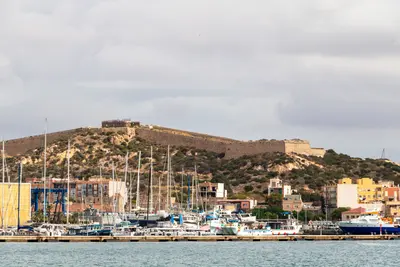
    Founded by the Carthaginians as Qart Hadasht around 227 BC, Cartagena remains a major naval port to this day. The unearthed Roman Theatre, Modernisme facades on Calle Mayor, and fortifications overlooking the port tell a story of over two millennia of city history.
    Nerja

    Nerja

    The coastal town of Nerja in the east of the Costa del Sol is known for its large stalactite cave and the Balcón de Europa, a viewpoint with extensive views of the Mediterranean Sea.
    Frigiliana

    Frigiliana

    Frigiliana, about six kilometers north of Nerja, has been repeatedly awarded as one of Spain's most beautiful and best-preserved villages. Winding Arab-era streets, Morisco past traces, and its location between the Sierras de Tejeda, Almijara y Alhama Natural Park and the nearby coast shape the village.
    Murcia

    Murcia

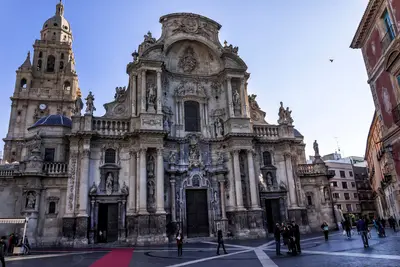
    Murcia lies on the Segura River in the Huerta, an agricultural area irrigated since Moorish times. The Santa María Cathedral with its baroque main façade, the Casino with its opulent halls, and the Plaza de las Flores form the core of the old town.

    Sources & method

    • Photos: Wikimedia Commons, Unsplash. Each photo carries its credit.
    • The content is based on web research from public, traceable sources. How the content is made · The role of AI