ExploreTravel GuidesPlan a trip
    de|en
    All Places & RegionsAbout FernwehFAQPrivacy PolicyImprint
    ExploreTravel GuidesPlan a trip
    • Neighborhoods & highlights
    • Eat & drink
    • Food culture
    • Culture
    • Getting around
    • Accommodation
    • Plan trip
    • Nearby
    Cartagena
    City

    Spain

    Cartagena

    Founded by the Carthaginians as Qart Hadasht around 227 BC, Cartagena remains a major naval port to this day.

    1. Home
    2. Destinations
    3. Spain
    4. Murcia
    5. Cartagena
    Founded by the Carthaginians as Qart Hadasht around 227 BC, Cartagena remains a major naval port to this day. The unearthed Roman Theatre, Modernisme facades on Calle Mayor, and fortifications overlooking the port tell a story of over two millennia of city history.
    Cartagena, with just over 200,000 inhabitants, is situated on a protected natural harbour that has been used as a port since antiquity. The Old Town, nestled between the harbour and five hills, is compact: Modernisme facades line Calle Mayor, and the Roman Theatre lies just behind. The Spanish Navy maintains one of its most important bases here, and cruise ships berth at the harbour. Many excavations and museums are just a few minutes' walk from each other.

    Sights in Cartagena

    Discover the most important sights and attractions

    Castle

    1Castillo de la Concepción

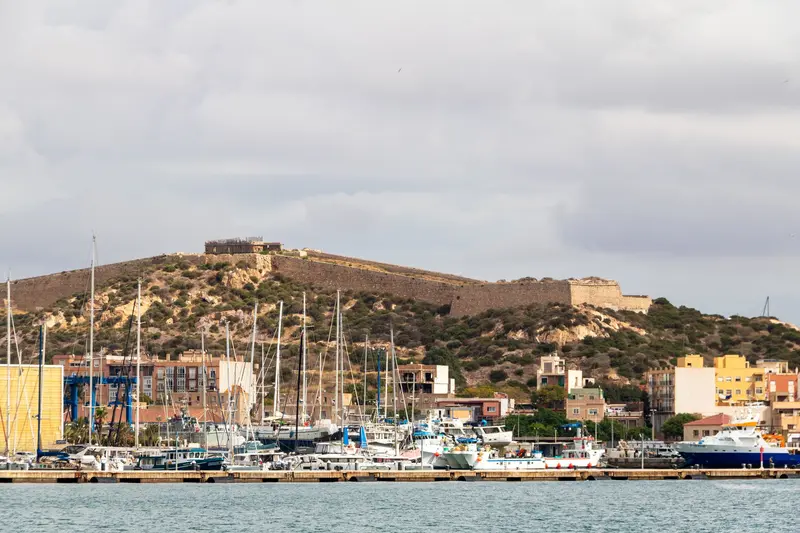
    The medieval castle on the highest hill of the Old Town houses a center for city history. A panoramic lift brings you up, from above you overlook the harbor and the Roman theater.
    Open in Google Maps
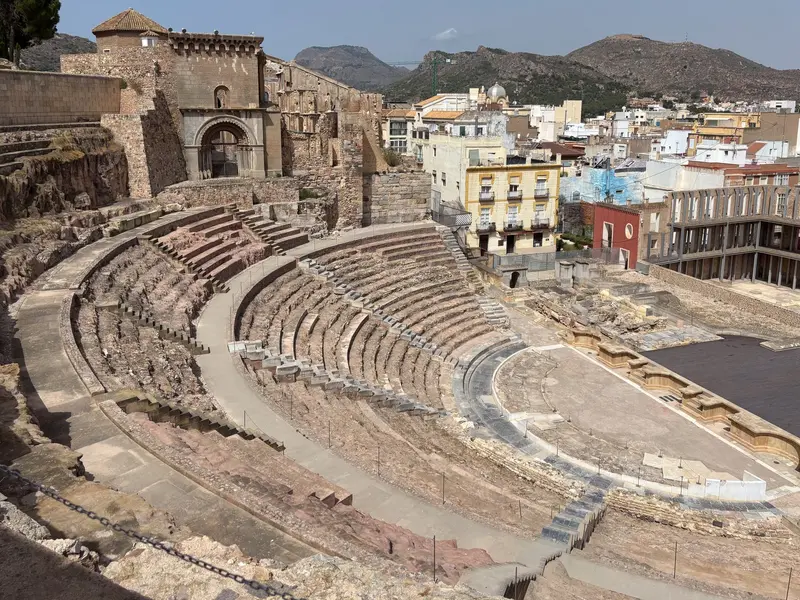
    The Roman Theatre
    Museum

    2The Roman Theatre

    Dating from the 1st century BC, the theatre seated around 6,000 spectators and was only discovered in 1988 beneath Old Town houses. Access is through a museum by Rafael Moneo and an underground passage directly to the spectator tiers.
    Open in Google Maps
    Museum

    3ARQUA Museum of Underwater Archaeology

    The National Museum of Underwater Archaeology by the harbour showcases finds from shipwrecks off the Spanish coast, ranging from Phoenician boats and Roman amphorae to silver coins from a frigate sunk in 1804.
    Open in Google Maps

    Restaurants in Cartagena

    Eating & Drinking

    Oriental

    Coffee specialty from Cartagena with condensed milk, brandy, Likör 43, and cinnamon.

    Caldero del Mar Menor

    Rice cooked in fish stock, featuring Ñora peppers, served with Allioli.

    Michirones

    A stew of dried fava beans with Chorizo and Chili, a typical regional tapa.

    Culture

    From Qart Hadasht to the NavyAround 227 BC, the Carthaginian Hasdrubal founded the city as Qart Hadasht; in 209 BC, the Romans conquered it and named it Carthago Nova. The Roman theatre was only discovered in 1988 beneath the old town and is now accessible with a museum by Rafael Moneo.In the 18th century, Cartagena became the headquarters of the Spanish Mediterranean fleet; the arsenal and fortifications date from this period. Around 1900, mining in the nearby Sierra Minera brought prosperity, evident in the city centre's Modernisme buildings. During the Spanish Civil War, the city was the main base for the Republican fleet.

    Exploring on site

    Explore the old town on foot. A panoramic lift leads up to the Castillo de la Concepción, and a tourist boat sails through the harbour to the entrance fortresses. Regional trains connect Cartagena with Murcia, and buses run to the Mar Menor and La Manga. The Región de Murcia Airport is around 30 kilometres away.

    Accommodations in Cartagena

    Find perfect stay in Cartagena

    Booking.com* (Affiliate link)
    Search Hotels
    Agoda* (Affiliate link)
    Search Hotels
    Airbnb
    Vacation Rentals

    * Affiliate link: if you book through it, we earn a small commission. The price stays the same for you.

    Campgrounds in Cartagena

    Find perfect campground in Cartagena

    Search via Google Maps
    Campgrounds nearby (15km)
    Camping.info
    Find Campgrounds
    Park4Night
    RV Parks & Camping

    Plan your trip to Cartagena

    Save places, build a route and plan your city trip, all in one place.

    1. 1
      1234

      Round trip

      12 days · 4 stops

      Saved

      Pick a route

      Pick a ready-made one or save places and plan your own.

      Open bookmarks
    2. 2

      Trip to Cartagena

      Live
      • 1Castillo de la Concepción3 days
      • 2The Roman Theatre4 days
      • 3ARQUA Museum of Underwater Archaeology5 days
      Budget

      Plan your trip

      The planner sorts stops, days and budget. Plan together in real time.

      Start trip planning
    3. 3
      9:41 No signal
      Available offline

      Use it on the road

      Download the guide to your phone and use it on site, even offline.
    Nearby

    Murcia

    Murcia

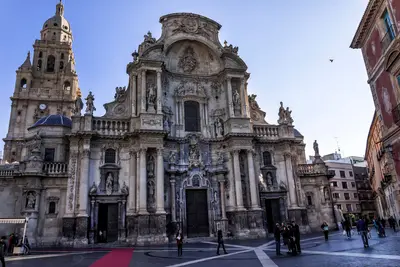
    Murcia lies on the Segura River in the Huerta, an agricultural area irrigated since Moorish times. The Santa María Cathedral with its baroque main façade, the Casino with its opulent halls, and the Plaza de las Flores form the core of the old town.
    Murcia

    Murcia

    The Murcia region in southeast Spain has a dry, sunny climate with mild winters. The capital, Murcia, is known for its baroque cathedral facade and the Huerta, a traditional fruit and vegetable growing area. On the coast are the port city of Cartagena with its Roman theatre and the Mar Menor, a large saltwater lagoon.
    Elche (Elx)

    Elche (Elx)

    Elche (Elx) ist weltbekannt für seinen UNESCO-geschützten Palmenhain, den größten Europas, und seine reiche Geschichte mit dem berühmten Mysterienspiel.
    Alicante

    Alicante

    Alicante, a vibrant port city on the Costa Blanca, blends historical charm with Mediterranean flair. The imposing Castillo de Santa Bárbara overlooks the city, offering expansive views over the bay; you can reach the Moorish-influenced fortress on foot or by elevator. Stroll along the famous Explanada de España, a palm-lined promenade with a wave mosaic, leading to the harbour. Discover the picturesque district of Barrio de Santa Cruz with its narrow streets and flower-adorned houses. Find authentic culinary experiences in the Old Town's tapas bars. Visit the castle ideally early in the morning or late afternoon to avoid the midday heat and capture the best light.
    Costa Blanca

    Costa Blanca

    The coast of Alicante province, known as Costa Blanca, stretches from Dénia in the north to Pilar de la Horadada on the Murcia border. To the north, limestone mountains like Montgó and Penyal d'Ifac drop steeply into the sea, dotted with coves and small ports. South of Alicante, the coast becomes flat, featuring long sandy beaches, salt flats, and dunes.You'll find resorts like Benidorm, old towns such as Altea, Elche's palm grove, and a mountainous interior with villages like Guadalest.