Fernweh
    ExploreTravel GuidesMy Trips
    de|en
    About FernwehImprintFAQPrivacy Policy
    ExploreTravel GuidesMy Trips
    Alicante

    Alicante

    CityCulture
    1. Home
    2. Destinations
    3. Spain
    4. Costa Blanca
    5. Alicante
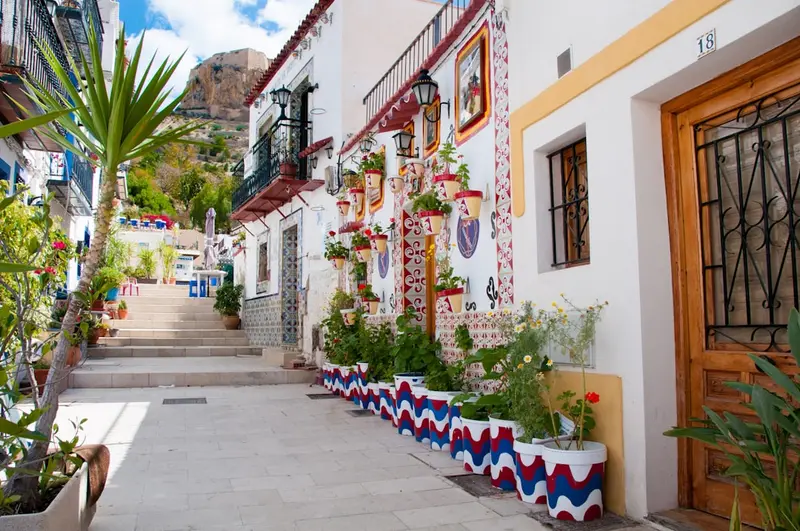
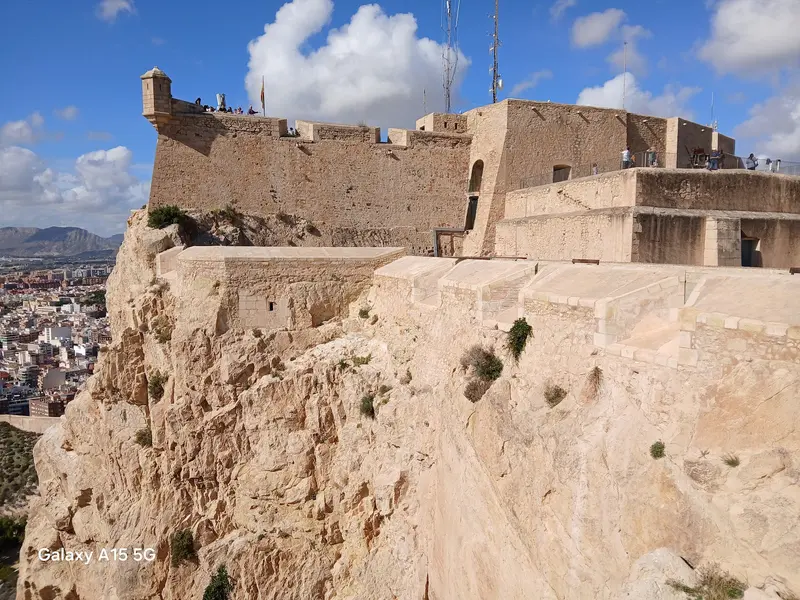
    Alicante, a vibrant port city on the Costa Blanca, blends historical charm with Mediterranean flair. The imposing Castillo de Santa Bárbara overlooks the city, offering expansive views over the bay; you can reach the Moorish-influenced fortress on foot or by elevator. Stroll along the famous Explanada de España, a palm-lined promenade with a wave mosaic, leading to the harbour. Discover the picturesque district of Barrio de Santa Cruz with its narrow streets and flower-adorned houses. Find authentic culinary experiences in the Old Town's tapas bars. Visit the castle ideally early in the morning or late afternoon to avoid the midday heat and capture the best light.
    • Neighborhoods & highlights
    • Walking tours
    • Eat & drink
    • Culture
    • Nightlife
    • Getting around
    • Accommodation
    • Plan trip
    • Nearby
    • Neighborhoods & highlights
    • Walking tours
    • Eat & drink
    • Culture
    • Nightlife
    • Getting around
    • Accommodation
    • Plan trip
    • Nearby

    Overview

    Alicante, a significant port city on the Costa Blanca, blends rich history with a Mediterranean lifestyle. Above the city rises the Castillo de Santa Bárbara, a Moorish-influenced fortress that offers you comprehensive panoramic views over the bay and surrounding area. Along the coast, the Explanada de España, with its distinctive wave mosaic and shade-giving palm trees, invites you for a stroll and leads you directly to the marina. The historic quarter of Barrio de Santa Cruz captivates with narrow, winding streets, whitewashed houses, and colorful flower decorations that highlight its Andalusian influences. For authentic insights into local gastronomy, you should visit the Mercado Central or explore the traditional tapas bars in the Old Town. To avoid the midday heat and experience the best light, a visit to the castle in the early morning or late afternoon is recommended.

    Places in Alicante

    Discover the most important sights and attractions

    Sights in Alicante

    Tuk Tuk Baloo-Go

    Tuk Tuk Baloo-Go offers an unconventional way to explore the city of Alicante and its surroundings. These guided tours in motorized rickshaws allow you to experience the narrow streets of the old town and the coastal promenades from a fresh perspective. During the ride, you'll receive informative commentary on the passing sights, from historic buildings to lively squares. It's a practical alternative to walking tours, especially if you want to see a lot in a shorter time. You can enjoy the fresh air while soaking in Alicante's architectural details and vibrant life. Our Tip: It’s best to book your tour for early morning or late afternoon to avoid the midday heat and get the best light for photos. Enquire beforehand about routes that focus on specific historic districts to best discover the city's cultural heritage.
    Open in Google Maps

    Castillo de Santa Bárbara

    The Castillo de Santa Bárbara is Alicante's historic landmark, majestically perched on Mount Benacantil. Its origins trace back to a 9th-century Moorish fortress. Recaptured by Alfonso X in 1248, this strategically important site was expanded over the centuries. From the castle's terraces, you'll enjoy a **breathtaking panoramic view** over the city, the harbor, and the Mediterranean Sea. Our tip: Visit the castle early in the morning or late in the afternoon to avoid the peak heat and crowds. The elevator from Postiguet Beach is convenient, but the walk offers charming perspectives for unique photos.
    Open in Google Maps

    Archäologisches Museum Alicante

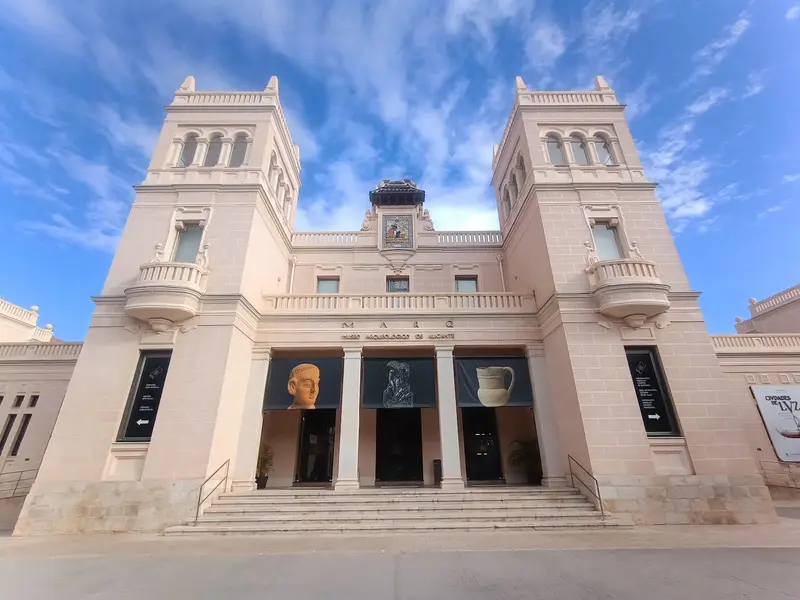
    The Archaeological Museum of Alicante (MARQ) is an internationally awarded museum that brings you closer to the rich history of Alicante province. It innovatively presents the region's development from the Paleolithic Age to modern times. Here you'll find impressive collections covering the prehistoric era, Iberian culture, Roman settlement, and the Middle Ages. MARQ places great emphasis on showcasing the archaeological process and the context of the finds, making it particularly informative. Particularly noteworthy are the detailed Roman mosaics and the diverse Iberian artifacts, which offer a deep insight into the lives of the inhabitants of that time. Plan at least two to three hours for your visit to explore the extensive exhibitions at your leisure. Our tip: To avoid the largest crowds, a weekday morning visit is recommended. The museum is also barrier-free and offers interesting insights into the past for families too.
    Open in Google Maps

    Pati d'Armes

    The Pati d'Armes, or Weapons Square, forms the heart of Santa Bárbara Castle in Alicante and was historically the central gathering point for the garrison. Here, military exercises were held and defense strategies coordinated. You find yourself on an expansive area surrounded by the oldest parts of the castle. From this strategically important vantage point, you can enjoy a breathtaking panoramic view over the city of Alicante, the port, and the vast Mediterranean Sea. Its exposed location highlights the castle's former significance as an impregnable fortress. Note the robust walls and the remains of former buildings that bear witness to the long history of this site. Our Tip: It's best to visit the Pati d'Armes in the early morning or late afternoon to avoid the intense midday sun and the biggest crowds. The light is also ideal then for impressive photos of the coastline and the city below you.
    Open in Google Maps

    Consell Regulador Denominació d’Origen Vins d’Alacant

    The Consell Regulador Denominació d’Origen Vins d’Alacant is the central institution that protects and promotes the quality and authenticity of wines from the Alicante region. Here, the long tradition of viticulture, which dates back to Roman times, is preserved and further developed. You will learn how Alicante's geographical and climatic conditions, especially its proximity to the Mediterranean and its calcareous soils, shape the unique character of its wines. The focus is often on the grape variety Monastrell, which thrives exceptionally well here and is responsible for robust red wines and rosés. While the Consell Regulador is not a classic tourist attraction offering guided tours, it is the heart of the local wine culture and offers insights into the strict production guidelines. Our Tip: To truly get to know Alicante's wines, visit one of the many bodegas in the area, which often offer tastings. The best time to visit for wine lovers is autumn, when the grape harvest is in full swing and many wineries offer special events.
    Open in Google Maps

    City walks in Alicante

    Curated walking tours through the city's highlights — handpicked by experienced travel journalists.

    Panoramablicke & Historie: Auf den Spuren des Castillo de Santa Bárbara

    Dieser Spaziergang führt Sie auf die Höhen von Alicante, um die beeindruckende Festung Santa Bárbara zu erkunden und atemberaubende Ausblicke zu genießen. Entdecken Sie verborgene Pfade, das historische Fischerviertel und moderne Kunst am Fuße des Berges.

    ~2 Std. 30 Min.
    In Google Maps öffnen
    Stopps (5)

    Essen & Trinken

    Alicante: Cultural Heritage and History

    Alicante's rich history is the result of millennia of settlement and its strategic location on the Mediterranean. The city was significantly shaped by Iberian, Roman, and Moorish cultures, each leaving a unique legacy.Alicante’s origins date back to pre-Roman times, when Iberian settlements defined the region, followed by the Roman city of Lucentum. A significant period was the more than 500 years of Moorish rule, which developed the city as Al-Laqant into an important trading center, leaving traces in its toponymy as well as in agricultural techniques. In the 13th century, the Christian Reconquista took place, after which Alicante became part of the Kingdom of Valencia.Alicante’s architecture is a multifaceted chronicle of these eras. The Castillo de Santa Bárbara, majestically perched on Monte Benacantil, is an outstanding example of military architecture, ranging from Roman foundations through Moorish extensions to Christian fortifications. The old town features winding alleys reminiscent of Moorish urban planning, as well as Baroque and Gothic elements in churches like the Concatedral de San Nicolás de Bari.Cultural peculiarities manifest themselves in traditional festivals such as the “Hogueras de San Juan” in June, a UNESCO-recognized spectacle of fire, art, and music celebrating the summer solstice. The local cuisine, characterized by rice dishes like Arroz a Banda and fresh seafood, reflects the region’s maritime identity and agricultural diversity.

    Nightlife

    Alicante's nightlife mainly centers around the historic quarter of El Barrio, where traditional bars and modern cocktail lounges like the 26 Cocktail Room line the streets. For later hours, you'll find clubs like the Konzep7 Club, which stay open until the early morning hours and offer a wide range of music styles.

    Getting around here

    Alicante is easy to explore thanks to its well-developed transport network and compact size. The modern TRAM network efficiently connects the city center with suburbs and coastal towns like Benidorm, while the extensive bus network also reaches more remote areas. For public transport, a rechargeable Mobilis card is recommended, offering multi-journey discounts and available at TRAM stops or kiosks; additionally, apps like Moovit can be very helpful for route planning.Within the city center and along the promenade, Alicante is extremely pedestrian-friendly, ideal for relaxed strolls to the main attractions. For shorter distances or to explore the coast, rental bikes and e-scooters are available at numerous stations. Taxis are also a convenient option, especially for late-night journeys or from the airport, with ride-sharing services like Cabify also available; a practical tip is to keep cash handy for smaller taxi rides.

    Accommodations in Alicante

    Accommodations in Alicante

    Find perfect stay in Alicante

    Booking.com
    Search Hotels
    Agoda
    Search Hotels
    Airbnb
    Vacation Rentals
    Hotels.com
    Hotels Worldwide
    Hostelworld
    Hostels

    Campgrounds in Alicante

    Find perfect campground in Alicante

    Search via Google Maps
    Campgrounds nearby (15km)
    Camping.info
    Find Campgrounds
    Park4Night
    RV Parks & Camping

    Plan your trip to Alicante

    Save places, build a route and plan your city trip — all in one place.

    Save places

    Bookmark sights, restaurants and neighborhoods you're interested in.

    Build your route

    Turn your bookmarks into a route — define order, days and budget.

    Refine with AI

    Let Mein Fernweh suggest experiences and put together a tailored daily plan.

    Start trip planningOpen bookmarks

    Locations nearby

    These places are nearby — perfect for additional days or a day trip.

    Costa Blanca

    Costa Blanca

    Die Costa Blanca, Spaniens „Weiße Küste“, lockt mit über 200 Kilometern goldener Sandstrände, azurblauem Mittelmeer und einem ganzjährig milden Klima. Sie ist berühmt für ihre lebhaften Badeorte, malerischen Fischerdörfer und das reiche kulturelle Erbe im Hinterland, was sie zu einem der beliebtesten Reiseziele Europas macht.
    Elche (Elx)

    Elche (Elx)

    Elche (Elx) ist weltbekannt für seinen UNESCO-geschützten Palmenhain, den größten Europas, und seine reiche Geschichte mit dem berühmten Mysterienspiel.
    Benidorm

    Benidorm

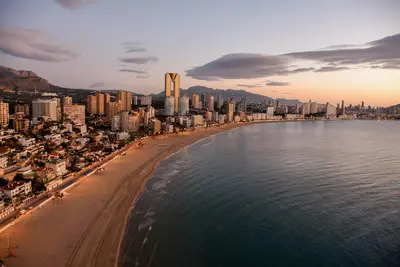
    Benidorm on the Costa Blanca is renowned for its impressive skyline, which has earned it the nickname "Manhattan of Spain." Originally a fishing village, the city developed into a tourist hub with vertical architecture from the 1960s onwards. Here you'll find expansive sandy beaches like the Playa de Levante and the Playa de Poniente for sunbathing and swimming. The historic Casco Antiguo, with its narrow streets and the Church of San Jaime y Santa Ana, offers a contrast to the high-rises. From the Balcón del Mediterráneo, you can enjoy panoramic views over the coast. A practical tip: visit the traditional tapas bars in the Old Town to experience the local gastronomy. For a quieter atmosphere away from the summer months, a visit during the off-season is recommended.
    Altea

    Altea

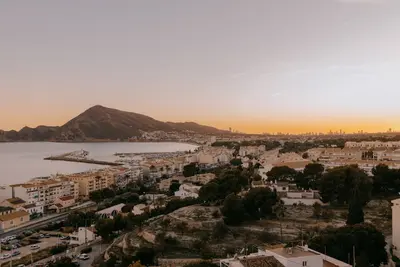
    Altea captivates with its charming old town, rising picturesquely on a hill with its whitewashed houses. The Church of Nuestra Señora del Consuelo, with its distinctive blue domes, forms the heart of the historic quarter. As you stroll through the narrow, cobblestone streets, you'll discover numerous art galleries, craft shops, and small cafés. This artistic atmosphere has attracted creatives for decades, shaping Altea's unique character. From the various viewpoints, you can enjoy a wide panoramic view over the coast and the azure Mediterranean Sea. To fully appreciate Altea's tranquility and beauty, it is advisable to visit the town during the low season. Also explore the beach promenade, which provides a beautiful contrast to the historic core.
    Jávea (Xàbia)

    Jávea (Xàbia)

    Jávea (Xàbia) on the Costa Blanca is divided into the historic Old Town, the port district of Duanes de la Mar, and Playa del Arenal beach. The Old Town offers Gothic architecture with the fortified church of Sant Bertomeu and a market. In the port of Duanes de la Mar, you'll see fishing boats and the modern church of Nuestra Señora de Loreto. The Playa del Arenal entices with its sandy beach and promenade. The Montgó Massif is a nature park for hikes with panoramic coastal views. Tip: Visit the Old Town market in the morning; spring or autumn are ideal for fresh fish in the port and explorations.