Fernweh: Home
    ExploreTravel GuidesPlan a tripMy tripLast visited
    de|en
    All Places & RegionsAll highlightsAbout FernwehFAQPrivacy PolicyImprint
    ExploreTravel GuidesPlan a tripMy tripLast visited
    • Overview
    • Places in the region
    • Eat & drink
    • Food culture
    • Culture
    • Getting around
    • Round trips
    • Nearby
    Costa Blanca

    Spain

    Costa Blanca

    Region

    The coast of Alicante province, known as Costa Blanca, stretches from Dénia in the north to Pilar de la Horadada on the Murcia border.

    by Felix Gillen

    1. Home
    2. Destinations
    3. Spain
    4. Costa Blanca
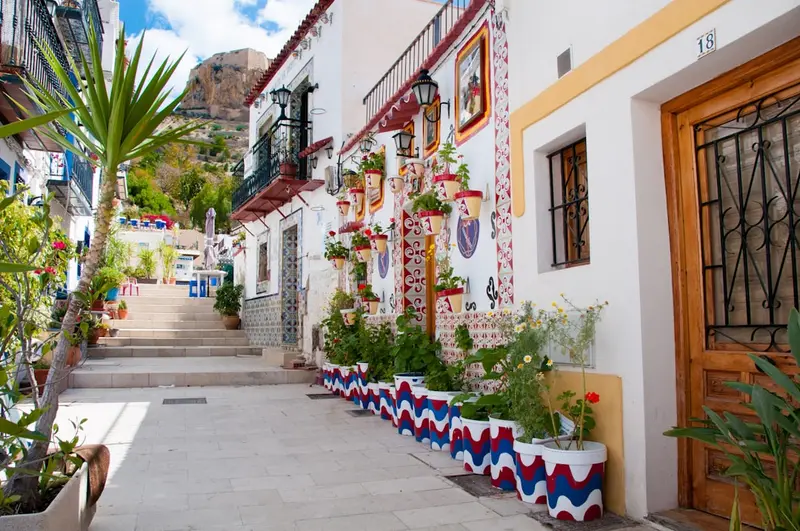
    The coast of Alicante province, known as Costa Blanca, stretches from Dénia in the north to Pilar de la Horadada on the Murcia border. To the north, limestone mountains like Montgó and Penyal d'Ifac drop steeply into the sea, dotted with coves and small ports. South of Alicante, the coast becomes flat, featuring long sandy beaches, salt flats, and dunes.You'll find resorts like Benidorm, old towns such as Altea, Elche's palm grove, and a mountainous interior with villages like Guadalest.
    The Costa Blanca spans over 200 km of coast. The north (Marina Alta, Baixa) is rocky, green, featuring towns Dénia, Jávea, Calp, Altea. Around Benidorm and Alicante, hotels and apartments cluster. South, wetlands and salt lakes (e.g., Santa Pola, Torrevieja) and Guardamar's dunes shape the scenery. The climate is dry, mild; many Northern Europeans spend long periods or retirement here. Inland, a detour is worthwhile to mountain villages like Guadalest and the Fonts de l'Algar waterfalls.
    Alicante

    Place 1 of 4

    Alicante

    Alicante, provincial capital and port city on the Costa Blanca, combines a historic old town with Mediterranean beach life.

    Discover
    Altea

    Place 2 of 4

    Altea

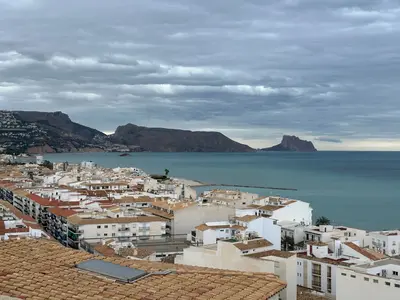
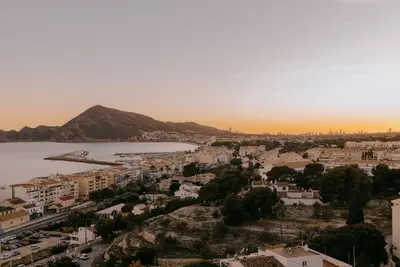
    Altea on the Costa Blanca, situated between Benidorm and Calp, is known for its old town of whitewashed houses on a hill. The Church of Nuestra Señora del Consuelo, with its blue-glazed tile domes, forms the centre of the historic quarter.

    Discover
    Benidorm

    Place 3 of 4

    Benidorm

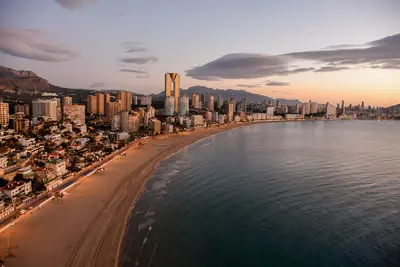
    Benidorm on the Costa Blanca is known for its dense high-rise skyline, which has earned it nicknames like "Manhattan of the Mediterranean.

    Discover
    Dénia

    Place 4 of 4

    Dénia

    Dénia is a port city on the northern Costa Blanca, towered over by a castle and the Montgó massif. From here, ferries go to Ibiza, Formentera, and Mallorca. Since 2015, Dénia belongs to the UNESCO Creative Cities Network for Gastronomy.

    Discover

    More places in Costa Blanca

    Calp (Calpe)

    Calp (Spanish Calpe), between Altea/Benidorm (south) and Xàbia (north). The landmark Penyal d'Ifac, a 332m limestone rock, connected to town by a narrow land strip, is a protected natural park. Also nearby: a salt lagoon (flamingos often seen in summer), two town beaches, a small old town.
    Elche (Elx)

    Elche (Elx)

    Elche, in Valencian Elx, is located approximately 20 kilometres southwest of Alicante, inland. The city is known for its palm grove, boasting around 70,000 date palms alone in the city gardens, which UNESCO declared a World Heritage Site in 2000, and for the 15th-century mystery play Misteri d'Elx.
    Jávea (Xàbia)

    Jávea (Xàbia)

    Xàbia (Jávea) lies between Capes Sant Antoni & La Nau on northern Costa Blanca. It has three parts: Old Town (with fortified church Sant Bertomeu), Duanes de la Mar port, and Arenal beach. Nearby are rock coves, viewpoints, and Montgó Natural Park.

    Sights in Costa Blanca

    Discover the most important sights and attractions

    Castell de Guadalest
    Castle

    Castell de Guadalest

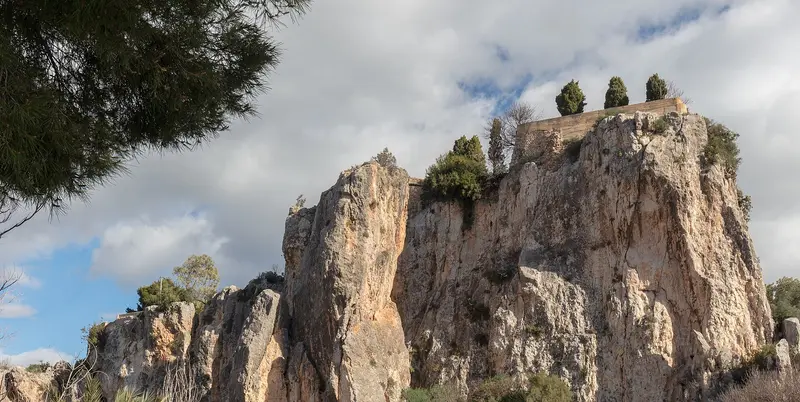
    Castle ruins high above the mountain village of Guadalest in the Marina Baixa. You reach the old town centre through a rock-hewn tunnel, and from above you look out over the valley and the Guadalest Reservoir.
    Open in Google Maps
    Fonts de l'Algar
    Park

    Fonts de l'Algar

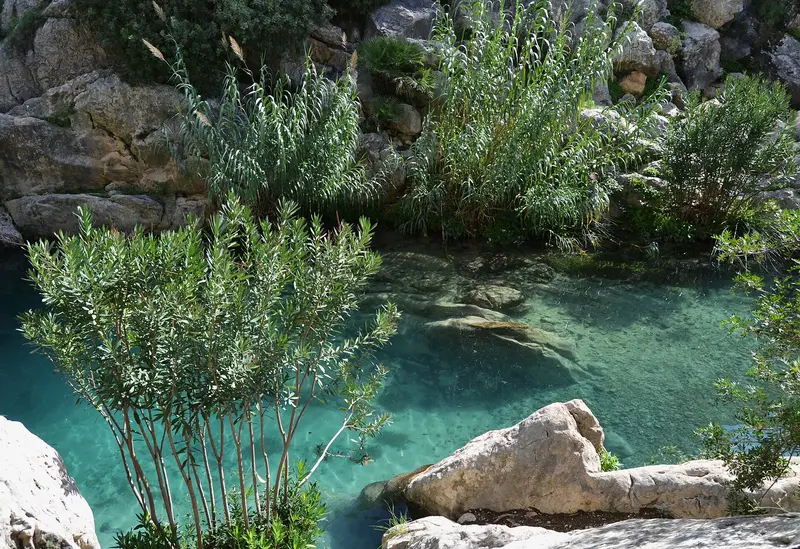
    Cascades and natural pools of the Algar River near Callosa d'en Sarrià. A path approximately 1.5 kilometers long runs along the river, and bathing is permitted in some of the pools. Admission is charged and visitor numbers are limited; in summer and on weekends, it's best to buy tickets in advance.
    Open in Google Maps
    Colorful Houses of La Vila Joiosa
    Attraction

    Colorful Houses of La Vila Joiosa

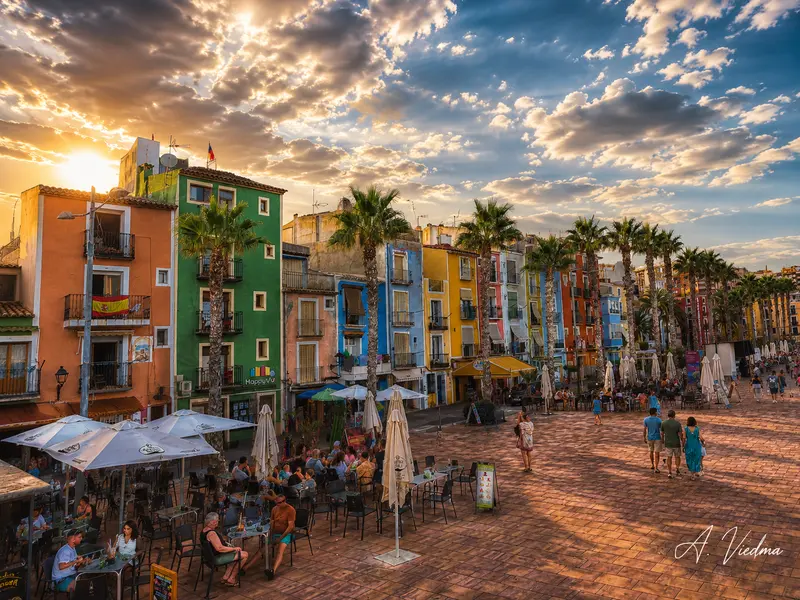
    The colorfully painted houses by the sea are the hallmark of La Vila Joiosa. A common explanation is that fishermen could thus recognize their houses from the water. The historic town center also includes the Gothic fortified church of the Asunción and remnants of a Renaissance city wall, and the town is also known for its chocolate production.
    Open in Google Maps
    Coves del Canelobre
    Historic Landmark

    Coves del Canelobre

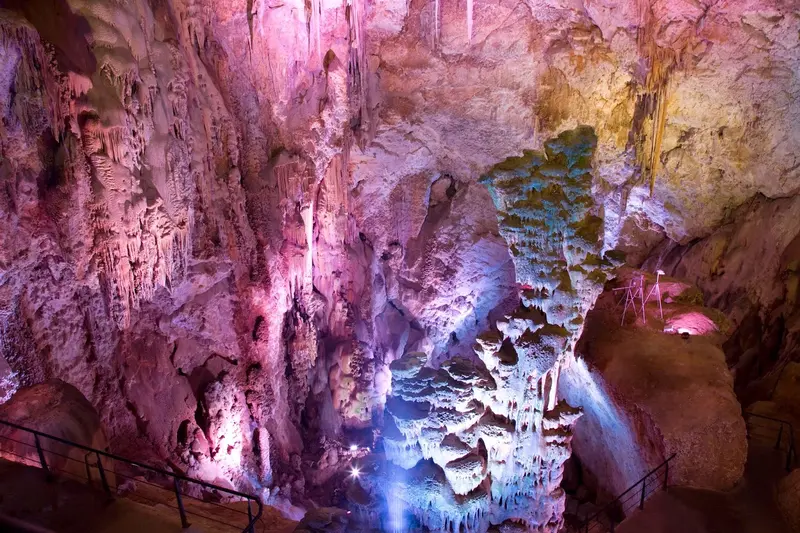
    The stalactite cave near Busot in the Alicante hinterland is renowned for its vast vault, approximately 70 meters high, which strikingly resembles the interior of a cathedral. It is explored during guided tours, and occasionally hosts concerts.
    Open in Google Maps
    Isla de Tabarca
    Attraction

    Isla de Tabarca

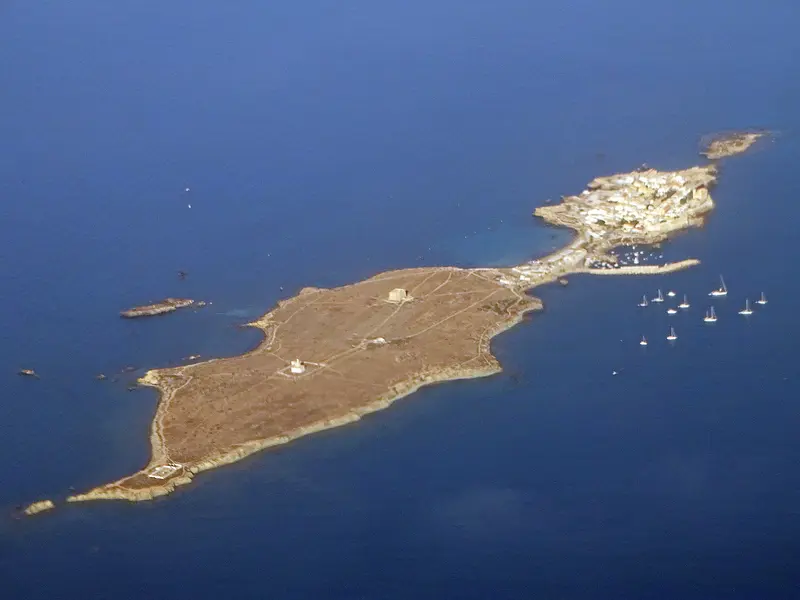
    The small island lies about 15 kilometers off Alicante and 9 kilometers off Santa Pola. Karl III. had it fortified and settled from 1760 with Genoese sailors shipwrecked off Tunisian Tabarka; the walled village dates from then. The island's waters were designated Spain's first marine reserve in 1986; boats cross from Alicante, Santa Pola, and Torrevieja.
    Open in Google Maps

    Essen & Trinken

    1

    CivitaVecchia Pizzería

    Pizzeria in the Old Town of Alicante, near Calle Virgen del Socorro.
    Show on Google Maps
    2

    La Taberna del Gourmet

    Restaurant with Tapas, rice dishes and seafood in the center of Alicante.
    Show on Google Maps
    3

    Nou Manolín

    Traditional restaurant with a tapas bar in the center of Alicante, known for its rice dishes.
    Show on Google Maps
    4

    Nonna Celia

    Italian restaurant on Plaça de San Cristóbal in the center of Alicante.
    Show on Google Maps
    5

    Valencia Once Restaurante

    Restaurant on València Street in the center of Alicante.
    Show on Google Maps

    Food and Drink

    Arroz a banda

    Rice cooked in fish stock; fish and seafood are often served separately. Served with Allioli.

    Arroz con costra

    Rice dish from the Elche region, with sausage and meat, baked with an egg layer to finish.

    Turrón

    Almond nougat from Xixona in the Alicante hinterland, as hard Turrón de Alicante or soft Turrón de Jijona.

    Gamba Roja from Dénia

    Red prawns from the waters off Dénia, usually simply prepared on the plancha.

    Culture & Events

    The Costa Blanca belongs to the Comunitat Valenciana. In addition to Spanish, Valencian is an official language. Town signs therefore often bear two names, such as Jávea and Xàbia or Elche and Elx.FestivalsIn Alicante, during the Hogueras de Sant Joan in June, large figures made of wood and cardboard are erected and burned on the night of June 24th to 25th. Many towns celebrate Moros y Cristianos with parades in historical costumes, the most famous being the festival in Alcoi in the hinterland. In Elche, every year on August 14th and 15th, the 15th-century mystery play Misteri d'Elx is performed, which UNESCO has recognized as intangible cultural heritage since 2001.

    Getting There & Around

    Alicante-Elche Airport is located southwest of Alicante and has direct flights from many German cities. High-speed trains connect Madrid to Alicante.Getting AroundThe TRAM d'Alacant tram connects Alicante with El Campello and Benidorm; Line 9 continues via Altea and Calp to Dénia. Buses connect the larger towns. A rental car is practical for the hinterland and secluded coves. The AP-7 coastal motorway has been toll-free in the Alicante–Valencia section since 2020.

    Round trips through this region

    Valencia & Costa Blanca

    Valencia & Costa Blanca

    The route runs from Valencia, with the Albufera Natural Park just outside the city, to Dénia at the foot of Montgó, and on to Altea with its white old town. Each leg takes about an hour. Between Dénia and Altea lie quiet rocky coves near Jávea and Moraira.

    8 Days
    3 stops

    Nearby

    Alicante

    Alicante

    Alicante, provincial capital and port city on the Costa Blanca, combines a historic old town with Mediterranean beach life. The Castillo de Santa Bárbara on the 167-metre Benacantil offers you wide views over the bay; you can reach the fortress, which is of Moorish origin, on foot or by lift. Stroll along the Explanada de España, a palm-lined promenade at the harbour with a marble mosaic in a wave pattern. Discover the Santa Cruz quarter in the old town with its narrow alleys. You will find culinary experiences in the tapas bars of the old town. It is best to visit the castle early in the morning or in the late afternoon to avoid the midday heat.
    Elche (Elx)

    Elche (Elx)

    Elche, in Valencian Elx, is located approximately 20 kilometres southwest of Alicante, inland. The city is known for its palm grove, boasting around 70,000 date palms alone in the city gardens, which UNESCO declared a World Heritage Site in 2000, and for the 15th-century mystery play Misteri d'Elx.
    Benidorm

    Benidorm

    Benidorm on the Costa Blanca is known for its dense high-rise skyline, which has earned it nicknames like "Manhattan of the Mediterranean." Originally a tuna-fishing village, the city transformed into a tourist hub from the 1950s, thanks to a 1956 development plan. Here you will find extensive sandy beaches like the bustling Playa de Levante and the quieter Playa de Poniente for sunbathing and swimming. The historic Casco Antiguo, with its narrow streets and the Church of San Jaime y Santa Ana, offers a contrast to the high-rises. From the Balcón del Mediterráneo, you can enjoy panoramic views over the coast. A practical tip: Visit the tapas bars in the old town. For a quieter atmosphere, a visit outside the summer months is recommended.
    Altea

    Altea

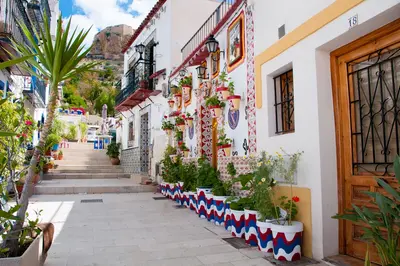
    Altea on the Costa Blanca, situated between Benidorm and Calp, is known for its old town of whitewashed houses on a hill. The Church of Nuestra Señora del Consuelo, with its blue-glazed tile domes, forms the centre of the historic quarter. Strolling through the narrow, cobbled streets, you'll pass artists' and artisans' studios as well as small cafés. Altea has long attracted painters, writers, and musicians, which shapes the character of the town. From the old town's viewpoints, you can gaze over the bay and the Mediterranean Sea. To experience Altea's tranquility, it's best to visit the town in the off-season. Also explore the beach promenade, which offers a beautiful contrast to the historic core.

    Calp (Calpe)

    Calp (Spanish Calpe), between Altea/Benidorm (south) and Xàbia (north). The landmark Penyal d'Ifac, a 332m limestone rock, connected to town by a narrow land strip, is a protected natural park. Also nearby: a salt lagoon (flamingos often seen in summer), two town beaches, a small old town.

    Sources & method

    • Photos: Wikimedia Commons, Unsplash, Google Maps. Each photo carries its credit.
    • Place data such as addresses and ratings comes from Google Maps.
    • The content is based on web research from public, traceable sources. How the content is made · The role of AI