Fernweh: Home
    ExploreTravel GuidesPlan a tripMy tripLast visited
    de|en
    All Places & RegionsAll highlightsAbout FernwehFAQPrivacy PolicyImprint
    ExploreTravel GuidesPlan a tripMy tripLast visited
    • Neighborhoods & highlights
    • Eat & drink
    • Food culture
    • Culture
    • Getting around
    • Accommodation
    • Plan trip
    • Nearby
    Segovia

    Spain

    Segovia

    CityCulture

    Segovia lies some 90 kilometers northwest of Madrid on a rocky ridge above two rivers. Its Roman Aqueduct, Late Gothic Cathedral, and the Alcázar perched on its rocky peak define the Old Town, a UNESCO World Heritage site.

    by Felix Gillen

    1. Home
    2. Destinations
    3. Spain
    4. Castile and León
    5. Segovia
    Segovia lies some 90 kilometers northwest of Madrid on a rocky ridge above two rivers. Its Roman Aqueduct, Late Gothic Cathedral, and the Alcázar perched on its rocky peak define the Old Town, a UNESCO World Heritage site.

    Sights in Segovia

    Discover the most important sights and attractions

    Aquädukt von Segovia

    1Aquädukt von Segovia

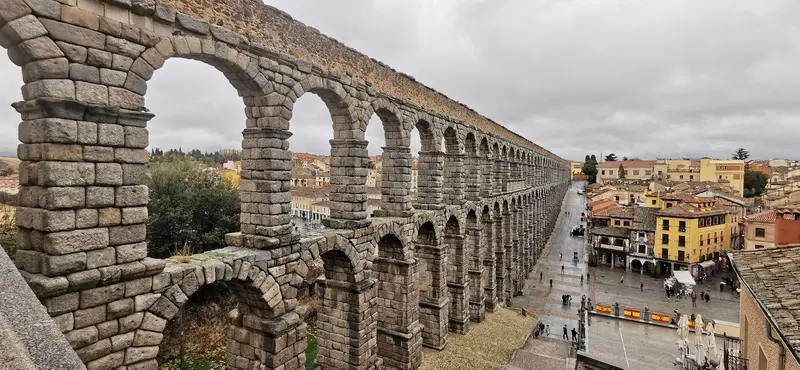
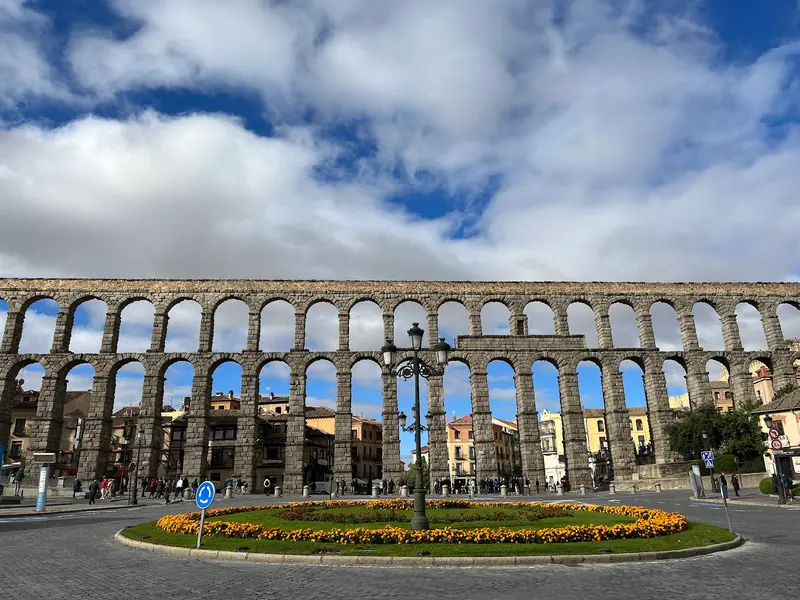
    The Roman aqueduct, from around 100 AD, crosses the Plaza del Azoguejo with 167 arches on two levels, around 28 meters high at its highest point. The granite blocks hold without mortar. From the stairs next to the aqueduct, you get a great view from above.
    Open in Google Maps
    Santuario de Nuestra Señora de la Fuencisla

    2Santuario de Nuestra Señora de la Fuencisla

    Pilgrimage church of Segovia's patron saint at the foot of the cliff below the Alcázar. From the path there along the Eresma, you look up at the castle.
    Open in Google Maps
    Old Town and Plaza Mayor

    3Old Town and Plaza Mayor

    Calle Real leads from the aqueduct through the Old Town (noble palaces, Romanesque churches) to Plaza Mayor (Town Hall, bandstand, cathedral). North of it is the former Jewish Quarter.
    Open in Google Maps
    Alcázar von Segovia

    4Alcázar von Segovia

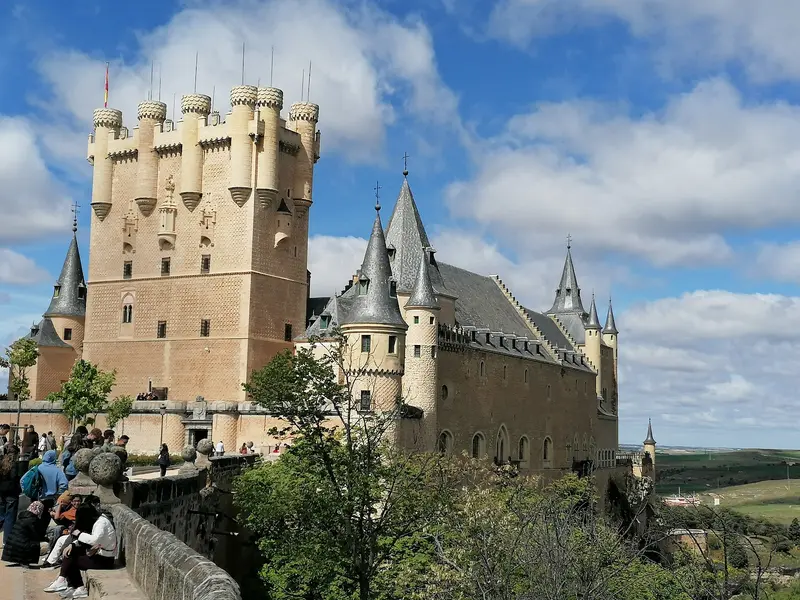
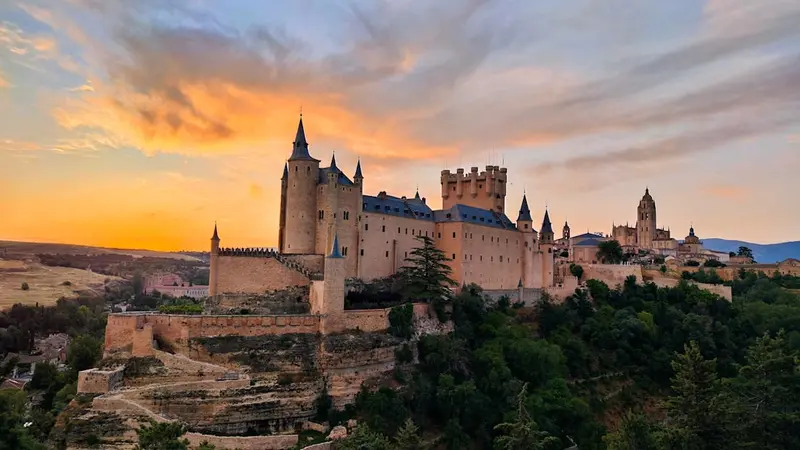
    The castle on the rock spur above the Eresma-Clamores confluence was home to Castilian kings. After a fire in 1862, it was rebuilt with pointed slate towers. Mudéjar-ceilinged halls, an arms museum, and the Juan II Tower with landscape views are open to visitors.
    Open in Google Maps
    Kathedrale von Segovia

    5Kathedrale von Segovia

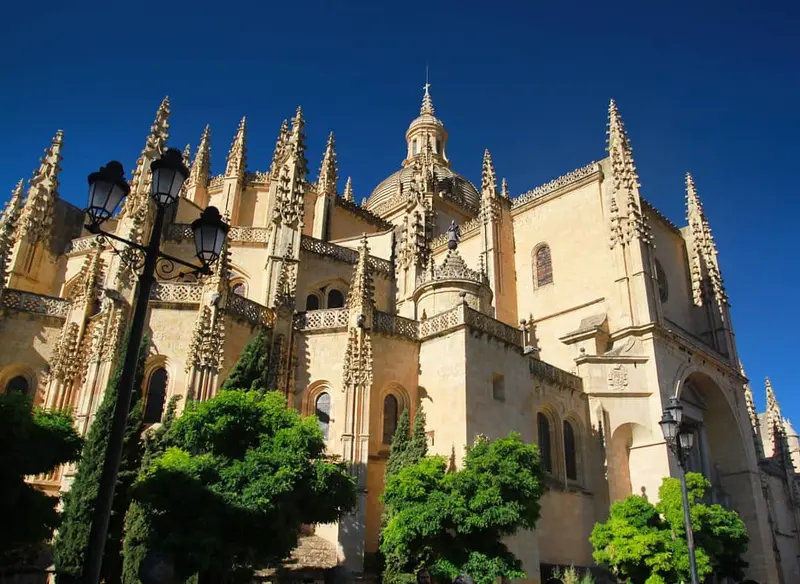
    The Cathedral on Plaza Mayor was built from 1525 and is considered one of Spain's last Gothic cathedrals. Tall pillars, 16th-century stained-glass windows, and a cloister define the interior; the tower can be climbed during guided tours.
    Open in Google Maps

    Essen & Trinken

    1

    Jose Maria's Restaurant

    Deftige, traditionelle Küche aus Segovia in einem alteingesessenen Restaurant mit Fliesenboden und Holzbalken.
    Show on Google Maps
    2

    El Sitio

    Restaurant in C. de la Infanta Isabel.
    Show on Google Maps
    3

    Restaurante Mesón de Cándido

    Traditional restaurant directly at the Aqueduct, known for Cochinillo asado.
    Show on Google Maps
    4

    Restaurante El Bernardino

    Restaurant in C. Cervantes.
    Show on Google Maps

    Food and Drink

    Roast suckling pig

    Wood-fired roasted suckling pig, traditionally carved with the edge of a plate to demonstrate its tenderness.

    Judiones de La Granja

    Large white beans from the neighboring town of La Granja, as a hearty stew with chorizo and bacon.

    Ponche segoviano

    Marzipan-covered and caramelized sponge cake, a specialty of the city's patisseries.

    Culture

    Roman Heritage and Royal CityThe aqueduct was built around the year 100 and supplied water to the city until the 20th century. Its granite blocks are stacked without mortar. In the Middle Ages, Segovia was a prosperous wool city and a favoured residence of the Castilian kings: in 1474, Isabella the Catholic was proclaimed queen here. The Alcázar burned down in 1862 and was then rebuilt in the Romantic style.Numerous Romanesque churches with open porticoes stand in the old town, such as San Millán and San Martín.

    Exploring Locally

    The high-speed train travels from Madrid-Chamartín in about half an hour to Segovia-Guiomar station, about five kilometers outside the city. From there, city buses run to the Aqueduct. Buses from Madrid stop closer to the center. You can explore the old town on foot; parking garages are located on the outskirts. By bus or car, you can reach the Palace of La Granja de San Ildefonso in the mountains.

    Accommodations in Segovia

    Find perfect stay in Segovia

    Booking.com* (Affiliate link)
    Search Hotels
    Agoda* (Affiliate link)
    Search Hotels
    Airbnb
    Vacation Rentals

    * Affiliate link: if you book through it, we earn a small commission. The price stays the same for you.

    Campgrounds in Segovia

    Find perfect campground in Segovia

    Search via Google Maps
    Campgrounds nearby (15km)
    Camping.info
    Find Campgrounds
    Park4Night
    RV Parks & Camping

    Plan your trip to Segovia

    Save places, build a route and plan your city trip, all in one place.

    1. 1
      Sunrise over alpine peaks and a sea of clouds
      1234

      Round trip

      12 days · 4 stops

      Saved

      Pick a route

      Pick a ready-made one or save places and plan your own.

      Open bookmarks
    2. 2

      Trip to Segovia

      Live
      • 1Aquädukt von Segovia3 days
      • 2Santuario de Nuestra Señora de la Fuencisla4 days
      • 3Old Town and Plaza Mayor5 days
      Budget

      Plan your trip

      The planner sorts stops, days and budget. Plan together in real time.

      Start trip planning
    3. 3
      9:41 No signal
      Segovia
      Available offline

      Use it on the road

      Download the guide to your phone and use it on site, even offline.

    Nearby

    San Lorenzo de El Escorial

    San Lorenzo de El Escorial

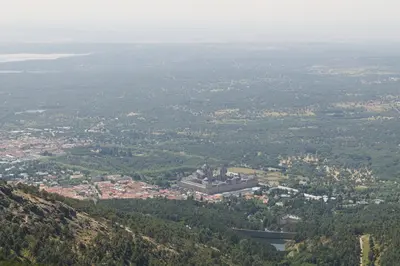
    San Lorenzo de El Escorial lies about 50 kilometres northwest of Madrid at the foot of the Sierra de Guadarrama. The town is defined by the monastery of El Escorial, which Philip II had built in the 16th century as a palace, monastery and royal burial place, and which is a UNESCO World Heritage Site.
    Ávila

    Ávila

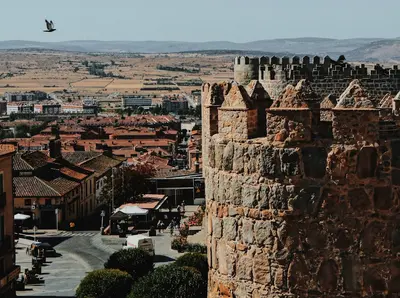
    Ávila, at over 1,100 metres above sea level, is one of Spain's highest provincial capitals. The old town is completely enclosed by a Romanesque wall with 87 towers. As the birthplace of Saint Teresa, Ávila is also a pilgrimage destination, and its old town is a UNESCO World Heritage site.
    Barrio de Salamanca

    Barrio de Salamanca

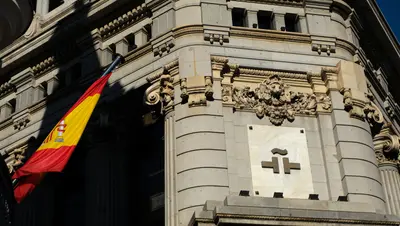
    The Barrio de Salamanca is Madrid's elegant residential and shopping district north of the Retiro. Wide, right-angled streets with late 19th-century apartment buildings, luxury boutiques on Calle de Serrano and several museums shape the district.
    Madrid Region

    Madrid Region

    The Madrid region is located in the center of the Iberian Peninsula, at an elevation of around 650 meters. In addition to the capital, it includes the royal sites of El Escorial and Aranjuez, the university city of Alcalá de Henares, and the Sierra de Guadarrama mountains in the north.
    Madrid

    Madrid

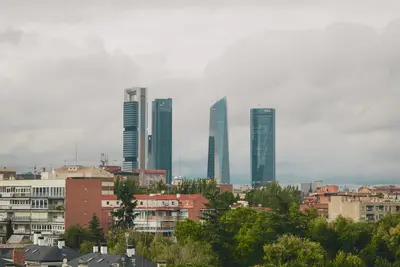
    Madrid is the capital of Spain and its largest city, home to some 3.4 million inhabitants. Prado, Thyssen-Bornemisza, and Reina Sofía form one of Europe's densest museum districts, also home to the Royal Palace, Plaza Mayor, Retiro Park, and a nightlife that starts late.

    Sources & method

    • Photos: Unsplash, Google Maps. Each photo carries its credit.
    • The content is based on web research from public, traceable sources. How the content is made · The role of AI