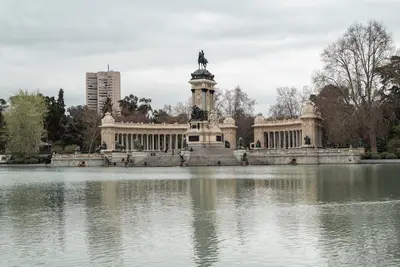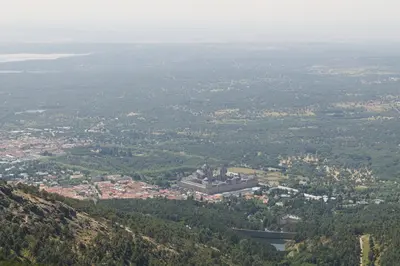
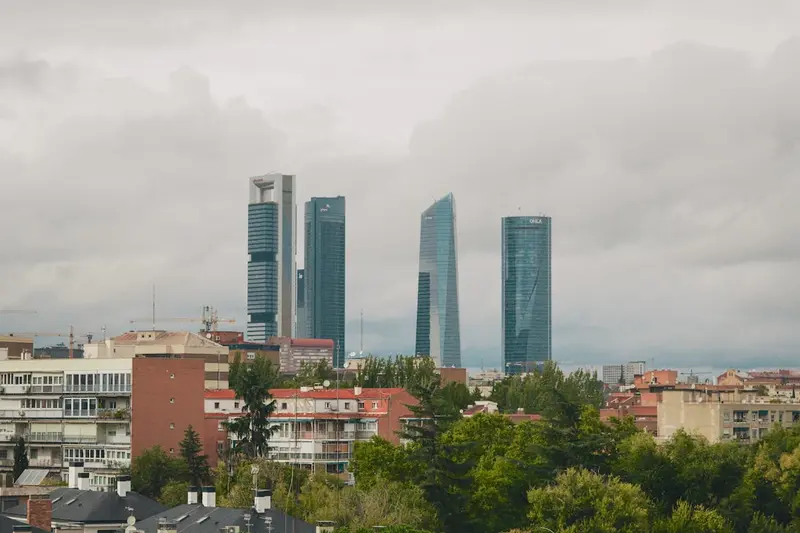
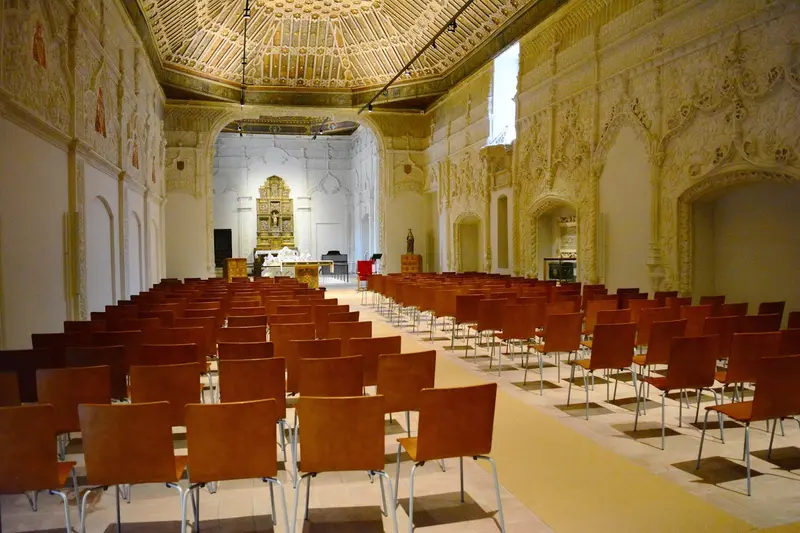
The Madrid region is located in the center of the Iberian Peninsula, at an elevation of around 650 meters. In addition to the capital, it includes the royal sites of El Escorial and Aranjuez, the university city of Alcalá de Henares, and the Sierra de Guadarrama mountains in the north.
With nearly seven million inhabitants, the Comunidad de Madrid is Spain's most populous region despite its relatively small size. To the north, the Sierra de Guadarrama rises over 2,400 meters; in the south, the landscape gives way to the Tajo plains. Three places outside the capital are UNESCO World Heritage sites: the Monastery of El Escorial, the Cultural Landscape of Aranjuez, and the Old Town of Alcalá de Henares. All are reachable from Madrid by local trains in under an hour, as are Toledo and Segovia in the neighboring regions.
Place 1 of 3
Aranjuez
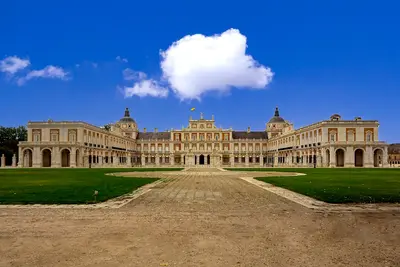
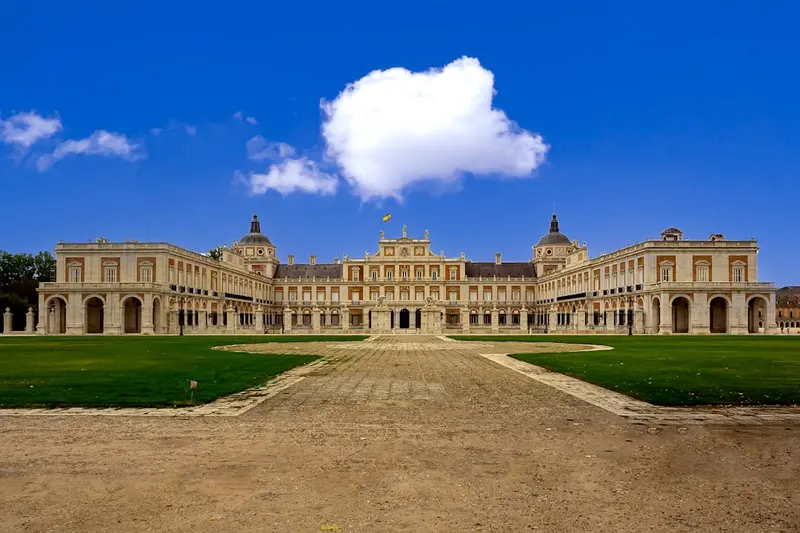
Aranjuez is located about 50 kilometers south of Madrid on the Tajo. Spanish kings spent spring here for centuries; the Royal Palace, extensive gardens, and the pleasure palace Casa del Labrador date from this era.
Discover the most important sights and attractions
Church
Old Town and University of Alcalá de Henares
About 30 kilometers east of Madrid lies the birthplace of Miguel de Cervantes. The university founded in 1499 with its Renaissance college San Ildefonso and the Old Town are UNESCO World Heritage. From Atocha station, take the Cercanías train for about 40 minutes.
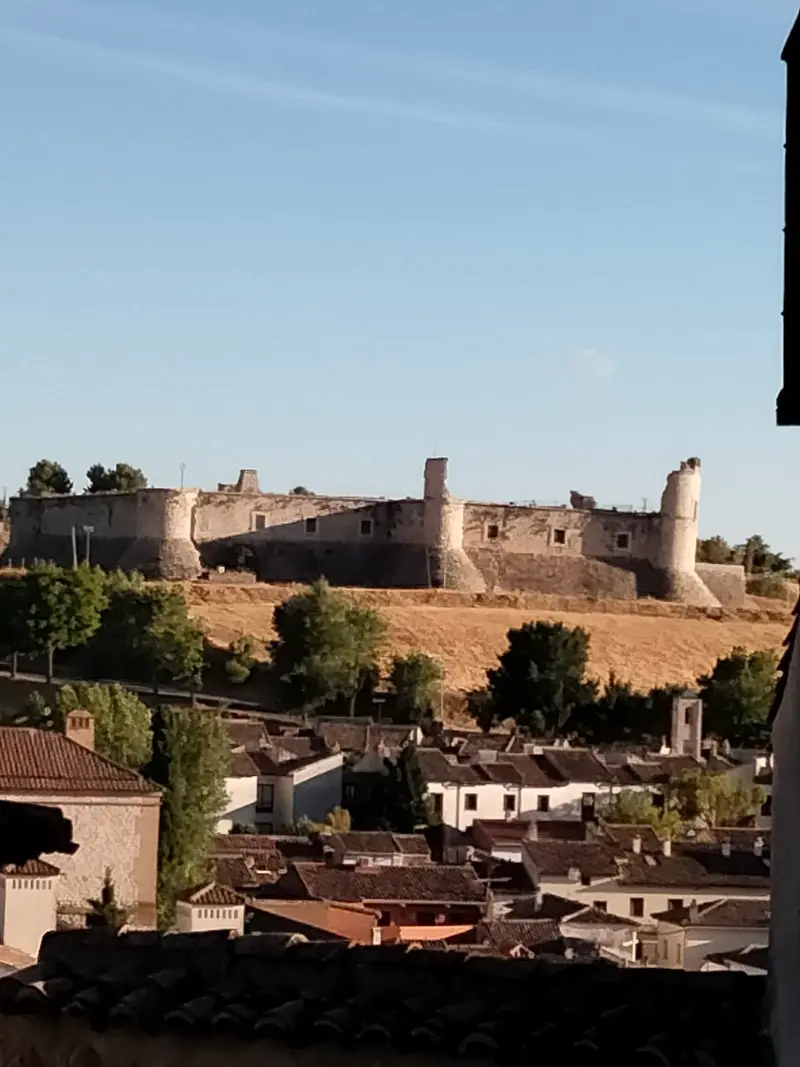
The irregular main square of the village of Chinchón, southeast of Madrid, is surrounded by houses with wooden galleries. It still hosts festivals and bullfights today, with restaurants and bars lining its sides.
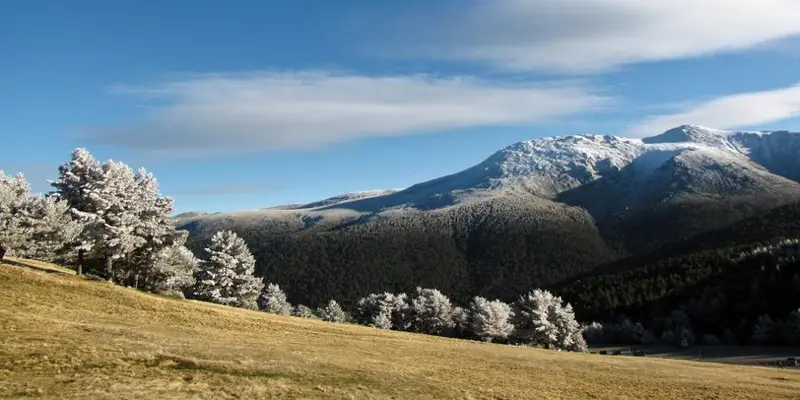
The mountain range north of Madrid reaches 2,428 meters at Peñalara and has been a National Park since 2013. Pine forests, granite outcrops, and mountain lakes make it the most popular hiking area for Madrid residents, with trailheads in places like Cercedilla, Rascafría, or the Navacerrada Pass.
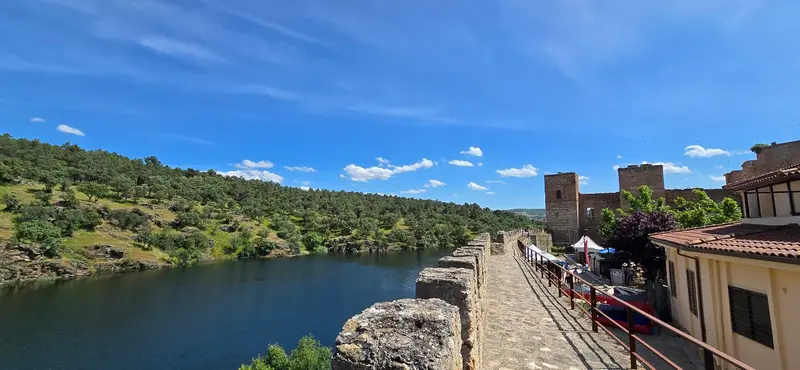
Buitrago del Lozoya, in northern Madrid Region, is enclosed by the region's best-preserved city wall – the only one fully intact. Of Muslim origin, it was likely built between the 9th and 11th centuries to secure the route to the Somosierra Pass. A National Monument since 1931, a section is freely accessible.
The Tajo's vegetable gardens yield strawberries and green asparagus in spring.
Chinchón's Anise
The Chinchón anise spirit has been distilled in the town for centuries.
Wines from Madrid
The DO Vinos de Madrid includes vineyards in the south and west of the region, primarily with Garnacha and Tempranillo.
Culture
Court and CapitalSince Philip II moved the court to Madrid in 1561, the region has been politically and culturally shaped by the royal house. He had the Monastery of El Escorial built, and his successors expanded the summer residence in Aranjuez. Alcalá de Henares, birthplace of Miguel de Cervantes, was a center of learning with its university.
Exploring on-site
The Cercanías train network connects Madrid with El Escorial, Aranjuez, Alcalá and places in the Sierra. Buses go to Chinchón and Manzanares el Real. With the Metro tourist ticket, you can also travel in the region if you choose the appropriate zone. For hiking in the Sierra, a rental car is more flexible.