The route leads through the historical heart of Spain, where it's noticeably less crowded than on the coasts. From Madrid, the journey takes you via Segovia and Ávila to Salamanca and Burgos; from there, it's about two and a half hours back to Madrid. The legs are short and driven on well-maintained motorways.
9 Days / 8 Nights
April–June & September–October
RV Friendly
5 stops
Why This Route?
For history enthusiasts who want to see a Roman aqueduct, medieval city walls, a university town, and a Gothic cathedral on a round trip.
Hidden Gems
Mirador de los Cuatro Postes near Ávila, with views of the entire city wall
Cielo de Salamanca in the Escuelas Menores, a 15th-century ceiling painting depicting constellations
Cartuja de Miraflores on the outskirts of Burgos, a Carthusian monastery with Gothic tombs
Itinerary
Stop 1 • 2 Nights
Madrid
City
Perfect for an exciting city trip. Rich in culture and history and Culinary highlights.
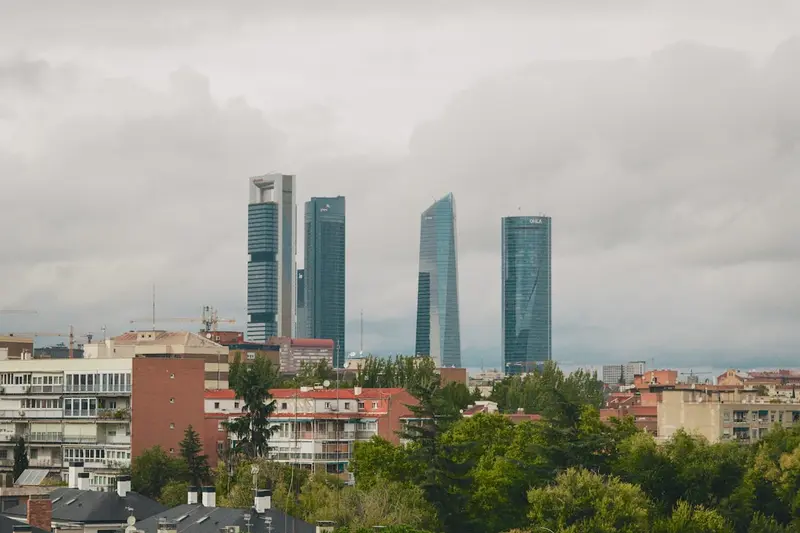
Madrid is the capital of Spain and its largest city, home to some 3.4 million inhabitants. Prado, Thyssen-Bornemisza, and Reina Sofía form one of Europe's densest museum districts, also home to the Royal Palace, Plaza Mayor, Retiro Park, and a nightlife that starts late.
Start and arrival: Madrid-Barajas Airport, pick up your rental car
8 Sights
2 Restaurants
Spirit
Capital Since 1561Philip II made Madrid the royal seat in 1561, transforming it from a small town into the capital of a world empire. The Hapsburgs had the Plaza Mayor built, and in the 18th century, the Bourbons added the Royal Palace and the Paseo del Prado. The Prado displays masterpieces by Velázquez, Goya, and El Greco, the Reina Sofía features Picasso’s “Guernica”, and the Thyssen-Bornemisza bridges the gap to modernity.Life on the StreetsCity life unfolds outdoors: in the tapas bars of Cava Baja, at the El Rastro flea market on Sunday mornings, and on the terraces of Malasaña. In May, Madrid celebrates its patron saint San Isidro with concerts and festivities in traditional attire. Flamenco is performed in tablaos like Corral de la Morería.
Rich in culture and history. Perfect for an exciting city trip.
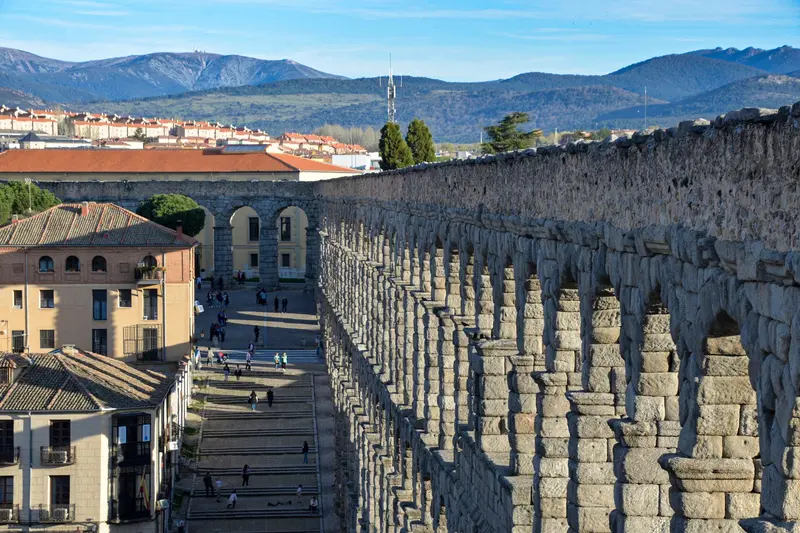
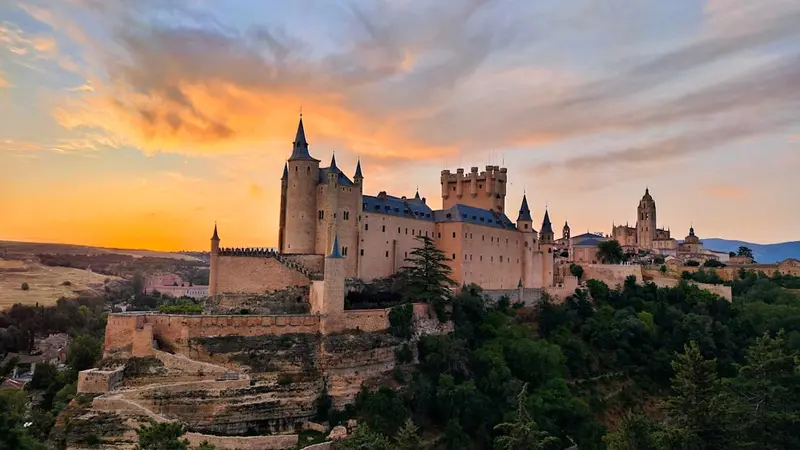
Segovia lies some 90 kilometers northwest of Madrid on a rocky ridge above two rivers. Its Roman Aqueduct, Late Gothic Cathedral, and the Alcázar perched on its rocky peak define the Old Town, a UNESCO World Heritage site.
5 Sights
4 Restaurants
Culture
Roman Heritage and Royal CityThe aqueduct was built around the year 100 and supplied water to the city until the 20th century. Its granite blocks are stacked without mortar. In the Middle Ages, Segovia was a prosperous wool city and a favoured residence of the Castilian kings: in 1474, Isabella the Catholic was proclaimed queen here. The Alcázar burned down in 1862 and was then rebuilt in the Romantic style.Numerous Romanesque churches with open porticoes stand in the old town, such as San Millán and San Martín.
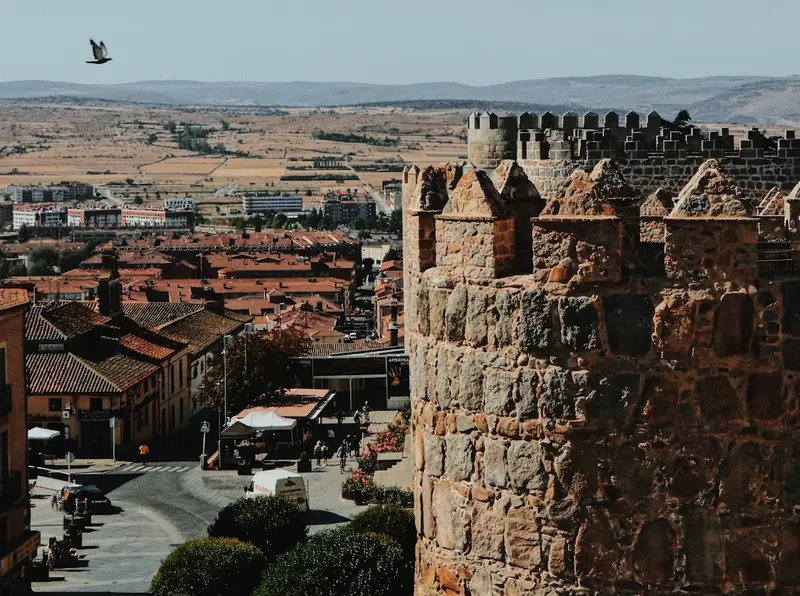
Ávila, at over 1,100 metres above sea level, is one of Spain's highest provincial capitals. The old town is completely enclosed by a Romanesque wall with 87 towers. As the birthplace of Saint Teresa, Ávila is also a pilgrimage destination, and its old town is a UNESCO World Heritage site.
5 Sights
3 Restaurants
Culture
Walls and MysticismAfter its reconquest, Ávila was developed as a border fortress from the late 11th century, and the city wall dates from this period. The apse of the cathedral is integrated into the wall as a defensive tower. In 1515, Teresa of Ávila was born here; she reformed the Carmelite Order and, as a mystic, was elevated to Doctor of the Church. Her birthplace now houses a convent with a museum.In the Monastery of Santo Tomás lies the tomb of Infante Juan, the only son of the Catholic Monarchs.
Rich in culture and history. Perfect for an exciting city trip and Route highlight.
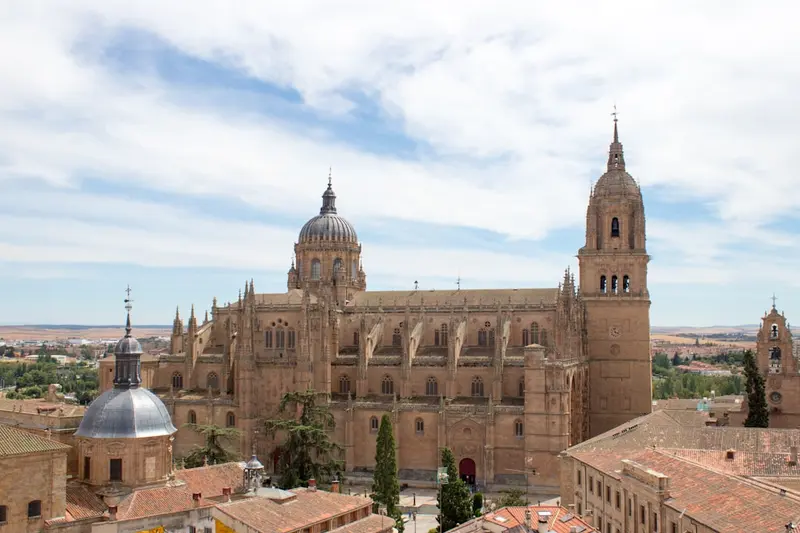
Salamanca is one of Europe's oldest university cities. The Old Town of golden-yellow sandstone, with the baroque Plaza Mayor, two cathedrals, and the university founded in 1218, is a UNESCO World Heritage site. Tens of thousands of students create a vibrant city life.
8 Sights
4 Restaurants
Spirit
University and Golden AgeAlfons IX. of León founded the University in 1218, where scholars like Fray Luis de León and Miguel de Unamuno later taught. Its Plateresque facade is covered in stonework; visitors traditionally look for the frog on a skull. The New Cathedral was built next to the Romanesque Old Cathedral starting in 1513, and restorers added an astronaut to its portal in 1992.The Plaza Mayor was built in the 18th century and is considered one of the finest examples of Spanish Baroque architecture. The Casa de las Conchas, dating from the late 15th century, is adorned with over 300 stone shells.
Rich in culture and history. Perfect for an exciting city trip.
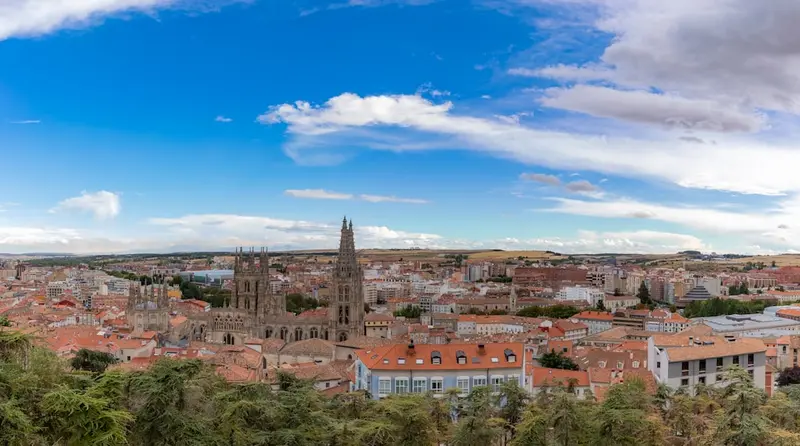
Burgos was the capital of Castile in the Middle Ages and is today a major stop on the Camino de Santiago. Its Gothic Cathedral is a UNESCO World Heritage site, along with the monasteries of Las Huelgas and Miraflores, and the Museum of Human Evolution.
5 Sights
5 Restaurants
Spirit
Castile's Old CapitalBurgos was founded in the 9th century and for centuries was the residence of the Castilian kings and a center of the wool trade. Construction of the cathedral began in 1221; it is the burial place of El Cid, who hailed from nearby Vivar. The Cistercian Abbey of Las Huelgas, founded in 1187, served as the royal burial site, while the Miraflores Charterhouse houses the tombs created by Gil de Siloé for the parents of Isabella the Catholic.Approximately 15 kilometers to the east are the Atapuerca archaeological sites, featuring some of Europe's oldest human traces. The findings are displayed at the Museum of Human Evolution in the city.