
Fernweh: Home
    ExploreTravel GuidesPlan a tripMy tripLast visited
    de|en
    All Places & RegionsAll highlightsAbout FernwehFAQPrivacy PolicyImprint
    ExploreTravel GuidesPlan a tripMy tripLast visited
    • Overview
    • Places in the region
    • Eat & drink
    • Culture
    • Round trips
    • Nearby
    Aragon

    Spain

    Aragon

    Region

    Aragón, a historic autonomous community in northeastern Spain, combines Pyrenean landscapes, UNESCO World Heritage Mudéjar architecture, and a vibrant capital.

    by Felix Gillen

    1. Home
    2. Destinations
    3. Spain
    4. Aragon
    Aragón, a historic autonomous community in northeastern Spain, combines Pyrenean landscapes, UNESCO World Heritage Mudéjar architecture, and a vibrant capital. Here you'll discover a region full of history, culture, and nature, that appeals to outdoor enthusiasts as much as to culture lovers.
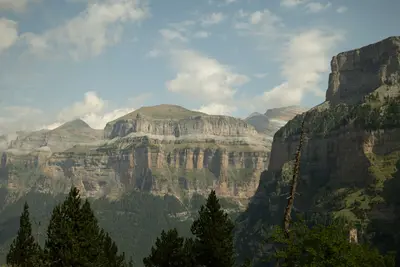
    Aragon, an autonomous community in northeastern Spain, offers a remarkable diversity of landscapes and cultures. Here you'll find unique Mudéjar architecture, a UNESCO World Heritage site, particularly impressive in the capital Zaragoza, with its Aljafería Palace and La Seo Cathedral. To the north, the majestic Pyrenees stretch out, home to national parks like Ordesa y Monte Perdido, ideal for hiking and nature observation. Zaragoza itself entices with the imposing Basílica del Pilar and vibrant city life. For a relaxed exploration of the mountains, the off-season in spring or autumn is recommended, when temperatures are milder and fewer visitors are around. Experience cultural depth off the main routes in smaller towns like Albarracín, considered one of Spain's most beautiful villages.
    Huesca

    Place 1 of 4

    Huesca

    Huesca, the capital of the eponymous province in Aragon, lies at the foot of the Pyrenees and is often underestimated. The city combines **centuries-old history, culture, and proximity to the mountains**.

    Discover
    Aínsa

    Place 2 of 4

    Aínsa

    Discover Aínsa, a breathtaking medieval fortress majestically perched on a hill in the heart of the Spanish Pyrenees.

    Discover
    Teruel

    Place 3 of 4

    Teruel

    Teruel is known for its Mudéjar architecture, a UNESCO World Heritage site, and for the tragic legend of the Lovers of Teruel. The city combines history and romance in a compact space.

    Discover
    Zaragoza

    Place 4 of 4

    Zaragoza

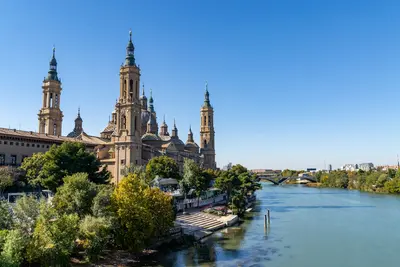
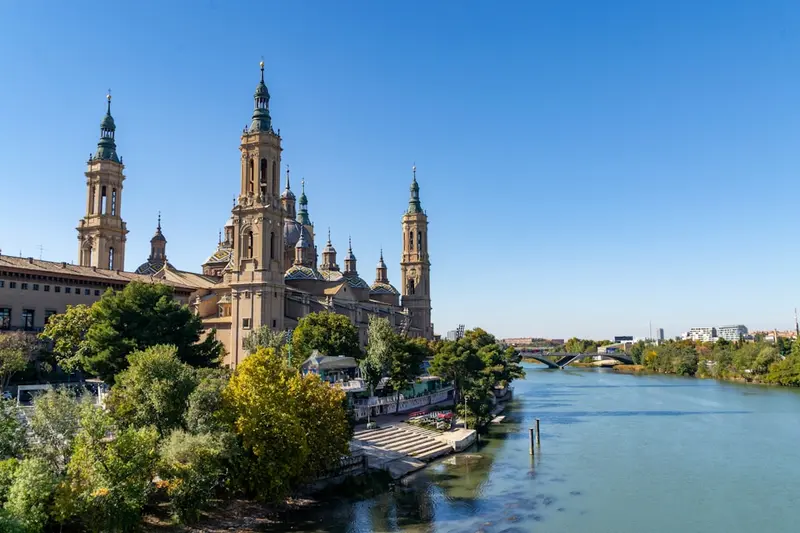
    Aragon's vibrant capital is home to the Basílica de Nuestra Señora del Pilar and the Aljafería Palace, a masterpiece of Islamic architecture in Spain.

    Discover

    Sights in Aragon

    Discover the most important sights and attractions

    Albarracín
    Attraction

    Albarracín

    The mountain town in the province of Teruel is situated on a rock almost entirely encircled by the Río Guadalaviar. Steep alleys with houses of stone, clay, and half-timbering lead to the El Salvador Cathedral and up to the 14th-century city wall. In the surroundings are rock shelters with prehistoric paintings.
    Open in Google Maps
    Monasterio de Piedra
    Attraction

    Monasterio de Piedra

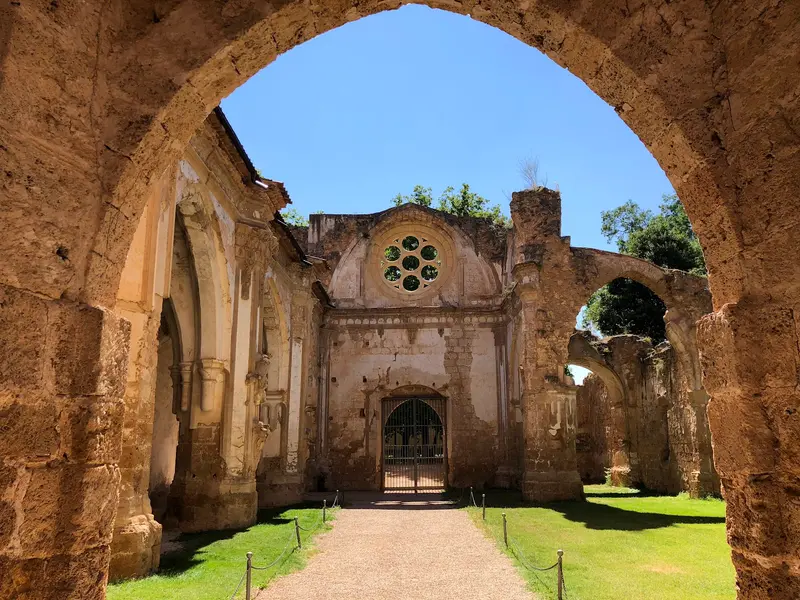
    Cistercian monks from Poblet founded the monastery in 1194 on the Río Piedra near Nuévalos. In the adjacent park, marked paths of about 5 km lead past grottoes and waterfalls; the highest is the over 50 m high Cola de Caballo. It is said that chocolate was first prepared at the monastery in Europe in 1534.
    Open in Google Maps
    Castillo de Loarre
    Castle

    Castillo de Loarre

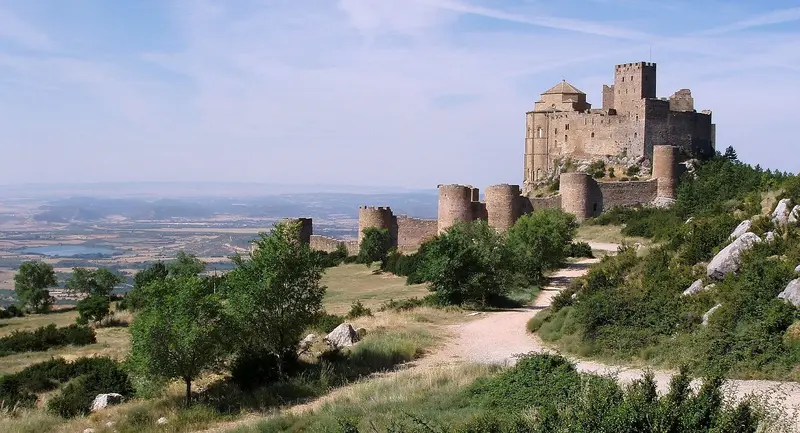
    Sancho III of Pamplona had the castle built from 1033 on the edge of the Pyrenees above the Hoya de Huesca; under Sancho Ramírez, a monastery was added. It is considered Europe's best-preserved Romanesque fortress. The Church of San Pedro with its 26 m high dome is worth seeing; Ridley Scott filmed scenes here for Kingdom of Heaven.
    Open in Google Maps
    Mallos de Riglos
    Park

    Mallos de Riglos

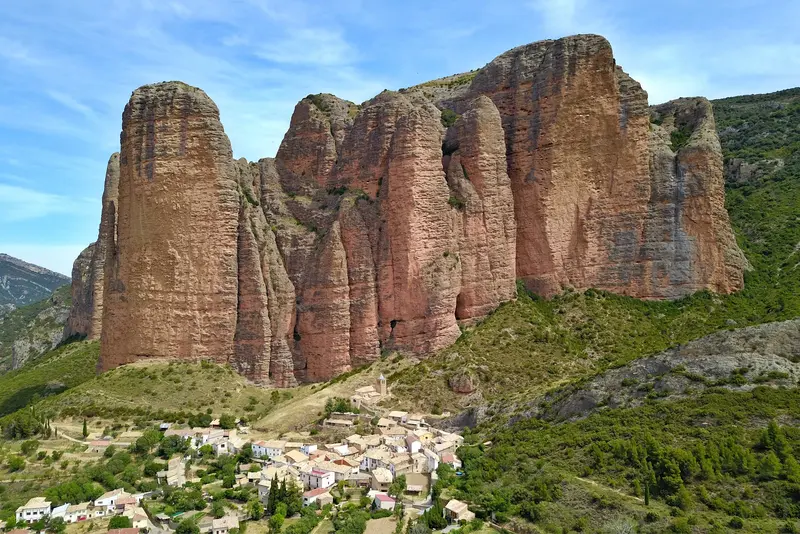
    Roughly 45 km northwest of Huesca, reddish conglomerate rock towers rise up to 275 m vertically above the village of Riglos. The largest, Pisón and Firé, feature walls that are among Spain's most renowned climbing areas. To its east, vultures nest on the Paredón de los Buitres.
    Open in Google Maps

    Essen & Trinken

    Baobab Restaurant

    Restaurant in C. del Arzobispo Apaolaza.
    Show on Google Maps

    Nueva Karambola

    Restaurant in C. de Baltasar Gracián.
    Show on Google Maps

    Churrería La Fama

    Restaurant in C. de Prudencio.
    Show on Google Maps
    1

    Restaurante La Rinconada de Lorenzo

    Restaurant in C. de la Salle.
    Show on Google Maps

    Restaurante Casa Lac

    Restaurant in C. de los Mártires.
    Show on Google Maps

    Aragón: A Rich Cultural Heritage

    Aragón, a region in northeastern Spain with deep historical roots, boasts a rich cultural and artistic heritage. Its settlement history ranges from the Iberians and Romans to the Visigoths and the formative Moorish era. After the Reconquista, the powerful Kingdom of Aragón was established, playing a significant role on the Iberian Peninsula and in the Mediterranean for centuries.A standout feature is its Mudéjar architecture, a unique fusion of Islamic and Christian building styles that reached its zenith in Aragón. Examples such as the Palacio de la Aljafería in Zaragoza and the Mudéjar Towers of Teruel are UNESCO World Heritage Sites, bearing testament to this era.Culturally, the Jota Aragonesa, a lively dance and song, is deeply embedded in the regional identity. The region is also the birthplace of the renowned painter Francisco de Goya y Lucientes, whose work, inspired by Aragón's landscapes and people, profoundly shaped art history. These elements establish Aragón as a place of immense cultural and historical importance.

    Round trips through this region

    Aragon & Pre-Pyrenees

    Aragon & Pre-Pyrenees

    The route leads from Zaragoza, with its Basílica del Pilar, into the Pyrenees to Aínsa, a medieval town at the confluence of the Cinca and Ara, and back via Huesca. From Aínsa, you reach the Ordesa y Monte Perdido National Park in about an hour. No leg of the journey takes longer than two hours.

    6 Days
    3 stops

    Nearby

    Zaragoza

    Zaragoza

    Aragon's vibrant capital is home to the Basílica de Nuestra Señora del Pilar and the Aljafería Palace, a masterpiece of Islamic architecture in Spain.
    Bardenas Reales

    Bardenas Reales

    The Bardenas Reales Natural Park in southern Navarra has been a UNESCO Biosphere Reserve since 2000. It consists of a semi-desert landscape where rainfall has washed unusual gypsum and clay formations, such as the Cabezo de Castildetierra.
    Huesca

    Huesca

    Huesca, the capital of the eponymous province in Aragon, lies at the foot of the Pyrenees and is often underestimated. The city combines **centuries-old history, culture, and proximity to the mountains**. Here, a relaxed atmosphere and remarkable buildings await you within a compact area.
    Tudela

    Tudela

    Tudela, in the south of Navarra, is the region's second-largest city and the main town of the Ribera on the Ebro. In the Middle Ages, Muslims, Jews, and Christians lived here side-by-side; their traces can still be found today in the winding streets of the old town. Tudela is also known for the vegetables from its fertile Ribera gardens. The city combines tradition and modern life.
    Sierra and Canyons of Guara

    Sierra and Canyons of Guara

    The Natural Park in the Huesca province is Aragon's largest protected area and known for its limestone canyons, which attract thousands of canyoning enthusiasts every year. Additionally, there are hiking trails, for example to the 2,077-meter-high Tozal de Guara, as well as good opportunities for observing birds of prey. In the Río Vero valley, there are also rock paintings that are part of the UNESCO World Heritage.

    Sources & method

    • Photos: Wikimedia Commons, Unsplash, Google Maps. Each photo carries its credit.
    • Place data such as addresses and ratings comes from Google Maps.
    • The content is based on web research from public, traceable sources. How the content is made · The role of AI