Fernweh
    ExploreTravel GuidesMy Trips
    de|en
    About FernwehImprintFAQPrivacy Policy
    ExploreTravel GuidesMy Trips
    Huesca

    Huesca

    City
    1. Home
    2. Destinations
    3. Spain
    4. Aragón
    5. Huesca
    Welcome to Huesca, the charming capital of its namesake province in Aragon! This often underestimated city at the foot of the Pyrenees enchants with a unique blend of centuries-old history, cultural depth, and alpine flair. Let yourselves be captivated by the relaxed atmosphere and the architectural treasures that you will encounter at every turn.
    • Neighborhoods & highlights
    • Walking tours
    • Eat & drink
    • Culture
    • Getting around
    • Accommodation
    • Plan trip
    • Nearby
    • Neighborhoods & highlights
    • Walking tours
    • Eat & drink
    • Culture
    • Getting around
    • Accommodation
    • Plan trip
    • Nearby

    Overview

    Huesca, the provincial capital in Aragon, combines historic buildings with a relaxed atmosphere at the foot of the Pyrenees. You'll encounter a rich past reflected in its well-preserved monuments. The Gothic Cathedral of Huesca shapes the cityscape, while the Romanesque Monasterio de San Pedro el Viejo, with its cloister and the Panteón Real de Aragón, offers deep insights into history. Explore the narrow streets of the old town and discover the historic Town Hall as well as the elegant Casino de Huesca in Modernisme style. For an authentic experience, it's recommended to visit the local markets and try Aragonese cuisine in one of the traditional restaurants. The best time to visit is in spring or autumn to enjoy the mild temperatures and explore the city at a relaxed pace.

    Places in Huesca

    Discover the most important sights and attractions

    Sights in Huesca

    Catedral de Huesca

    Die imposante Kathedrale von Huesca, offiziell bekannt als Kathedrale der Verklärung des Herrn, ist ein Meisterwerk der gotischen Architektur und thront majestätisch über der Stadt. Ihr werdet sofort von der prächtigen Fassade mit ihren detaillierten Skulpturen und dem beeindruckenden Hauptportal fasziniert sein. Im Inneren offenbart sich euch eine Welt voller Kunstschätze, darunter ein Altarbild des berühmten Künstlers Damià Forment aus dem 16. Jahrhundert, das als eines der schönsten Spaniens gilt. Nehmt euch Zeit, die ruhige Atmosphäre zu genießen und die kunstvollen Kapellen zu erkunden, die von der reichen Geschichte und dem Glauben der Region zeugen.
    Open in Google Maps

    Monasterio de San Pedro el Viejo

    Taucht ein in die Geschichte Huescas im Monasterio de San Pedro el Viejo, einem der bedeutendsten romanischen Klöster Spaniens. Dieses architektonische Juwel, das im 12. Jahrhundert gegründet wurde, beherbergt die Grabstätten zweier aragonesischer Könige – Alfons I. und Ramiro II. Der wunderschöne Kreuzgang mit seinen kunstvollen Kapitellen ist ein Ort der Ruhe und Besinnung, wo ihr euch die Geschichten vergangener Zeiten vorstellen könnt. Lasst euch von den Fresken und der schlichten, aber eindringlichen Schönheit der Kirche beeindrucken, die eine tiefe spirituelle Verbindung zur aragonesischen Monarchie pflegt und euch einen authentischen Einblick in das mittelalterliche Leben gibt.
    Open in Google Maps

    Museo de Huesca

    Für alle Kunst- und Geschichtsliebhaber ist das Museo de Huesca ein absolutes Muss. Untergebracht in einem ehemaligen Universitätsgebäude und dem Königspalast der aragonesischen Krone aus dem 12. Jahrhundert, bietet dieses Museum eine faszinierende Reise durch die Geschichte der Region. Ihr findet hier eine beeindruckende Sammlung prähistorischer Artefakte, römischer Funde und mittelalterlicher Kunst, die die Entwicklung Huescas von der Antike bis zur Neuzeit beleuchtet. Besonders hervorzuheben sind die Überreste des alten Königspalastes, die in die Museumsstruktur integriert sind, und die hervorragenden Exponate zur lokalen Malerei und Skulptur. Ein Besuch hier ermöglicht euch ein tiefes Verständnis für das kulturelle Erbe Aragoniens.
    Open in Google Maps

    Callejón de Palma

    The Callejón de Palma in Huesca is a characteristic alley, deeply rooted in the Old Town. Here you'll find an authentic piece of historic Huesca, away from the busier squares. This narrow passage connects different parts of the old quarter and reveals the region's traditional architecture. Its high, often stone walls and narrow passages create a special, almost intimate atmosphere. It's a place where you can feel the tranquility and charm of bygone eras. Pay attention to the details of the facades and the small, often unassuming elements that tell the story of the place. Our Tip: For photographers, the Callejón de Palma offers captivating subjects, especially in the morning hours when the light accentuates the textures of the old stones. To experience the alley in its full tranquility and avoid the few tourist crowds, an early morning visit is recommended.
    Open in Google Maps

    Sala de la Campana de Huesca

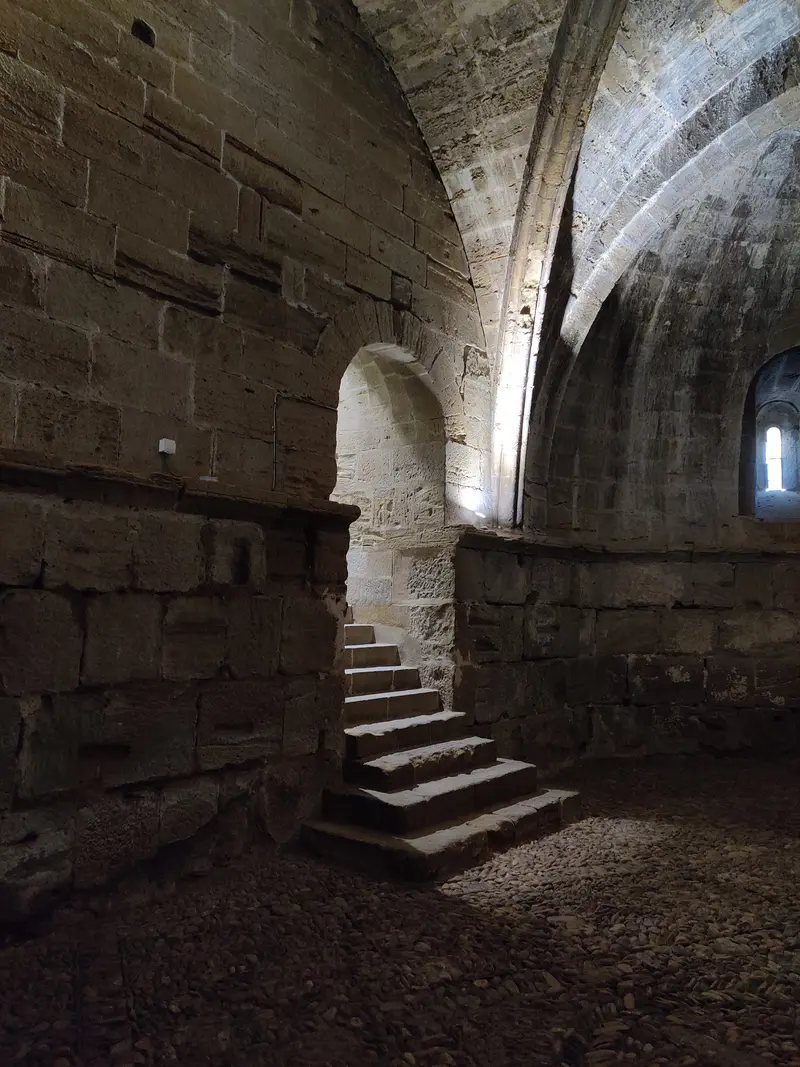
    The Sala de la Campana in Huesca holds profound historical significance, deeply tied to the famous Legend of the Bell of Huesca. This 12th-century tale describes how King Ramiro II brought his rebellious nobles to heel by inviting them to view a new bell, then decapitating the insurgents to form a macabre 'bell'. This room is located within the former Monastery of San Pedro el Viejo, an impressive Romanesque structure. The chamber itself is simple and atmospheric, rendering the grim history even more impactful. While its exact historical authenticity as the decapitation site is debated, it remains a central point in Aragonese historiography and a testament to the era's power struggles. Our Tip: Visit the Sala de la Campana preferably in the morning to fully experience its tranquility and thoroughly study the information panels. Note the details of the Romanesque architecture in the monastery, which starkly contrast with the chamber's simplicity.
    Open in Google Maps

    City walks in Huesca

    Curated walking tours through the city's highlights — handpicked by experienced travel journalists.

    Huescas Moderne Seiten: Kunst, Architektur und Flussufer

    Dieser Spaziergang führt Sie abseits der historischen Gassen zu Huescas zeitgenössischer Kunstszene, beeindruckender moderner Architektur und entspannten Flussufern. Erleben Sie eine andere Facette der Stadt, die Tradition und Moderne elegant verbindet und einen frischen Blick auf die aragonesische Hauptstadt bietet.

    ~1 Std. 45 Min.
    In Google Maps öffnen
    Stopps (6)

    Restaurants & Cafés

    Huesca's Cultural and Historical Heritage

    Huesca, a city with ancient roots, looks back on a rich and diverse history that shapes its current cultural identity. Its origins trace back to pre-Roman times as the Iberian settlement of Bolskan, before becoming Osca under the Romans and later Wasqa under Moorish rule. The nearly four centuries of Muslim presence left deep marks on the city, which was once an important centre of the Taifa of Huesca, in its art, architecture, and intellectual life.The Reconquista in 1096 by King Peter I of Aragon marked a decisive turning point and led to the construction of significant Christian buildings. The most famous is the Cathedral of Huesca, an outstanding example of Gothic architecture, built on the foundations of the former main mosque. Also of great historical significance is the Romanesque church of San Pedro el Viejo, which serves as the royal pantheon for the Kings of Aragon.Cultural traditions are deeply rooted in Huesca, particularly the annual Fiestas de San Lorenzo in August. During these celebrations, the city dresses in white and green, honoring its patron saint with processions, dances, and music. These festivities reflect the vibrant popular culture and sense of community among the people of Huesca, who preserve their history and customs across generations.

    On the Go Locally

    Huesca is a city that is wonderful to explore on foot. The historic center and most sights are so close to each other that you won't need public transport to discover its charming streets and squares. There is neither a metro nor a tram system.For longer distances or destinations outside the city center, a reliable local bus network is available. Single tickets can be purchased directly on the bus, which is the most practical option for most visitors. A special app or complicated multi-journey tickets are generally not necessary for tourists in this manageable city.Taxis are readily available in Huesca and offer a convenient alternative, especially for trips to or from the train station or for late evening hours. Ride-sharing services, however, are not common in Huesca. Those wishing to explore the surroundings will also find bicycle rentals in some places, which offer a lovely way to discover the parks and green spaces away from the main roads.

    Accommodations in Huesca

    Accommodations in Huesca

    Find perfect stay in Huesca

    Booking.com
    Search Hotels
    Agoda
    Search Hotels
    Airbnb
    Vacation Rentals
    Hotels.com
    Hotels Worldwide
    Hostelworld
    Hostels

    Campgrounds in Huesca

    Find perfect campground in Huesca

    Search via Google Maps
    Campgrounds nearby (15km)
    Camping.info
    Find Campgrounds
    Park4Night
    RV Parks & Camping

    Plan your trip to Huesca

    Save places, build a route and plan your city trip — all in one place.

    Save places

    Bookmark sights, restaurants and neighborhoods you're interested in.

    Build your route

    Turn your bookmarks into a route — define order, days and budget.

    Refine with AI

    Let Mein Fernweh suggest experiences and put together a tailored daily plan.

    Start trip planningOpen bookmarks

    Locations nearby

    These places are nearby — perfect for additional days or a day trip.

    Parque Natural de la Sierra y Cañones de Guara

    Parque Natural de la Sierra y Cañones de Guara

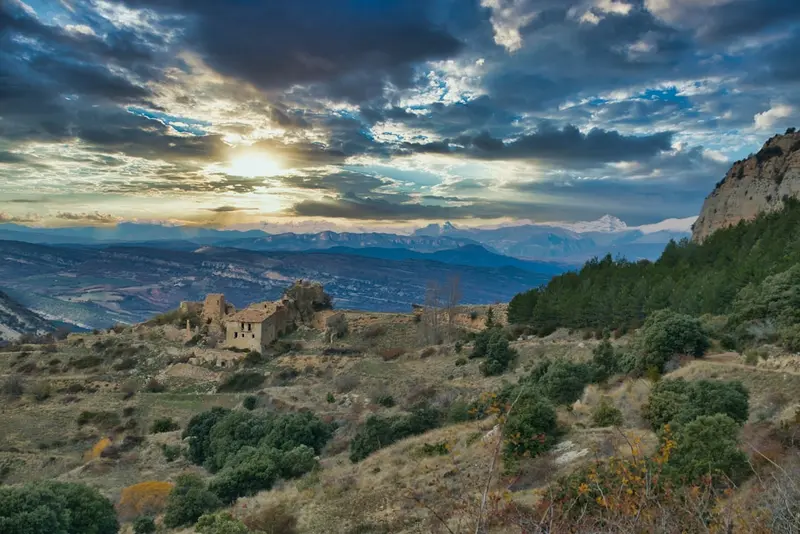
    Ein beeindruckendes Naturparadies, berühmt für seine spektakulären Kalksteinschluchten und -canyons, die es zu einem Top-Ziel für Canyoning, Wandern und Vogelbeobachtung machen.
    Jaca

    Jaca

    Jaca, once the first capital of Aragón, is picturesquely situated in the Pyrenees, combining rich history with mountain charm. Its distinctive landmark is the star-shaped 16th-century Citadel; a visit to which is highly recommended. The Cathedral of San Pedro, a Romanesque masterpiece, testifies to Jaca's role as an important stage on the Camino de Santiago. Explore its charming old town with its alleys and savor the local cuisine in traditional eateries. Jaca is an ideal base for hiking and winter sports in the surrounding mountains; for a relaxed exploration, it's best to visit the city in spring or autumn.
    Aínsa

    Aínsa

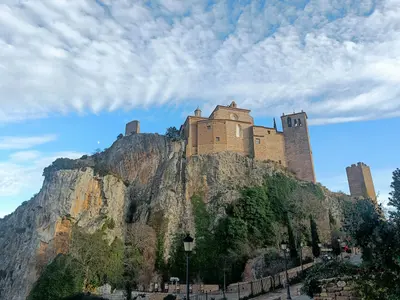
    Discover Aínsa, a breathtaking medieval fortress majestically perched on a hill in the heart of the Spanish Pyrenees. This historic-artistic gem transports you on an unforgettable journey through time with its cobblestone streets, the imposing castle, and the charming Plaza Mayor. Here, where history meets spectacular nature, you'll feel the spirit of bygone eras and the warm hospitality of the Aragon region.
    Aragón

    Aragón

    Aragón, a historically rich autonomous community in northeastern Spain, captivates with a fascinating blend of majestic Pyrenean landscapes, impressive Mudejar architecture, a UNESCO World Heritage site, and a vibrant capital city. Discover a region brimming with history, culture, and breathtaking nature, that delights both adventurers and culture enthusiasts.
    Zaragoza

    Zaragoza

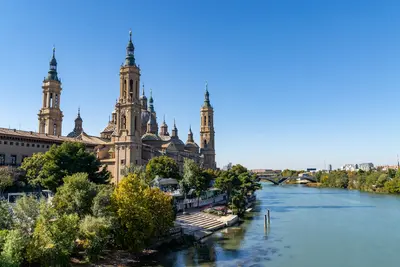
    Als pulsierende Hauptstadt Aragóns ist Zaragoza Heimat der prächtigen Basilika Nuestra Señora del Pilar und des Aljafería-Palastes, einem Meisterwerk der islamischen Kunst.