Fernweh: Home
    ExploreTravel GuidesPlan a tripMy tripLast visited
    de|en
    All Places & RegionsAll highlightsAbout FernwehFAQPrivacy PolicyImprint
    ExploreTravel GuidesPlan a tripMy tripLast visited
    • Neighborhoods & highlights
    • Recommendations
    • Eat & drink
    • Food culture
    • Culture
    • Getting around
    • Accommodation
    • Plan trip
    • Nearby
    Valencia

    Spain

    Valencia

    CityCulture

    Valencia is the third-largest city in Spain and is located on the Mediterranean coast between rice fields and orange groves.

    by Felix Gillen

    1. Home
    2. Destinations
    3. Spain
    4. Comunitat Valenciana
    5. Valencia
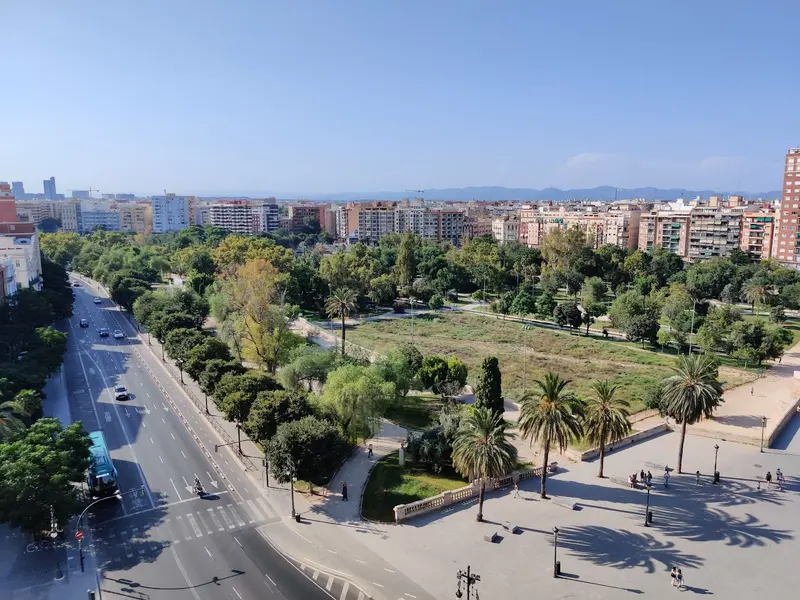
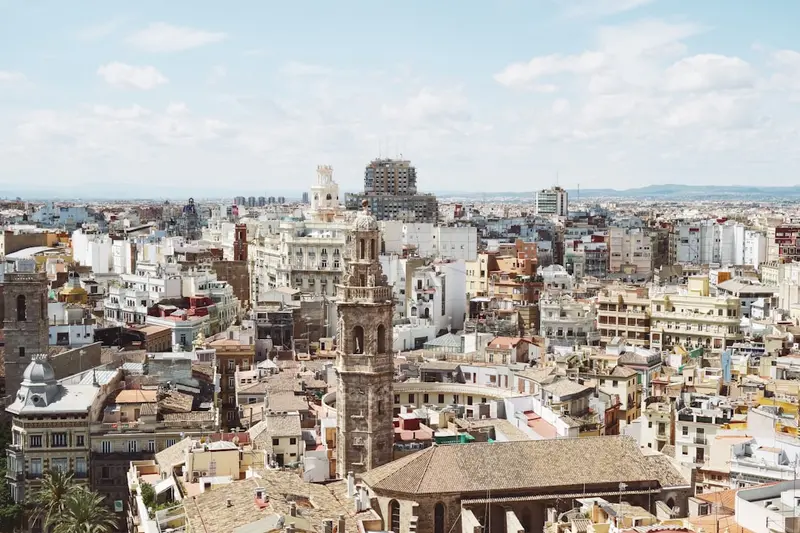
    Valencia is the third-largest city in Spain and is located on the Mediterranean coast between rice fields and orange groves. The Gothic Old Town with its Silk Exchange and Cathedral, the City of Arts and Sciences, and the park in the old Turia riverbed define the city, plus city beaches and paella, which originated here.

    Sights in Valencia

    Discover the most important sights and attractions

    City of the Arts and the Sciences

    1City of the Arts and the Sciences

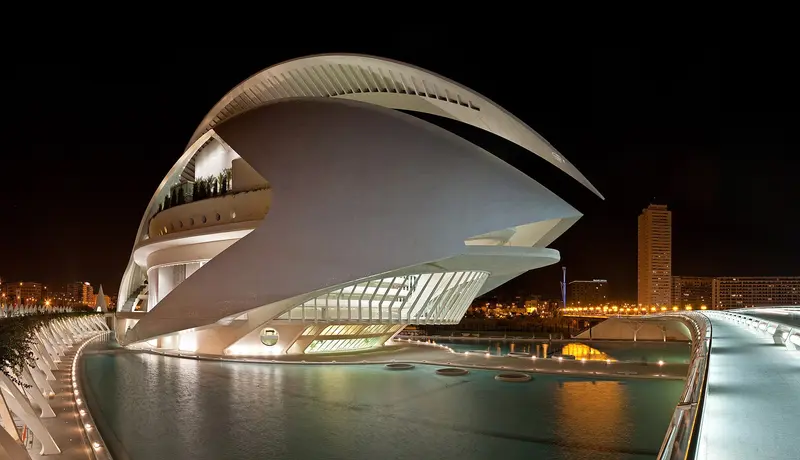
    The complex at the end of Turia Park comprises the opera house Palau de les Arts Reina Sofía, the Science Museum, the L'Hemisfèric cinema, and the Oceanogràfic, one of Europe's largest aquariums. Santiago Calatrava's white structures reflect in shallow water pools, and the grounds are freely accessible.
    Open in Google Maps
    Llotja de la Seda
    Attraction

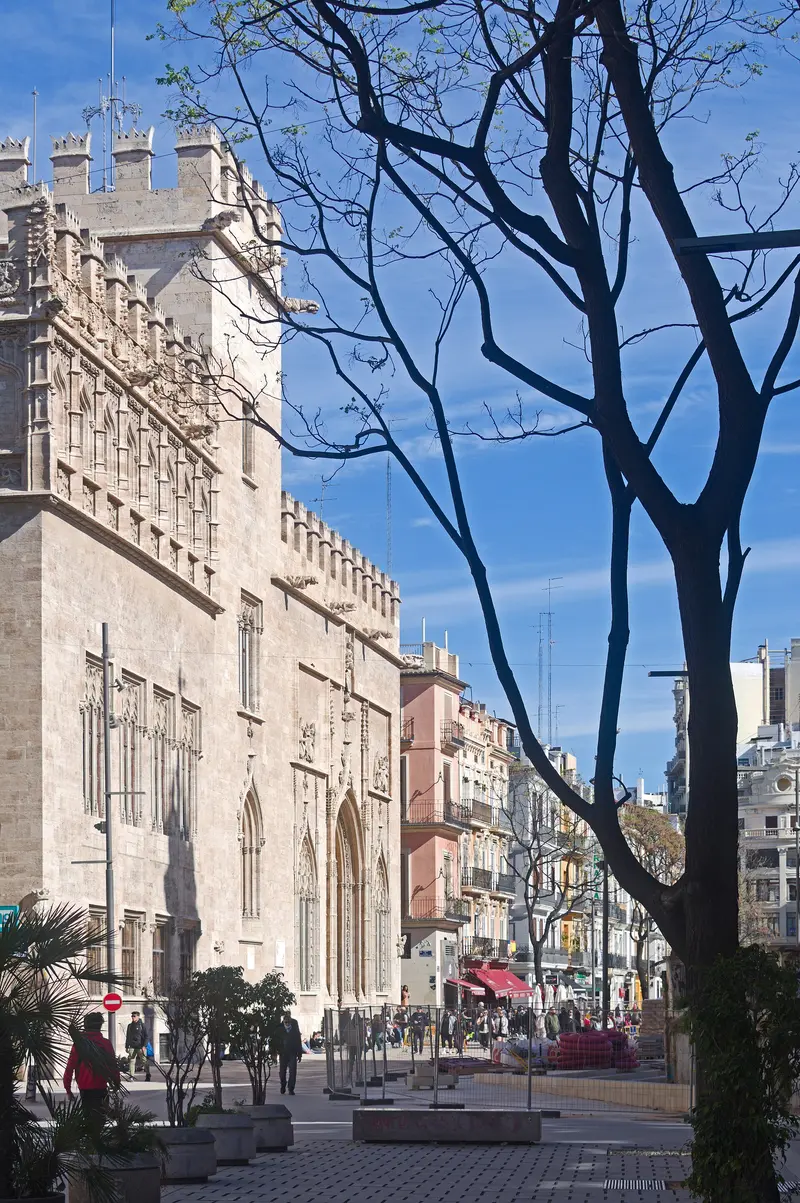
    2Llotja de la Seda

    The late Gothic Silk Exchange was built from 1482 and has been a UNESCO World Heritage site since 1996. In the Column Hall, twisted columns support a high vault, where trade agreements were concluded. Directly opposite is the Mercat Central.
    Open in Google Maps
    Bioparc Valencia

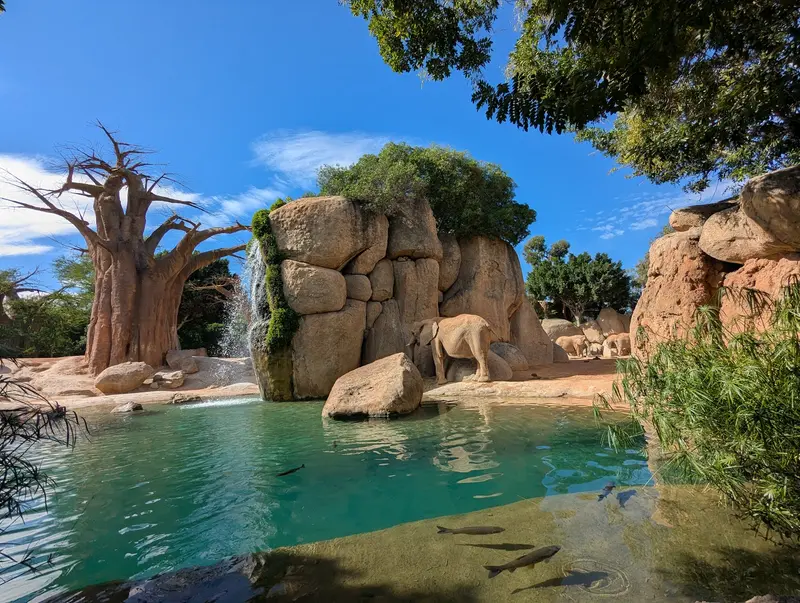
    3Bioparc Valencia

    Opened in 2008 in the old Turia riverbed, the zoo embraces the “Zooinmersión” concept: instead of bars, streams, ponds, and rocks separate visitors from animals. Its different zones display African habitats like savannah, equatorial rainforest, wetlands, and Madagascar.
    Open in Google Maps
    Torres de Serranos

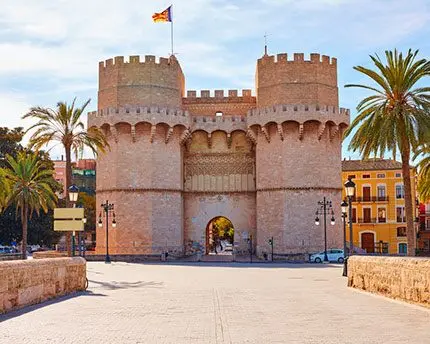
    4Torres de Serranos

    Built in the Valencian Gothic style between 1392 and 1398 according to plans by Pere Balaguer, the city gate was one of twelve gates in the medieval wall. When the wall was largely demolished in 1865, the towers remained standing. From 1586 to 1887, they served as a prison for nobles; today, they are open to visitors.
    Open in Google Maps
    Kathedrale von Valencia

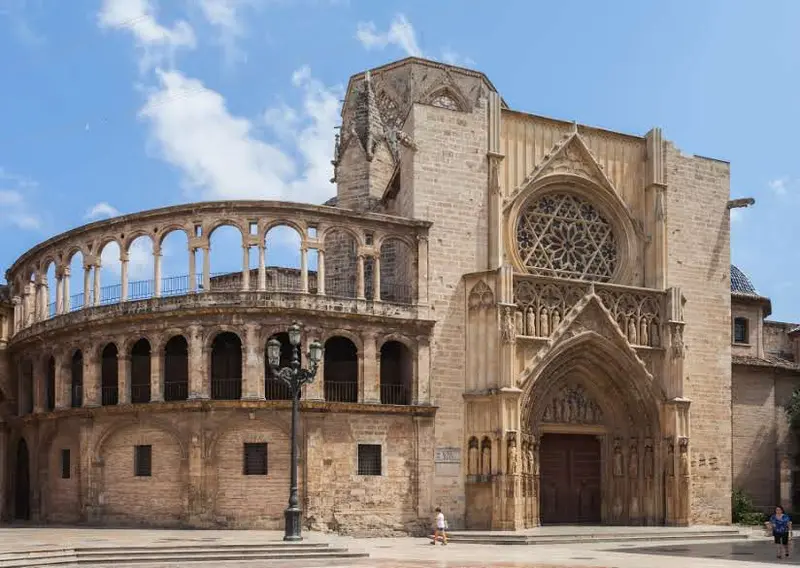
    5Kathedrale von Valencia

    The Cathedral was consecrated in 1238 and built from 1262 on the site of an earlier mosque, with Valencian Gothic predominating. In a chapel, a chalice is venerated, which many believe to be the Holy Grail; King Alfons V. donated it to the Cathedral in 1436. The Miguelete bell tower was connected to the building in 1459.
    Open in Google Maps
    Jardí del Túria
    Park

    6Jardí del Túria

    In the former riverbed of the Turia, an approximately nine-kilometer-long park stretches around the old town, featuring cycle and jogging paths, sports fields, and gardens. Old stone bridges span it, and at its eastern end lies the City of Arts and Sciences.
    Open in Google Maps

    Essen & Trinken

    1

    Bar Los Picapiedra

    Bar in C/ dels Cavallers.
    Show on Google Maps
    2

    Taberna Alkázar

    Tavern in the center of Valencia with fish, seafood, and Spanish tapas.
    Show on Google Maps
    3

    Navarro

    Family-run restaurant downtown with Mediterranean cuisine and rice dishes.
    Show on Google Maps
    4

    La Salita de Begoña Rodrigo

    Gourmet restaurant by chef Begoña Rodrigo in Russafa district, with Mediterranean tasting cuisine.
    Show on Google Maps

    Restaurante Lienzo

    Raffinierte, kreative mediterrane Küche aus saisonalen, lokalen Zutaten in einer ehemaligen Kunstgalerie.
    Show on Google Maps

    Food and Drink

    Paella valenciana

    The original Paella with chicken, rabbit, and beans is traditionally eaten at noon; many beach and Albufera restaurants specialize in it.

    Horchata and Fartons

    Cold horchata from nearby Alboraya, with elongated, sweet yeast pastries for dipping.

    All i pebre

    Eel stew with garlic, bell pepper and potatoes from the villages of Albufera.

    Mercat Central

    The Modernisme-style market hall, with several hundred stalls, is the best place for fruit, fish, and local products.

    Culture

    Mediterranean Trading CityValencia was founded by the Romans in 138 BC and was Moorish for over 500 years thereafter, before James I of Aragon conquered the city in 1238. In the 15th century, Valencia was one of the wealthiest cities on the Mediterranean. From this period dates the Silk Exchange, Llotja de la Seda, a UNESCO World Heritage site. In the Cathedral, a chalice revered as the Holy Grail is preserved. Every Thursday at noon, the Water Tribunal meets in front of its portal, settling disputes over the irrigation of the Huerta for centuries.Fallas and Modern ArchitectureFrom March 15 to 19, the city celebrates Fallas: Hundreds of figures made of wood and papier-mâché stand in the streets and are burned on the last night, accompanied by daily firecracker displays, the Mascletàs. The City of Arts and Sciences, designed by Santiago Calatrava and Félix Candela, was built starting in the late 1990s.

    Exploring locally

    Metro and tram lines from Metrovalencia, as well as EMT buses, cover the city, with the Metro also reaching the airport. You can get around quickly with the Valenbisi bike-sharing system and on the cycle paths through the Turia Park. High-speed trains connect Joaquín Sorolla station to Madrid in just under two hours. The tram goes to the beach, and buses serve the Albufera Natural Park.

    Accommodations in Valencia

    Find perfect stay in Valencia

    Booking.com* (Affiliate link)
    Search Hotels
    Agoda* (Affiliate link)
    Search Hotels
    Airbnb
    Vacation Rentals

    * Affiliate link: if you book through it, we earn a small commission. The price stays the same for you.

    Campgrounds in Valencia

    Find perfect campground in Valencia

    Search via Google Maps
    Campgrounds nearby (15km)
    Camping.info
    Find Campgrounds
    Park4Night
    RV Parks & Camping

    Plan your trip to Valencia

    Save places, build a route and plan your city trip, all in one place.

    1. 1
      Sunrise over alpine peaks and a sea of clouds
      1234

      Round trip

      12 days · 4 stops

      Saved

      Pick a route

      Pick a ready-made one or save places and plan your own.

      Open bookmarks
    2. 2

      Trip to Valencia

      Live
      • 1City of the Arts and the Sciences3 days
      • 2Llotja de la Seda4 days
      • 3Bioparc Valencia5 days
      Budget

      Plan your trip

      The planner sorts stops, days and budget. Plan together in real time.

      Start trip planning
    3. 3
      9:41 No signal
      Valencia
      Available offline

      Use it on the road

      Download the guide to your phone and use it on site, even offline.

    Nearby

    Comunitat Valenciana

    Comunitat Valenciana

    The Valencia region on Spain's east coast extends from the orange groves of the Huerta to the old towns along the Mediterranean. Its capital, Valencia, combines its Gothic Old Town, the City of Arts and Sciences, and the home of paella. To its north, on the Costa del Azahar, lies the castle town of Peñíscola, and to the south, the Costa Blanca adjoins.
    Dénia

    Dénia

    Dénia is a port city on the northern Costa Blanca, towered over by a castle and the Montgó massif. From here, ferries go to Ibiza, Formentera, and Mallorca. Since 2015, Dénia belongs to the UNESCO Creative Cities Network for Gastronomy.
    Jávea (Xàbia)

    Jávea (Xàbia)

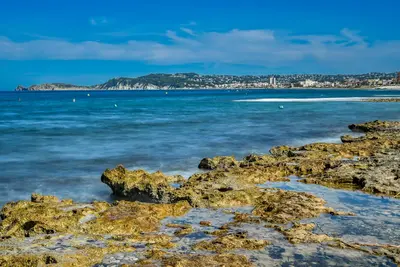
    Xàbia (Jávea) lies between Capes Sant Antoni & La Nau on northern Costa Blanca. It has three parts: Old Town (with fortified church Sant Bertomeu), Duanes de la Mar port, and Arenal beach. Nearby are rock coves, viewpoints, and Montgó Natural Park.

    Calp (Calpe)

    Calp (Spanish Calpe), between Altea/Benidorm (south) and Xàbia (north). The landmark Penyal d'Ifac, a 332m limestone rock, connected to town by a narrow land strip, is a protected natural park. Also nearby: a salt lagoon (flamingos often seen in summer), two town beaches, a small old town.
    Altea

    Altea

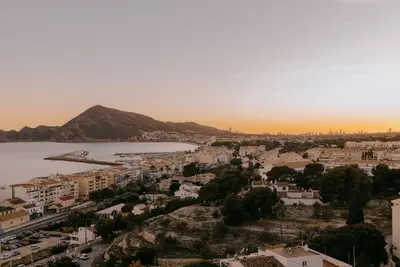
    Altea on the Costa Blanca, situated between Benidorm and Calp, is known for its old town of whitewashed houses on a hill. The Church of Nuestra Señora del Consuelo, with its blue-glazed tile domes, forms the centre of the historic quarter. Strolling through the narrow, cobbled streets, you'll pass artists' and artisans' studios as well as small cafés. Altea has long attracted painters, writers, and musicians, which shapes the character of the town. From the old town's viewpoints, you can gaze over the bay and the Mediterranean Sea. To experience Altea's tranquility, it's best to visit the town in the off-season. Also explore the beach promenade, which offers a beautiful contrast to the historic core.
    Sources & method

    • Photos: Wikimedia Commons, Unsplash, Google Maps. Each photo carries its credit.
    • Place data such as addresses and ratings comes from Google Maps.
    • The content is based on web research from public, traceable sources. How the content is made · The role of AI