Fernweh: Home
    ExploreTravel GuidesPlan a tripMy tripLast visited
    de|en
    All Places & RegionsAll highlightsAbout FernwehFAQPrivacy PolicyImprint
    ExploreTravel GuidesPlan a tripMy tripLast visited
    • Neighborhoods & highlights
    • Eat & drink
    • Accommodation
    • Plan trip
    • Nearby
    Córdoba

    Spain

    Córdoba

    CityCulture

    Córdoba is located on the Guadalquivir in Andalusia and was the capital of the Emirate and later the Caliphate of Córdoba, from which the Umayyads ruled Al-Andalus.

    by Felix Gillen

    1. Home
    2. Destinations
    3. Spain
    4. Andalusia
    5. Córdoba
    Córdoba is located on the Guadalquivir in Andalusia and was the capital of the Emirate and later the Caliphate of Córdoba, from which the Umayyads ruled Al-Andalus. You travel here primarily for the Mezquita-Cathedral, a former mosque in the middle of which a cathedral was built starting in 1523. It has been a UNESCO World Heritage site since 1984; in 1994, the designation was expanded to include the entire old town.In the Judería, the old Jewish quarter near the Mezquita, you'll discover narrow alleys, flower-filled patios, and a synagogue from 1315. The Alcázar de los Reyes Cristianos with its gardens and the Puente Romano with its 16 arches over the Guadalquivir are further highlights. You can experience the Patio culture during the Fiesta de los Patios in the second and third week of May, which is recognized as an intangible UNESCO Cultural Heritage. Spring and autumn are the most pleasant times to travel; in July and August, average daily highs are around 37 degrees Celsius.

    Sights in Córdoba

    Discover the most important sights and attractions

    Mezquita-Catedral de Córdoba

    1Mezquita-Catedral de Córdoba

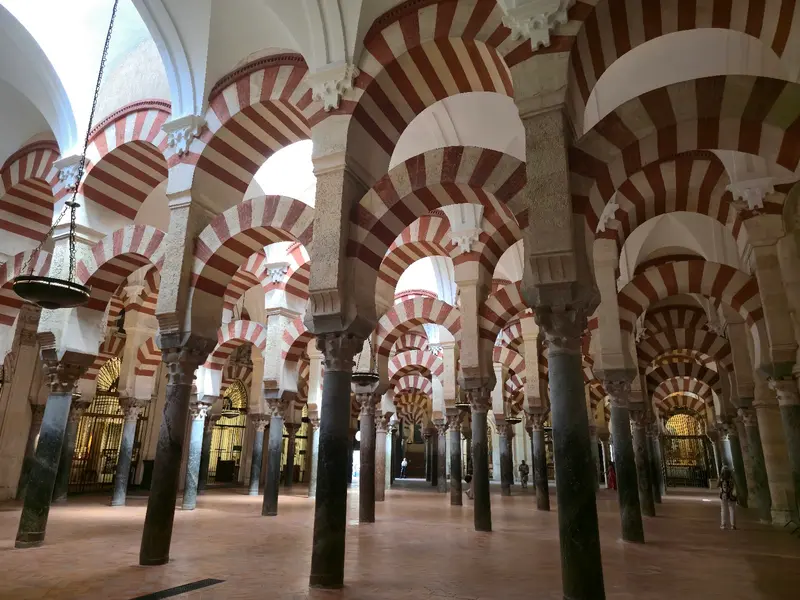
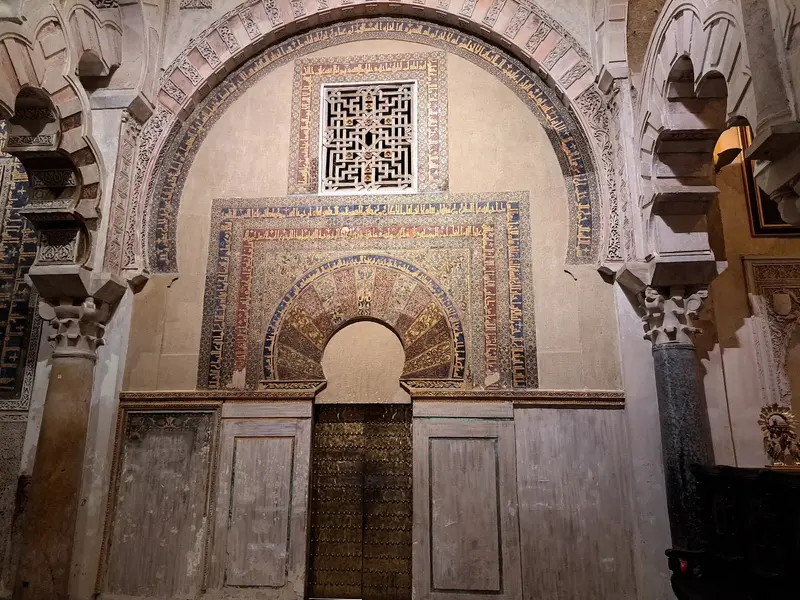
    After its expansion in the 10th century, the Mezquita was one of the largest mosques in the Islamic world. From 1523, a cathedral was built into its center. You walk through the forest of columns with the red-and-white striped arches to the richly decorated Mihrab; since 1984, the structure is a UNESCO World Heritage site.
    Open in Google Maps
    Archaeological Museum Córdoba

    2Archaeological Museum Córdoba

    The museum is housed in the 16th-century Palacio de los Páez de Castillejo, built over the remains of the Roman theatre, with parts of its seating visible in one hall. Highlights include the Iberian Lion of Nueva Carteya, a Roman copy of the Crouching Aphrodite, and the 2nd-century Mithras of Cabra.
    Open in Google Maps
    Puente Romano
    Historic Landmark

    3Puente Romano

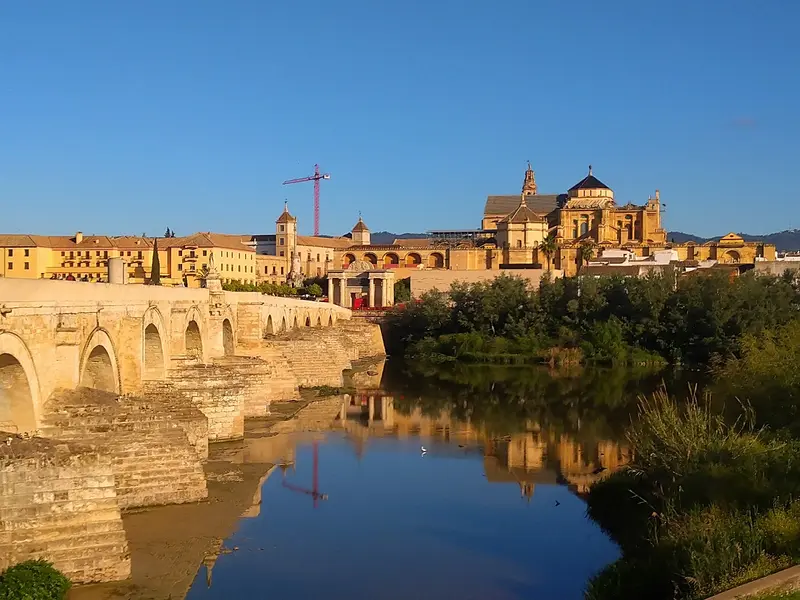
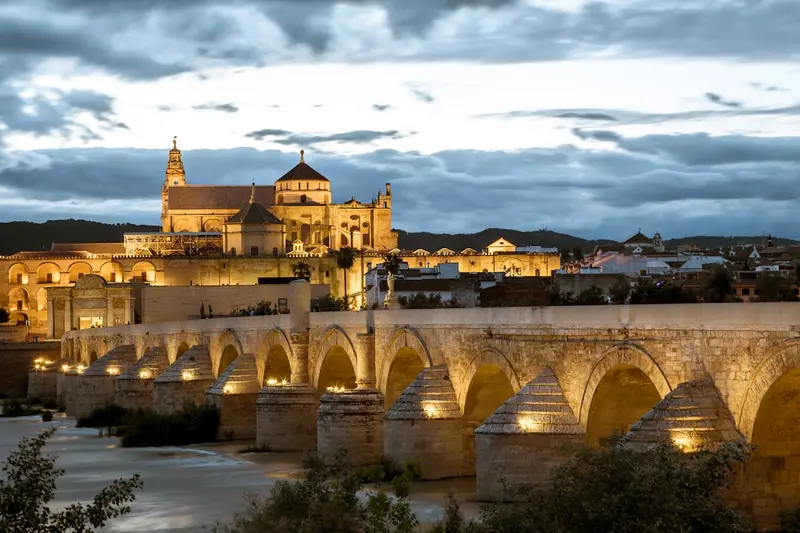
    The bridge over the Guadalquivir was built by the Romans in the early 1st century BC; its present 16-arch form largely dates back to an 8th-century reconstruction. Since 2004, it is pedestrian-only. At its northern end stands the Puerta del Puente, at the southern end the Torre de la Calahorra, and from the bridge, you can see the Mezquita.
    Open in Google Maps
    Medina Azahara
    Museum

    4Medina Azahara

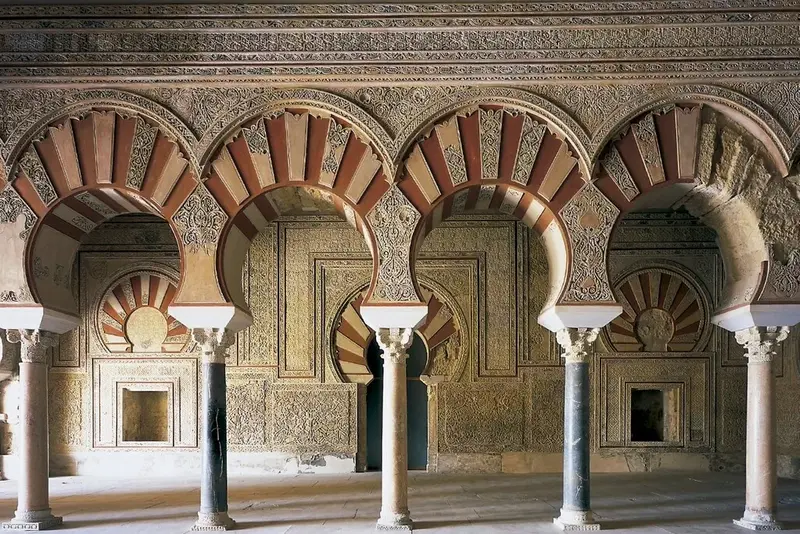
    The palace city, about five kilometers west of Córdoba, was established by the first Caliph of al-Andalus, Abd ar-Rahman III., from about 936 to 940. Already between 1010 and 1013, it was plundered in the civil war and then abandoned. Since 2018, the excavation site has been a UNESCO World Heritage site; a museum opened in 2009 is at its edge.
    Open in Google Maps
    Synagogue of Córdoba
    Museum

    5Synagogue of Córdoba

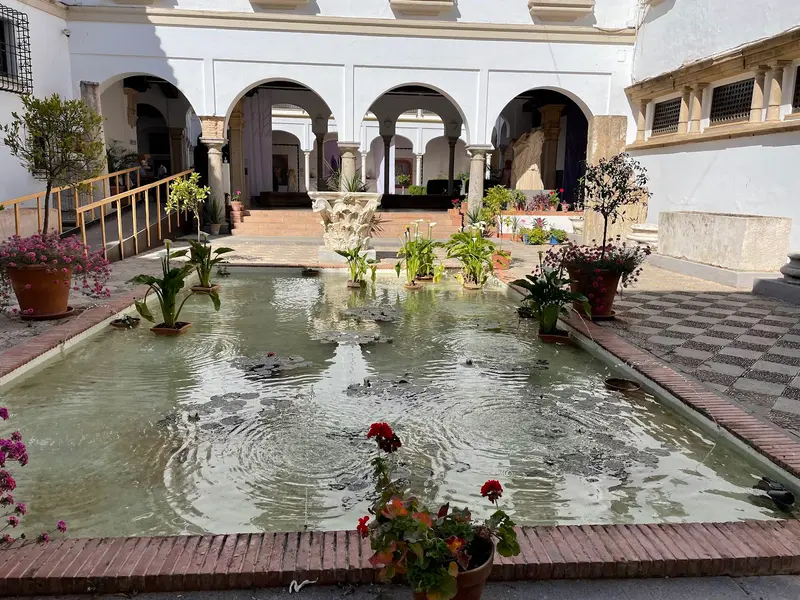
    The small synagogue in Calle de los Judíos in the old Jewish Quarter was completed in 1315 in Mudéjar style. As the city's only synagogue, it survived the persecutions. Preserved are the courtyard, the stucco-decorated prayer hall, and the women's gallery.
    Open in Google Maps

    Essen & Trinken

    1

    Bodegas Mezquita Céspedes

    Bar in C. Céspedes.
    Show on Google Maps
    2

    Taberna La Montillana

    Elegante, moderne Taverne mit traditionellen andalusischen Fleisch- und Fischgerichten mit kreativer Note.
    Show on Google Maps
    3

    Bodegas Mezquita Corregidor

    Bar in C. Corregidor Luis de la Cerda.
    Show on Google Maps
    4

    Casa Pepe de La Judería

    Ochsenschwanzeintopf und gebackene Schweinefleischröllchen in einem jahrhundertealten Lokal mit Dachterrasse und Blick auf Moschee.
    Show on Google Maps
    5

    La Taberna del Río

    Bar in C. Enrique Romero Torres.
    Show on Google Maps

    Accommodations in Córdoba

    Find perfect stay in Córdoba

    Booking.com* (Affiliate link)
    Search Hotels
    Agoda* (Affiliate link)
    Search Hotels
    Airbnb
    Vacation Rentals

    * Affiliate link: if you book through it, we earn a small commission. The price stays the same for you.

    Campgrounds in Córdoba

    Find perfect campground in Córdoba

    Search via Google Maps
    Campgrounds nearby (15km)
    Camping.info
    Find Campgrounds
    Park4Night
    RV Parks & Camping

    Plan your trip to Córdoba

    Save places, build a route and plan your city trip, all in one place.

    1. 1
      Sunrise over alpine peaks and a sea of clouds
      1234

      Round trip

      12 days · 4 stops

      Saved

      Pick a route

      Pick a ready-made one or save places and plan your own.

      Open bookmarks
    2. 2

      Trip to Córdoba

      Live
      • 1Mezquita-Catedral de Córdoba3 days
      • 2Archaeological Museum Córdoba4 days
      • 3Puente Romano5 days
      Budget

      Plan your trip

      The planner sorts stops, days and budget. Plan together in real time.

      Start trip planning
    3. 3
      9:41 No signal
      Córdoba
      Available offline

      Use it on the road

      Download the guide to your phone and use it on site, even offline.

    Nearby

    Andalusia

    Andalusia

    Andalucía in the south of Spain combines Moorish palaces, white villages, long beaches, Flamenco and a distinct tapas culture. The autonomous community is Spain's most populous and one of the country's most versatile travel regions.
    Seville

    Seville

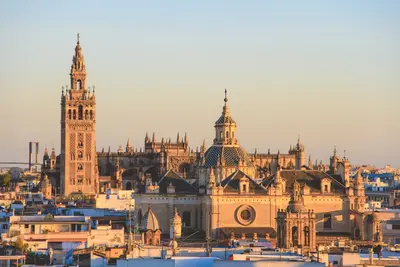
    Seville, the capital of Andalusia on the Guadalquivir River, blends Moorish heritage with vibrant street culture. Highlights include the Cathedral of Seville with its bell tower La Giralda and the Real Alcázar, which together with the Archivo de Indias have been UNESCO World Heritage Sites since 1987.Stroll through the winding alleys of the Barrio de Santa Cruz, once the Jewish quarter, where hidden patios await discovery. The expansive Plaza de España in Parque de María Luisa was built for the Ibero-American Exposition of 1929. In the evenings, experience flamenco, for example in the Triana district, considered one of flamenco's birthplaces. The best time to visit is spring (March to May) or autumn (September to October); in July and August, daily high temperatures regularly exceed 35 degrees Celsius. Tickets for major attractions are best booked online in advance.
    Granada

    Granada

    Granada in Andalusia lies at the foot of the Sierra Nevada and was, from the 13th century, the capital of the Nasrid kingdom, the last Muslim-ruled state on the Iberian Peninsula. The main reason for visiting is the Alhambra, a UNESCO World Heritage site since 1984, featuring the Nasrid Palaces, the Generalife Gardens, and the Alcazaba fortress.Explore the Albaicín quarter with its narrow Moorish streets and viewpoints overlooking the Alhambra. The adjacent Sacromonte is famous for its cave dwellings and flamenco. The Cathedral, built on the site of the former Great Mosque, and the Royal Chapel in the city centre commemorate the Christian conquest of 1492, with the Catholic Monarchs buried in the Capilla Real. Tickets for the Alhambra can be purchased up to three months in advance; the Nasrid Palaces have a fixed entry time. Spring and autumn offer more pleasant temperatures than high summer.
    Ronda

    Ronda

    Ronda in Andalusia is situated on a rock plateau that divides the Tajo Gorge of the Guadalevín river into two parts. The Puente Nuevo, completed in 1793, connects the old town La Ciudad with the El Mercadillo quarter, along with the bullring inaugurated in 1785, the 13th and 14th-century Arab baths, and sweeping views of the surrounding countryside.
    Costa del Sol

    Costa del Sol

    The Costa del Sol, on the Mediterranean coast of Málaga province, is one of Spain's most famous coastal regions, attracting millions of visitors every year thanks to its sunny climate. It combines sandy beaches, vibrant nightlife, white villages, and a cultural history ranging from Moorish influences to modern art in Málaga.

    Sources & method

    • Photos: Unsplash, Google Maps. Each photo carries its credit.
    • Place data such as addresses and ratings comes from Google Maps.
    • The content is based on web research from public, traceable sources. How the content is made · The role of AI