Fernweh: Home
    ExploreTravel GuidesPlan a tripMy tripLast visited
    de|en
    All Places & RegionsAll highlightsAbout FernwehFAQPrivacy PolicyImprint
    ExploreTravel GuidesPlan a tripMy tripLast visited
    • Neighborhoods & highlights
    • Walking tours
    • Eat & drink
    • Culture
    • Getting around
    • Accommodation
    • Plan trip
    • Nearby
    Mérida

    Spain

    Mérida

    City

    Mérida, the former capital of the Roman province of Lusitania, takes you on an unparalleled journey through time.

    by Felix Gillen

    1. Home
    2. Destinations
    3. Spain
    4. Extremadura
    5. Mérida
    Mérida, the former capital of the Roman province of Lusitania, takes you on an unparalleled journey through time. Its impressive archaeological sites, protected by UNESCO as a World Heritage site, make it an **open-air museum of Roman antiquity**. Discover a city where history comes alive and captivates you at every turn.

    Sights in Mérida

    Discover the most important sights and attractions

    1Teatro Romano de Mérida

    The Roman Theatre of Mérida is one of the best-preserved Roman theatres. According to an inscription, it was inaugurated around 16/15 BC, donated by Marcus Vipsanius Agrippa. Particularly impressive is the approximately 17-meter-high Scaenae Frons, the decorated stage wall with its rows of columns. Since 1933, the Classical Theatre Festival has been held here, nowadays in July and August. It's best to visit in the early morning or late afternoon, when it's quieter.

    Open in Google Maps

    2Anfiteatro Romano de Mérida

    Located right next to the theatre, the Roman Amphitheatre tells a completely different story. Here, where gladiatorial combat and animal hunts once entertained the masses, you can explore the arena's impressive scale and the remains of the animal cages. It offers a clear glimpse into daily life and the brutal spectacles of ancient Rome. A visit to both sites with a combo ticket is highly recommended, allowing you to delve deep into Rome's past.
    Open in Google Maps

    3Puente Romano

    The Roman Bridge over the Guadiana is a masterpiece of ancient engineering. At around 790 meters including its approaches, it is considered the longest surviving bridge of antiquity. Today, 60 arches of granite ashlar are visible. Stroll the bridge, enjoy river and city views. Especially beautiful at sunset, as golden light illuminates old stones.
    Open in Google Maps

    4Acueducto de los Milagros

    The Aqueduct of Miracles, as it translates, lives up to its name. Its up to 25-meter-high pillars of granite blocks and bricks span the Albarregas valley. The Romans likely built it in the 1st century AD to channel water into the city. A walk in the area offers great photo opportunities and lets you grasp the scale of this construction.
    Open in Google Maps

    5Museo Nacional de Arte Romano

    This museum, designed by Rafael Moneo, showcases Roman art and everyday objects from the Mérida excavations. Here you'll discover mosaics, sculptures, ceramics, and coins, which paint a vivid picture of Roman life in Emerita Augusta. The museum's architecture is also worth seeing. It's the ideal place to deepen your knowledge of the city's Roman history.
    Open in Google Maps

    City walks in Mérida

    Curated walking tours through the city's highlights, handpicked by experienced travel journalists.

    Mérida's Hidden Treasures: Engineering & the Early Middle Ages

    Discover lesser-known facets of Mérida, from impressive Roman engineering to the roots of early Christianity. This walk reveals private Roman villas and the legacy of the Visigoths, away from the most famous ruins.

    ~2 Std. 30 Min.
    Open in Google Maps
    Stops (6)

    Restaurants & Cafes

    Restaurante A de Arco

    This elegant-rustic restaurant is known for its exquisite interpretation of traditional Extremaduran cuisine. Here you can look forward to high-quality local products, including the famous Iberico pork and fresh game dishes. The warm atmosphere and attentive service make a visit a special experience, perfect for a stylish dinner.
    Show on Google Maps

    La Taberna de Mérida

    For authentic tapas & regional specialties in a lively setting, this is the place. This popular spot offers a wide range of small bites, from Pata Negra to local cheeses, paired with fine regional wines. Its relaxed, social vibe encourages trying various dishes and enjoying the Spanish vibe.
    Show on Google Maps

    DeTapas en la Plaza

    Situated right on Plaza de España, this café-restaurant offers a fantastic chance to watch the vibrant city life. Here you can enjoy light meals, fresh salads, sandwiches, and, of course, a good selection of tapas. It's the ideal spot for a morning coffee break or a relaxed evening drink, while soaking in the charming atmosphere of the main square.
    Show on Google Maps

    Tabula Calda

    Restaurant in C. Romero Leal.
    Show on Google Maps

    Mérida's Cultural Heritage: A Journey Through Time

    Mérida, founded as Emerita Augusta by Emperor Augustus in 25 BC, is a city whose cultural and historical heritage is deeply rooted in Roman origins. As the capital of the Roman province of Lusitania, it grew into one of the most significant centers of the Empire on the Iberian Peninsula. Due to its exceptionally well-preserved Roman monuments, the city was declared a UNESCO World Heritage site and today functions as a living open-air museum. Its architecture tells stories of ancient engineering and daily life over two millennia ago. Beyond the dominant Roman era, the Visigothic period and subsequent Moorish rule also shaped the city's landscape and cultural traditions. This multifaceted history is reflected in the various architectural layers, making Mérida a unique destination for history enthusiasts.

    Traveling locally

    Mérida, with its compact centre and numerous Roman sites, is easily explored on foot. Most attractions are close to each other, making walking the obvious way to get around. City buses are useful for longer distances or more remote points.Mérida does not have a metro or tram. For excursions into the surrounding area, such as to the Parque Natural de Cornalvo, having your own vehicle is the most flexible option. Taxis are a convenient choice for short trips. In the historic centre, public transport generally plays a secondary role.

    Accommodations in Mérida

    Find perfect stay in Mérida

    Booking.com* (Affiliate link)
    Search Hotels
    Agoda* (Affiliate link)
    Search Hotels
    Airbnb
    Vacation Rentals

    * Affiliate link: if you book through it, we earn a small commission. The price stays the same for you.

    Campgrounds in Mérida

    Find perfect campground in Mérida

    Search via Google Maps
    Campgrounds nearby (15km)
    Camping.info
    Find Campgrounds
    Park4Night
    RV Parks & Camping

    Plan your trip to Mérida

    Save places, build a route and plan your city trip, all in one place.

    1. 1
      Sunrise over alpine peaks and a sea of clouds
      1234

      Round trip

      12 days · 4 stops

      Saved

      Pick a route

      Pick a ready-made one or save places and plan your own.

      Open bookmarks
    2. 2

      Trip to Mérida

      Live
      • 1Teatro Romano de Mérida3 days
      • 2Anfiteatro Romano de Mérida4 days
      • 3Puente Romano5 days
      Budget

      Plan your trip

      The planner sorts stops, days and budget. Plan together in real time.

      Start trip planning
    3. 3
      9:41 No signal
      Mérida
      Available offline

      Use it on the road

      Download the guide to your phone and use it on site, even offline.

    Nearby

    Extremadura

    Extremadura

    Extremadura, in western Spain, bordering Portugal, lies off the beaten path of mass tourism. Here you'll discover vast Dehesa landscapes, a history spanning from the Romans to the Conquistadors, and a cuisine featuring everything from Ibérico ham to smoked paprika from La Vera. The region is sparsely populated, ideal for travelers seeking to experience history and nature in tranquility.
    Cáceres

    Cáceres

    Cáceres boasts one of Spain's best-preserved old towns, designated a UNESCO World Heritage site. Stroll through cobblestone streets, past noble palaces, defensive towers, and Romanesque, Gothic, and Renaissance churches. Evenings, when the day visitors have departed, the upper town is especially tranquil.
    Elvas

    Elvas

    Elvas is located just a few kilometers from the Spanish border and Spanish Badajoz. The city is surrounded by a vast system of bastions, moats, and forts, a UNESCO World Heritage site since 2012. Additionally, there's a kilometer-long aqueduct.
    Trujillo

    Trujillo

    Trujillo, nestled in the vast landscape of Extremadura, takes you back to the age of the Spanish Conquistadors. Here Francisco Pizarro was born, and the city still displays the wealth of that epoch: a grand Plaza Mayor, noble palaces, and a castle on the granite hill above the old town.
    Monsaraz

    Monsaraz

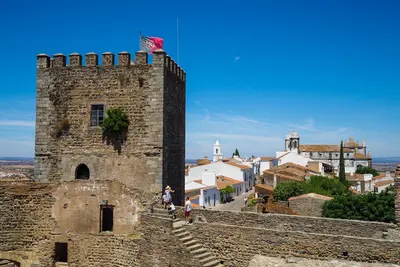
    Monsaraz is a tiny, walled village on a hilltop near the Spanish border. White houses, slate alleys, and a castle overlook the Alqueva Reservoir, one of Europe's largest artificial lakes.

    Sources & method

    • Photos: Unsplash. Each photo carries its credit.
    • The content is based on web research from public, traceable sources. How the content is made · The role of AI