Fernweh: Home
    ExploreTravel GuidesPlan a tripMy tripLast visited
    de|en
    All Places & RegionsAll highlightsAbout FernwehFAQPrivacy PolicyImprint
    ExploreTravel GuidesPlan a tripMy tripLast visited
    Monfragüe National Park

    Spain

    Monfragüe National Park

    National Park

    Monfragüe in Extremadura has been a National Park since 2007 and a UNESCO Biosphere Reserve since 2003.

    by Felix Gillen

    1. Home
    2. Destinations
    3. Spain
    4. Extremadura
    5. Monfragüe National Park
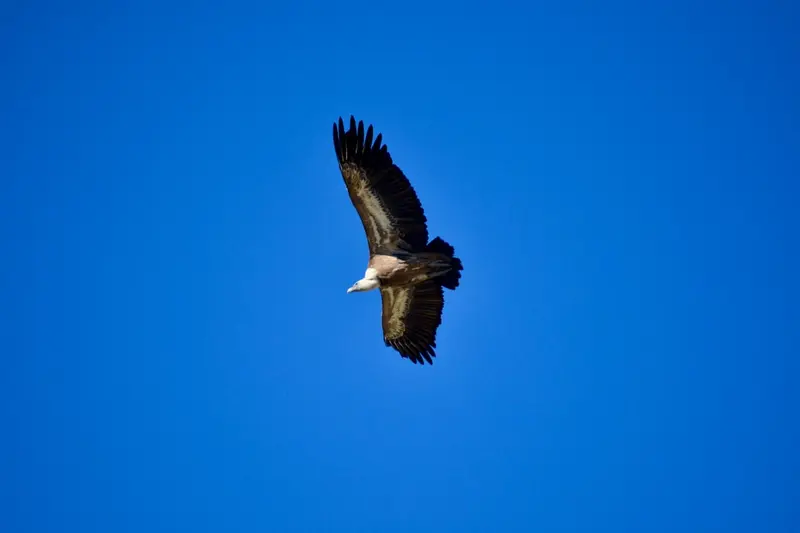
    Monfragüe in Extremadura has been a National Park since 2007 and a UNESCO Biosphere Reserve since 2003. It is home to one of Europe's largest colonies of Cinereous Vultures, along with Griffon Vultures, Spanish Imperial Eagles, and Black Storks. The landscape comprises Dehesa, Mediterranean scrubland, steep rock faces, and the dammed Tajo and Tiétar rivers.

    Sights

    Discover the most important sights and attractions

    Salto del Gitano / Peñafalcón

    Salto del Gitano / Peñafalcón

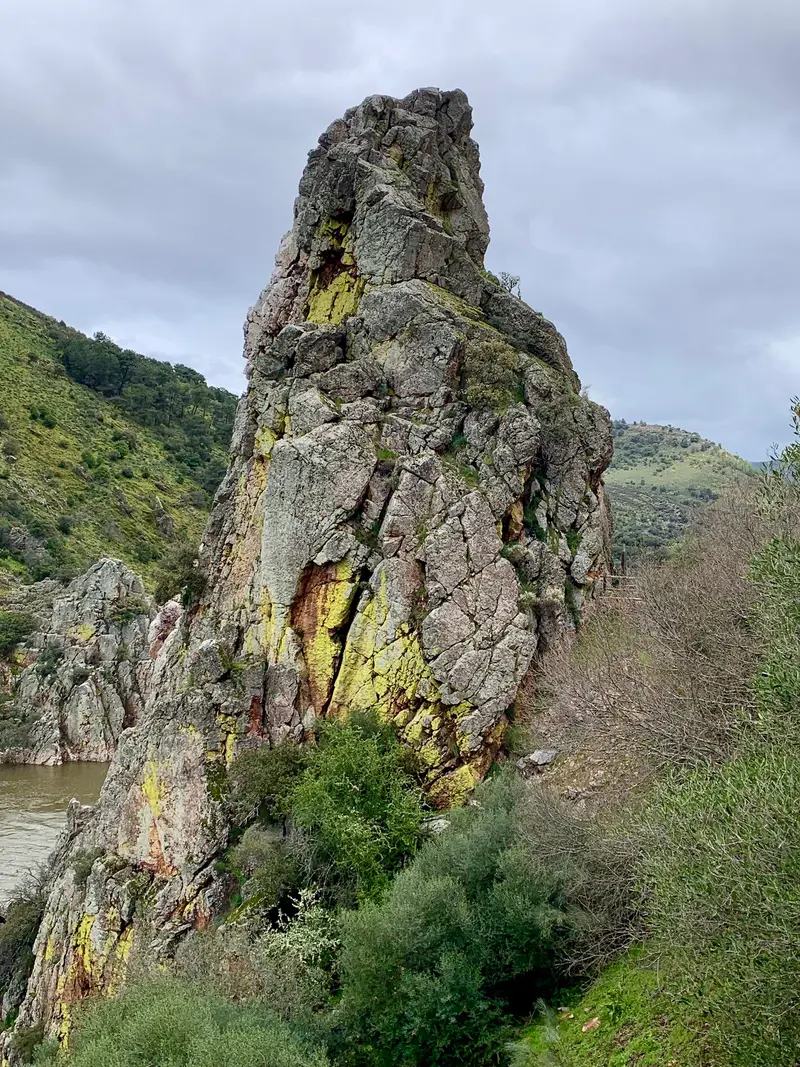
    The Salto del Gitano, with its Peñafalcón rock, is the most famous viewpoint in Monfragüe. You look out onto the steep cliff face above the Tajo, where a colony of griffon vultures breeds. From about March to September, you'll also see Egyptian vultures here, as well as black storks. The vultures often fly close past the viewpoint, but binoculars are still worthwhile.
    Open in Google Maps
    Castillo de Monfragüe

    Castillo de Monfragüe

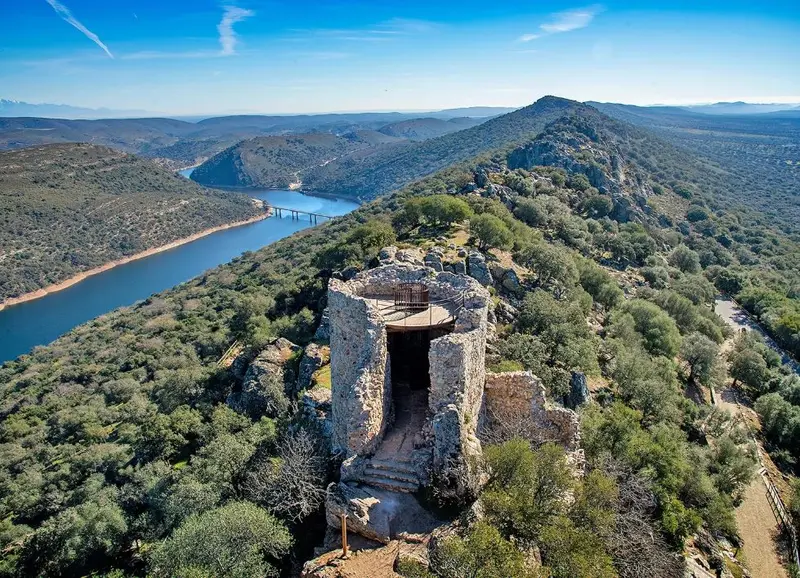
    Perched on a rocky ridge above the National Park is the Castillo de Monfragüe. Contemporary chronicles indicate the castle was built in the 9th century; its round tower dates from the 12th, and the pentagonal one from the 15th century. From above, you can let your gaze sweep over the Dehesa landscapes, the Tajo, and the rock formations. You can also often observe raptors here, utilizing the thermals above the rocks.
    Open in Google Maps
    Centro de Interpretación de la Naturaleza de Monfragüe

    Centro de Interpretación de la Naturaleza de Monfragüe

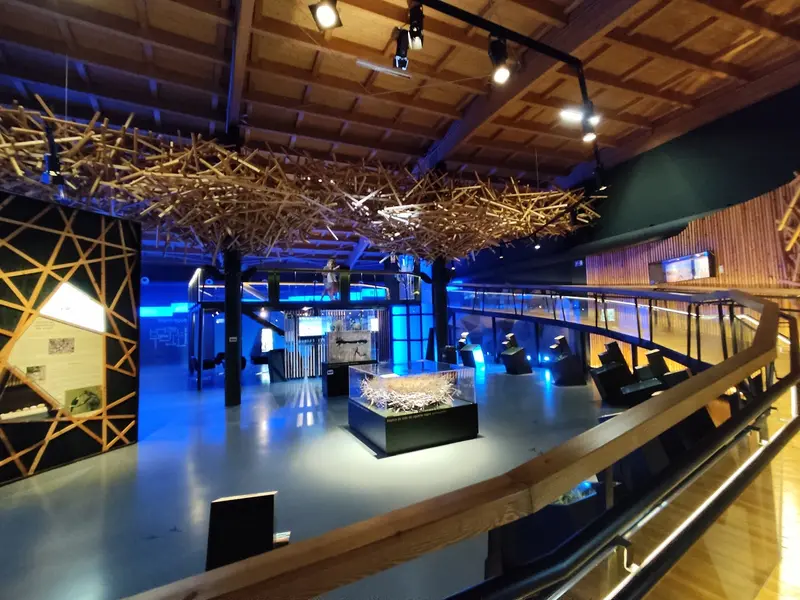
    Your visit to Monfragüe best begins in Villarreal de San Carlos, the small village in the heart of the park, founded by Charles III. At the visitor center, you'll get information about flora and fauna, hiking trails, and viewpoints. A good starting point to plan your exploration.
    Open in Google Maps
    Puente del Cardenal

    Puente del Cardenal

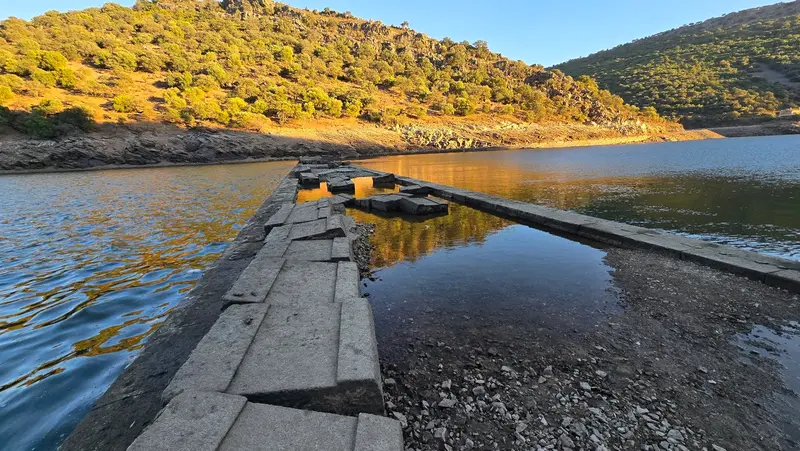
    The Puente del Cardenal is a 15th-century granite bridge. Bishop Juan de Carvajal of Plasencia had it built over the Tajo from 1450, to improve the route between Plasencia and Trujillo. Since the Tajo was dammed, the bridge is often partially or entirely submerged. At low water, it's a beautiful photo subject, combining history and landscape.
    Open in Google Maps
    Mirador de la Tajadilla

    Mirador de la Tajadilla

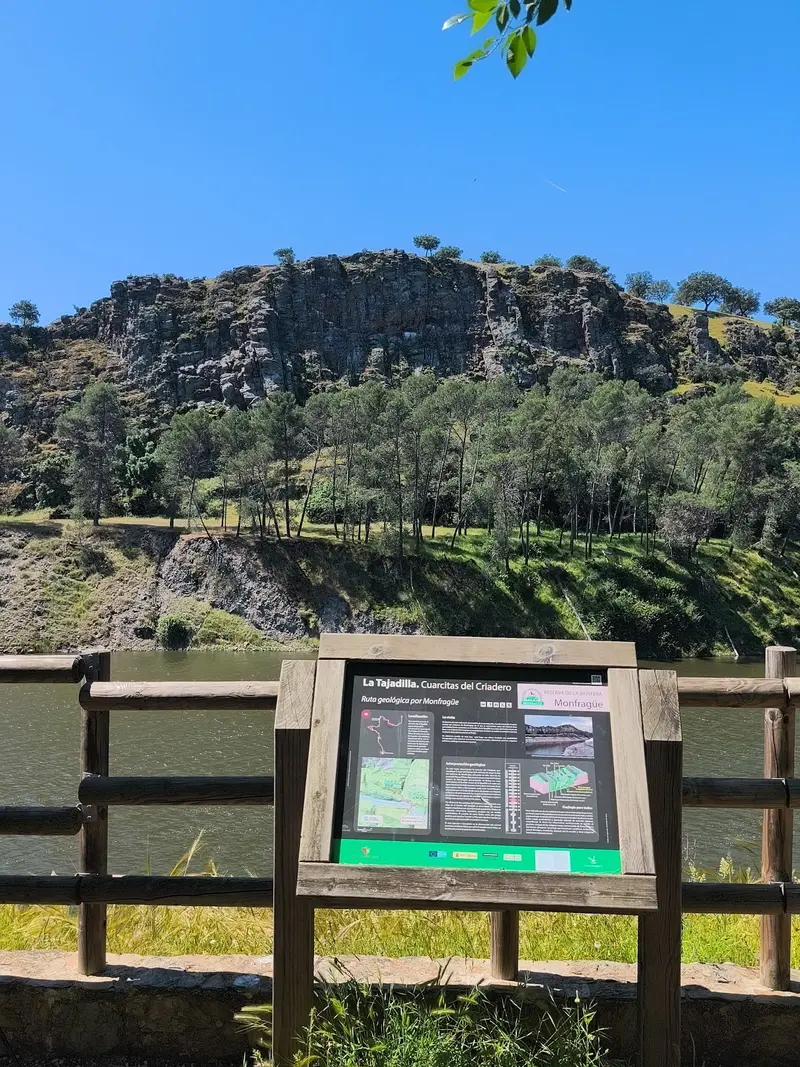
    The Mirador de la Tajadilla is located on the Tiétar, near the dam that regulates the river. It is considered one of the best places to observe Griffon Vultures, Egyptian Vultures, and Kites in their daily lives. A quieter spot than Salto del Gitano, it is well-suited to peacefully enjoy Monfragüe's nature.
    Open in Google Maps

    Restaurants & Cafes

    Restaurante Monfragüe

    Im Herzen von Villarreal de San Carlos gelegen, bietet Dir das Restaurante Monfragüe eine willkommene Gelegenheit, nach einem Tag in der Natur neue Kräfte zu sammeln. Hier kannst Du traditionelle extremadurische Küche genießen, oft mit lokalen Produkten wie iberischem Schwein oder Wild. Die Atmosphäre ist herzlich und bodenständig, perfekt, um die regionalen Spezialitäten in gemütlichem Ambiente zu probieren.
    Show on Google Maps

    Restaurante La Taberna de Monfragüe

    Nur einen Katzensprung vom Park entfernt, in Torrejón el Rubio, lädt Dich die Taberna de Monfragüe zu einer kulinarischen Entdeckungsreise ein. Das Restaurant ist bekannt für seine hausgemachten Speisen und eine authentische Atmosphäre. Probiere unbedingt die hervorragenden Fleischgerichte der Region und die Tapas, die mit frischen Zutaten zubereitet werden.
    Show on Google Maps

    Restaurante Azafrán

    Ebenfalls in Torrejón el Rubio gelegen, präsentiert sich das Restaurante Azafrán etwas moderner und bietet Dir eine raffiniertere Interpretation der lokalen Küche. Mit einem Fokus auf Qualität und kreative Zubereitung findest Du hier eine spannende Mischung aus traditionellen Aromen und innovativen Gerichten. Die elegante, aber entspannte Atmosphäre macht es zu einer ausgezeichneten Wahl für ein besonderes Abendessen.
    Show on Google Maps

    Monfragüe's Historical Heritage

    Monfragüe's history is closely intertwined with its strategic location and natural surroundings. Early human traces date back to prehistoric times. The Castillo de Monfragüe, according to contemporary chronicles, was built in the 9th century during a period of Muslim rule, bearing witness to its past as a borderland.The structural elements preserved today largely stem from later expansions by knightly orders in the service of Alfons VIII: The round tower dates from the 12th century, the pentagonal one from the 15th. In the 15th century, Bishop Juan de Carvajal had the Puente del Cardenal built over the Tajo; later, Karl III founded the village of Villarreal de San Carlos to combat banditry along the route.The surrounding villages and the typical Dehesa landscape reflect a traditional way of life, shaped by livestock farming and agriculture. The regional cuisine thrives on products from the Dehesa.

    Exploring Locally

    Monfragüe is a National Park and not an urban destination; public transport is extremely limited. Bus connections, if any, are only from surrounding cities like Plasencia or Trujillo to villages on the park's edge.Within the park, your own vehicle is the most flexible option to reach viewpoints and hiking trails; parking is available at key locations. For active travelers, bicycles are suitable for exploring the roads through the park.You can order taxis in nearby villages, but ride-sharing services are practically nonexistent. You can explore the park on foot via numerous marked trails. Plan your arrival in advance and rent a car if necessary.

    Accommodations in Monfragüe National Park

    Find perfect stay in Monfragüe National Park

    Booking.com* (Affiliate link)
    Search Hotels
    Agoda* (Affiliate link)
    Search Hotels
    Airbnb
    Vacation Rentals

    * Affiliate link: if you book through it, we earn a small commission. The price stays the same for you.

    Campgrounds in Monfragüe National Park

    Find perfect campground in Monfragüe National Park

    Search via Google Maps
    Campgrounds nearby (15km)
    Camping.info
    Find Campgrounds
    Park4Night
    RV Parks & Camping

    Nearby

    Plasencia

    Plasencia

    Plasencia, in the north of Extremadura, combines a lively present with a lot of history. The city is surrounded by medieval walls, the old town features two interconnected cathedrals, and the Plaza Mayor is the meeting point for locals.
    Trujillo

    Trujillo

    Trujillo, nestled in the vast landscape of Extremadura, takes you back to the age of the Spanish Conquistadors. Here Francisco Pizarro was born, and the city still displays the wealth of that epoch: a grand Plaza Mayor, noble palaces, and a castle on the granite hill above the old town.
    Cáceres

    Cáceres

    Cáceres boasts one of Spain's best-preserved old towns, designated a UNESCO World Heritage site. Stroll through cobblestone streets, past noble palaces, defensive towers, and Romanesque, Gothic, and Renaissance churches. Evenings, when the day visitors have departed, the upper town is especially tranquil.
    Extremadura

    Extremadura

    Extremadura, in western Spain, bordering Portugal, lies off the beaten path of mass tourism. Here you'll discover vast Dehesa landscapes, a history spanning from the Romans to the Conquistadors, and a cuisine featuring everything from Ibérico ham to smoked paprika from La Vera. The region is sparsely populated, ideal for travelers seeking to experience history and nature in tranquility.
    Monsanto

    Monsanto

    Monsanto clings to a granite mountain over the Beira Baixa plain. Houses are built between, under and on huge boulders; a castle ruin sits atop. In 1938 it was named "Portugal's Most Portuguese Village." Today it's part of the Aldeias Históricas.

    Sources & method

    • Photos: Unsplash, Google Maps. Each photo carries its credit.
    • The content is based on web research from public, traceable sources. How the content is made · The role of AI