Fernweh: Home
    ExploreTravel GuidesPlan a tripMy tripLast visited
    de|en
    All Places & RegionsAll highlightsAbout FernwehFAQPrivacy PolicyImprint
    ExploreTravel GuidesPlan a tripMy tripLast visited
    Zumaia und die Flysch-Route

    Spain

    Zumaia und die Flysch-Route

    Point of InterestNatureCulture

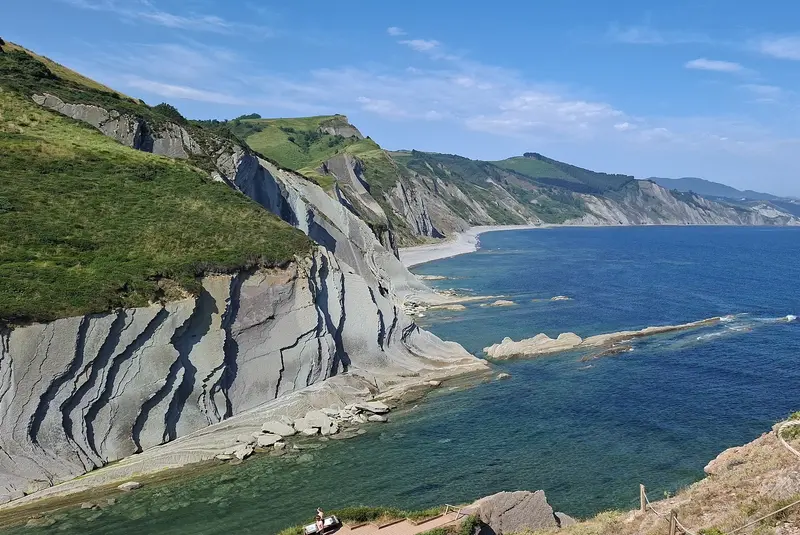
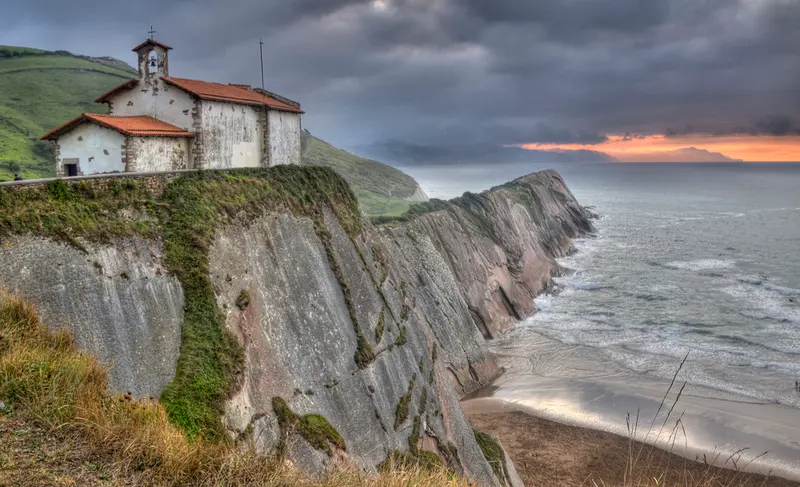
    On the coast near Zumaia, the Flysch Route exposes geological layers that document many millions of years of Earth's history.

    by Felix Gillen

    1. Home
    2. Destinations
    3. Spain
    4. Basqueland
    5. Zumaia und die Flysch-Route
    On the coast near Zumaia, the Flysch Route exposes geological layers that document many millions of years of Earth's history. The steeply uplifted rock layers shape an impressive cliff coast, which belongs to the UNESCO Geopark of the Basque Coast.

    Sehenswürdigkeiten

    Discover the most important sights and attractions

    Ermita de San Telmo
    Church

    1Ermita de San Telmo

    The chapel stands on the Flysch cliff above Itzurun Beach and is dedicated to Saint Telmo, the patron saint of sailors. It was first mentioned in 1540, and inside, there is an 18th-century Rococo altar made of unpainted wood. In 2013, scenes from the film Ocho apellidos vascos were shot here.
    Open in Google Maps
    Ignacio Zuloaga Museum
    Museum

    2Ignacio Zuloaga Museum

    The museum near Playa de Santiago is dedicated to the Basque painter Ignacio Zuloaga. In addition to his own paintings, it displays works from his collection, including works by El Greco and Goya.
    Open in Google Maps
    Flysch of Zumaia and Itzurun Beach
    Historic Landmark

    3Flysch of Zumaia and Itzurun Beach

    At Itzurun Beach and along the coast between Zumaia and Deba, vertically-oriented rock layers, known as Flysch, emerge from the sea. The easily accessible outcrops document millions of years of Earth's history; here lie the global reference profiles for the start of the Selandian and Thanetian stages of the Paleocene.
    Open in Google Maps
    Church of San Pedro
    Church

    4Church of San Pedro

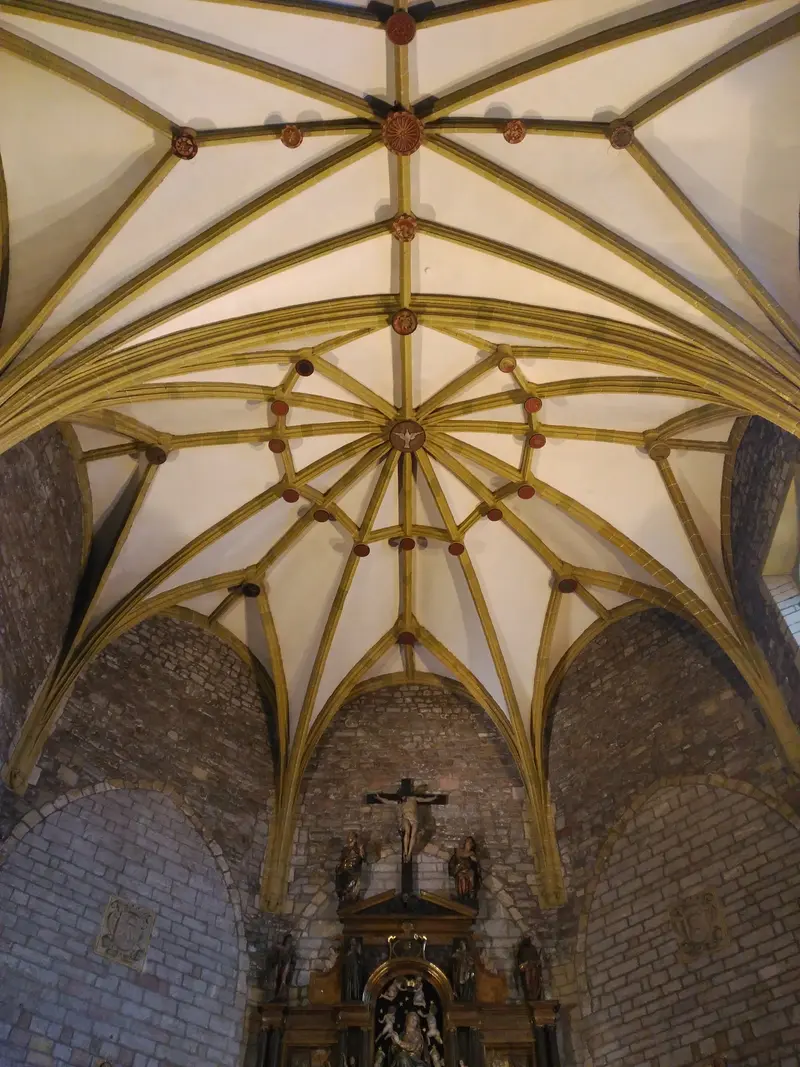
    The Gothic parish church in the town centre looks like a fortress; construction began shortly after the town's founding in 1347. The west tower is 34 metres high, its single-nave interior features a cross-ribbed vault. The high altar was designed by Juan de Antxieta and installed at the end of the 16th century.
    Open in Google Maps

    Essen & Trinken

    1

    Unami Pizza

    Restaurant in Aita Mari Auzategia Auzoa.
    Show on Google Maps
    2

    Trainera

    Bar in Lugar.
    Show on Google Maps
    3

    KANTAURI Taberna

    Restaurant in Plaza Kantauri.
    Show on Google Maps
    4

    Restaurante Idoia

    Bar in Julio Beobide Ibilbidea.
    Show on Google Maps
    5

    Txopa Gastrolekua

    Bar in Txomin Agirre Kalea.
    Show on Google Maps

    Accommodations in Zumaia und die Flysch-Route

    Find perfect stay in Zumaia und die Flysch-Route

    Booking.com* (Affiliate link)
    Search Hotels
    Agoda* (Affiliate link)
    Search Hotels
    Airbnb
    Vacation Rentals

    * Affiliate link: if you book through it, we earn a small commission. The price stays the same for you.

    Campgrounds in Zumaia und die Flysch-Route

    Find perfect campground in Zumaia und die Flysch-Route

    Search via Google Maps
    Campgrounds nearby (15km)
    Camping.info
    Find Campgrounds
    Park4Night
    RV Parks & Camping

    Nearby

    San Sebastián (Donostia)

    San Sebastián (Donostia)

    San Sebastián (Basque Donostia) is a coastal city in the Basque Country on La Concha Bay. Worth the trip for the city beach La Concha between Monte Urgull and Miramar Palace, the Pintxo bars of the Old Town, and a cuisine earning the city the reputation for more Michelin stars per square meter than any other.
    Basqueland

    Basqueland

    The Basque Country (País Vasco, Basque Euskadi) is an autonomous community in northern Spain with its own language, distinct culture, and long history. The Atlantic coast with sandy beaches and steep cliffs, green hills and mountains inland, vibrant cities, an internationally renowned cuisine, and modern architecture characterize the region.
    Bilbao

    Bilbao

    Bilbao is the largest city in the Basque Country and a prime example of successful urban regeneration. The Guggenheim Museum has transformed the former industrial city into a hub for art and culture.
    Biarritz

    Biarritz

    Biarritz, on France's Basque coast, blends seaside resort tradition with surf culture. In the 19th century, largely due to Empress Eugénie, the town became a meeting place for European nobility. Today, villas, the Grande Plage, and the *Rocher de la Vierge* define the cityscape. Besides renowned surf spots, there's the *Musée de la Mer*, an oceanarium dedicated to the Atlantic. From the Phare de Biarritz, you look out over the coast to the Pyrenees. Spring and autumn are quieter than mid-summer. You'll find Basque specialties in the market hall Les Halles.
    Vitoria-Gasteiz

    Vitoria-Gasteiz

    Vitoria-Gasteiz is the seat of the Basque Government and Parliament and was the 'European Green Capital' in 2012. The city has a well-preserved medieval center, many parks and green spaces, and a relaxed atmosphere.

    Sources & method

    • Photos: Unsplash, Google Maps. Each photo carries its credit.
    • Place data such as addresses and ratings comes from Google Maps.
    • The content is based on web research from public, traceable sources. How the content is made · The role of AI