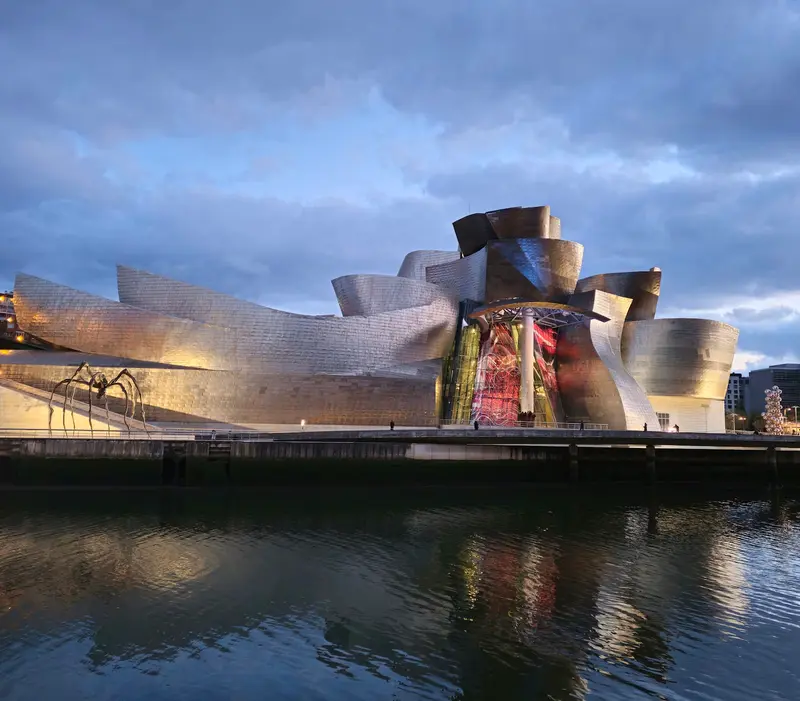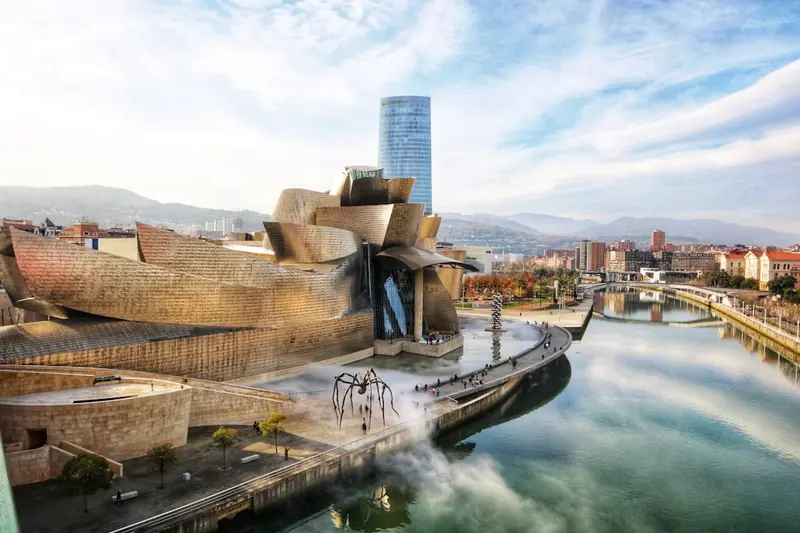
As the largest city in the Basque Country, Bilbao is an impressive example of successful urban regeneration and famous for the iconic Guggenheim Museum, which has transformed the city into a centre for art and culture.
Bilbao, the largest city in the Basque Country, exemplifies successful urban renewal, blending modern architecture with a rich cultural heritage. The iconic Guggenheim Museum, designed by Frank Gehry, forms the heart of its art scene and significantly shaped the city's transformation. You should definitely explore the historic Casco Viejo, where narrow streets lead to the Santiago Cathedral and traditional pintxos bars. A visit to the Mercado de la Ribera, one of Europe's largest covered markets, offers insights into local gastronomy and fresh produce. For panoramic views of the city and the Nervión Delta, a ride on the Funicular de Artxanda is highly recommended. The districts of Abando and Indautxu feature wide boulevards and contemporary architecture, ideal for strolling and discovery. To experience the city at a relaxed pace, plan your stay in spring or autumn, outside of peak season.
Places in Bilbao
Discover the most important sights and attractions
Sights in Bilbao
Atyla Ship Foundation
The Atyla Ship Foundation in Bilbao is a unique educational project at sea. The Atyla, an impressive two-masted schooner, was built modeled after 18th-century Spanish ships. Its mission is to foster teamwork, leadership skills, and intercultural exchange through adventure sailing. Here, you won't experience a static museum, but rather a vibrant maritime heritage that actively contributes to personal development. When the Atyla is anchored in Bilbao, you have the opportunity to visit the ship and learn more about its role as a "sailing school at sea." The foundation often offers open days where you can explore the traditional rigging and its history. It's a rare opportunity to experience an authentic sailing ship that combines historical seafaring with modern education. Practical Tip: As the Atyla travels worldwide, its location is variable. Before your visit, check the official website of the Atyla Ship Foundation for current mooring times and visiting opportunities in Bilbao. For the best photo of the ship in the harbor, a walk along the Ría de Bilbao in the early morning is recommended.
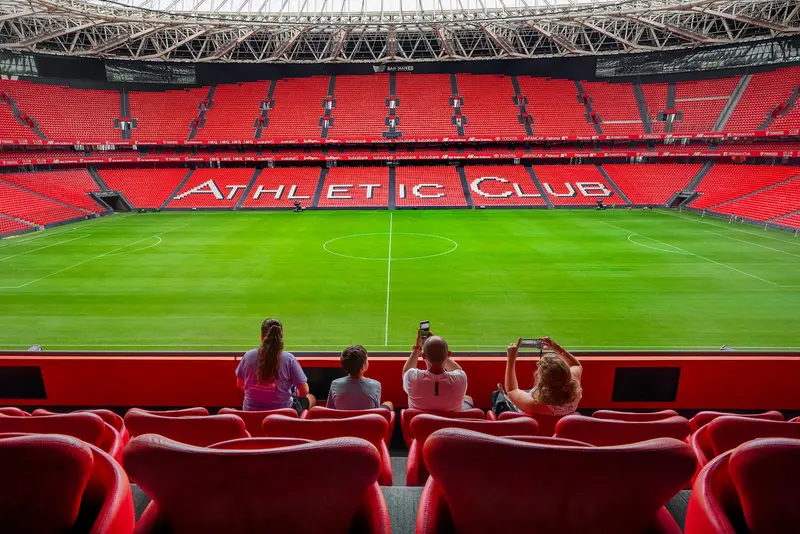
The Athletic Club Museoa and the tour through San Mamés Stadium offer a deep insight into the unique world of one of Spain's most traditional football clubs. Athletic Bilbao is known for its strict philosophy of only signing players with Basque roots or from its own youth academy, making the club a strong symbol of Basque identity. In the museum, you discover the club's rich history, admire numerous trophies, including the Copa del Rey, and learn about legendary players who have shaped the history of "Los Leones." The stadium tour takes you through the hallowed halls of "La Catedral": You enter the changing rooms, the press room, and walk through the player tunnel directly to the pitch side, where you can feel the impressive atmosphere of the modern stadium. A practical tip: Book your tickets online in advance to avoid waiting times, especially on weekends. For the best photos of the pitch without crowds, a visit right after opening in the morning is recommended.
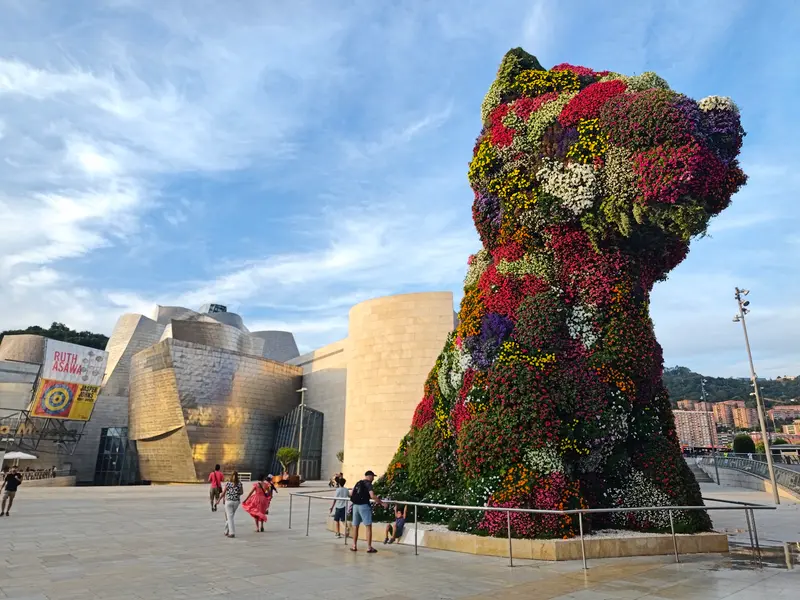
The monumental sculpture "Puppy" by Jeff Koons has been an iconic landmark of Bilbao since 1997, standing majestically in front of the Guggenheim Museum. This 12.4-meter-tall depiction of a West Highland White Terrier consists of a steel structure planted with thousands of living flowers. Originally created for an exhibition in Germany, "Puppy" was permanently installed in Bilbao for the museum's opening, symbolizing a playful yet imposing guard at the entrance. The flowers are changed seasonally twice a year, giving the artwork a constantly fresh, vibrant appearance. Here, you'll experience a fascinating blend of nature and art, harmoniously integrating with the museum's modern architecture while forming a strong contrast. Our tip: Visit "Puppy" ideally in the early morning to avoid the crowds and observe the flower details in peace. For an impressive overall view with the Guggenheim in the background, the perspective from the opposite bank of the Ría is ideal.
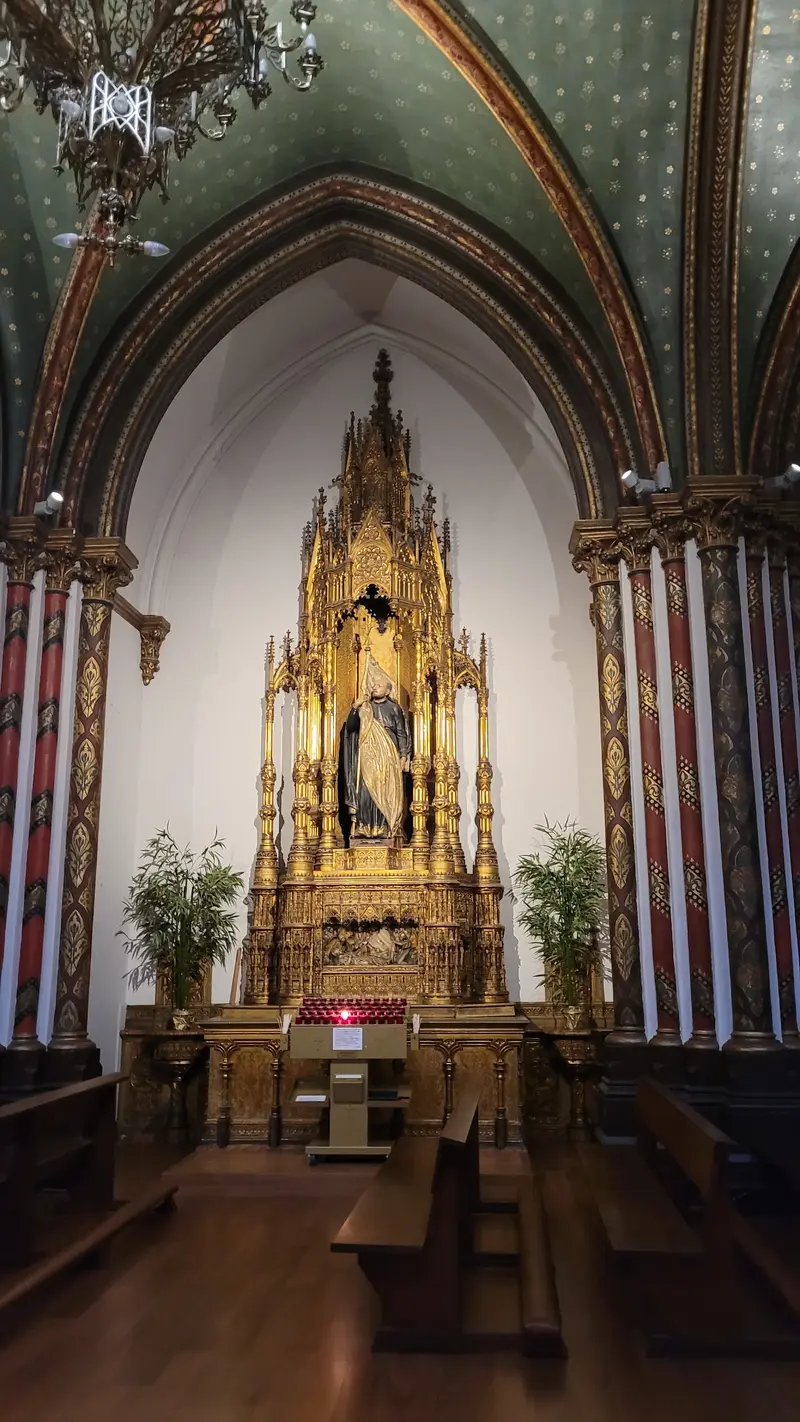
The Bihotz Sakratuaren eliza, also known as the Iglesia del Sagrado Corazón de Jesús, is a striking Neo-Gothic building at the end of Gran Vía in Bilbao. Constructed between 1889 and 1912 following the plans of architect José María Basterra, it significantly shapes the cityscape. You will be impressed by its imposing facade with two slender towers and elaborate stonework. Inside, you will find high vaults, intricate stained-glass windows depicting biblical scenes, and a magnificent main altar dedicated to the Sacred Heart of Jesus. The church serves not only as an active sacred building but also stands as a significant testament to the religious architecture of the late 19th and early 20th centuries in the region. Our Tip: Visit the church in the morning, when the light streams through the colorful stained-glass windows, bathing the interior in a special atmosphere. For an impressive exterior view and photos without distracting elements, we recommend looking from the opposite end of Gran Vía, especially in the early morning hours before the hustle and bustle begins.
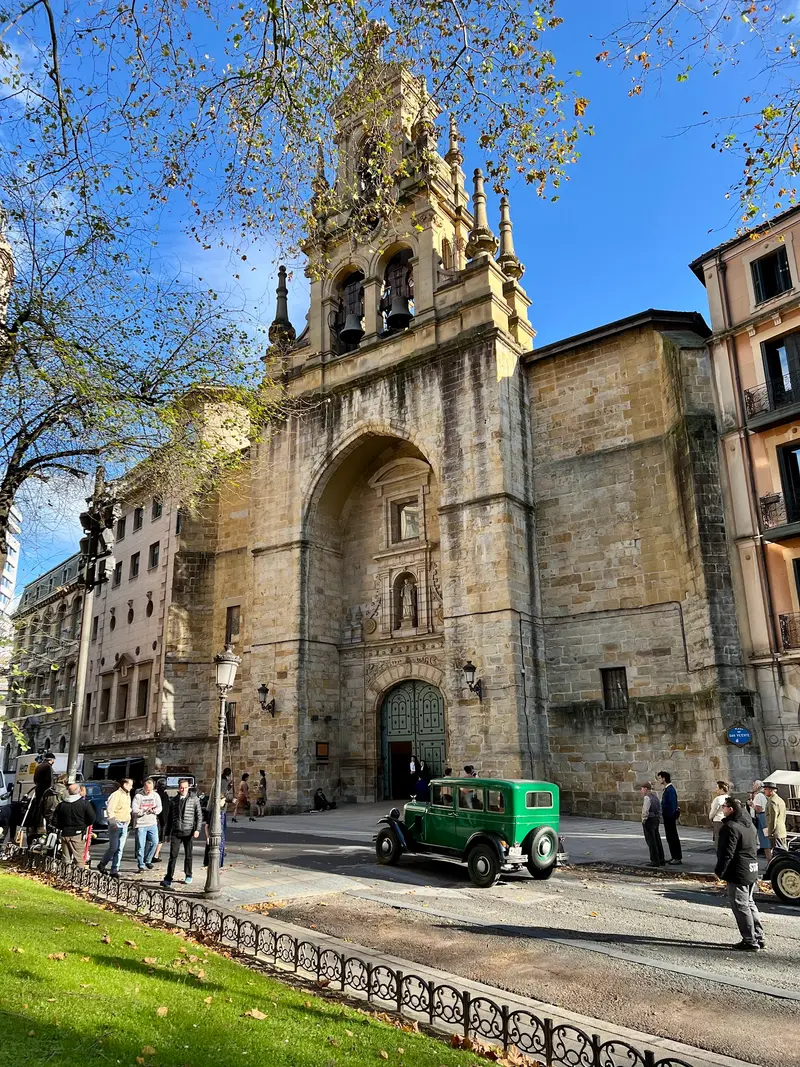
The Church of San Vicente de Abando is a significant testament to Bilbao's religious architecture and ranks among the city's oldest sacred buildings. Originally founded as a hermitage in the 12th century, the current structure was built in the 16th century in a late Gothic style, where you will also discover clear Renaissance elements in its design. Its robust stone architecture and the simple elegance of its three-nave interior reflect the architectural style of that era.Inside, an impressive main altarpiece and several side chapels await you, representing various epochs of Bilbao's art history. The church long served as the parish church for the then village of Abando, before it was incorporated into the city of Bilbao, and is thus an important testament to urban development. Our Tip: Visit the church in the morning, shortly after opening, to quietly appreciate the architecture and let its details impress you without large crowds. For a good exterior shot of the entire facade, the square directly in front of it is ideal.
Curated walking tours through the city's highlights — handpicked by experienced travel journalists.
Bilbaos Facetten: Eine Reise von Moderne zu Historie
Entdecken Sie Bilbao auf einem malerischen Spaziergang, der Sie von der futuristischen Architektur des Guggenheim Museums durch elegante Boulevards zum pulsierenden Herzen der Altstadt führt. Erleben Sie den einzigartigen Mix aus baskischer Tradition und zeitgenössischem Flair auf dieser etwa 2-stündigen Tour.
Bilbao, once a significant center of Basque industry, has transformed over the centuries from a medieval trading port into a modern cultural metropolis. The city, officially founded in 1300, experienced a boom thanks to the iron ore trade and shipbuilding, which significantly shaped its urbanization. Today, Bilbao's architecture tells a fascinating story of tradition and forward-looking design.The architectural spectrum ranges from the winding Casco Viejo with its Gothic Santiago Cathedral to the elegant 19th-century Art Nouveau buildings of the Gran Vía. A turning point was the opening of Frank Gehry's Guggenheim Museum in 1997, which established Bilbao internationally as a hotspot for contemporary architecture and art. Further prominent structures like Santiago Calatrava's Zubizuri Bridge or Cesar Pelli's Iberdrola Tower underscore this modern transformation.Culturally, Bilbao is deeply rooted in its Basque identity, evident in the preservation of the Euskera language and numerous traditions. The vibrant Pintxo culture is a central part of social life and gastronomy. Significant cultural institutions alongside the Guggenheim include the Museo de Bellas Artes, which houses an extensive collection of classical and modern art, as well as the Arriaga Theatre. The annual Aste Nagusia (Great Week) is a celebration of Basque culture with music, dance, and sports.
Exploring locally
Bilbao is excellent for exploring on foot, especially the charming Old Town (Casco Viejo) and the Museum Quarter, with many main attractions located close together. For longer distances, the city offers an efficient and modern public transport network. The Metro Bilbao, known for its Norman Foster architecture, gets you around the city quickly, while buses and the modern tram also connect more distant districts.For all public transport, the rechargeable Barik card is recommended, which offers significant discounts compared to single tickets and is conveniently available at stations or kiosks. Alternatively, local apps, such as the one for Bilbobus, provide real-time information and ticket options on your smartphone. Renting bicycles, for example through the city's system Bilbao Bizi!, or e-scooters is also a popular and eco-friendly way to experience the city, thanks to well-developed cycle paths. Taxis and ride-sharing services are also available, offering comfort, especially after dark or for trips to destinations outside the center. Plan your routes in advance for a relaxed and efficient exploration of Bilbao.
These places are nearby — perfect for additional days or a day trip.
País Vasco
Das País Vasco, oder Baskenland, ist eine autonome Gemeinschaft im Norden Spaniens, die sich durch ihre einzigartige Kultur, reiche Geschichte und atemberaubende Landschaften auszeichnet. Von den goldenen Stränden und rauen Klippen der Atlantikküste bis zu den grünen Hügeln und majestätischen Bergen im Landesinneren bietet es eine faszinierende Mischung aus urbanem Flair und ursprünglicher Natur, gekrönt von einer weltberühmten Gastronomie und avantgardistischer Architektur.
Vitoria-Gasteiz
Die Hauptstadt des Baskenlandes und „Grüne Hauptstadt Europas“ besticht durch ihr gut erhaltenes mittelalterliches Zentrum, ihre vielen Parks und Gärten sowie eine entspannte Atmosphäre.
Zumaia und die Flysch-Route
Entlang der Küste bei Zumaia offenbart die einzigartige Flysch-Route geologische Formationen von Millionen von Jahren, die spektakuläre Einblicke in die Erdgeschichte und eine dramatische Landschaft bieten.
Haro
Haro, the wine capital of Rioja Alta, is deeply connected to Spanish wine culture, offering an authentic experience. Here you'll find the historic Barrio de la Estación, a unique cluster of old wineries that have been producing wine since the 19th century. In the city center, the Plaza de la Paz, with its Town Hall and the Basilica de Nuestra Señora de la Vega, shapes the scene. The Church of Santo Tomás impresses with its late Gothic portal and Renaissance tower. A yearly highlight is the Batalla del Vino on June 29th, a traditional wine festival. If you plan your visit in spring or autumn, you'll experience the region with pleasant temperatures and fewer crowds. For a comprehensive wine tasting, you should book tours in advance at the wineries of Barrio de la Estación.
San Sebastián (Donostia)
Die elegante Küstenstadt San Sebastián ist weltweit bekannt für ihre wunderschöne Bucht La Concha, ihre lebendige Pintxo-Kultur und ihre Rolle als eine der führenden gastronomischen Städte Europas.