ExploreTravel GuidesPlan a trip
    de|en
    All Places & RegionsAbout FernwehFAQPrivacy PolicyImprint
    ExploreTravel GuidesPlan a trip
    Comillas
    Village

    Spain

    Comillas

    The coastal town of Comillas became a hub for Catalan architects in the 19th century, thanks to the Marqués de Comillas.

    1. Home
    2. Destinations
    3. Spain
    4. Cantabria
    5. Comillas
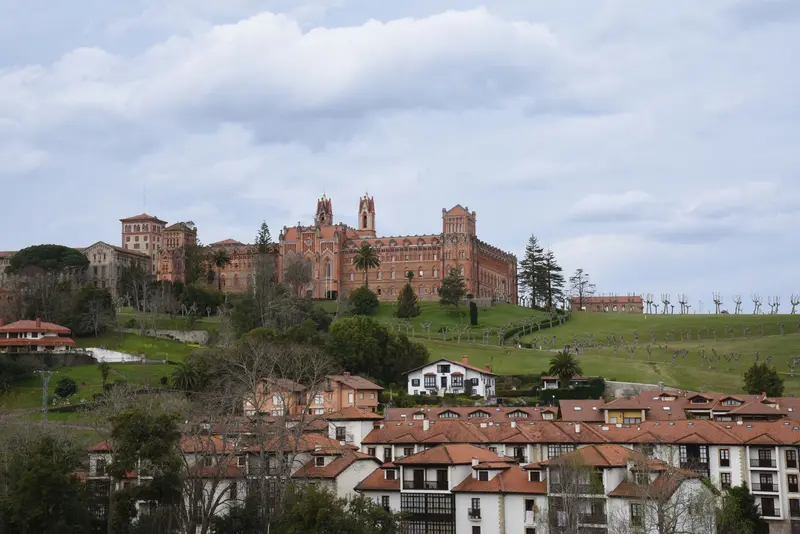
    The coastal town of Comillas became a hub for Catalan architects in the 19th century, thanks to the Marqués de Comillas. It is home to Gaudí's El Capricho, the Palacio de Sobrellano, and the former Pontifical University, plus a long sandy beach.
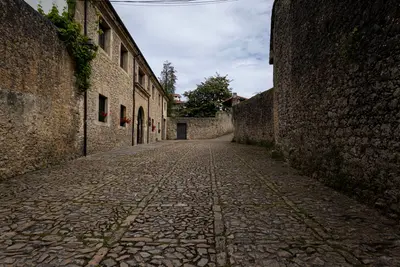
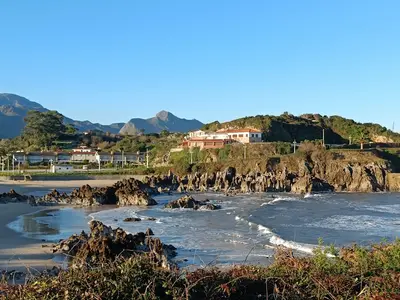
    Comillas is a town of just over 2,000 inhabitants on Cantabria's west coast, about 50 kilometers from Santander. Surrounding its small old town of squares and stone houses, palaces and buildings of Catalan Modernisme dot the hills, distinguishing it from other coastal villages. Below, a sandy beach and a small fishing harbor stretch out. The distances between the sights are short; you can see the main attractions on foot in one day.

    Sights in Comillas

    Discover the most important sights and attractions

    Museum

    El Capricho de Gaudí

    The summer villa Villa Quijano was built from 1883 to 1885 based on plans by the young Antoni Gaudí. Green ceramic tiles with sunflowers, cast-iron balconies, and a slender, minaret-like tower characterize the house, which is accessible today as a museum.
    Open in Google Maps
    Museum

    Palacio de Sobrellano

    The Neo-Gothic palace of the Marqués de Comillas was designed by Joan Martorell and completed at the end of the 19th century. On guided tours, you'll see halls with furniture, some of which is by Gaudí; next to it stands the family's burial chapel.
    Open in Google Maps

    Sights in Comillas

    Discover the most important sights and attractions

    Museum

    1El Capricho de Gaudí

    The summer villa Villa Quijano was built from 1883 to 1885 based on plans by the young Antoni Gaudí. Green ceramic tiles with sunflowers, cast-iron balconies, and a slender, minaret-like tower characterize the house, which is accessible today as a museum.
    Open in Google Maps
    Museum

    2Palacio de Sobrellano

    The Neo-Gothic palace of the Marqués de Comillas was designed by Joan Martorell and completed at the end of the 19th century. On guided tours, you'll see halls with furniture, some of which is by Gaudí; next to it stands the family's burial chapel.
    Open in Google Maps

    Restaurants in Comillas

    Food & Beverages

    Fish from the Port

    Around the harbor and the plaza, restaurants serve fish, seafood, and Rabas.

    Cocido montañés

    The hearty bean stew of Cantabria is especially on many menus in winter.

    Custom

    Modernisme on the Bay of BiscayAntonio López y López hailed from Comillas, made a fortune in Cuba and Barcelona and became the first Marqués de Comillas. At the end of the 19th century, he brought Catalan architects to his hometown. Joan Martorell designed the Neo-Gothic Palacio de Sobrellano and the seminary, while Lluís Domènech i Montaner created the cemetery with Josep Llimona's angel on a church ruin.Here, the young Antoni Gaudí built El Capricho, a summer villa with green ceramic tiles and a minaret-like tower, one of his few works outside Catalonia.

    Exploring locally

    ALSA buses connect Comillas with Santander, Santillana del Mar, and San Vicente de la Barquera. By car, you can reach the town via the A-8 motorway. In town, explore on foot; the buildings on the hills are just a few minutes apart.

    Accommodations in Comillas

    Find perfect stay in Comillas

    Booking.com* (Affiliate link)
    Search Hotels
    Agoda* (Affiliate link)
    Search Hotels
    Airbnb
    Vacation Rentals

    * Affiliate link: if you book through it, we earn a small commission. The price stays the same for you.

    Campgrounds in Comillas

    Find perfect campground in Comillas

    Search via Google Maps
    Campgrounds nearby (15km)
    Camping.info
    Find Campgrounds
    Park4Night
    RV Parks & Camping

    Nearby

    Santillana del Mar

    Santillana del Mar

    Santillana del Mar is a medieval town with cobblestone streets, heraldic houses, and the Romanesque Collegiate Church of Santa Juliana. About two kilometers away is the Altamira Cave, whose Stone Age paintings can be seen in the museum with a faithful replica.
    Cantabria

    Cantabria

    Cantabria lies between Asturias and the Basque Country on the Bay of Biscay. The capital Santander with its bay, medieval Santillana del Mar, and the Modernisme buildings of Comillas are located close to each other. Inland rise the Picos de Europa, and in caves like Altamira are found some of the most significant Paleolithic cave paintings.
    Llanes

    Llanes

    Llanes, a charming coastal town in Asturias, combines maritime history with impressive nature. Here you'll find a well-preserved old town with medieval walls and the historic Torreón. The lively harbour is the heart of the town, where fishing boats and Agustín Ibarrola's colourful art installation Cubos de la Memoria define the scene. Along the coast, you'll discover unique beaches like Playa de Toró with its striking rock formations or the bizarre Playa de Gulpiyuri, a small saltwater inland lake. The Paseo de San Pedro offers spectacular views of the Cantabrian Sea and the Picos de Europa in the background. It's best to visit Llanes in late spring or early autumn to enjoy mild temperatures and fewer visitors. A stroll through the old town's alleys reveals traditional Asturian architecture and cozy Sidrerías.
    Santander

    Santander

    Santander, the capital of Cantabria, is located on a wide bay of the Bay of Biscay. Largely rebuilt after the city fire of 1941, today the cityscape is shaped by the La Magdalena peninsula with its palace, the beaches of Sardinero, and the Centro Botín at the harbour.
    Picos de Europa Nationalpark (Cangas de Onís)

    Picos de Europa Nationalpark (Cangas de Onís)

    Als Tor zum Picos de Europa Nationalpark bietet die Region um Cangas de Onís atemberaubende Berglandschaften, die heilige Stätte Covadonga und unzählige Möglichkeiten für Outdoor-Aktivitäten.