Welcome to Catalonia, a fascinating region in northeastern Spain that will captivate you with its unparalleled blend of vibrant city life, breathtaking coastal landscapes, and alpine beauty.
Welcome to Catalonia, a fascinating region in northeastern Spain that will captivate you with its unparalleled blend of vibrant city life, breathtaking coastal landscapes, and alpine beauty. Here, you'll experience a unique culture, reflected in Gaudí's distinctive architecture, its rich history, and excellent gastronomy.
Katalonien, im Nordosten Spaniens gelegen, zeichnet sich durch seine kulturelle Eigenständigkeit und geografische Vielfalt aus. Die Hauptstadt Barcelona fasziniert dich mit Antoni Gaudís architektonischen Meisterwerken wie der Sagrada Família und dem Park Güell sowie dem historischen Gotischen Viertel. Entlang der Costa Brava erwarten dich malerische Buchten und charmante Fischerdörfer, während das Hinterland bis zu den Pyrenäen beeindruckende Berglandschaften bietet. Die katalanische Küche, bekannt für ihre Meeresfrüchte und traditionellen Gerichte wie Pa amb tomàquet, spiegelt die regionale Identität wider. Für eine entspannte Erkundung der Städte und Küsten empfiehlt sich die Reise im Frühling oder Herbst. Ein Besuch des Klosters Montserrat bietet zudem eine spektakuläre Aussicht und kulturelle Tiefe.
Place 1 of 4
Lleida
Lleida, often overlooked but full of character, is a fascinating city in the heart of Catalonia that will captivate you with its rich history and authentic atmosphere.
Barcelona, the capital of Catalonia and Spain's second-largest city, lies right on the Mediterranean and combines a Gothic old town, a city beach and the buildings of Catalan Modernisme.
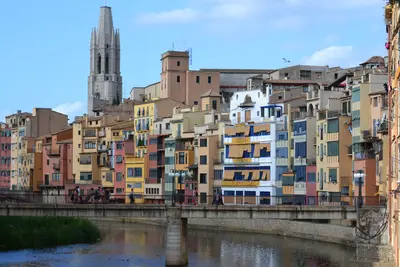
The Catalan city of Girona captivates with its rich history and picturesque setting. Along the Onyar River, colorful houses line its banks, while the well-preserved Barri Vell, the Old Quarter, entices with narrow alleys and medieval charm.
The rugged mountain massif northwest of Barcelona is home to a Benedictine monastery and is a significant spiritual center of Catalonia, with hiking trails and sweeping panoramic views.
Sitges, located approximately 35 kilometers southwest of Barcelona, between the Garraf Massif and the Mediterranean Sea, offers beaches and a rich artistic heritage.The painter Santiago Rusiñol settled here in the late 19th century; his former home and studio is now the Museum Cau Ferrat. Nearby is the Palau de Maricel, commissioned by the American collector Charles Deering.The Baroque Església de Sant Bartomeu i Santa Tecla stands on the headland La Punta, directly by the sea, near the two museums.Explore the narrow streets of the Old Town and the promenade leading to the beaches.Visit Sitges in spring or autumn, when it's quieter than in high summer.
Tarragona is a city with a rich Roman heritage on Spain's Costa Daurada. Here you'll discover the impressive Roman amphitheater, the circus, and well-preserved city walls, all part of a UNESCO World Heritage site. The Part Alta, the historic upper town, houses the imposing Santa Tecla Cathedral and winding alleys perfect for strolling. Beyond its ancient sites, the city also boasts beautiful beaches and a vibrant culinary scene, renowned for fresh seafood. For historical insights into the region's past, visit the Archaeological Museum. Ideally, visit Tarragona in spring or autumn to explore its attractions in pleasant temperatures and with fewer crowds. A stroll along the Balcó del Mediterrani also offers expansive views over the Mediterranean Sea.
High in the Catalan Pyrenees lies the Vall de Núria, a secluded valley nearly 2,000 meters high, inaccessible by road: You can get up there by rack railway from Ribes de Freser or Queralbs or on foot via the old pilgrim's path. The valley is a hiking and small ski area and also a pilgrimage site, well suited for quiet days in the mountains.
Sights in Catalonia
Discover the most important sights and attractions
Sagrada Família, Barcelona
Immerse yourself in Antoni Gaudí's unfinished masterpiece, the Sagrada Família, which majestically towers over the Barcelona skyline. This basilica is a true marvel of Modernisme, its detailed façades and luminous interiors will captivate you with their symbolism and innovative architecture. Every corner tells a story, and the construction progress, which spans decades, makes it a living monument to architectural art that you absolutely must experience for yourself.
Discover the spiritual and scenic beauty of Montserrat, the “saw mountain,” which rises dramatically from the Catalan plain. This unique natural phenomenon is home to a Benedictine monastery, where the Black Madonna (La Moreneta), the patron saint of Catalonia, is venerated. Enjoy the breathtaking views, explore the hiking trails, and let yourself be enchanted by the peaceful atmosphere of this special place, which will immediately captivate you with its majestic presence.
The Dalí Theatre-Museum in Figueres was conceived and designed by Salvador Dalí himself, and he is buried in its crypt at the center of the museum. The museum is not an ordinary exhibition space, but a total work of art that showcases Dalí's eccentric art in many facets. From the geodesic dome designed by architect Emilio Pérez Piñero to the illusions and installations, you will find a collection of Dalí's works here that can both puzzle and captivate you.
Stroll the winding alleys of Girona's historic old town, transporting you back in time. Admire the magnificent Cathedral with its wide nave and explore the former Jewish Quarter, El Call, with its unique charm. The colorful houses directly on the Onyar River are especially photogenic, recalling Florence. Girona offers a perfect blend of history, architecture, and vibrant atmosphere, a must-see on any Costa Brava visit.
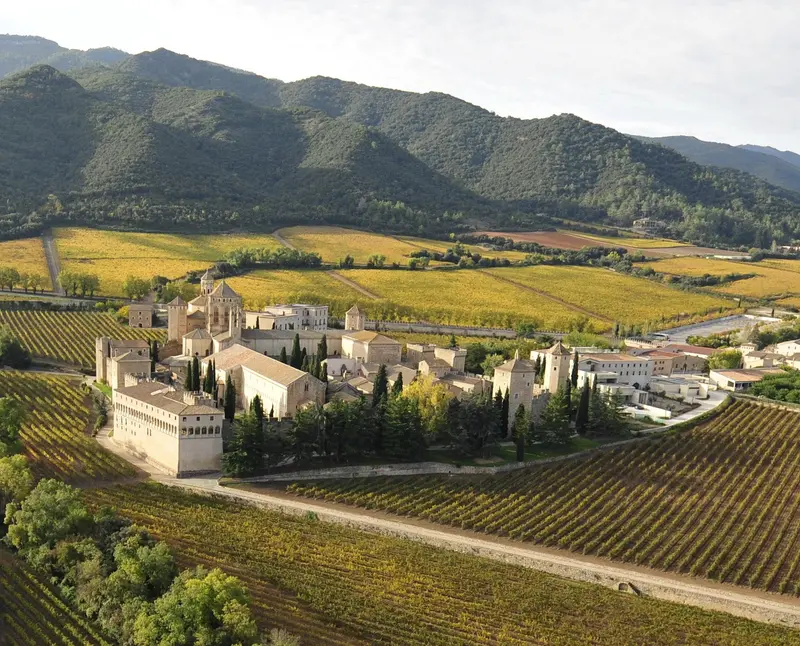
Founded in 1150, the Cistercian monastery at the foot of the Muntanyes de Prades is considered Europe's largest inhabited monastic complex. From the 14th century, it became the burial place for the Kings of the Crown of Aragon, whose tombs you can see in the church. Monks live here today; the complex can be visited.
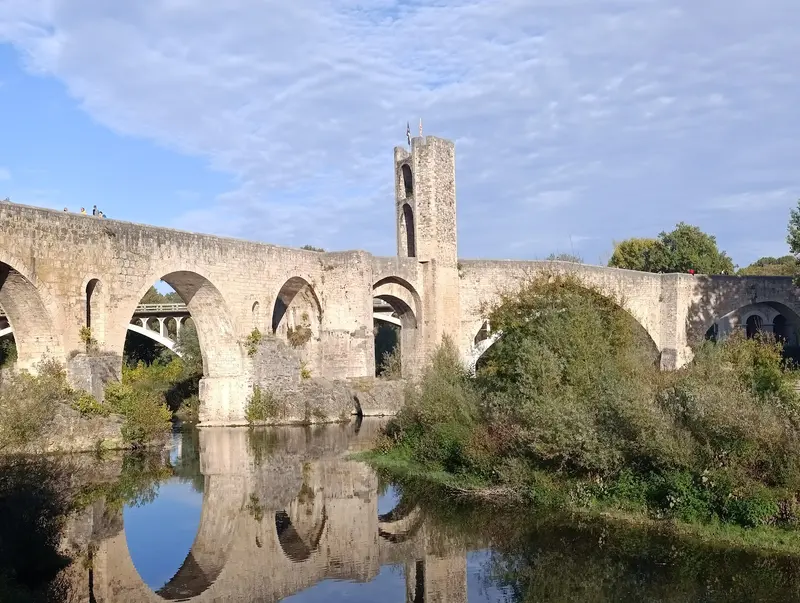
The medieval town in Garrotxa grew around a castle between the Fluvià and Capellades rivers. Its landmark is the Romanesque bridge over the Fluvià, which, with seven unequal arches, leads at an angle to the fortified town gate and was once part of the route from Girona to Olot.
Experience authentic Catalan cuisine in a historic setting at Can Culleretes, Barcelona's oldest restaurant. Here you'll enjoy traditional dishes like "Escudella i Carn d'Olla" or "Fricandó" in a rustic atmosphere that has delighted guests since 1786. A visit is like a journey back in time, offering you a true insight into the city's culinary history.
At the three-Michelin-starred restaurant Disfrutar, let yourself be enchanted by avant-garde and creative cuisine of the highest caliber. Here, the former El Bulli chefs create a unique culinary experience that engages all senses and delights you with innovative textures and surprising flavor combinations. It is a true journey of discovery for gourmets that you shouldn't miss if you are looking for an unforgettable meal.
Immerse yourself in the authentic atmosphere of La Cova Fumada in Barceloneta, a humble but legendary bar known as the birthplace of the 'Bomba' – a fried potato ball with spicy sauce. Here you'll find fresh seafood, tapas, and traditional Catalan dishes at fair prices, served in a lively, local ambiance. Be prepared to queue, as this spot is a true hidden gem among locals.
Discover the unique cuisine of the Restaurant Les Cols in Olot, a Two-Michelin-starred restaurant located in the heart of the volcanic region of La Garrotxa. Here, you'll experience a deeply rooted, seasonal, and locally inspired gastronomy, presented in a minimalist yet impressive farmhouse setting. The dishes reflect the surrounding landscape and offer a harmonious blend of tradition and modernity that will leave a truly lasting impression on you.
Diese Monate bieten milde bis warme Temperaturen, weniger Niederschlag als im Winter und Herbst, sowie angenehme Wassertemperaturen für einen Badeurlaub in der Übergangszeit. Die Besucherzahlen sind moderater als in der Hochsaison.
Katalonien verfügt über ein vielfältiges Klima, das hauptsächlich mediterran geprägt ist, aber aufgrund seiner geografischen Lage erhebliche regionale Unterschiede aufweist:Küstenregion (z.B. Barcelona, Costa Brava): Hier herrscht ein typisches Mittelmeerklima mit heißen, trockenen Sommern und milden Wintern. Die Niederschläge konzentrieren sich auf Frühling und Herbst, oft in Form von kurzen, aber intensiven Schauern. Die Luftfeuchtigkeit ist an der Küste tendenziell höher.Binnenland und Zentral-Katalonien (z.B. Lleida, Vic): Weiter im Landesinneren nimmt der mediterrane Einfluss ab und geht in ein kontinentaleres Klima über. Die Sommer sind heißer und trockener, die Winter kälter mit häufigerem Frost und Nebel. Die Temperaturunterschiede zwischen Tag und Nacht sowie zwischen den Jahreszeiten sind hier ausgeprägter.Pyrenäenregion (z.B. Val d'Aran, Andorra): Im Norden dominieren Gebirgsklimata mit kälteren Wintern, reichlich Schnee und frischen, kurzen Sommern. Die Niederschläge sind das ganze Jahr über höher als in anderen Regionen, oft als Schnee in den höheren Lagen.Es gibt keine ausgeprägte Regen- oder Trockenzeit im tropischen Sinne, sondern eher trockene Sommer und feuchtere Perioden im Frühling und Herbst. Starke Winde, wie der Mistral oder die Tramontana, können besonders in den nördlichen Küstenabschnitten vorkommen und für kühlere Temperaturen sorgen.
Seasons
Jan
Feb
Mar
Apr
May
Jun
Jul
Aug
Sep
Oct
Nov
Dec
Hauptsaison
Übergangszeit
Nebensaison
Best Time to Visit
▶Show detailed monthly data
Month
Temp (°C)
Rain (mm)
Sun (h)
January
10.0
45
5.0
February
11.0
35
6.0
March
13.0
45
6.0
April
16.0
55
7.0
May
20.0
60
8.0
June
24.0
30
9.0
July
27.0
20
10.0
August
27.0
35
9.0
September
23.0
70
7.0
October
19.0
80
6.0
November
14.0
60
5.0
December
11.0
50
4.0
Culture, Art, and History of Catalonia
Catalonia boasts a deeply rooted history, spanning from Roman beginnings to its golden age as a maritime power of the Crown of Aragon in the Middle Ages. This long evolution forged a distinct identity, particularly manifesting in the 19th-century Renaixença, a powerful revival of Catalan language and culture.Catalonia's architecture is a mirror of this history, from impressive Romanesque churches and Gothic cathedrals to the unique Modernisme Català. Names like Antoni Gaudí and Lluís Domènech i Montaner shaped Barcelona's cityscape with their works and are part of the UNESCO World Heritage.Cultural traditions are vibrant and diverse. The impressive Castells, human towers, are an intangible UNESCO cultural heritage and symbolize community and courage. The traditional circle dance Sardana also fosters cohesion, while April 23rd, Sant Jordi, celebrates the love for literature and romance with the exchange of books and roses.The rich gastronomy with specialties like Cava and Calçots, as well as colorful festivals like the Correfocs (fire runs), underscore Catalonia's distinct regional autonomy and cultural heritage.