First mountains, then sea: From Bangkok, you travel to Chiang Mai, over the winding mountain road to Pai and on to Chiang Rai. From there, you fly via Bangkok to Krabi and cross by minibus and car ferry to Koh Lanta, where you spend a week at the end.
20 Days / 19 Nights
November–März
5 stops
Why This Route?
For anyone wanting to explore the North in depth, then unwind on the beach.
Hidden Gems
Tha Pai Hot Springs near Pai
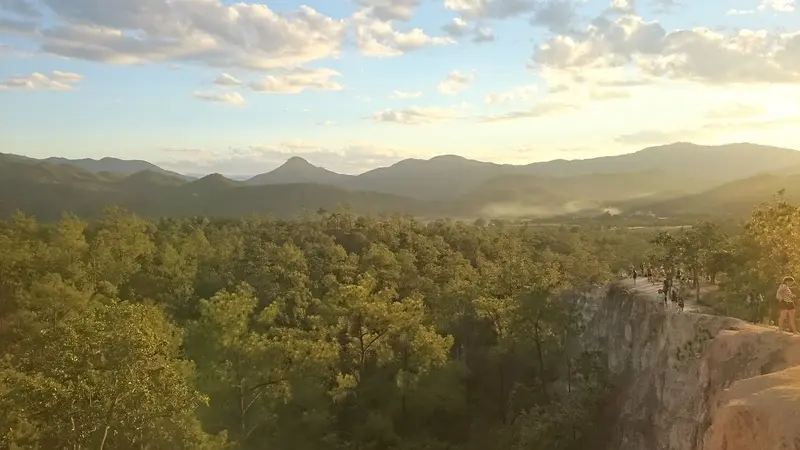
Pai Canyon for sunset
Lanta Old Town with stilt houses on Koh Lanta's east coast
Itinerary
Stop 1 • 3 Nights
Bangkok
City
Perfect for an exciting city trip. Rich in culture and history and Culinary highlights.
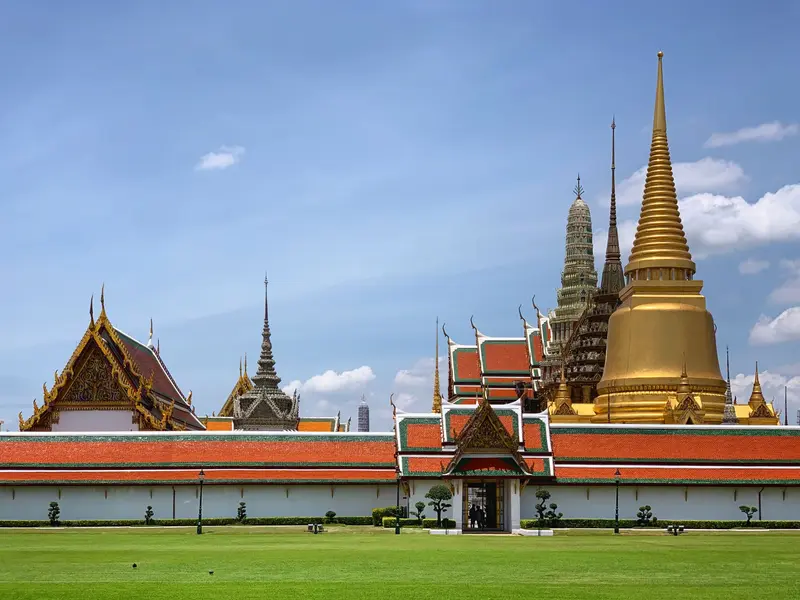
Bangkok is Thailand's capital and by far its largest city, where Buddhist temples, street food, and high-rise districts lie closely side by side. Along the Chao Phraya River stand the Grand Palace with the Emerald Buddha, Wat Pho with its 46-meter-long Reclining Buddha, and opposite, Wat Arun. Markets like the Chatuchak Weekend Market and the street food of Yaowarat showcase daily city life, while Sukhumvit and Siam are known for shopping malls and nightlife. The most pleasant time to visit is from November to February. You can avoid traffic jams with the Skytrain (BTS), Metro (MRT), and river boats.
10 Sights
3 Restaurants
History and Culture
History and CultureAfter the destruction of Ayutthaya in 1767, the capital was initially in Thonburi on the west bank. King Rama I relocated it in 1782 to Rattanakosin Island on the east bank; the erection of the City Pillar on April 21, 1782, is considered the founding date of Bangkok as the capital. From this period date the Grand Palace and Wat Phra Kaeo with the Emerald Buddha. Older are Wat Pho, which Rama I had rebuilt from 1788, and Wat Arun on the west bank, whose grand prang was completed in 1851.Buddhism shapes daily life: In the early morning, monks walk through the neighborhoods on their alms rounds, and many people bring offerings to temples and shrines. The monarchy enjoys high reverence; you'll see images of the royal family everywhere; insults to the royal house are punishable by law. During Songkran in April, entire streets turn into water fights.
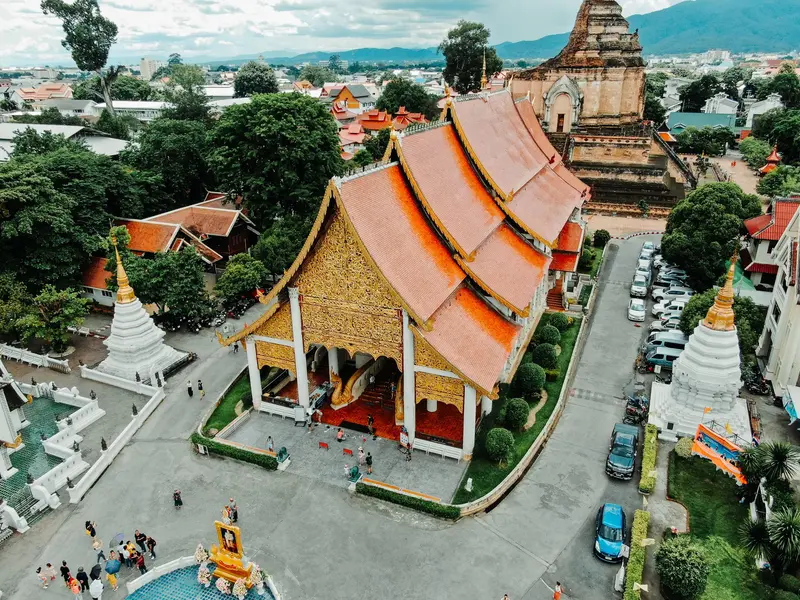
Chiang Mai is Northern Thailand's largest city and was the capital of the Lanna Kingdom for centuries. Within the old city's square moat stand dozens of temples made of teak and brick, while the forested mountains of Doi Suthep rise around the city. Here you'll find cooking schools, night markets, a vibrant café scene, and a great starting point for mountain tours.
8 Sights
5 Restaurants
Lanna Heritage & City Life
Lanna Heritage and City LifeKing Mengrai founded Chiang Mai in 1296 as the capital of the Lanna Kingdom. Many of its temples, with their stepped roofs, Naga staircases and wood carvings, date from this era or were rebuilt in its style. After two centuries of Burmese rule, the city fell under Siamese influence in the late 18th century, fully joining Thailand only in 1939.Today, Chiang Mai is a university city and handicraft hub, with workshops for silver, lacquerware, wood and paper umbrellas along the road to San Kamphaeng. On Sunday evenings, Ratchadamnoen Road becomes the Walking Street Market; Saturdays, Wualai Road. In November, the city celebrates Yi Peng with paper lanterns; April features Songkran's multi-day water fights around the city moat.
Perfect for unwinding and relaxation. For adventure seekers.
Pai is a small town in the mountains of Northern Thailand, known for its relaxed atmosphere and the valley landscape. Northern Thai daily life meets a vibrant backpacker scene here.Among the most famous attractions are the Pai Canyon with its narrow earthen ridges and the Wat Phra That Mae Yen, to whose white Buddha 353 steps lead up. The Pam-Bok Waterfall and the hot springs in the area can also be combined well into a single day.In the evenings, the main street transforms into a Walking Street with street food and stalls. The cool dry season from November to February is the most pleasant time to visit. You can explore the surroundings most flexibly by scooter, but the winding mountain road to Chiang Mai requires driving experience.
7 Sights
3 Restaurants
Culture and Population
Market Town for the Hill VillagesNorthern Thai families live in the town and valley alongside Shan (Tai Yai), Lisu, Lahu, and Karen. In Ban Santichon village, west of town, live descendants of Chinese immigrants from Yunnan. Temples in the valley, such as Wat Sri Don Chai, are built in the Lanna style with wooden structures and stepped roofs; in the mornings, monks collect alms along the main road.The road from Chiang Mai via Pai to Mae Hong Son was only continuously paved in the early to mid-1990s. Since then, Pai has developed into a hub for backpacker tourism, with its own music, café, and hostel scene.
Rich in culture and history. For adventure seekers and Route highlight.
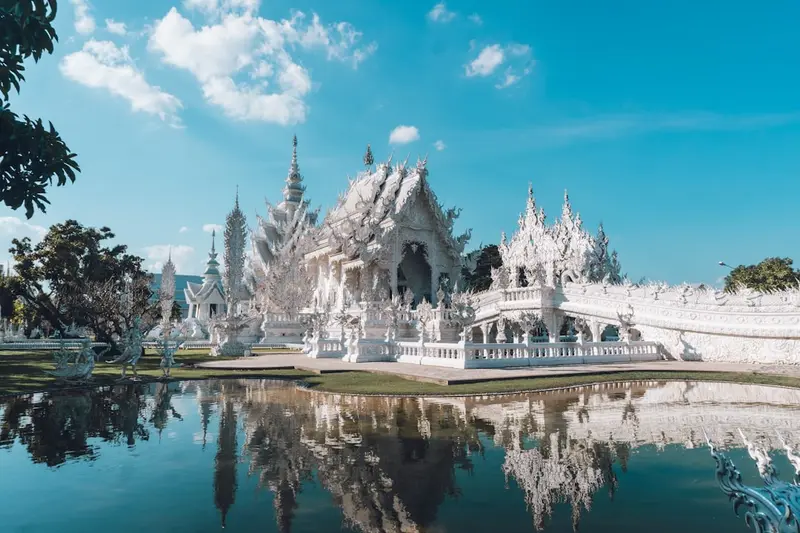
Chiang Rai is Thailand's northernmost major city and quieter than Chiang Mai. It is known for contemporary temple art: the Wat Rong Khun, the White Temple by artist Chalermchai Kositpipat, the blue-golden Wat Rong Suea Ten, and the Baan Dam Museum by Thawan Duchanee. The city is also a starting point for trips to the Golden Triangle, Mae Salong, and the mountain villages. It is most pleasant during the cool dry season from November to February.
5 Sights
5 Restaurants
History and Art
Lanna HistoryKing Mangrai founded Chiang Rai in 1262 as his dynasty's capital, before relocating his residence further south to establish Chiang Mai. After its conquest by Burma, the city remained under Burmese rule for centuries. In 1786, it became a vassal of Siam, only becoming a regular Thai province in 1933. The Emerald Buddha, now in Bangkok, was discovered in Wat Phra Kaeo in 1434.Contemporary Temple ArtToday, Chiang Rai is mainly known for artists from the region: Chalermchai Kositpipat created the White Temple, Thawan Duchanee the Baan Dam and the door panels of Wat Phra Singh. In the province's mountains live Akha, Lahu, Karen, and other hill tribes, whose textiles and handicrafts you find in the city's markets.
Perfect for unwinding and relaxation. Rich in culture and history and Route highlight.
Koh Lanta, part of Krabi Province, is larger and more tranquil than most Andaman Sea islands. Its main island, Lanta Yai, is elongated: beaches line the west coast, forested hills rise inland, and a single main road connects north and south.The beaches vary distinctly. In the north lie Klong Dao and Phra Ae, featuring shallow water and the densest infrastructure. Further south, Klong Khong, Klong Nin, and Kantiang Bay become quieter and rockier. The Mu Ko Lanta National Park, complete with a lighthouse, hiking trail, and macaques, adjoins the southern tip.On the east coast lies Lanta Old Town, a village of stilt houses built over the water, where the island's Chinese-Muslim trading history is evident; nearby live families of the Urak Lawoi, the original sea nomads. The island is reached by ferry from Krabi and Phuket, and via a land connection over Koh Lanta Noi. The season runs from November to April; during the rainy season, many accommodations and restaurants close.
6 Sights
3 Restaurants
Culture and Population
Three Population GroupsKoh Lanta is culturally more diverse than most Andaman Islands. The majority of the rural population is Muslim; in villages, mosques and prayer times set the daily rhythm. During Ramadan, many local kitchens close during the day. Buddhist and Thai-Chinese families are also present, along with the Urak Lawoi, one of the Andaman Sea's sea nomad groups, predominantly living in the southeast.The Old TownChinese traders settled in Ban Si Raya on the east coast; their descendants still shape the area. Its two-story wooden houses on stilts along the shore likely date from the 1960s, alongside a Chinese shrine resembling a pier into the sea, and a temple. Each March, the Old Town celebrates the Laanta-Lanta-Festival with music, dances, and street food.Away from the beaches, the rule is: cover shoulders and knees in villages and mosques; swimwear stays on the beach.