Fernweh
    ExploreTravel GuidesMy Trips
    de|en
    About FernwehImprintFAQPrivacy Policy
    ExploreTravel GuidesMy Trips
    Chiang Rai

    Chiang Rai

    CityCulture
    1. Home
    2. Destinations
    3. Thailand
    4. Nordthailand
    5. Chiang Rai
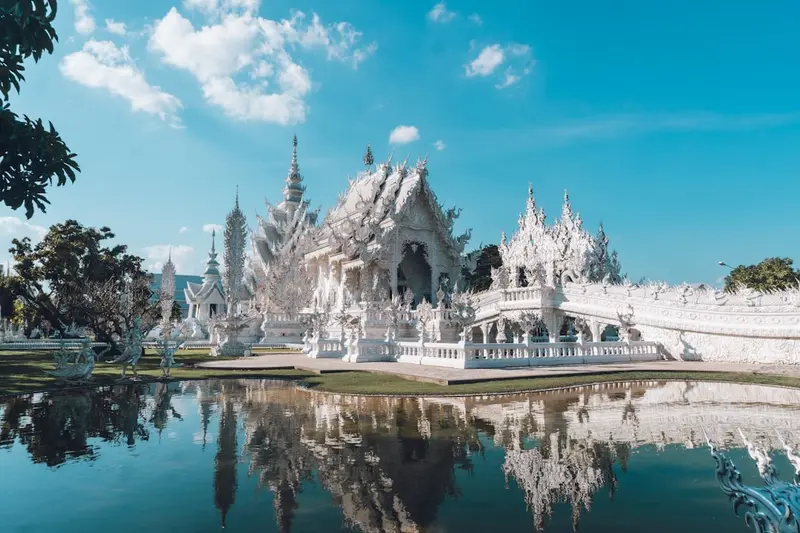
    Chiang Rai, located in northern Thailand, captivates with its relaxed atmosphere and rich cultural diversity. Here you'll discover a unique blend of traditional Lanna culture and modern art. The world-famous Wat Rong Khun, the White Temple, and the vibrant Wat Rong Suea Ten, the Blue Temple, are architectural highlights you shouldn't miss. Equally impressive is the Baan Dam Museum, the Black House, with its provocative art collection. The city also serves as an ideal base for exploring the Golden Triangle and the surrounding hill tribes. For authentic culinary experiences and local handicrafts, a visit to the night market is highly recommended. The cooler dry season from November to February offers optimal conditions for sightseeing.
    • Neighborhoods & highlights
    • Walking tours
    • Eat & drink
    • Culture
    • Getting around
    • Accommodation
    • Plan trip
    • Nearby
    • Neighborhoods & highlights
    • Walking tours
    • Eat & drink
    • Culture
    • Getting around
    • Accommodation
    • Plan trip
    • Nearby

    Overview

    Chiang Rai, located in the northernmost part of Thailand, is characterized by its tranquil atmosphere and deep cultural roots. Here, you'll encounter a unique synthesis of traditional Lanna culture and contemporary art. The iconic Wat Rong Khun, known as the White Temple, and the vibrant Wat Rong Suea Ten, the Blue Temple, are outstanding architectural works. Equally impressive is the Baan Dam Museum, the Black House, with its often provocative art collection. The city also serves as a strategic base for excursions to the Golden Triangle and the hill tribe villages. For authentic culinary experiences and local crafts, an evening visit to the night market is recommended. The cooler dry season from November to February offers optimal conditions for extended sightseeing.

    Places in Chiang Rai

    Discover the most important sights and attractions

    Sights in Chiang Rai

    Masjid Nurul Islam Pakistan Chiang Rai

    The Masjid Nurul Islam Pakistan in Chiang Rai is an important center for the region's Muslim community and reflects Northern Thailand's cultural diversity. It serves not only as a place of worship, but also as a meeting point and educational center, fostering Pakistani culture and traditions in Thailand. Upon visiting, you will find a quiet and contemplative atmosphere. The architecture is simple yet elegant, often incorporating elements that blend both local and Islamic styles. You can take the opportunity to experience the peaceful surroundings and learn more about the Muslim community residing here. Practical tip: Ensure appropriate attire that covers shoulders and knees, and remove your shoes before entering the prayer hall to show respect. The best time to visit is outside main prayer times, so as not to disturb the tranquility. For photos, early morning or late afternoon is recommended, when the light is softer and fewer people are present.
    Open in Google Maps

    Wat Phra Kaeo

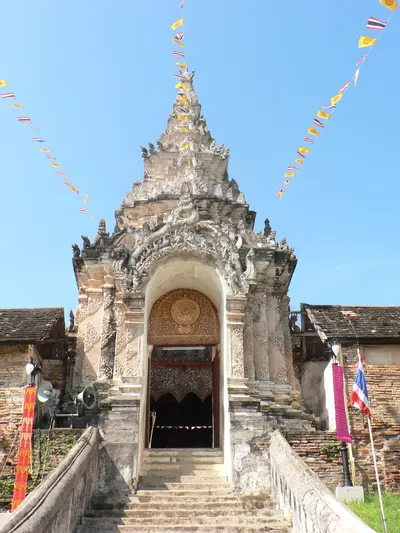
    The Wat Phra Kaeo in Chiang Rai holds great historical significance, as it was here in 1434 that the famous Emerald Buddha was discovered. After a lightning strike hit a chedi, the statue, hidden beneath stucco, was revealed, before embarking on a long journey through various kingdoms and finally finding its current home in Bangkok. Today, the temple houses a beautiful jade replica of the Emerald Buddha, created in 1990 to commemorate the 90th birthday of the Princess Mother. Here, you will find a peaceful atmosphere, characterized by elegant Lanna architecture. Besides the main ubosot, where the jade statue resides, you can also visit the Ho Phra Yok Museum, which houses a collection of Lanna artifacts, including the original bronze Buddha statue Phra Chao Lan Thong. As a royal temple, it enjoys high esteem. Our Tip: It's best to visit the temple early in the morning to enjoy the tranquility and avoid the largest crowds. Please ensure you wear appropriate clothing that covers your shoulders and knees.
    Open in Google Maps

    Masjid Darulaman Chiang Rai - 清萊府雲南المسجد الصيني بشيانغ راي清真寺

    The Masjid Darulaman in Chiang Rai is a central gathering point for the local Chinese-Muslim community, mainly consisting of descendants of Hui Chinese who settled in this region. Here you’ll find a fascinating example of Northern Thailand's cultural diversity, where Islamic traditions meet Chinese influences. The mosque's architecture features a unique blend of traditional Islamic elements and Chinese architectural styles. Striking are the green roofs, reminiscent of Chinese temples, combined with minarets that emphasize its Islamic character. Inside, a simple but dignified prayer hall awaits you, radiating tranquility. Pay attention to the fine details in the calligraphy and decorations, which reflect both cultures. For a visit, it's recommended to go outside of prayer times to peacefully absorb the atmosphere and avoid disturbing the community. Practical Tip: Wear respectful clothing that covers your shoulders and knees. Women should also carry a headscarf. The best time for photos is in the morning, when the light is soft and the architectural colors are shown to their best advantage. The mosque offers an authentic glimpse into the life of an often overlooked community in Thailand.
    Open in Google Maps

    Rong Suea Ten Temple

    Moderner buddhistischer Tempel in einem auffälligen blauen Farbton mit aufwendigen Schnitzereien.
    Open in Google Maps

    Wat Phra Singha

    The Wat Phra Singha in Chiang Rai is a historically significant temple with origins in the late 14th century, specifically around 1385. It was built during the flourishing period of the Lanna Kingdom and once served as a repository for the famous Phra Phuttha Sihing Buddha statue before it was relocated to Chiang Mai. Here you will find an excellent example of traditional Lanna architecture, characterized by its elegant lines and intricate decorations. Upon entering the temple grounds, you will notice the impressive Ubosot (ordination hall) and the Viharn (assembly hall). Pay special attention to the detailed wood carvings on the gables and doors, depicting mythological figures and floral motifs. Inside the Viharn, you can admire murals that tell scenes from the Jataka stories, the former lives of Buddha. Although the original statue is no longer here, the temple houses a revered replica, which you will find in the main Viharn. This temple offers a tranquil atmosphere that invites reflection. Our Tip: It's best to visit Wat Phra Singha early in the morning to experience the peaceful ambiance without large crowds and to utilize the soft morning light for photos of the delicate architecture. Please ensure appropriate clothing that covers shoulders and knees to show respect for this sacred site.
    Open in Google Maps

    City walks in Chiang Rai

    Curated walking tours through the city's highlights — handpicked by experienced travel journalists.

    Chiang Rais Grüne Oasen & Kulturelle Vielfalt am Fluss

    Entdecken Sie auf diesem Spaziergang die weniger bekannte, aber ebenso faszinierende Seite Chiang Rais, die sich entlang des malerischen Kok Flusses und in seinen ruhigen Ecken entfaltet. Von historischen Aussichtspunkten über reiche Lanna-Kunst bis hin zu entspannten Flussufer-Momenten und einem lebhaften Abendmarkt – dieser Weg bietet eine einzigartige Mischung aus Natur, Kultur und lokalem Flair.

    ~2 Std. 30 Min.
    In Google Maps öffnen
    Stopps (5)

    Essen & Trinken

    Culture, Art, and History in Chiang Rai

    Chiang Rai, founded in 1262 by King Mangrai, briefly served as the capital of the historical Lanna Kingdom before it was relocated to Chiang Mai. For centuries, the region was a strategically important hub and at times under Burmese rule, before becoming part of the Kingdom of Siam again in the late 18th and early 19th centuries. This rich and complex history shapes the city's cultural identity.The architecture in Chiang Rai is a blend of traditional Lanna style and contemporary art. Classic temples like Wat Phra Kaeo, which once housed the Emerald Buddha, stand in contrast to modern works such as the surreal Wat Rong Khun (White Temple) by Chalermchai Kositpipat and the vibrant blue Wat Rong Suea Ten. These sites reflect both deeply rooted Buddhism and innovative artistic expressions.Beyond the influence of Lanna culture, the presence of various hill tribes such as the Akha, Lahu, and Karen also plays a role. Their traditional crafts and ways of life enrich the local culture and are often visible in the city's markets. Buddhist festivals and local rituals are deeply embedded in daily life and bear witness to a vibrant spiritual tradition.

    Getting around here

    Chiang Rai offers a relaxed atmosphere, which is also reflected in its transportation options. The city has no subway or tram; instead, locals and visitors rely on a mix of traditional and modern means of transport.For shorter distances within the city center, Tuk-tuks, Songthaews (shared taxis), and motorbike taxis are widely used. It's advisable to negotiate the fare before starting your journey. Alternatively, ride-sharing apps like Grab offer a convenient and transparently priced option for ordering taxis or private vehicles.The city center is also very pedestrian-friendly, and many main attractions can be comfortably explored on foot. For those wanting to explore the surroundings, numerous rental stations for bicycles and scooters are available, which is particularly recommended for trips to the surrounding temples and rice fields. Buses connect Chiang Rai with other cities but are less relevant for intra-city traffic. For flexible exploration, renting a scooter or using ride-sharing is the most practical choice.

    Accommodations in Chiang Rai

    Accommodations in Chiang Rai

    Find perfect stay in Chiang Rai

    Booking.com
    Search Hotels
    Agoda
    Search Hotels
    Airbnb
    Vacation Rentals
    Hotels.com
    Hotels Worldwide
    Hostelworld
    Hostels

    Plan your trip to Chiang Rai

    Save places, build a route and plan your city trip — all in one place.

    Save places

    Bookmark sights, restaurants and neighborhoods you're interested in.

    Build your route

    Turn your bookmarks into a route — define order, days and budget.

    Refine with AI

    Let Mein Fernweh suggest experiences and put together a tailored daily plan.

    Start trip planningOpen bookmarks

    Locations nearby

    These places are nearby — perfect for additional days or a day trip.

    Nordthailand

    Nordthailand

    Nordthailand lockt mit einer faszinierenden Mischung aus majestätischen Berglandschaften, jahrhundertealter Lanna-Kultur und spirituellen Tempelanlagen.Entdecken Sie die entspannte Atmosphäre pulsierender Städte und die unberührte Schönheit seiner Nationalparks, die dieses Gebiet zu einem unvergesslichen Reiseziel machen.
    Pai

    Pai

    Set in a picturesque river valley, Pai is a popular destination for backpackers and nature lovers, known for its relaxed atmosphere, waterfalls, and hot springs.
    Mae Hong Son

    Mae Hong Son

    Surrounded by gentle mountains and dense jungle, Mae Hong Son offers an insight into Shan culture and is a starting point for the famous "Mae Hong Son Loop".
    Sukhothai Historical Park

    Sukhothai Historical Park

    As a UNESCO World Heritage Site, this expansive park preserves the impressive ruins of the first capital of the Kingdom of Sukhothai and bears witness to Thailand's golden era.
    Phu Thap Boek

    Phu Thap Boek

    Phetchabun's highest point, Phu Thap Boek, is famous for its unique cabbage fields, cool mountain air, and stunning views of the surrounding misty landscape.