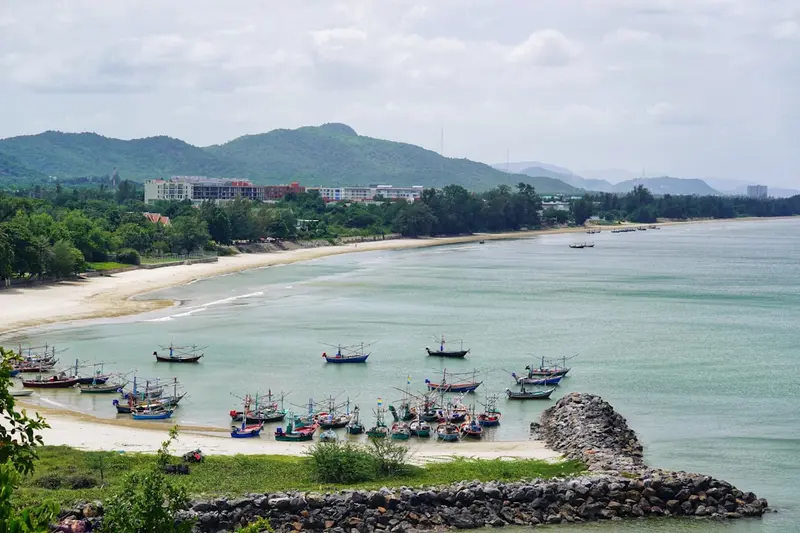
The route showcases Thailand through temples, markets, and cuisine: street food in Bangkok, cooking classes and night markets in Chiang Mai, the temples of Chiang Rai, and finally a few days by the Gulf in Hua Hin. From Chiang Rai, you fly back to Bangkok and then drive about three hours to Hua Hin.
17 Days / 16 Nights
November–Februar
4 stops
Why This Route?
Showcases Thailand beyond its beaches, with ample time for food and temples.
Hidden Gems
Talat Noi, the old riverside district next to Chinatown in Bangkok
Saturday evening market on Wualai Road in Chiang Mai
Khao Takiab south of Hua Hin with its temple and bay view
Itinerary
Stop 1 • 4 Nights
Bangkok
City
Perfect for an exciting city trip. Rich in culture and history and Culinary highlights.
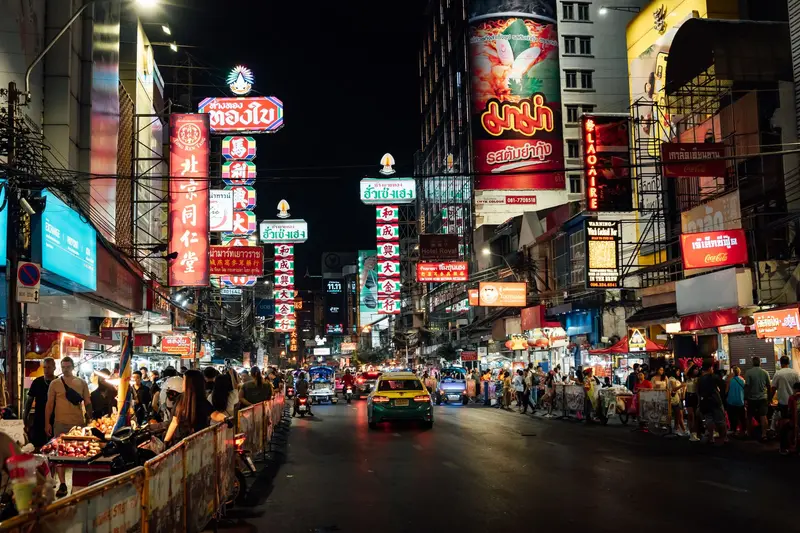
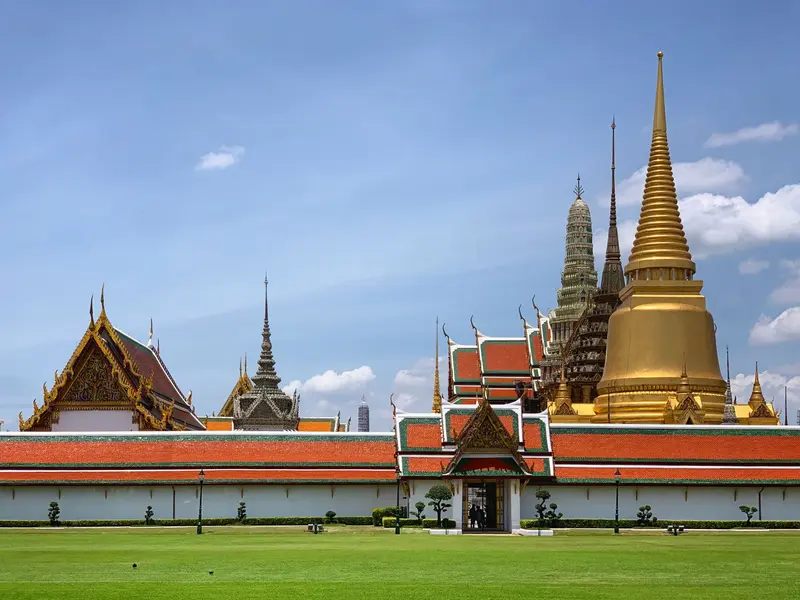
Bangkok is Thailand's capital and by far its largest city, where Buddhist temples, street food, and high-rise districts lie closely side by side. Along the Chao Phraya River stand the Grand Palace with the Emerald Buddha, Wat Pho with its 46-meter-long Reclining Buddha, and opposite, Wat Arun. Markets like the Chatuchak Weekend Market and the street food of Yaowarat showcase daily city life, while Sukhumvit and Siam are known for shopping malls and nightlife. The most pleasant time to visit is from November to February. You can avoid traffic jams with the Skytrain (BTS), Metro (MRT), and river boats.
10 Sights
3 Restaurants
History and Culture
History and CultureAfter the destruction of Ayutthaya in 1767, the capital was initially in Thonburi on the west bank. King Rama I relocated it in 1782 to Rattanakosin Island on the east bank; the erection of the City Pillar on April 21, 1782, is considered the founding date of Bangkok as the capital. From this period date the Grand Palace and Wat Phra Kaeo with the Emerald Buddha. Older are Wat Pho, which Rama I had rebuilt from 1788, and Wat Arun on the west bank, whose grand prang was completed in 1851.Buddhism shapes daily life: In the early morning, monks walk through the neighborhoods on their alms rounds, and many people bring offerings to temples and shrines. The monarchy enjoys high reverence; you'll see images of the royal family everywhere; insults to the royal house are punishable by law. During Songkran in April, entire streets turn into water fights.
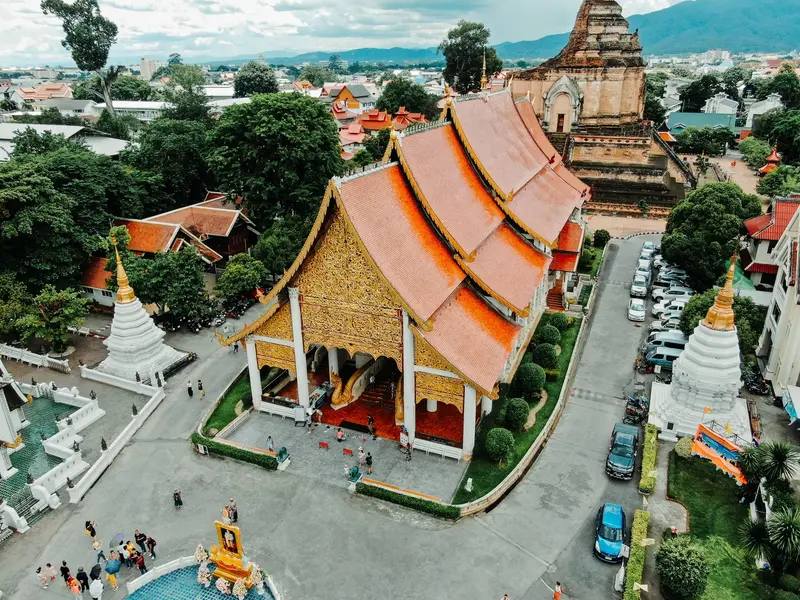
Chiang Mai is Northern Thailand's largest city and was the capital of the Lanna Kingdom for centuries. Within the old city's square moat stand dozens of temples made of teak and brick, while the forested mountains of Doi Suthep rise around the city. Here you'll find cooking schools, night markets, a vibrant café scene, and a great starting point for mountain tours.
8 Sights
5 Restaurants
Lanna Heritage & City Life
Lanna Heritage and City LifeKing Mengrai founded Chiang Mai in 1296 as the capital of the Lanna Kingdom. Many of its temples, with their stepped roofs, Naga staircases and wood carvings, date from this era or were rebuilt in its style. After two centuries of Burmese rule, the city fell under Siamese influence in the late 18th century, fully joining Thailand only in 1939.Today, Chiang Mai is a university city and handicraft hub, with workshops for silver, lacquerware, wood and paper umbrellas along the road to San Kamphaeng. On Sunday evenings, Ratchadamnoen Road becomes the Walking Street Market; Saturdays, Wualai Road. In November, the city celebrates Yi Peng with paper lanterns; April features Songkran's multi-day water fights around the city moat.
Rich in culture and history. For adventure seekers and Route highlight.
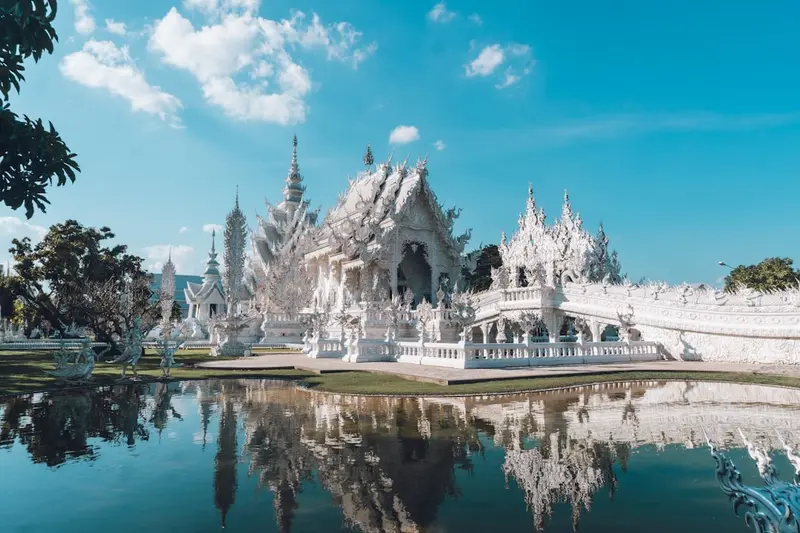
Chiang Rai is Thailand's northernmost major city and quieter than Chiang Mai. It is known for contemporary temple art: the Wat Rong Khun, the White Temple by artist Chalermchai Kositpipat, the blue-golden Wat Rong Suea Ten, and the Baan Dam Museum by Thawan Duchanee. The city is also a starting point for trips to the Golden Triangle, Mae Salong, and the mountain villages. It is most pleasant during the cool dry season from November to February.
5 Sights
5 Restaurants
History and Art
Lanna HistoryKing Mangrai founded Chiang Rai in 1262 as his dynasty's capital, before relocating his residence further south to establish Chiang Mai. After its conquest by Burma, the city remained under Burmese rule for centuries. In 1786, it became a vassal of Siam, only becoming a regular Thai province in 1933. The Emerald Buddha, now in Bangkok, was discovered in Wat Phra Kaeo in 1434.Contemporary Temple ArtToday, Chiang Rai is mainly known for artists from the region: Chalermchai Kositpipat created the White Temple, Thawan Duchanee the Baan Dam and the door panels of Wat Phra Singh. In the province's mountains live Akha, Lahu, Karen, and other hill tribes, whose textiles and handicrafts you find in the city's markets.
Perfect for unwinding and relaxation. Culinary highlights.
Hua Hin is one of Thailand's oldest seaside resorts, closely linked to the royal family. It features a long sandy beach, the historic train station with its royal pavilion, and, near the coast, the summer palaces Klai Kangwon and Mrigadayavan. At the southern end of the bay, a temple stands on Khao Takiab, offering views over the coast. In the evenings, the town gathers at the night market on Dechanuchit Road. The most pleasant time is from November to February.
5 Sights
5 Restaurants
Royal Sea Resort
From Fishing Village to Seaside ResortHua Hin was formerly called Samore Riang, "Rows of Rocks," and was a fishing village. In 1911, the Southern Railway reached the town, after which it became the country's first seaside resort, popular with the court and Bangkok's affluent society. From 1923 to 1924, King Rama VI commissioned the teakwood Mrigadayavan Palace near Cha-am, while King Rama VII had the Klai Kangwon Palace built in Hua Hin from 1926.The train station was rebuilt in 1926 in Victorian style, and the red-and-gold pavilion next to it was moved from Sanam Chandra Palace in Nakhon Pathom in 1967. This connection to the monarchy continues to shape the city's identity to this day.