Back to United Arab Emirates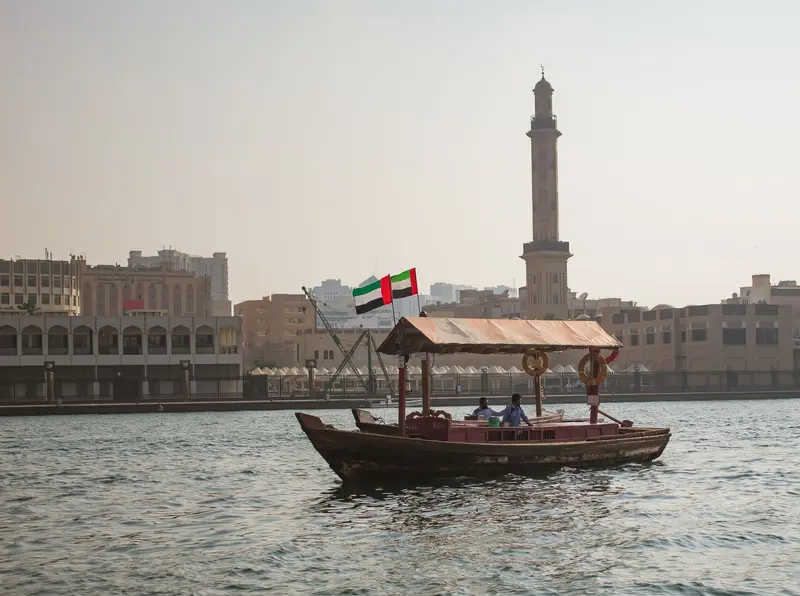
Round trip through the Emirates
by Felix Gillen
By rental car from Dubai, via Sharjah and Ras al-Khaimah, to the Jebel Jais mountains, then to Fujairah on the east coast, on to Al Ain and the Liwa Oases on the edge of the Rub al Khali, finally to Abu Dhabi.
6 stops
Why This Route?
This tour shows more than the two major cities: forts and museums in Ras al-Khaimah and Fujairah, the Jebel Jais mountains, Al Ain's UNESCO cultural sites, and the Liwa desert. Most stages are short; only the stretch from Al Ain to Liwa and on to Abu Dhabi is longer.
Hidden Gems
- Viewing Deck Park at Jebel Jais
- Al-Bidiya Mosque on the East Coast
- Qasr Al Muwaiji in Al Ain
- Fort Mezairaa in Liwa
Getting there and back
Open jaw: start and end are in different places
- Arrival
- Flight · Dubai (DXB)It's best to pick up the rental car only after your days in Dubai; in the city, you'll get around well with the Metro, Tram, and Abra.
- Departure
- Flight · Abu Dhabi (AUH)Liwa to Abu Dhabi is roughly 220 to 250 km depending on your destination; allow about three hours. Mountain excursions in Fujairah require prior registration; check the UK FCDO travel advice (gov.uk/foreign-travel-advice) before you go.
Itinerary
Stop 1 • 3 Nights
Dubai
Route highlight. routes.tagDescriptions.stadt and Rich in culture and history.
Dubai, the emirate's namesake city, lies on the Persian Gulf, straddling the Dubai Creek. The Creek's banks host old quarters Deira and Bur Dubai, with souks, wind-tower houses, and museums. Along Sheikh Zayed Road are Downtown (with the Burj Khalifa), followed southwest by Dubai Marina and JBR. Metro, Tram, and Abras link the districts.
Old Town by the Creek, Souks in Deira, Downtown. Sharjah is just next door and makes for a great day trip to museums and Heart of Sharjah.
11 Sights
5 Restaurants
History and Culture
It all started at the CreekIn 1833, members of the Bani Yas tribe under the Al Maktoum family settled at the mouth of the Creek. Pearl diving and a tax-free port for foreign merchants made Dubai a trading hub; around 1900, merchants from Bastak, Iran, built the quarter known today as Al Fahidi. The Al Fahidi Fort was built around 1787 and became the city's first museum in 1971; it has been closed for restoration since 2021.Discover Emirati CultureThe Sheikh Mohammed Centre for Cultural Understanding is located in a restored house in Al Fahidi. Under the motto "Open Doors, Open Minds," it offers tours of the Jumeirah Mosque and Emirati meals in the courtyard of a wind-tower house, where hosts answer questions about religion and daily life.Birthplace of the EmiratesOn December 2, 1971, the rulers signed the declaration establishing the United Arab Emirates at Union House in Dubai. The Etihad Museum on the site tells this story.
Stop 2 • 2 Nights
Ras al-Khaimah
Rich in culture and history. Rich in history and historical sites and Dreamy beaches.
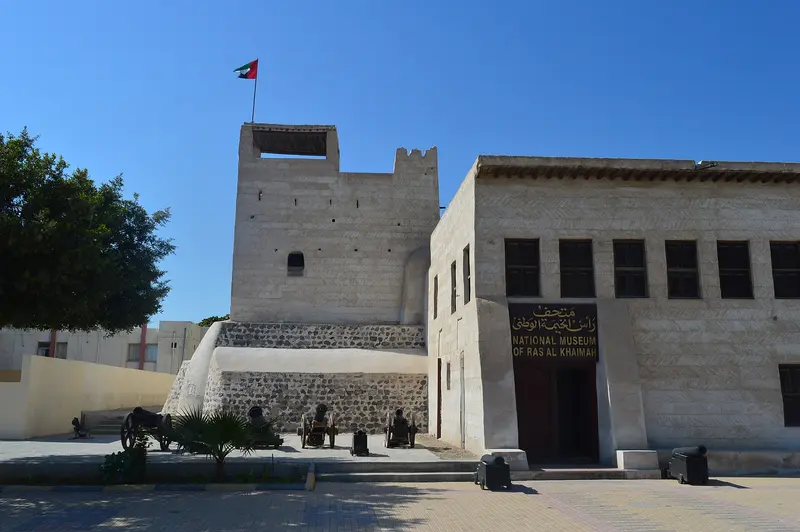
Ras al-Khaimah is the capital of the eponymous emirate on the Gulf coast in the north of the UAE. An inlet divides it into the Old Town in the west and Al Nakheel in the east, with mangroves growing along its banks. The National Museum, located in the historic fort, Dhayah Fort, and the abandoned pearl fishing village of Al Jazirat al-Hamra tell the story of the Qawasim; to its west lie the hotels of Al Hamra and Al Marjan Island.
National Museum and Dhayah Fort, a day on the road up to Jebel Jais.
4 Sights
2 Restaurants
History and Culture
City of the QawasimThe fortress of the ruling Al Qasimi family was destroyed by the Portuguese in 1621 and by the British in 1820, and subsequently rebuilt. The family lived here until 1964, after which the building served as a police station and prison, and has been a museum since 1987. The Mohammed bin Salem Mosque in the old town is the emirate's oldest place of worship and the only mosque there without a minaret.Al Jazirat al-Hamra Pearl Fishing VillageLocated on a former tidal island on the emirate's coast are approximately 500 houses, a fort, watchtowers, a souk, and a mosque. The inhabitants from the Zaab tribe left the village between 1968 and 1971. It is considered the last preserved pearl fishing village on the Gulf and is on UNESCO's tentative World Heritage List. The site is an open-air museum; guided tours with volunteer guides can be booked via the Heritage Village website.ShimalThe Shimal archaeological site includes Bronze Age tombs and the ruins of a palace from the Julfar period (13th to 16th century), popularly known as the Palace of the Queen of Sheba. A staircase follows the medieval ascent, though there is no historical connection to the Queen of Sheba.
Stop 3 • 2 Nights
Fujairah
Rich in culture and history. Rich in history and historical sites and Dreamy beaches and coastal landscapes.
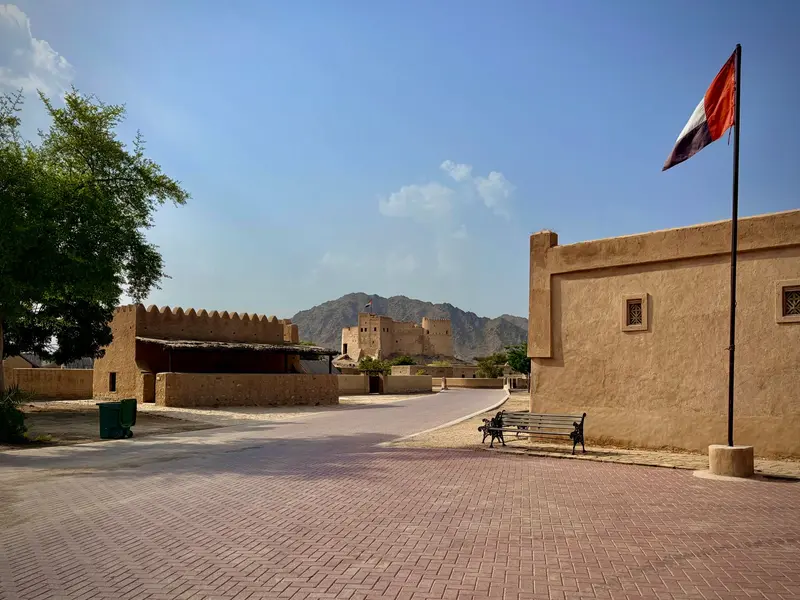
Fujairah is the capital of the eponymous emirate on the east coast of the UAE on the Gulf of Oman. Around the 16th-century fort are a museum and a Heritage Village; the 2015 Sheikh Zayed Mosque shapes the city's skyline. Off the coast, tankers anchor near the port, one of the world's largest bunkering ports; in the hinterland, the Hajar Mountains begin.
Fujairah Fort and Museum, side trip north to Al-Bidiya Mosque and Dibba.
5 Sights
4 Restaurants
History and Culture
The Fort and the Old TownFujairah Fort is located about two kilometers from the modern center, in Old Fujairah. Wahhabist troops occupied it from 1808 to 1810, and it later served as a prison. In 1925, the British Navy shelled the fort, after which it fell into disrepair until its restoration from 1997 to 2000.Sheikh Zayed MosqueOpened in 2015, this mosque is considered the second largest in the Emirates, after the Sheikh Zayed Mosque in Abu Dhabi. It can accommodate around 28,000 worshippers. Reports vary on whether non-Muslims are permitted to visit the interior. According to a 2024 travel report, this is possible outside of prayer times and not on Fridays, upon registration at the Sheikh Zayed Grand Mosque Centre.BullfightingFor over 70 years, bulls have competed every Friday in Fujairah in an enclosed ring, locking horns against each other. There are no matadors, and the fights are bloodless. They usually start in the late afternoon, but animal welfare activists still criticize the practice.
Stop 4 • 2 Nights
Al Ain
routes.tagDescriptions.unesco-welterbe. routes.tagDescriptions.oase and Rich in history and historical sites.
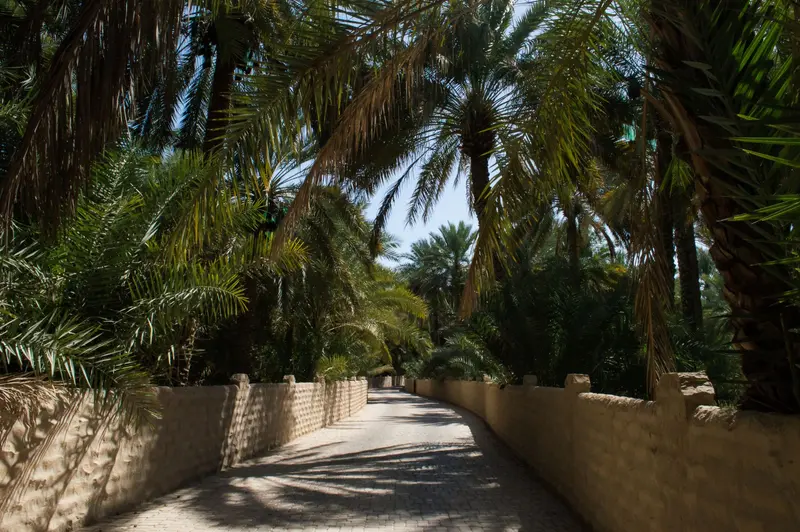
Al Ain is the second largest city in the Emirate of Abu Dhabi and is located approximately 160 kilometers east of the capital, on the border with Oman. Due to its oases, parks, and avenues, it is also known as the Garden City. The cultural sites of Al Ain were the first in the Emirates to be inscribed on the UNESCO World Heritage List in 2011, including the Oasis, the Hili Tombs, and the slopes of Jebel Hafeet.
Oasis, Al Jahili Fort and Hili Tombs, evening drive up Jebel Hafeet.
7 Sights
3 Restaurants
History & World Heritage
Cultural Sites of Al AinIn 2011, UNESCO inscribed sites in four areas: Hafit, Hili, Bidaa Bint Saud, and the oases. They demonstrate that the desert region has been inhabited since the Neolithic Age. Among the most famous evidence are stone tombs from the 3rd millennium BC and early examples of the Aflaj irrigation system.Water from the MountainsTo this day, the oases thrive on the Falaj channels, which carry water from the mountains solely by gravity, without pumps. The Al Ain Oasis alone covers approximately 1,200 hectares and features about 147,000 date palms.Ruling Family and FortsForts like Al Jahili and Qasr Al Muwaiji protected oases and water. In Qasr Al Muwaiji, a residence of Sheikh Zayed, his son Khalifa, the future President of the Emirates, was born in 1948.
Stop 5 • 1 Night
Liwa Oases
routes.tagDescriptions.wüste. routes.tagDescriptions.dünen and routes.tagDescriptions.oase.
The Liwa Oases are located in the Al Dhafra region, approximately 150 kilometers southwest of Abu Dhabi, on the northern edge of the Rub' al Khali. About 50 villages stretch for approximately 100 kilometers along an arc of palm groves; the largest settlement is Mezairaa. South of this, the approximately 300-meter-high dune Tal Moreeb rises, the venue for the winter Liwa International Festival.
Palm groves around Mezairaa and the ca. 300-meter high Tal Moreeb dune.
3 Sights
1 Restaurant
History & Festivals
Home of the Ruling FamiliesLiwa is considered the birthplace of Abu Dhabi and Dubai's ruling families. The Al Nahyan only moved their seat to the coast of Abu Dhabi in 1793.Dates and AgricultureThe oasis's economy revolves around date cultivation. Every July, the Liwa Dates Festival celebrates the harvest. In 2026, its 22nd edition ran from July 14 to 23, featuring competitions for the best fresh Rutab dates and other fruits.Liwa International FestivalIn winter, hundreds of thousands of visitors flock to the festival at Tal Moreeb dune, with over 700,000 in 2025/26. It features off-road vehicle hill climbs, concerts, and camping. The next edition is scheduled from December 11, 2026 to January 2, 2027.
Stop 6 • 3 Nights
Abu Dhabi
routes.tagDescriptions.hauptstadt. Rich in culture and history and routes.tagDescriptions.moscheen.
Abu Dhabi is the capital of the United Arab Emirates and lies on an island in the Persian Gulf, connected to the mainland by several bridges. Besides the Sheikh Zayed Mosque and Qasr Al Hosn Fort, the Corniche, the Qasr Al Watan Presidential Palace, and the mangroves to the east define the visit. Off the coast lie Saadiyat Island with its museums and Yas Island with Ferrari World and the Formula 1 track.
Sheikh Zayed Grand Mosque, Qasr Al Hosn and a day on Saadiyat Island.
7 Sights
3 Restaurants
History and Culture
From the Watering Hole to the CapitalThe city was founded in 1761 after a hunting party from the Bani Yas tribe discovered freshwater on the coast. An 18th-century watchtower forms the core of Qasr Al Hosn, the city's oldest surviving building. In 1793, the ruling Al Nahyan family moved its seat from the Liwa oasis here, and the fort remained the seat of the ruler and government until 1966.Pearls and OilBefore oil, the city subsisted on pearl diving. In 1958, oil was found offshore in the Umm Shaif field. This wealth swiftly turned the small settlement into a major city.Religion and Visitor RulesThe Sheikh Zayed Mosque, built 1996-2007, is the city's religious hub, open to all. Here, and at the Presidential Palace, a modest dress code is required: covered shoulders and knees; for women in the mosque, also the hair. On Fridays, visitor operations at the mosque cease during midday prayers.
6 stops
Route Summary
Duration14 Days
Stops6 Places
TypeMixed
Best Time to GoNovember–March