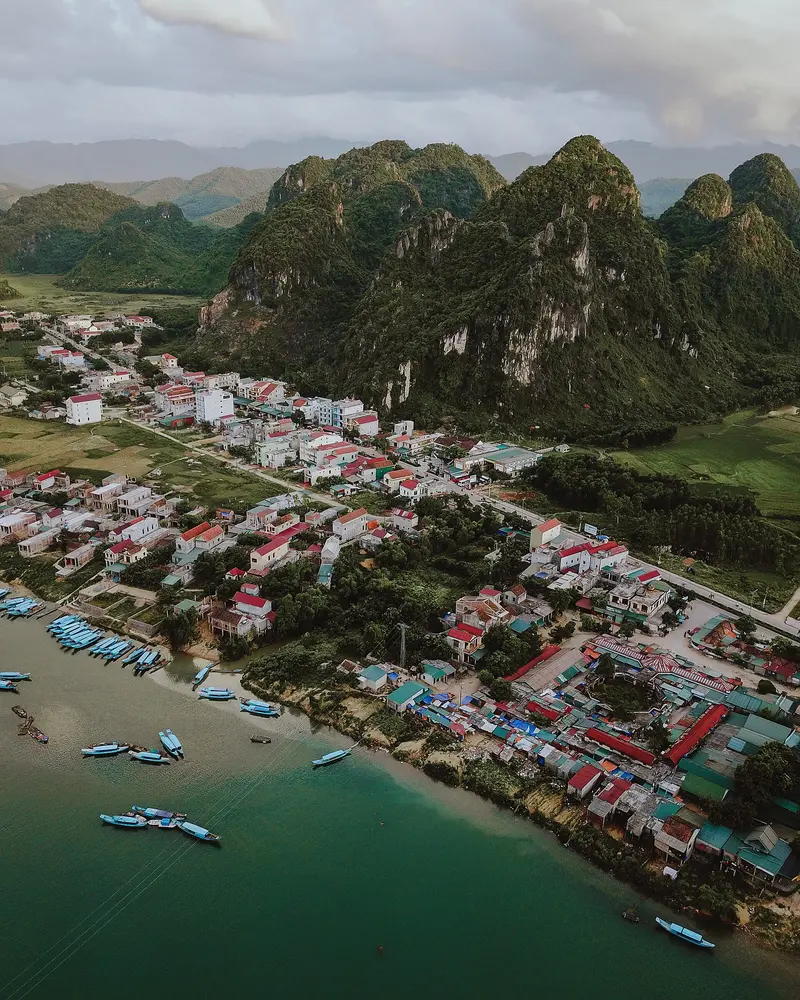
Kris Martyn / Wikimedia Commons / CC BY-SA 4.0, mod.
Round trip · Vietnam
Caves, Imperial City and Island Beaches: Central Vietnam and Phu Quoc
by Felix Gillen
- 15 Days / 14 Nights
- Hanoi → Phu Quoc
After an arrival night in Hanoi, you fly in just over an hour to Đồng Hới and continue to Phong Nha-Kẻ Bàng National Park with its caves and river valleys. By bus, it's a three to five-hour journey to Huế, then over the Hải Vân Pass or through the tunnel to Hội An. From Đà Nẵng, a direct flight of about one and three-quarter hours takes you to Phú Quốc, where the trip concludes with beach days and boat excursions. This route deliberately takes its time: four stops in two weeks, with several nights at each location.
At a glance
- Duration
- 15 Days / 14 Nights
- Stops
- 5 · Hanoi → Phu Quoc
- Arrival
- Flight · Hanoi (HAN)
- Departure
- Flight · Phú Quốc (PQC)
- Best Time to Go
- February to April: Central Vietnam is usually dry and mild, while Phú Quốc enjoys a dry season with calm seas
More on when to go
From September to December, Central Vietnam is threatened by rain and floods, especially in October and November, when boat and river tours in Phong Nha may be cancelled. On Phú Quốc, September and October are the rainiest months.
5 stops
Why This Route?
Instead of covering the whole country, this trip focuses on the center and ends by the sea. You combine the cave country of Phong Nha, the imperial city of Hue and the Old Town of Hoi An with a few quiet days on an island in the Gulf of Thailand, with only a handful of moves along the way.
Hidden Gems
- Rent a bike in Phong Nha and cycle about ten kilometers into the Bong Lai Valley with its rice paddies and small riverside eateries
- In Huế, drive to Vọng Cảnh Hill, a few kilometers outside, for sunset, overlooking the Perfume River
- On Phú Quốc, eat crabs in the fishing village of Hàm Ninh on the east coast, in one of the stilt-house restaurants over the shallow water
Getting there and back
Open jaw: start and end are in different places
- Arrival
- Flight · Hanoi (HAN)From Noi Bai Airport, take bus 86 to the Old Quarter, or a taxi/Grab, about 35 kilometers. The next day, you'll fly from there to Dong Hoi in just over an hour.
- Departure
- Flight · Phú Quốc (PQC)From Phu Quoc Airport, you fly to Ho Chi Minh City in just over an hour and connect there. Domestic flights usually arrive at Tan Son Nhat (SGN); long-haul flights leave from there or, once it is in operation, from the new Long Thanh Airport (LTH), about 40 kilometers (25 miles) east of the city. Check your ticket to see which airport you depart from, and allow plenty of time if you have to change airports.
Itinerary
Hanoi
Hanoi is the capital of Vietnam and the political and cultural center of the North, situated on the Red River. Visitors come for its over a thousand-year history, the vibrant Old Quarter around Hoàn Kiếm Lake, and the street food stalls, which are among the best in the country.
In 1010, Lý Thái Tổ, the first ruler of the Lý Dynasty, made the place his capital and named it Thăng Long, "Ascending Dragon." The city has borne the name Hà Nội since 1831. From 1902, it served as the capital of French Indochina, and since 1976, it has been the capital of reunified Vietnam. Buildings from all these eras are preserved, ranging from Confucian temples to colonial villas.
Key Neighborhoods
Old Quarter: The dense maze of alleys north of the lake has largely preserved its historic street layout. Many streets still bear the names of the goods once traded there, such as Hàng Bạc, named after the silver shops. Most budget accommodations and street food stalls are located here.
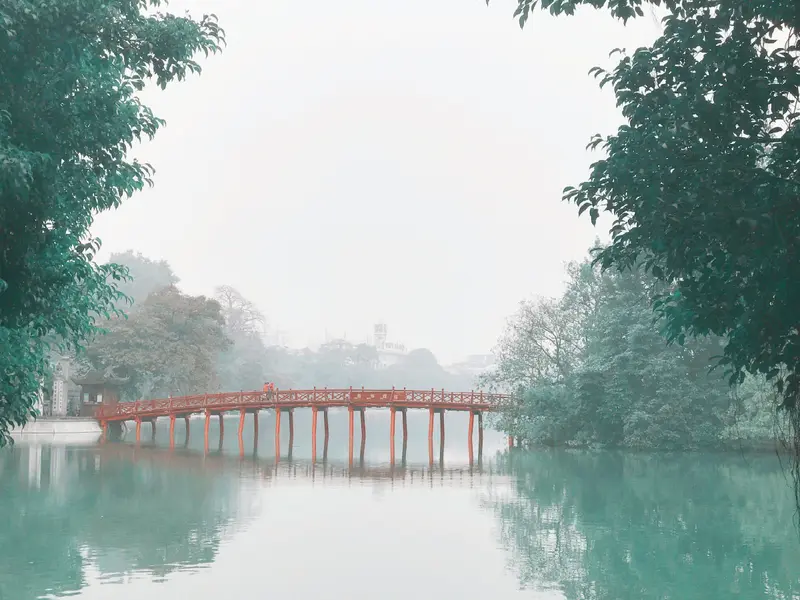
Hoàn Kiếm Lake: The lake is the heart of the city. Via the red Thê Húc Bridge, you reach Ngọc Sơn Temple on a small island; on another stands the Turtle Tower.
French Quarter: South of the lake, wide avenues, colonial villas, embassies, and ministries define the area. Here you'll find the Opera House, the Hotel Metropole, and the National Museum of Vietnamese History.
Ba Đình: To the west lie most of the governmental and imperial sites: the Hồ Chí Minh Mausoleum, the One Pillar Pagoda, and the Imperial Citadel of Thăng Long, a UNESCO World Heritage site since 2010.
West Lake (Tây Hồ): The city's largest lake boasts approximately 17 kilometers of shoreline. On a small island near its southeastern shore stands the Trấn Quốc Pagoda, Hanoi's oldest pagoda. This district is quieter, featuring cafés, villas, and many foreign residents.
Arrival night after the long-haul flight; in the evening, a stroll around Hoan Kiem Lake.
7 Sights
4 Restaurants
History and Culture
From 1010, Hanoi, then known as Thăng Long, was the seat of the Lý Dynasty. The 1070 Temple of Literature and the Imperial Academy, established in 1076 as the nation's first university, reflect the Confucian scholarly tradition.The colonial era brought the French Quarter and the Opera House, where August Revolution rallies were held in August 1945. On September 2, 1945, Hồ Chí Minh proclaimed the Declaration of Independence in what is now Ba Đình Square.
Phong Nha-Ke Bang
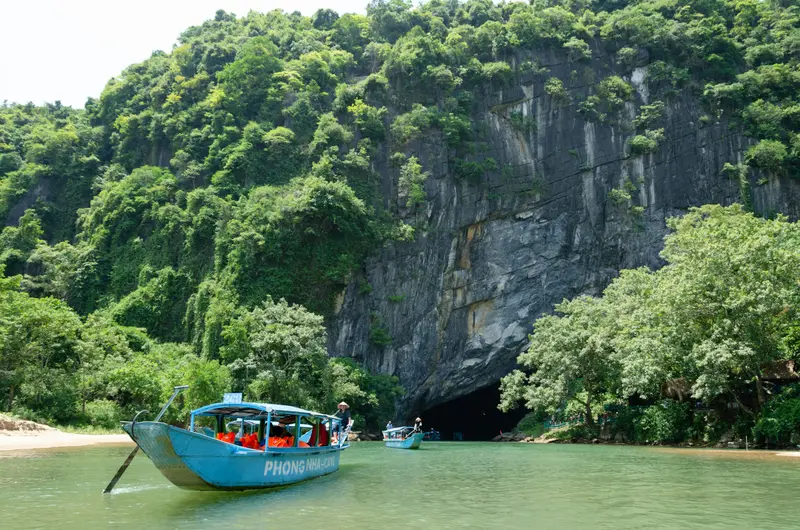
Phong Nha-Kẻ Bàng National Park is located in the karst mountains of Central Vietnam, on the border with Laos, north of Huế. You visit for its caves, including Sơn Đoòng, the world's largest known cave, and several stalactite caves that you can visit without an expedition.The karst is around 400 million years old and is considered Asia's oldest major karst region, with over 220 kilometers of documented caves and underground rivers. Since 2003, the park has been a UNESCO World Heritage site, and in 2025, the site was expanded to include the adjacent Hin Nam No National Park in Laos.The starting point is Phong Nha town, about 45 kilometers west of the coastal city of Đồng Hới, with guesthouses and tour operators. Two to three days are sufficient for the accessible caves, while multi-day cave tours must be booked long in advance. Since July 1, 2025, the area has belonged to Quảng Trị Province, which was merged with Quảng Bình.
Flight to Dong Hoi in just over an hour, then about 45 kilometers to Phong Nha. Take the boat 2.5 kilometers up the Son River to Phong Nha Cave, and walk into Paradise Cave: of its 31 kilometers, about one is open without a guide.
4 Sights
Caves, Tickets and Seasons
Admission (guide prices 2026):Phong Nha Cave: 150,000 VND plus 55,000 VND boat feeParadise Cave (Thiên Đường): 250,000 VND, electric shuttle from the car park extraDark Cave (Hang Tối): 350,000 VND including activities and equipmentPrices are subject to change; the rates displayed on site apply.Sơn Đoòng: The world's largest known cave has been open to visitors since 2013, exclusively through the licensed operator Oxalis Adventure. Numbers are limited to 1,000 guests per year; expeditions run from January to August and are fully booked for 2026 and 2027.Rainy season: From September to February caves may close temporarily during heavy rain, and in October and November the park sometimes closes completely for several days because of storms. Before cave tours and during the rainy season, check the UK FCDO Travel Advice (gov.uk/foreign-travel-advice).
Hue
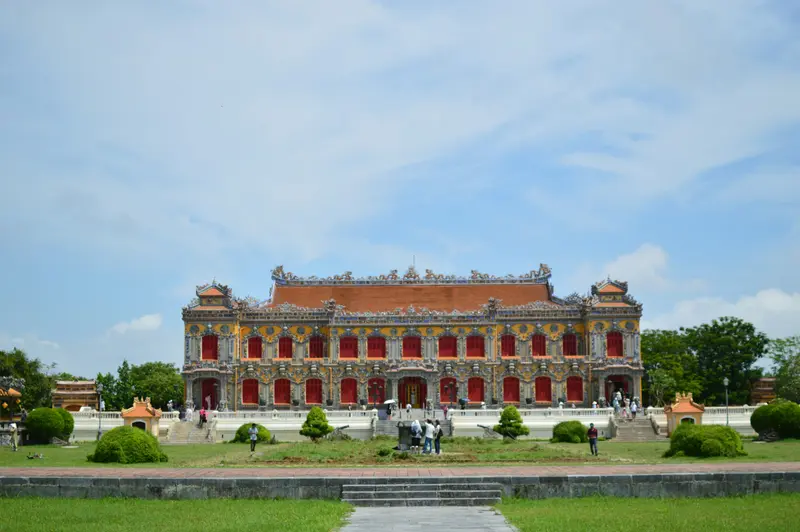
Located on the Perfume River in Central Vietnam, Huế served as the national capital from 1802 to 1945 under the Nguyễn Dynasty. You visit for the Citadel with the Imperial City and the upstream Imperial Tombs, which have been a UNESCO World Heritage site since 1993.The Citadel, housing the Imperial City and the Forbidden Purple City, is located on the north bank of the river, while buildings from the French colonial era stand on the south bank. Along the upper Perfume River, the imperial tomb complexes are spread out, along with temples such as the Thiên Mụ Pagoda, the city's landmark. You should plan at least two full days for the Imperial City and the tombs.Huế boasts its own unique cuisine, rooted in the imperial court: spicy and served in small portions. The most famous dish is Bún bò Huế, a beef noodle soup. Since 2025, Huế has been a centrally administered city, encompassing the area of the former province of Thừa Thiên Huế.
About three to five hours by bus. The Imperial City, Thien Mu Pagoda and a boat trip on the Perfume River to the royal tombs.
5 Sights
2 Restaurants
Imperial City and Gateway
Huế was the capital of unified Vietnam from 1802 to 1945 under the Nguyễn Dynasty, the country's last imperial dynasty. The complex was planned according to Eastern geomancy principles, with the Perfume River and Ngu Binh Mountain part of the overall composition.Admission (as of 2026, guide prices):Imperial City: 200,000 VNDTombs of Minh Mang, Tu Duc, or Khai Dinh: 150,000 VND eachCombined ticket Imperial City and the three tombs: 530,000 VNDAs of 2026, an additional ticket for all sites is available for 600,000 VND, valid for five days.Children aged 7 to 12 pay 100,000 VND for the four-site ticket.Prices are subject to change; please refer to on-site information.During the 1968 Tết Offensive, Huế was the scene of one of the longest and deadliest battles of the Vietnam War; the Citadel was also severely damaged.
Hoi An
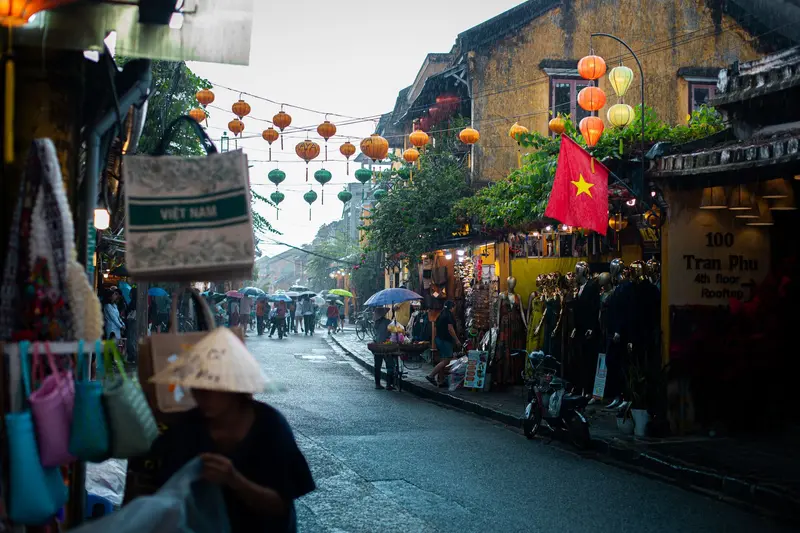
Hoi An is a small port city at the mouth of the Thu Bon River in Central Vietnam, about 30 kilometers south of Da Nang. You go there for its Old Town, an exceptionally well-preserved trading port from the 15th to 19th centuries, which has been a UNESCO World Heritage site since 1999.In the narrow streets stand over 1,000 wooden houses, assembly halls of Chinese merchants, pagodas, and ancestral homes, where Vietnamese, Chinese, and Japanese influences mingle. Its landmark is the Japanese Bridge with its small temple. In the evenings, lanterns illuminate the riverside streets.About five kilometers to the east lies An Bang Beach, easily accessible by bicycle. Approximately 40 to 45 kilometers southwest is the temple city of My Son, a popular day trip. As of July 1, 2025, Hoi An will administratively belong to the city of Da Nang.
Two and a half to three and a half hours by bus through the tunnel, or a full-day trip by car or with an Easy Rider over the Hai Van Pass. Old Town, An Bang Beach and an excursion to My Son.
5 Sights
4 Restaurants
Old Town Ticket, Lantern Evenings and Rainy Season
Ticket: To enter the Old Town you need a ticket valid for up to three days. There are two options (as of January 2026):80,000 VND: Old Town, Japanese Bridge or Quan Công Temple, and two additional sites120,000 VND: Old Town, Japanese Bridge or Quan Công Temple, one museum and three additional sitesChildren under 16 are exempt. The ticket also covers traditional music and dance performances and the evening cultural programmes. The Old Town is a pedestrian zone from 9 am to 9.30 pm in summer and until 9 pm in winter.Lantern evenings: On the 14th day of each lunar month, the full-moon evening, the electric lights in the Old Town are dimmed from about 6 pm to 9 pm. The lanes then glow in the light of paper lanterns, and lanterns are set afloat on the Thu Bồn River in memory of ancestors.Rainy season: September to January is the rainy season, with the highest flood risk in October and November, when the low-lying Old Town can be flooded within a few hours. Before you travel, check the UK FCDO Travel Advice (gov.uk/foreign-travel-advice).
Phu Quoc
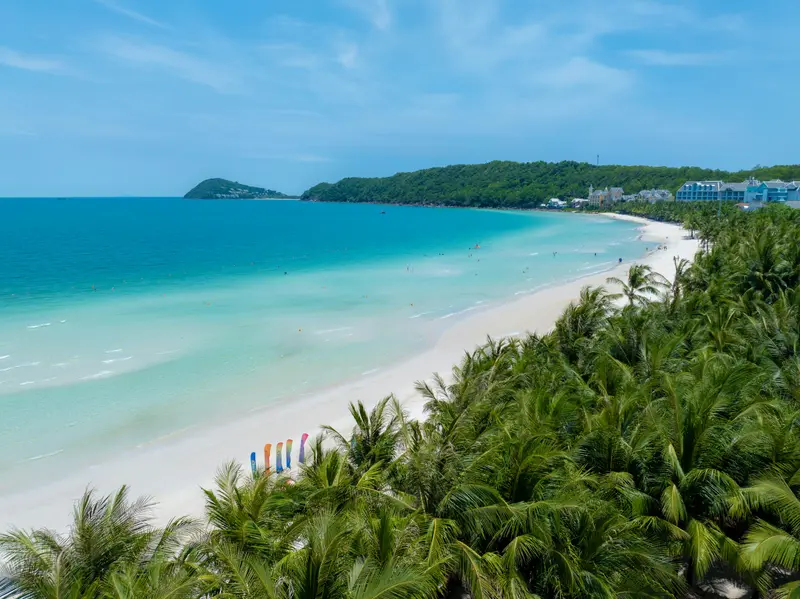
Phú Quốc is Vietnam's largest island, located in the Gulf of Thailand off the country's southwest coast, closer to Cambodia than to the Vietnamese mainland. You come for the beaches, warm sea, and west coast sunsets, plus fish sauce, pepper, and fresh seafood.The island is about 50 km long. Its main town is Dương Đông on the west coast, featuring a night market and the small Dinh Cậu Temple. To the south is An Thới, the starting point for the cable car to Hòn Thơm island. More than half of the island, especially the forested north, is a national park.Since June 2025, Phú Quốc has been a special administrative zone and is part of An Giang Province.
From Da Nang Airport, 45 to 60 minutes from Hoi An, a nonstop flight of about 1 hour 45 minutes to Phu Quoc. Snorkeling trip to the An Thoi Islands and a ride on the nearly eight-kilometer cable car to Hon Thom.
6 Sights
1 Restaurant
History and Culture
The island is known for two products: fish sauce made from locally caught anchovies, considered one of Vietnam's best and protected by a designation of origin, and pepper, grown mainly in the north.A grim chapter of history is told at Phú Quốc Prison near An Thới. The French built it for captured Việt Minh fighters; it later became South Vietnam's largest prison camp, holding around 40,000 inmates in 1973.The Dinh Cậu Temple on a rock in Dương Đông was built in 1937 for the sea goddess Thiên Hậu. The site had been a place of worship long before.
Plan this route as your trip
All stops, trains and nights go into your trip planner. You adjust dates and places to stay afterwards.
This route is a suggestion from our research. Please check timetables, times in port, opening hours and prices before you book – what your tour operator or carrier says is what counts.
Fernweh is a free travel guide and trip planner: routes researched by people, taken over in one click, used day by day on the road. More about Fernweh
5 stops
Route Summary
Duration15 Days
Stops5 Places
TypeMixed